



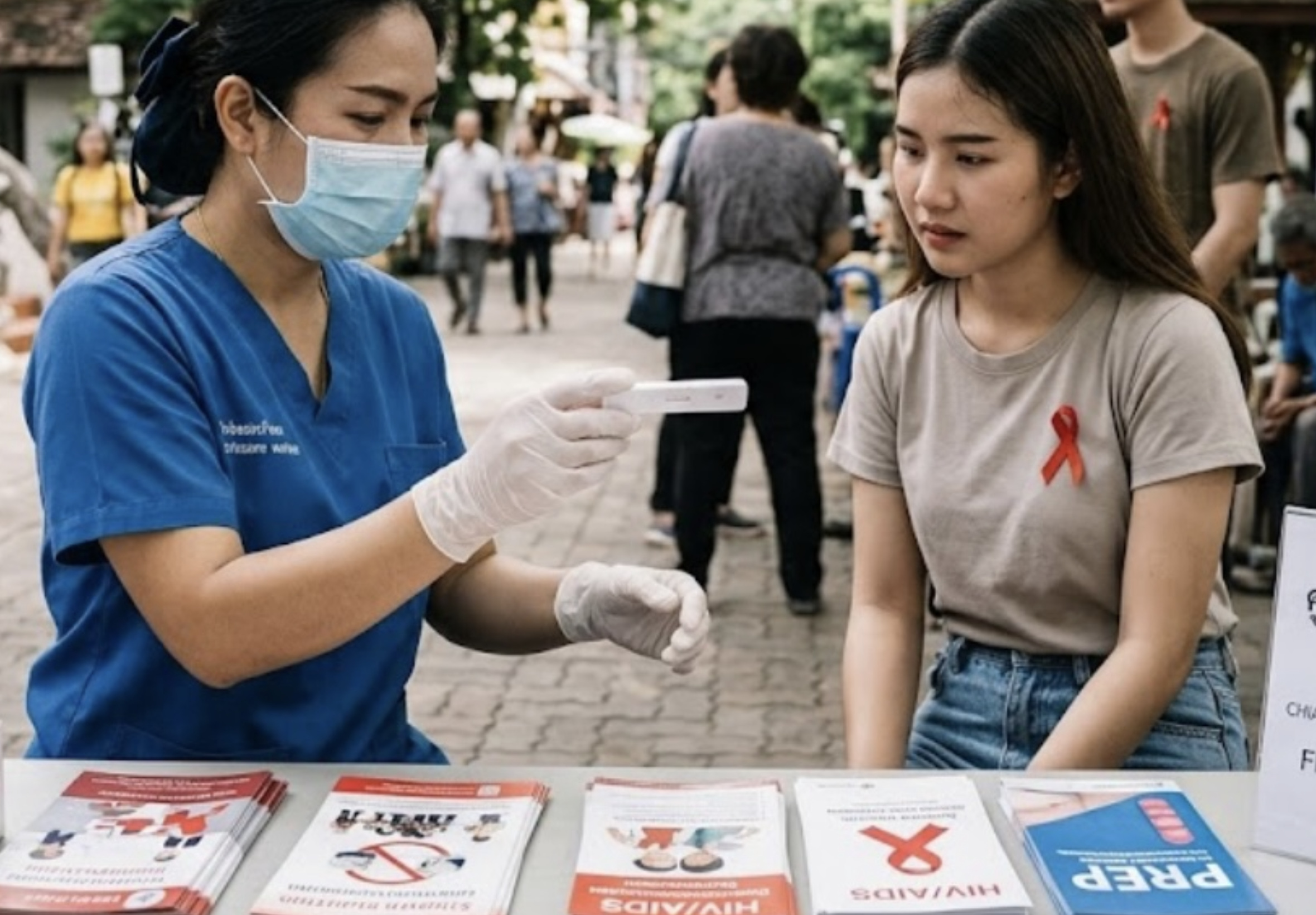

Health authorities in Chiang Mai have warned that HIV infections continue to rise across the province, with the virus increasingly affecting the wider community rather than remaining concentrated within traditionally recognised high-risk groups.
According to the Chiang Mai Provincial Public Health Office, the province has recorded around 23,900 cumulative HIV infections, with approximately 700 new cases each year - the equivalent of almost two new infections every day.
Wider spread across communities
Officials say the pattern of infection has changed, with increasing concern over migrant workers and ethnic minority communities. These groups often face obstacles to accessing healthcare, including language barriers, limited entitlement to treatment, missing identification documents and fears of stigma, factors that can discourage testing and delay treatment.
Health officials also reported an HIV prevalence of 3.6% among ethnic minority men engaged in sex work, highlighting continuing gaps in prevention programmes and healthcare access.
Young people aged between 15 and 24 have also emerged as a growing concern. Nationally, authorities say 49% of new HIV infections occur within this age group, a trend linked to changing sexual behaviour, limited awareness of prevention measures and restricted access to youth-friendly health services.
Adults aged 25 to 49 continue to account for the largest share of new infections, reflecting their high levels of social and sexual activity. Officials say this group remains a priority for education campaigns, routine HIV testing and easier access to treatment.
Digital dating and prevention
The Provincial Public Health Office also pointed to changing behaviour in the digital age. Local data shows that 61.9% of men who have sex with men (MSM) in Chiang Mai use dating applications to meet people they have not previously known for sexual encounters, a practice that health officials say may increase the risk of HIV transmission as well as other sexually transmitted infections, including mpox.
Authorities are calling for broader public education through digital platforms, more inclusive healthcare services and continued efforts to reduce HIV-related stigma. They also want wider availability of HIV testing together with pre-exposure prophylaxis (PrEP), post-exposure prophylaxis (PEP) and prompt treatment.
Health officials stress that reducing new infections will depend on improving access to healthcare for marginalised communities while encouraging regular testing, greater awareness and early treatment across all sections of society.
Join the discussion? 

28 July 2026
-
 1
1
Recommended Comments
Create an account or sign in to comment