Get today's headlines by email
The arrest followed coordination between Thailand’s Immigration Bureau and Chinese authorities. Mr Fei was linked to a scheme known as the “1040 Project”, which operated between 2011 and 2014 and targeted victims through closed groups and word-of-mouth recruitment. Members were required to pay an entry fee of 69,800 yuan, approximately 325,000 baht, with promises of high returns.
Investigators said the operation used a multi-level structure, claiming that participants who reached the highest tier would receive returns of up to 10.4 million yuan. Mr Fei allegedly managed the collection and distribution of membership fees. More than 300 people were reportedly defrauded, with total losses exceeding 100 million yuan, or about 475 million baht.
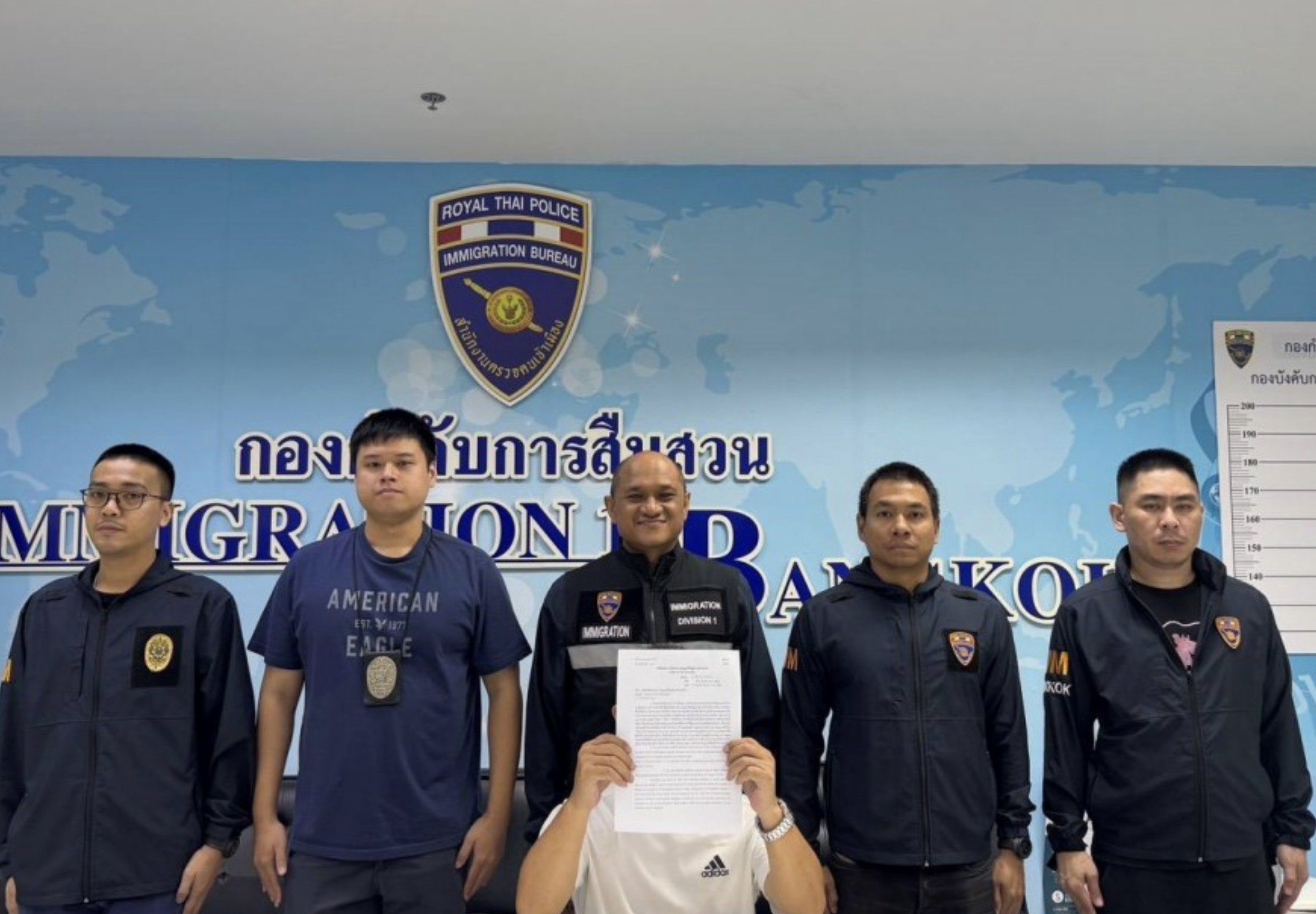
Chinese authorities in Zhanjiang, Guangdong province, issued an arrest warrant and revoked Mr Fei’s passport. He subsequently fled to Thailand, where he remained until Thai immigration investigators located him at a residence and business premises in Sampheng 2. Officers confirmed his identity before revoking his permission to stay in the country due to the outstanding foreign arrest warrant.
Police have transferred Mr Fei to the relevant investigation division for further legal processing. He is expected to be deported from Thailand in accordance with immigration law. The case highlights ongoing cooperation between Thai and Chinese authorities in tackling transnational crime, particularly financial fraud schemes targeting large numbers of victims. Naewna reported that officials have not disclosed further details about additional suspects or whether others linked to the network remain at large in Thailand.
Picture courtesy of Naewna
Join the discussion?
Already a member?
Adapted by ASEAN Now Naewna 18 Apr 2026
- 1 comment
- 225 views
-

Georgealbert