Skip to content
View in the app

A better way to browse. Learn more.

Thailand News and Discussion Forum | ASEANNOW

A full-screen app on your home screen with push notifications, badges and more.

To install this app on iOS and iPadOS
  1. Tap the Share icon in Safari
  2. Scroll the menu and tap Add to Home Screen.
  3. Tap Add in the top-right corner.
To install this app on Android
  1. Tap the 3-dot menu (⋮) in the top-right corner of the browser.
  2. Tap Add to Home screen or Install app.
  3. Confirm by tapping Install.

Thailand News

All the latest news stories from Thailand are written in English. Fresh news and stories from around the kingdom brought to you daily.
The Royal Thai Air Force (RTAF) continues its operations along the Thai-Cambodian border amid recent tensions. Air Marshal Chakkrit Thammavichai confirmed that all branches of the armed forces remain vigilant to defend Thailand’s airspace after reports of provocations from Cambodia. Surveillance has been maintained since a second ceasefire announcement, ensuring national security.

The current situation follows a series of confrontations, including an incident where a flare device on the border fence was triggered, as claimed by Cambodia. The Thai Air Force dismissed this as a breach of a prior agreement, emphasizing a commitment to maintaining a non-hostile environment. Air Marshal Thammavichai assured the public that operations focus on self-defense and humanitarian principles, ensuring the safety of Thai citizens.

Despite uncertainties, the RTAF is prepared for continued operations, highlighting a collaboration between the armed forces and government to sustain military supplies for the next 2-3 years. This partnership exemplifies a unified approach across state agencies, aiming to strengthen public trust and national security. The Air Force also underscores its historical adherence to targeting only military forces, avoiding civilian casualties.

Looking forward, security remains a priority, particularly during the election period. Since December 27, 2025, the armed forces have been on standby to address any threats. The Air Marshal reaffirmed the continuous readiness of security agencies to manage risks in all dimensions, bolstering national defense capabilities, reported The Nation.

Key Takeaways
Thai Air Force remains vigilant along the Cambodian border.
Recent flare incidents breach previous agreements, sparking tensions.
National security is a priority with all forces on standby since late 2025.

Related Stories
Trat Border Clashes Intensify as Thai Forces Hit Koh Kong
Thai Forces Push for Gulf Closure to Throttle Cambodia's Supplies


Adapted by ASEAN Now from The Nation 2026-01-31


snoop1130
snoop1130
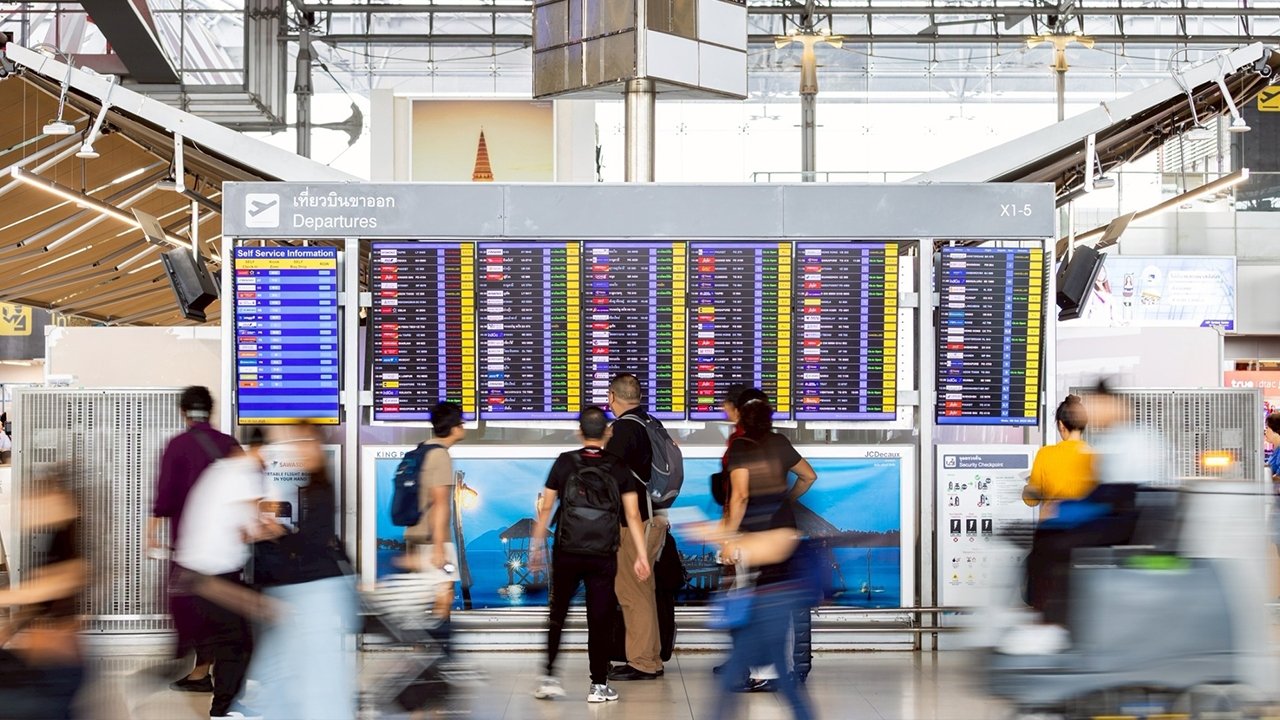
Airports of Thailand (AOT) plans to increase the passenger service charge (PSC) for international departures this May. The fee will rise from 730 baht to 1,120 baht per passenger, affecting six major airports including Suvarnabhumi and Don Mueang. While this change targets foreign travelers, AOT asserts it will not impact international visitor numbers to Thailand.

The decision comes amidst concerns from political parties warning that higher charges could burden passengers and harm the tourism sector. However, AOT CEO Paweena Jariyathitipong expressed confidence that tourism would remain unaffected. The projected increase in revenue, estimated to exceed 10 billion baht, is meant to align passenger fees with actual operational costs, rather than merely boosting profits.

AOT plans to reinvest revenues into airport improvements, focusing on upgrades and maintenance in areas like bathrooms, electrical and air conditioning systems, terminal structures, and security. These investments aim to enhance passenger convenience and service quality. Paweena emphasized that the PSC should be viewed as an investment in safer and more efficient airport operations, not a financial loss for travelers.

Despite reservations, studies cited by Paweena indicate that such charges typically do not deter tourists, who prioritize airfare over service fees. The new PSC is pending approval from the Minister of Transport, with implementation expected by May if sanctioned, reported The Thaiger.

Key Takeaways
AOT to increase PSC for outgoing international flights from 730 to 1,120 baht.
Revenue from the hike will support operational costs and airport upgrades.
The adjustment requires approval and may begin in May.

Related Stories
Nok Air Grounded from International Flights Amid Safety Concerns
AOT confirms facial recognition for international flights


Adapted by ASEAN Now from The Thaiger 2026-01-31


snoop1130
snoop1130
Thailand has made significant strides in its space ambitions by participating in the 2026 Beijing International Commercial Space Exhibition. The event signifies a key milestone for Thailand's burgeoning space economy and its awaited Thai First Astronaut project. The Geo-Informatics and Space Technology Development Agency (GISTDA) led the charge, with Deputy Director Phee Chusri presenting on cross-border cooperation in commercial aerospace.

The presentation caught the attention of over 25 major aerospace organizations, including AWIMETEL and SPACETY. This exposure led to early discussions on the use of high-resolution SAR satellite data, collaboration on Thailand’s LandX programme, and potential partnerships for the THEOS Constellation, a major satellite network project by Thailand. These negotiations aim to bolster Thailand's presence in the global space sector.

Collaboration was a central theme as GISTDA also met with the China Manned Space Agency (CMSA) alongside Thai educational and research entities. Talks focused on fostering human resource development and facilitating future cooperations in astronaut training and research initiatives. This collaboration is pivotal as it underscores a shared commitment to advancing Thailand's space exploration capabilities.

A breakthrough achievement from the exhibition was CMSA's promise of full support for Thailand’s first astronaut initiative. This includes training and technical research support, with plans for a Thai astronaut to participate in a mission aboard the Chinese space station soon. This partnership enhances Thailand's prospects of developing a robust space program and highlights the country's growing influence in the Asia-Pacific space industry, reported The Thaiger.

Key Takeaways
Thailand strengthens its space presence with new Chinese partnerships.
Discussions initiate potential collaborations on satellite and astronaut projects.
CMSA pledges support for Thailand's first astronaut mission.

Related Stories
Thai Research Launched on NASA Mission to Space Station
Thai Food to Reach Space with CPF’s Historic Chicken Launch


Adapted by ASEAN Now from The Thaiger 2026-01-31


snoop1130
snoop1130
Thai authorities have repatriated 32 Thai nationals who escaped from scam centres in Cambodia, with one victim warning of brutal conditions including fatal beatings and the sale of organs. The group was received after crossing back into Thailand on January 31, 2026, following coordination between Thai officials and the Thai embassy in Phnom Penh. The case has again highlighted the severe human rights abuses linked to cross-border scam operations targeting migrant workers.

Officials crossed into Cambodia’s Kong Kong province to collect the escapees at the Ban Cham Yeam border checkpoint. The operation was led by Ms Kalaya Prasitphak, district chief of Khlong Yai in Trat province, together with 182 Marines and immigration officers. The return was carried out on humanitarian grounds after diplomatic coordination.

Initial health screening found all 32 returnees to be in good condition. However, six individuals were separated from the group due to outstanding arrest warrants and were transferred for further legal proceedings. Authorities confirmed that legal processes would continue in accordance with Thai law.

One of the victims, Mr Riew from Surat Thani province, described being deceived into accepting work as an administrator in Sa Kaeo province. He said he was later sent to Bavet city in Cambodia’s Svay Rieng province before being transferred again to Poipet, where he was forced to scam fellow Thais. He identified himself as a victim of human trafficking.

Mr Riew said the detention facilities held victims of many nationalities under appalling conditions. Those who failed to meet scamming quotas were beaten and physically abused, he said, adding that some victims were beaten to death. He also warned that some detainees were forced to have their organs sold to a third country.

Medical care was not provided by the operators, Mr Riew said, and any required treatment had to be paid for at costs ranging from US$100 to US$300. He described the environment as inhumane and likened the experience to living in hell. His account echoed previous warnings from authorities about organised scam networks in the region.

He explained that during a raid on January 17, chaos allowed him and several others to escape. They fled into a forest, where they hid for hours before making their way to Phnom Penh. There, they sought assistance from the Thai embassy, which helped arrange their return.

Thainewsroom reported that Thai officials said screening and investigations would continue, particularly for those with legal issues. Authorities also reiterated warnings to the public not to be deceived by overseas job advertisements linked to scam operations. Further cooperation with neighbouring countries is expected to continue.


Picture courtesy of TNR


Key Takeaways

• Thirty-two Thai nationals were repatriated from Cambodia on January 31, 2026, after escaping scam centres.
• A victim reported severe abuse, including beatings, lack of medical care, and alleged organ sales.
• Thai authorities are continuing legal proceedings and warning the public against deceptive job offers.

Related stories

Cambodia-returns-162-Thai-nationals-via-Ban-Laem-border

Seven-Thais-flee-Cambodian-job-scam-caught-at-border


Adapted by ASEAN Now from Thainewsroom 2026-02-02


Georgealbert
Georgealbert
The Election Commission (EC) reported that advance voting nationwide on Sunday, February 01, 2026, proceeded smoothly overall, with more than 2.2 million registered participants turning out across the country. While the process was largely orderly, some polling stations faced overcrowding and traffic congestion, prompting on-the-spot coordination with local authorities to maintain access and flow.

At a press conference held at the Office of the Election Commission, EC Secretary-General Sawaeng Boonmee provided an overview of the opening of central polling stations for Members of the House of Representatives, both within and outside constituencies nationwide. High-level EC executives attended the briefing, which outlined participation figures, logistics, and monitoring measures in place during the voting process.

Sawaeng stated that Sunday (February 1) was designated for advance voting both outside and within constituencies. A total of 8,610 people registered for advance voting within their constituencies, 2,206,138 registered to vote outside their constituencies and 1,666 registered voters were persons with disabilities, infirmities, or elderly citizens.

Polling was conducted at 521 locations within constituencies, 524 locations outside constituencies, and 22 locations designated for voters with disabilities, infirmities, and the elderly. Polling units opened at 8am and the EC reported that voting across all 77 provinces had remained orderly, with a high level of public participation.

The Bangkapi district recorded the highest number of registered advance voters, exceeding 58,000 people. Chatuchak district and Chiang Mai also reported more than 50,000 registrants each, while Bang Khen district recorded 19,000 registered voters, where heavy traffic was reported before entry to polling units.

The EC acknowledged that some polling units had insufficient space to accommodate the volume of registered voters, contributing to congestion in certain areas. In response, the EC coordinated with polling officials and traffic police from the Bangkok Metropolitan Administration to urgently address traffic issues and facilitate quicker access to polling stations.

Alongside logistical management, the EC confirmed it remained on high alert for vote-buying, particularly in 42 provinces identified as having intense electoral competition. The commission iworked with police, intelligence units and the Bank of Thailand to monitor suspicious financial activities, including large cash withdrawals potentially linked to candidates.

The Nation reported that Sawaeng noted that while intelligence units had detected “movements” related to possible vote-buying, most complaints so far related to social media campaigning. A viral allegation of vote-buying was investigated and subsequently proven to be false and isolated incidents, such as the removal of a campaign banner in Chonburi province, were resolved.


Picture courtesy of The Nation

Key Takeaways

• Advance voting on February 01, 2026, was largely orderly despite congestion in some high-turnout areas.
• More than 2.2 million voters registered for advance voting nationwide across 77 provinces.
• The EC is intensified monitoring efforts to prevent vote-buying in 42 high-risk provinces.


Adapted by ASEAN Now from Nation 2026-02-02


Georgealbert
Georgealbert
The Election Commission (EC) has urged voters, election candidates and political parties to refrain from vote-buying, warning that violations of electoral law carry severe criminal penalties and long-term political consequences. The commission stressed that both those who offer inducements and those who accept them face imprisonment, fines and the loss of voting rights.

The warning comes as elections approach, with the EC emphasising the need to protect the integrity of the electoral process and prevent unlawful influence over voters. Officials said vote-buying undermines democratic principles and violates existing legislation designed to ensure fair competition.

Under the Organic Act on the Election of Members of Parliament BE 2561 (2018) and its amendments, Section 73 prohibits candidates or any individual from influencing voters to vote for or against a candidate or political party, or to abstain from voting. This includes offering, promising, or preparing to give money or other benefits that can be calculated in monetary terms to individuals.

The law also forbids offering or agreeing to provide money, property, or benefits to communities, associations, foundations, temples, schools, welfare institutions, or other organisations. Campaigning through entertainment or social events, hosting or planning receptions or feasts, and using deception, coercion, threats, influence, false accusations, or misleading information about a candidate’s or party’s popularity are also banned.

Violations by vote buyers carry penalties of imprisonment ranging from one to 10 years, fines between 20,000 and 200,000 baht, or both. Courts may also revoke the voting rights of convicted individuals for up to 20 years, significantly affecting their future political participation.

In addition, Sections 158 and 159 allow courts to grant a reward of up to half of the imposed fine to individuals who report vote-buying offences. This measure is intended to encourage public cooperation in identifying and preventing electoral misconduct.

For vote sellers, Section 101 of the same law prohibits voters from accepting or agreeing to accept money, assets, or other benefits in exchange for voting or abstaining. Penalties include imprisonment for one to five years, fines of 20,000 to 100,000 baht, or both, along with the revocation of voting rights for 10 years.

However, Section 164 provides an exemption for individuals who accept or agree to accept inducements but report the offence to the EC or an EC-appointed official before arrest. In such cases, they will not face punishment or disqualification from voting.

The Nation reported that the EC has called on all voters, candidates and political parties to cooperate in conducting elections honestly, fairly, and in full compliance with the law. Officials said continued vigilance and public participation are essential to maintaining trust in the electoral system.

Key Takeaways

• The EC warns that vote-buying and vote-selling are serious crimes with prison terms, fines, and voting bans.
• Both individuals and organisations involved in inducements or unlawful campaigning face severe penalties under election law.
• Whistleblowers may receive financial rewards or immunity if they report offences before arrests are made.


Adapted by ASEAN Now from Nation 2026-02-02


Georgealbert
Georgealbert

Account

Navigation

Search

Search

Configure browser push notifications

Chrome (Android)
  1. Tap the lock icon next to the address bar.
  2. Tap Permissions → Notifications.
  3. Adjust your preference.
Chrome (Desktop)
  1. Click the padlock icon in the address bar.
  2. Select Site settings.
  3. Find Notifications and adjust your preference.