



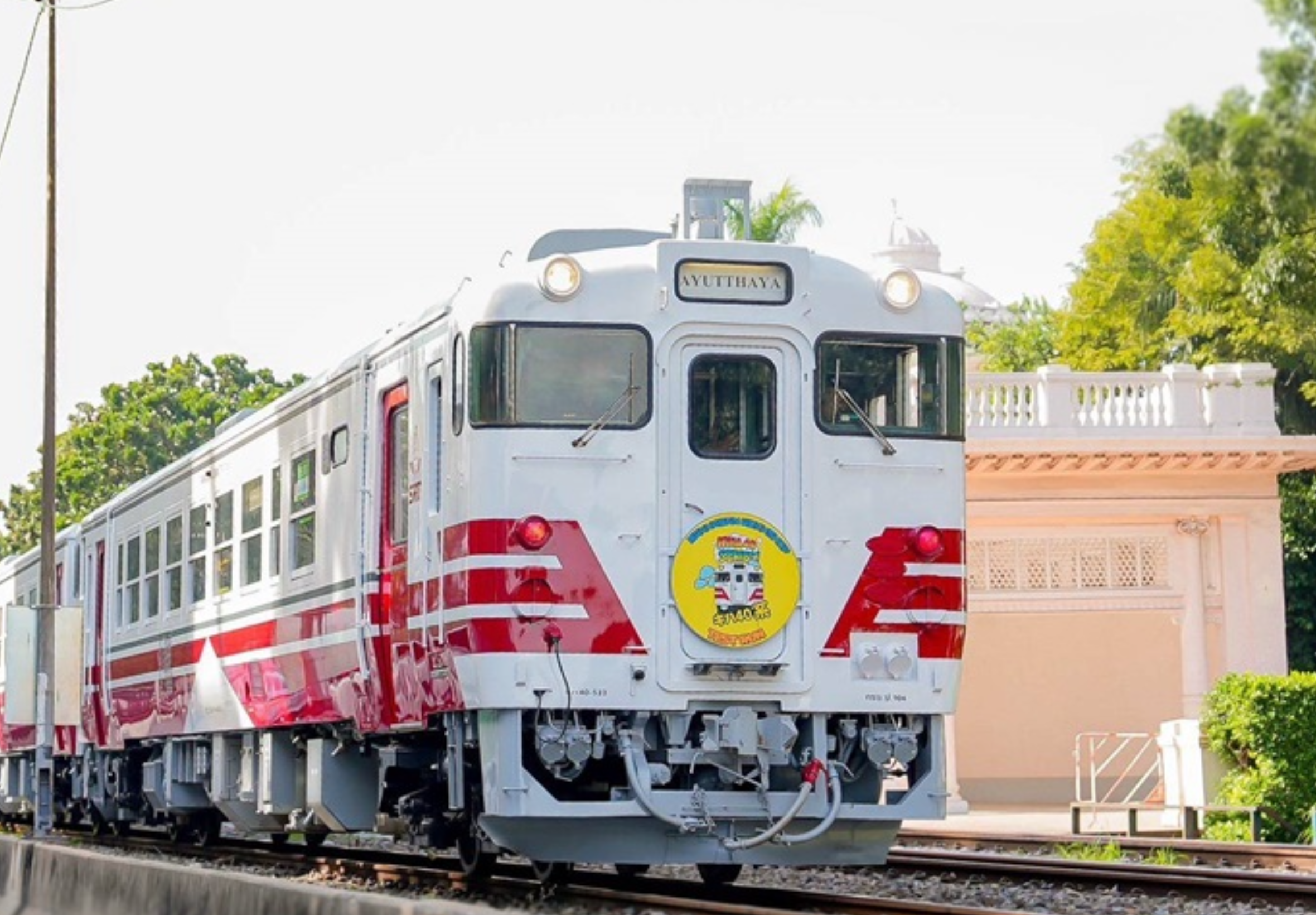

Thailand’s State Railway (SRT) will begin trial operations of refurbished KIHA 40 and KIHA 48 diesel railcars on the Don Mueang to Ayutthaya route from 20 April 2026, aiming to improve connectivity and reduce travel costs. The six-month feeder service will link suburban Red Line rail services and Don Mueang Airport, offering commuters an alternative amid rising energy prices. Services will run Monday to Friday with six return trips daily until 31 October 2026.
Get today's headlines by email 
The railcars, 20 in total, were provided by East Japan Railway Company (JR East) and have undergone extensive refurbishment in Thailand. Six units are now fully upgraded and tested, with improvements to engines, electrical systems, air conditioning and passenger interiors. Features include air conditioning, closed-system toilets and luggage storage to support both regular commuters and tourists.
The trial route will stop at eight stations and one halt: Don Mueang, Rangsit, Chiang Rak, Thammasat University halt, Chiang Rak Noi, Khlong Phutsa, Bang Pa-in, Ban Pho and Ayutthaya. The service is designed to enhance accessibility for key passenger groups, including students at Thammasat University Rangsit campus and travellers connecting to the Red Line at Rangsit station. It is also expected to support airport access and integrate with multiple public transport options in the area.
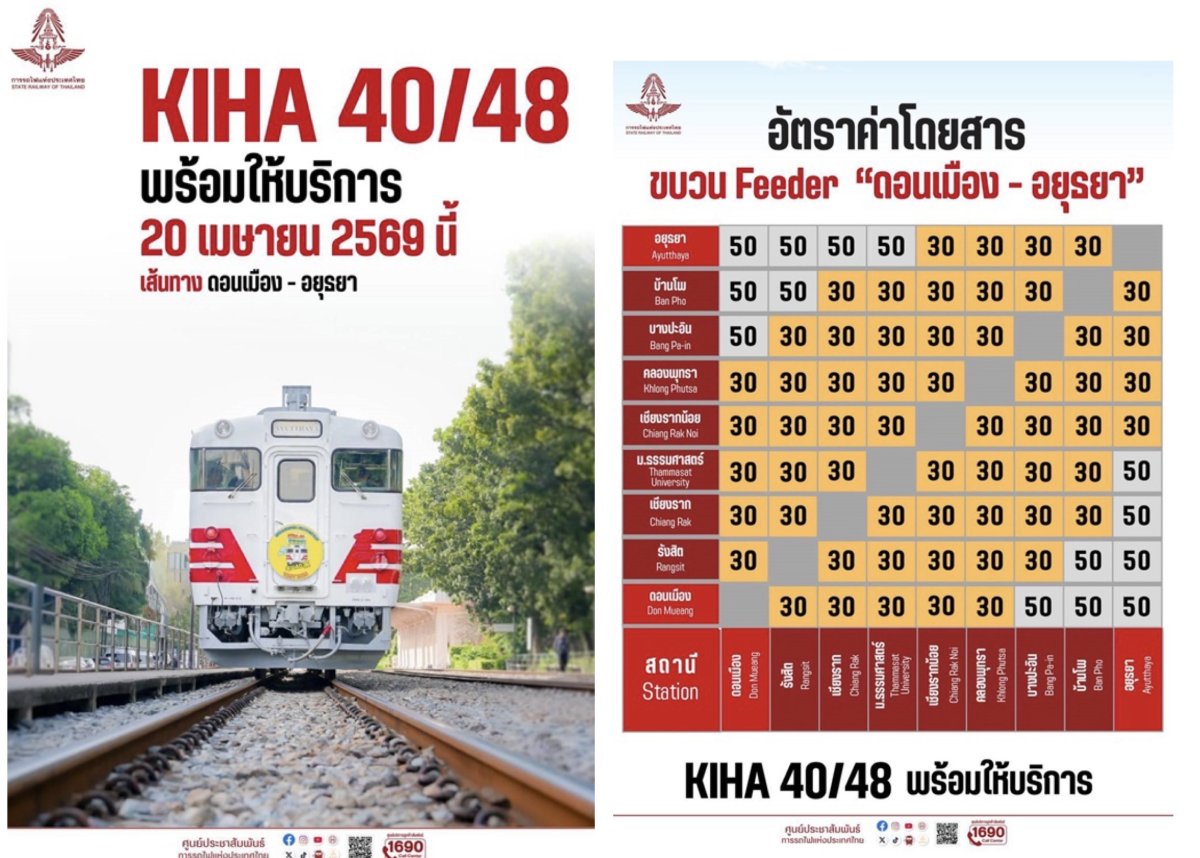
Picture courtesy of MGR
Acting SRT governor Anan Phonimdaeng said the initiative reflects ongoing efforts to expand rail networks and improve intermodal connectivity. He added that the service is expected to attract at least 1,000 passengers per day, helping to reduce reliance on private vehicles and ease road congestion. The project is also intended to lower travel costs for the public during a period of higher fuel prices.
Manager Online reported that SRT plans to monitor performance throughout the trial period and assess results before deciding on future operations or expansion. The agency views the introduction of the KIHA railcars as part of a broader strategy to strengthen rail transport as a primary national mobility network. Further adjustments and service improvements may follow based on passenger demand and operational outcomes.
Join the discussion? 
Already a member? 
 Adapted by ASEAN Now MGRonline 13 Apr 2026
Recommended Comments
Create an account or sign in to comment