



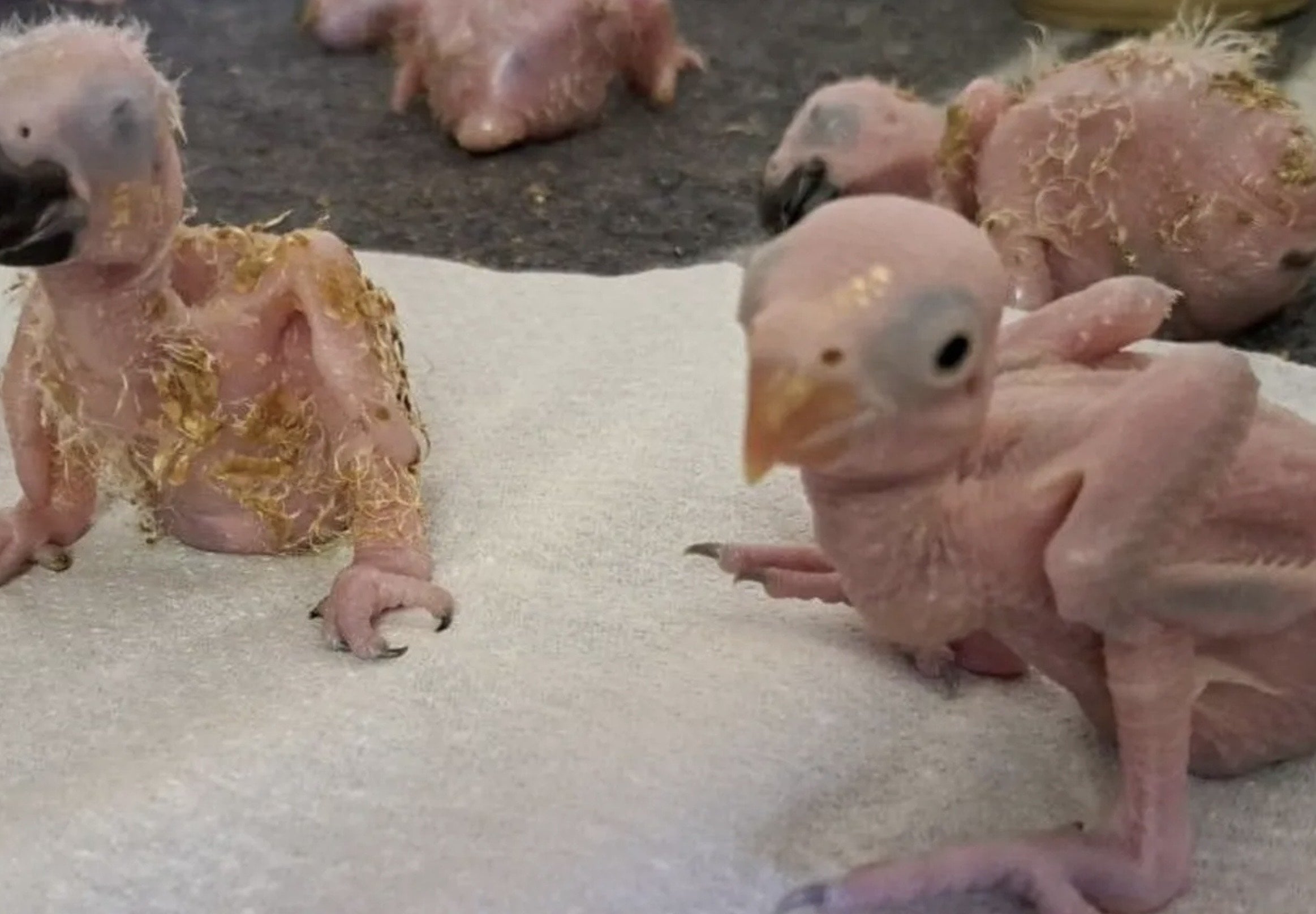

A 50-year-old Thai national has been arrested at Johannesburg's OR Tambo International Airport after allegedly trying to smuggle 50 suspected endangered parrot eggs into South Africa in hand luggage.
Several of the eggs seized last Thursday have since hatched, and staff at Pretoria's National Zoological Garden are providing intensive care to the chicks in an effort to maximise their chances of survival.
South Africa's Department of Forestry, Fisheries and the Environment (DFFE) said the eggs were being carried in a "homemade incubator bag". Initial investigations indicate they may belong to a parrot species protected under the Convention on International Trade in Endangered Species of Wild Fauna and Flora (Cites).
Chicks receive specialist care in Pretoria
The interception was carried out in a joint operation involving the DFFE, the Green Scorpions environmental enforcement unit and several police divisions.
Environment Minister David Maynier praised the agencies involved, saying that "illegal wildlife trafficking can only be challenged by a co-ordinated defence of our natural heritage".
He also thanked staff at the National Zoological Garden in South Africa's capital, Pretoria, who he said had been working tirelessly to incubate the seized eggs and provide specialist care for the hatchlings.
If convicted, the Thai suspect could face a fine of up to 10 million rand, up to 10 years in prison, or both.
Second Thai arrest at the same airport
The case follows the arrest in July of another Thai citizen, aged 23, at the same Johannesburg airport. That suspect was allegedly attempting to smuggle 418 parrot eggs.
The DFFE said the arrests demonstrated the increasing sophistication of cross-border wildlife trafficking networks and underlined the need for intelligence-led, co-ordinated enforcement.
Officials said parrot eggs are often moved in improvised incubators, with conditions that can put developing embryos and newly hatched birds at risk. Illegal collection and trafficking of such eggs poses a serious threat to wild bird populations and animal welfare, the department added.
Wildlife crime remains a significant problem in South Africa, one of the world's most biodiverse countries. Criminal networks frequently target animals including elephants and pangolins for the international black market.
Six years ago, South Africa adopted a strategy aimed at improving co-operation between government bodies, police, conservation authorities, customs officials, prosecutors and overseas partners to dismantle illicit wildlife networks.
Join the discussion? 

27 August 2026
Recommended Comments
Create an account or sign in to comment