



Skip to content
View in the app

A better way to browse. Learn more.

Thailand News and Discussion Forum | ASEANNOW

A full-screen app on your home screen with push notifications, badges and more.

To install this app on iOS and iPadOS
  1. Tap the Share icon in Safari
  2. Scroll the menu and tap Add to Home Screen.
  3. Tap Add in the top-right corner.
To install this app on Android
  1. Tap the 3-dot menu (⋮) in the top-right corner of the browser.
  2. Tap Add to Home screen or Install app.
  3. Confirm by tapping Install.

Thailand Immigration Flags Overstayers But Struggles to Act

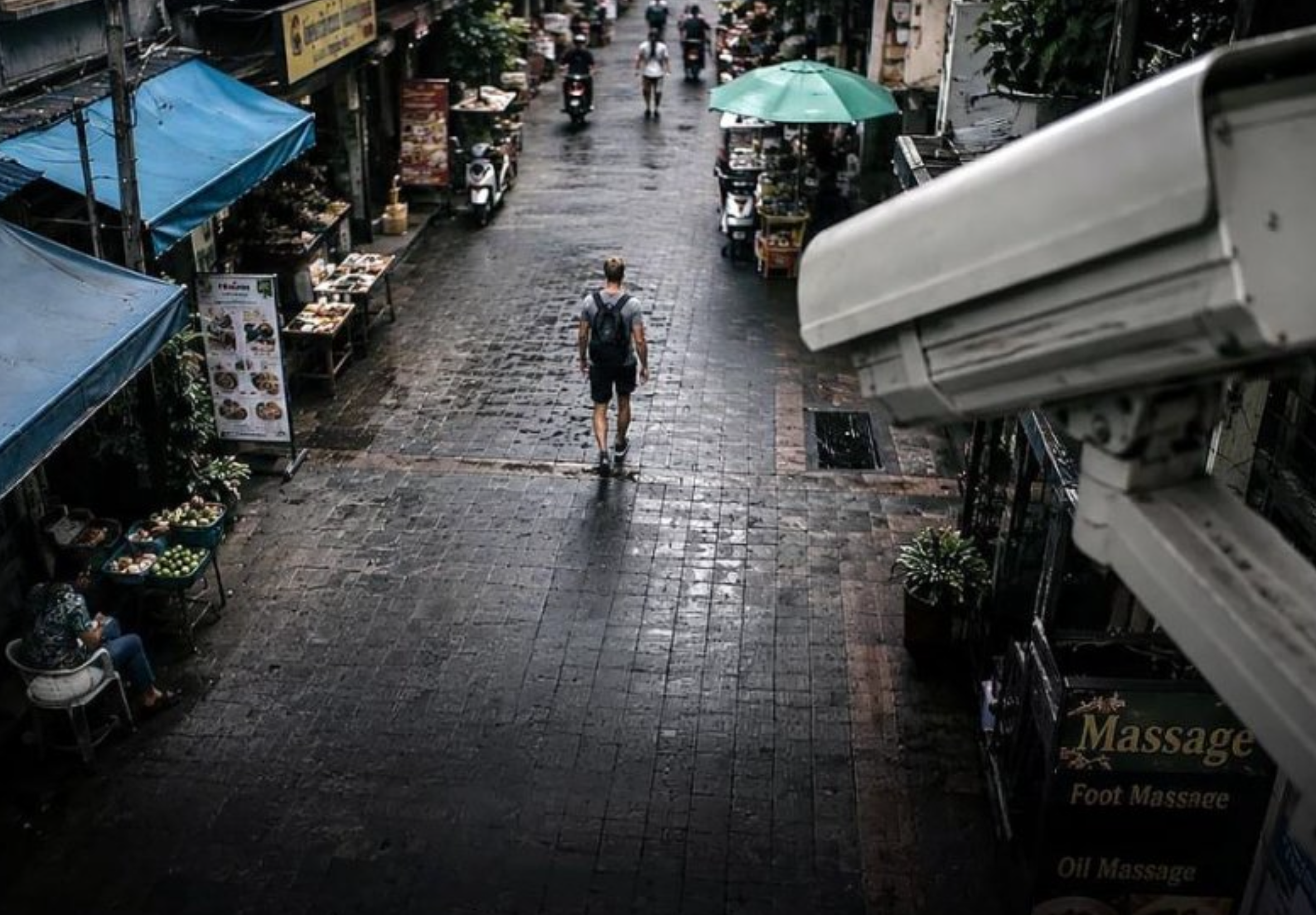
Thailand’s immigration system holds detailed records of foreign arrivals and overstayers but continues to struggle to consistently act on that information, meaning some long-term overstayers are only detected during raids, at departure points or after unrelated criminal investigations. The gap between digital records and enforcement has become a recurring issue, with known violations sometimes left unaddressed for months or years despite being visible in official systems.

Get today's headlines by email image.png

On paper, Thailand operates a highly data-driven immigration regime. The Immigration Bureau collects fingerprints and facial images on entry, and since May 2025 all arrivals must complete the Thailand Digital Arrival Card, replacing the paper TM6 form. Long-stay visitors must submit 90-day address reports, while landlords are required to notify authorities via the TM30 system when foreigners move in. From 2026, officials say a centralised database will automatically calculate permitted stays and flag overstayers when no departure record exists.

However, enforcement remains largely passive. System alerts do not automatically trigger immediate intervention, meaning overstayers are typically identified only when they attempt to leave the country, during police raids, after public tips, or when linked to other offences. As a result, individuals can remain formally flagged as overstayers without any direct enforcement action for extended periods.

In June 2026, police in Pattaya detained a 40-year-old British man accused of throwing acid at an apartment caretaker, seriously injuring her. Officers later found he had overstayed since February, with the immigration breach only identified during the criminal investigation. In a separate case in Udon Thani the same month, a foreign couple were arrested over the death of a two-week-old infant, with checks revealing both had overstayed since March. In both cases, overstaying was not the initial trigger for detection.

Structural limitations add to the problem. Officials have reported that the biometric system reached a ceiling of 50 million records, forcing manual processing of around 17 million arrivals in 2023 and 2024. A replacement system, budgeted at around 3 billion baht and expected to take 29 months, is under development. Until then, gaps in integration and processing continue to limit real-time tracking.

From January to May 2026, authorities denied entry to 29,490 foreigners, revoked 668 student visas for misuse, and arrested 14,161 overstayers and illegal workers. Immigration raids were carried out across 190 high-risk zones, with Chonburi province, including Pattaya, recording 147 operations. Detention centres in Bangkok were also holding more than 600 foreigners awaiting deportation, the highest figure in five years. In May 2026, the government scrapped the 60-day visa exemption for 93 countries as part of a wider security drive.

Enforcement has been described as cyclical, intensifying under some administrations and easing under others. A 2018 crackdown pledge by then immigration chief Surachate Hakparn was followed by reduced enforcement during and after the COVID-19 period from 2020 to 2023 as tourism recovery took priority. Arrivals fell by around 7% in 2025, the first annual decline outside the pandemic years, amid shifting rules and security concerns. Penalties include fines of 500 baht per day, capped at 20,000 baht, and re-entry bans ranging from one to ten years.

The Thaiger reported currently that reforms are focused on completing database upgrades, improving links with police and Interpol systems, and shifting towards continuous administrative enforcement rather than periodic crackdowns. Until then, Thailand will continue to hold detailed records of overstayers while relying on inconsistent triggers to act on them.

image.png

Picture courtesy of The Thaiger

Join the discussion? image.png

Already a member? image.png

image.png Adapted by ASEAN Now TheThaiger 28 June 2026

User Feedback

Recommended Comments

Yumthai Gold Member

Yumthai

Advanced Member
1 hour ago, JerryM said:

You say irrelevant. I'll say hibernating.

A couple of shiny days does not mean the decades long lasting winter is over.

JerryM Gold Member

JerryM

Advanced Member
57 minutes ago, Yumthai said:

A couple of shiny days does not mean the decades long lasting winter is over.

As long as the roots are not severed,

all is well and all will be well in

the garden. ...

In a garden, growth

has its season. There is spring and

summer, but there is also fall and

winter. And then spring and summer

again...

(Peter Sellers in Being There)

JerryM Gold Member

JerryM

Advanced Member
(edited)
On 6/29/2026 at 6:53 PM, JustinTyme said:

Too Easy: (Step One) - Make it a crime to use agents to facilitate annual visa extensions. This means that people need to show up to Immigration, in person, with all the correct information / bank records. Therefore, "the toilet flushes" annually, and it becomes impossible to overstay by more than one year. (You're welcome!) 555!

Using an agent to facilitate annual extension already is illegal for both the passport holder and the agent. But ministerial regulations like the in-person requirement and the "discretion" option are not going anywhere. But what others do to influence or induce that IMM officer's discretion is another matter.

And while the highly informed persons on here say that IMM officers can via "discretion" make or break ministerial regulations, they cannot do so with the Immigration Act which has a higher priority.

Edited by JerryM

greeneking Silver Member

greeneking

Advanced Member
On 6/29/2026 at 11:04 PM, technoronin said:

Just like the current banking headaches, they are trying to punish the law abiding foreigners instead of actively pursuing miscreants. More paperwork and more hassles while not breaking the laws.

My next visa renewal is in November. I understand Immigration want to see money in the account for 2 months.

But I am expecting my Bank to tell me they must freeze my account for 4 months if I want a letter to take to Immigration.

They did this already last year and know my account is legit and has been for more than 20 years.

Just another law abiding guy facing useless bureaucratic hurdles.

JerryM Gold Member

JerryM

Advanced Member
14 hours ago, JerryM said:

And while the highly informed persons on here say that IMM officers can via "discretion" make or break ministerial regulations, they cannot do so with the Immigration Act which has a higher priority.

This was posted last year on the VISA Forum -- the post was a reply to someone else, not me:

Everyone's situation is different. Agents will always be around. What you call corruption is simply a way of life here. Everyone gets a piece of the pie.

In implementing Section 128 of the Anti-Corruption Act, this is how Thai Immigration defines the "pie" -- Chonburi as an online published example:

merged.jpg

jacko45k Star Member

jacko45k

Advanced Member
On 6/29/2026 at 10:36 AM, impulse said:

AI can lock down their bank accounts.

I don't know about you, but I'd leave on my own accord if I couldn't tap the ATM occasionally. No cops required...

If they have them.... tourists cannot these days. I expect they could track the use of foreign cards though.

Create an account or sign in to comment

Account

Navigation

Search

Search

Configure browser push notifications

Chrome (Android)
  1. Tap the lock icon next to the address bar.
  2. Tap Permissions → Notifications.
  3. Adjust your preference.
Chrome (Desktop)
  1. Click the padlock icon in the address bar.
  2. Select Site settings.
  3. Find Notifications and adjust your preference.

