



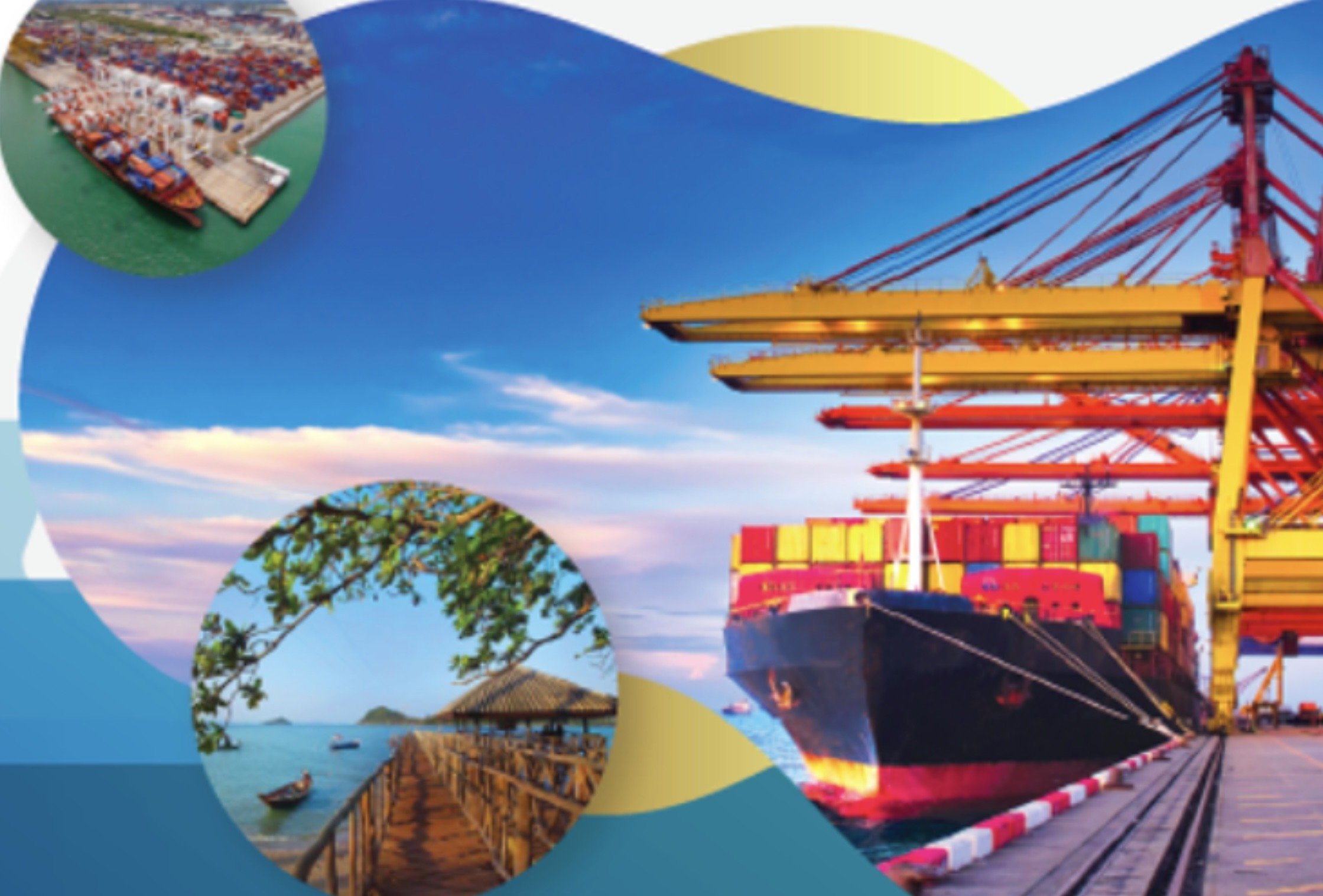

Thailand’s proposed “land bridge” linking the Andaman Sea and the Gulf of Thailand has regained attention amid tensions over shipping routes through the Strait of Hormuz and the Strait of Malacca. The project, which would create a 90-kilometre road and rail corridor between Ranong and Chumphon provinces, is being promoted as a way to strengthen Thailand’s geostrategic role and boost its weak economy.
Get today's headlines by email 
The renewed focus followed comments by Singaporean Defence Minister Chan Chun Sing during a visit to Thailand late last month, when he expressed interest in the project. His remarks came shortly after Indonesian Finance Minister Purbaya Yudhi Sadewa suggested vessels using the Malacca Strait could face toll charges similar to Iranian pressure tactics in the Persian Gulf.
Indonesia later clarified it had no intention of imposing transit fees and would continue following international maritime law under the United Nations Convention on the Law of the Sea. Singapore also did not formally follow up on Mr Chan’s remarks, but the discussion renewed debate over shipping security and alternative trade routes in Southeast Asia.
The land bridge is viewed as a scaled-down alternative to the long-discussed “Kra Canal” proposal, which dates back to the 17th century. Thai governments periodically considered building a canal through the southern peninsula, similar to the Suez or Panama canals, but concerns over national security and fears of separatism in the deep South prevented progress.
Former prime minister General Prayut Chan-o-cha formally shelved the canal proposal by 2018 and replaced it with the land bridge concept. The project later became associated with governments linked to the transport ministry, the construction sector and the Chidchob family.
The current coalition government led by the Bhumjaithai Party under Prime Minister Anutin Charnvirakul is promoting the project as part of efforts to revive Thailand’s economy, which is growing at below 2% annually. The government has also proposed a wider “southern economic corridor” focused on trade, investment, tourism and links to China’s rail network connecting Kunming in Yunnan with Vientiane in Laos and eventually Bangkok.
Experts Pavida Pananond of Thammasat Business School and Thitinan Pongsudhirak of Chulalongkorn University questioned whether the project could attract enough shipping demand to justify its estimated cost of more than US$30 billion. They argued that shipping operators prioritise cost, reliability and efficiency, while transferring cargo containers across nearly 100 kilometres of land would add extra handling and expense.
The experts also noted that the Strait of Malacca carries not only container cargo but also tankers, bulk carriers and gas carriers that cannot easily use a road and rail corridor. They said the project has drawn more interest from property developers and investors seeking Special Economic Zone incentives than from major shipping companies.
The Bangkokpost reported that civil society groups are expected to oppose the project over environmental and social concerns, while the opposition People’s Party is likely to scrutinise costs, feasibility and potential graft allegations. Completion is not expected before the mid-2030s due to feasibility studies, environmental assessments and bidding processes.
Join the discussion? 
Already a member? 
 Adapted by ASEAN Now Bangkokpost 17 May 2026
Recommended Comments
Create an account or sign in to comment