



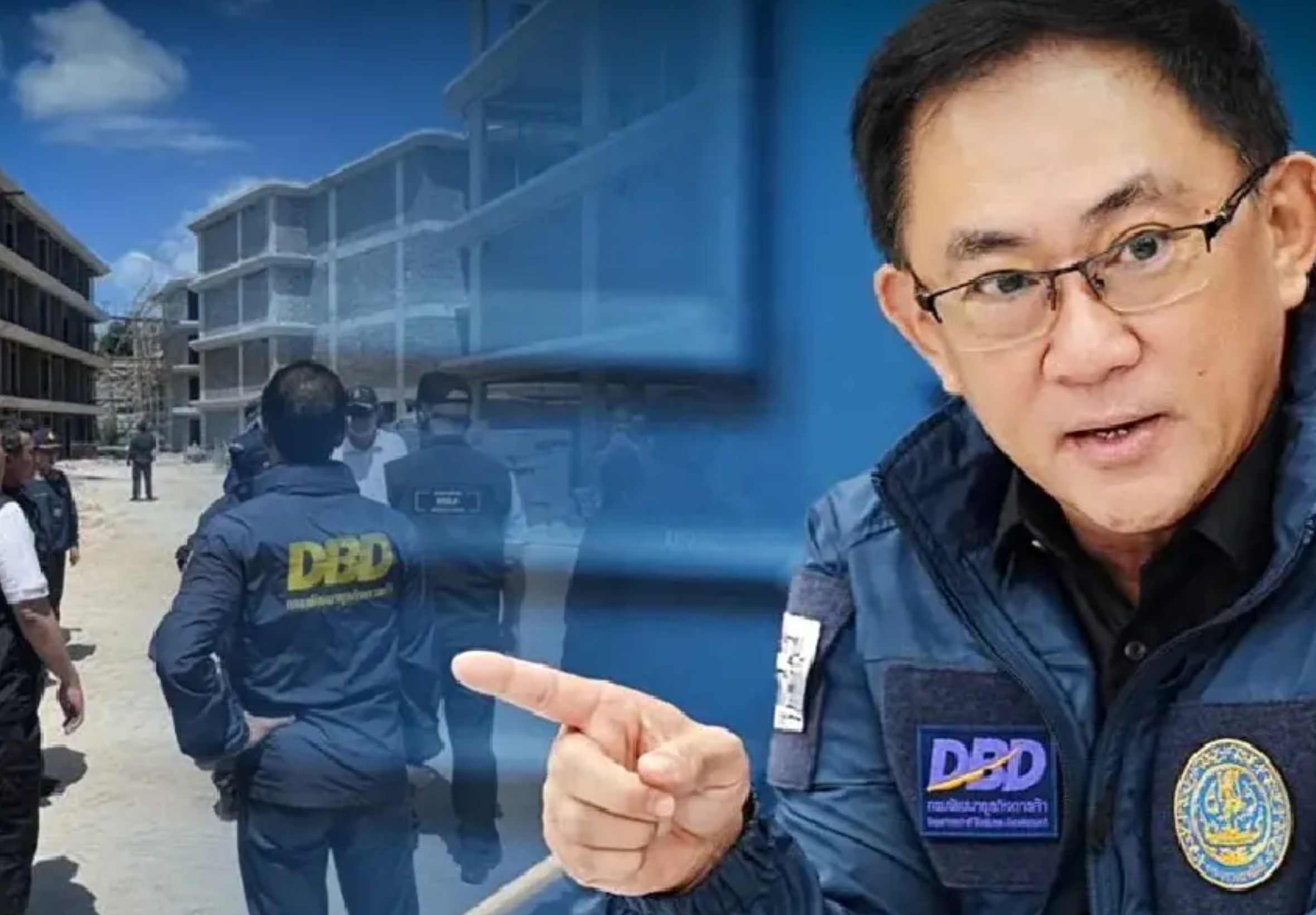

Thai authorities have searched five targets linked to property, hotel and wellness businesses as they broaden an investigation into suspected foreign nominee shareholding arrangements. The Department of Business Development is examining 34 companies over possible breaches of the Foreign Business Act 1999.
Get today's headlines by email 
Poonpong Naiyanapakorn, director-general of the Department of Business Development under the Ministry of Commerce, said the information had been passed to the Department of Special Investigation for further examination.
The initial searches involved Chinese- and Israeli-linked businesses. Officials are investigating the source of investment funds, who actually controlled the companies and whether Thai shareholders were genuine investors or held shares for foreign nationals.
For foreigners living, investing or operating businesses in Thailand, the case underlines the risks of using Thai nominee shareholders, particularly in restricted sectors and land-linked businesses. Authorities are also looking at advisers and others who may have helped arrange such structures.
Law firm linked to 150 companies
One principal target was law firm, identified by authorities on as P, which came under scrutiny after investigators widened an inquiry into a legal entity in Koh Samui district, Surat Thani.
The firm was found to be connected to more than 150 companies, while its address was registered as the head office for more than 103 legal entities. Authorities suspect it may have assisted or participated in shareholding arrangements intended to bypass restrictions on businesses reserved for, or restricted to, Thai nationals.
Officials said the scale of those links raised concerns that the firm may have formed part of a wider corporate-registration network.
Property, hotels and wellness businesses examined
Authorities searched a group, identified as J, suspected of using Thai nationals to hold shares for foreign investors in land acquisition and property operations. A Chinese company was identified as developer, while Chinese directors and executives appeared to set policy, manage operations and direct the business.
The address was also registered to at least five related companies, which investigators believe could form an interconnected network for project management, construction and asset holding.
Company identified as B was investigated after an examination of an Israeli-linked business on Koh Phangan. At least five affiliated companies were registered at the same address and appeared to share directors and shareholders.
One business operated accommodation while advertising rehabilitation, wellness yoga and treatment services, with reported assets above 100 million baht. District officials found no hotel operating licence, while the Surat Thani Provincial Public Health Office is checking whether it holds a licence under the Health Establishment Act 2016.
Company identified as N, which has run a Koh Samui hotel since 2013, is also being examined. It has a Thai director and Thai and Israeli shareholders; officials are checking funding sources and whether Thai shareholders could afford their stakes.
Company L, a residential developer and landlord with assets above 330 million baht, owns three land plots bought for more than 11 million baht. A related entity owns another eight plots valued above 30 million baht. The site appeared to operate as a resort catering exclusively to foreign tourists.
Ministry warns of prosecutions
Poonpong said the ministry would continue pursuing suspected nominee arrangements and coordinate with relevant agencies where breaches are found.
The investigation could extend to foreign investors, Thai shareholders and professional advisers. No final legal findings have yet been announced.
Join the discussion? 

15 July 2026
-
 1
1
Recommended Comments
Create an account or sign in to comment