



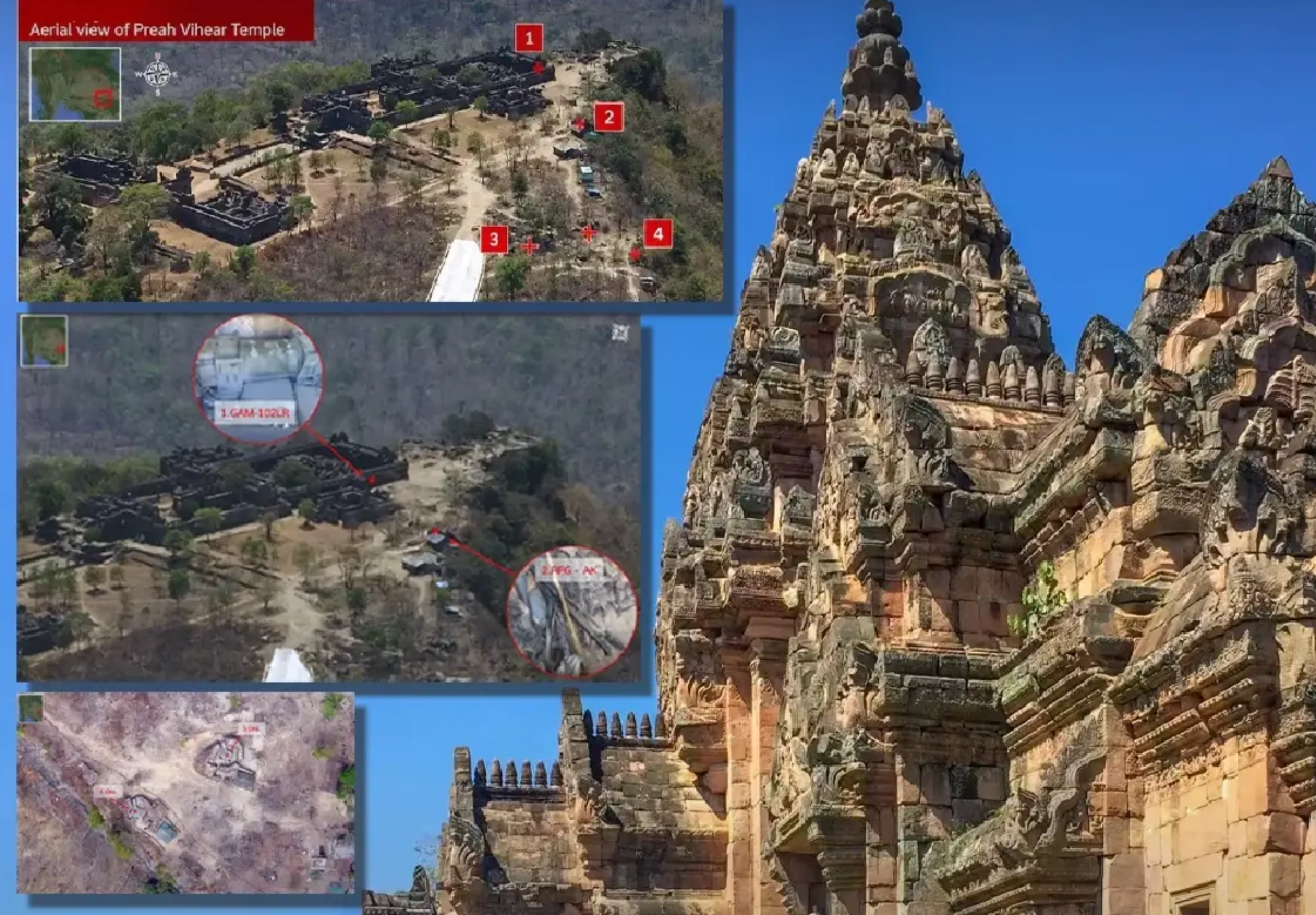

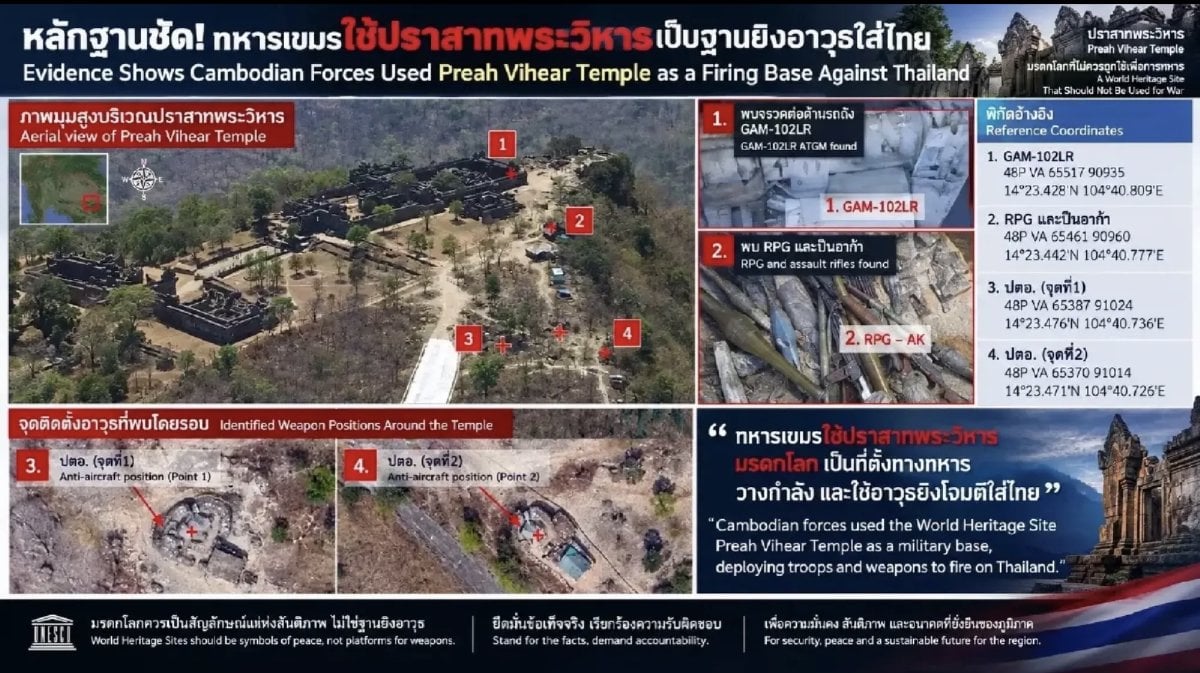
Thailand says it has evidence that Cambodian forces has used the area around the Preah Vihear temple, a UNESCO World Heritage site, for military purposes, and has called for the material to be independently assessed.
Air Chief Marshal Prapas Sornchaidee, director of the Joint Information Centre on the Thailand-Cambodia Situation, said on Saturday, September 12, that Thailand was prepared to provide coordinates, timings, aerial images and other supporting information for an impartial review.
Thai evidence includes weapons images
According to Prapas, the evidence presented by Thailand includes aerial photographs, coordinates and pictures of weapons allegedly found in the temple area. These include anti-tank rocket-propelled grenades, small arms and positions for anti-aircraft weapons.
Thailand says there is also information indicating military activity in the area, alongside allegations that weapons were fired from the World Heritage zone at Thai forces.
Prapas said the Thai side did not want findings based solely on either country's allegations. Instead, it wanted the evidence examined against international standards.
"World Heritage sites should not be used as military bases or as shields for military operations," he said. "If there are allegations that weapons were fired from such an area, the sequence of events should be examined - who fired, from where, when and at what target."
Protected status is not automatically lost
Prapas said the presence of troops or weapons at Preah Vihear would not automatically remove its legal protection or allow an attack on the location.
The 1954 Hague Convention for the Protection of Cultural Property in the Event of Armed Conflict requires parties to avoid using cultural property and its immediate surroundings in ways likely to expose it to damage during hostilities, except in narrowly defined cases of military necessity.
He said any response to weapons being fired from the area would have to be judged on the facts and applicable law at the time. Authorities would need to consider whether the site had become a military objective, whether other options were available and what precautions could limit damage to cultural heritage.
Those considerations are further set out in the 1999 Second Protocol to the Hague Convention, including rules on imperative military necessity and precautions during attacks.
Full timeline needed to assign blame
On responsibility for any damage to the temple, Prapas said investigators would need to examine the entire chain of events rather than focus only on images of destruction afterwards.
This would include establishing who brought troops and weapons into the area, who fired from which position and when, and what the responding side was targeting.
Picture courtesy of The Nation
Join the discussion? 

13 September 2026
Recommended Comments
Create an account or sign in to comment