



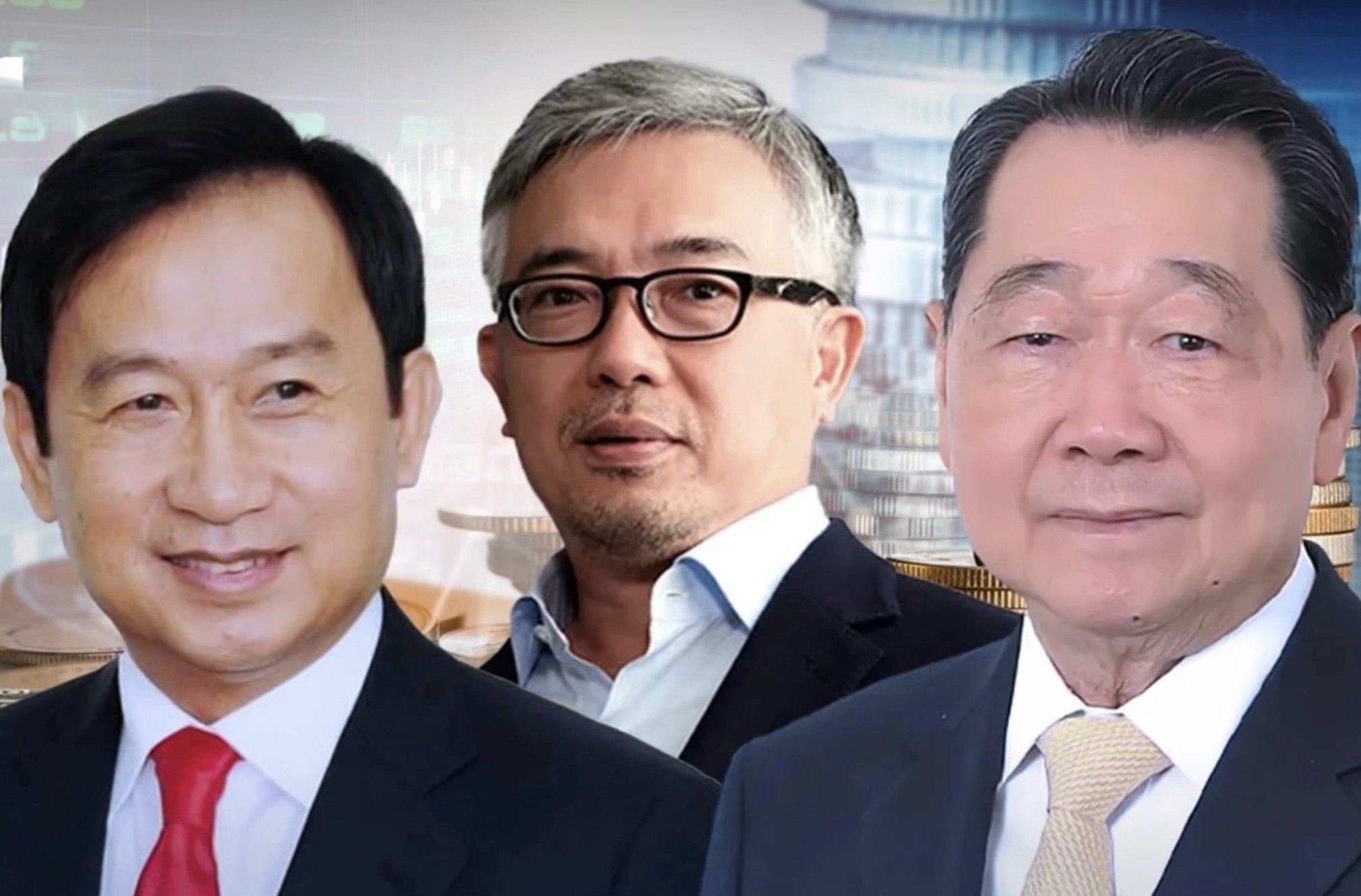

Three Thai families remain among Asia’s 20 wealthiest dynasties as combined fortunes across the region reached a record US$647 billion on April 14, 2026, according to the Bloomberg Billionaires Index. The Chearavanont, Yoovidhya and Chirathivat families together account for an estimated 14.4% of the total. The ranking highlights a major shift towards industries supporting artificial intelligence growth.
Get today's headlines by email 
The Chearavanont family ranked fourth with an estimated fortune of US$44.8 billion, maintaining its position as Thailand’s wealthiest dynasty despite a slight drop in ranking. Its CP Group, which began as a Bangkok seed shop in 1921, now spans agribusiness, retail, telecommunications and technology. The group is expanding through CP Axtra with a US$580 million plan to launch 110 high-tech retail outlets across Southeast Asia.
The Yoovidhya family rose to seventh place with wealth of US$32.9 billion, driven by the global success of Red Bull, co-founded by the late Chaleo Yoovidhya. Chalerm Yoovidhya recently transferred a US$1 billion stake into a Geneva-based trust as part of a long-term succession strategy. Analysts view this as a move to secure wealth stability for future generations.
The Chirathivat family ranked 20th with a net worth of US$15.7 billion. As owners of Central Group, the family has strengthened governance by appointing Suthiphand Chirathivat as chairman. Despite slipping slightly in rankings, the group continues to consolidate its position in Southeast Asia’s retail and hospitality sectors.
Across Asia, the combined wealth of the top 20 dynasties rose 16% year on year, marking the strongest increase since tracking began in 2019. The surge reflects a strategic pivot away from consumer-focused businesses towards core industrial inputs such as semiconductors, metals and energy systems. These sectors are seen as essential to supporting the rapid expansion of artificial intelligence technologies.
India’s Ambani family retained the top position, backed by a US$120 billion investment in a “sovereign AI” ecosystem. China’s Zhang family recorded the sharpest rise, with wealth increasing nearly 200% due to demand for aluminium used in cooling AI hardware. South Korea’s Lee and Chung families strengthened their involvement in AI and robotics.
Elsewhere, Hong Kong’s Kwok, Cheng and Lee families benefited from a rebound in the property market. Indonesia’s Hartono family and India’s Mistry and Jindal families slipped slightly amid leadership transitions and debt refinancing. Singapore’s Wee family and the Kwek/Quek dynasty both advanced following financial market stabilisation and governance improvements.
The Nation reported that the “backbone strategy” is expected to continue shaping investment decisions, with wealthy families seeking greater control over upstream industries critical to AI infrastructure. This shift is likely to influence regional competition and long-term economic positioning across Asia.
Join the discussion? 
Already a member? 
 Adapted by ASEAN Now Nation 15 Apr 2026
Recommended Comments
Create an account or sign in to comment