



Skip to content
View in the app

A better way to browse. Learn more.

Thailand News and Discussion Forum | ASEANNOW

A full-screen app on your home screen with push notifications, badges and more.

To install this app on iOS and iPadOS
  1. Tap the Share icon in Safari
  2. Scroll the menu and tap Add to Home Screen.
  3. Tap Add in the top-right corner.
To install this app on Android
  1. Tap the 3-dot menu (⋮) in the top-right corner of the browser.
  2. Tap Add to Home screen or Install app.
  3. Confirm by tapping Install.

Thailand Minimum Wage Growth Lags Living Costs Nationwide

Featured Replies

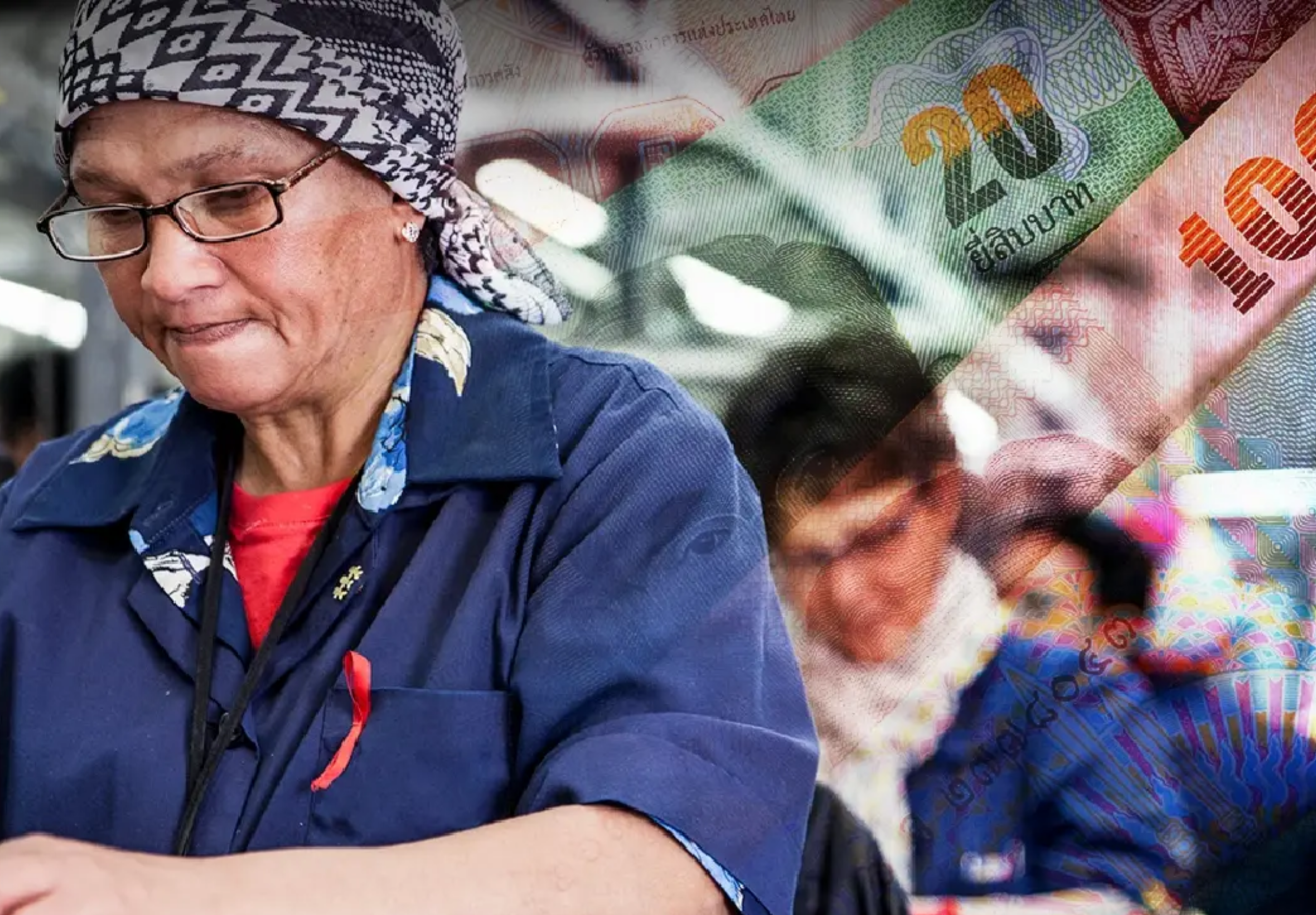
Thailand’s minimum wage has risen by an average of just 1.7% per year over the past decade, with limited improvement in real incomes as rising living costs offset gains, according to analysis by Bnomics, the research unit of Bangkok Bank. While nominal wages have increased, higher expenses for food, transport and housing have eroded purchasing power. As a result, many workers have seen little to no meaningful improvement in their quality of life.

Get today's headlines by email image.png

The nationwide minimum wage was set at 300 baht per day in 2012 and remained unchanged for several years, providing a baseline income guarantee. Over time, gradual increases in everyday costs reduced the real value of that wage level. Although adjustments have been made, they have largely allowed workers to keep pace with inflation rather than achieve financial progress.

The study highlights that minimum wages have effectively been “chasing” lost purchasing power, with increases often compensating for earlier cost rises. This has left many workers feeling no better off despite higher headline wages. Instead, they have largely maintained existing living standards without significant advancement.

The Covid-19 pandemic further exposed structural weaknesses in Thailand’s wage system, as living costs surged while wage growth lagged behind. Many households were forced to rely on borrowing, contributing to rising household debt and increased financial vulnerability. The findings point to a broader issue of slow income growth combined with limited opportunities for upward mobility.

Nominal income growth averaged 1.7% annually over the decade, while real income growth remained below 1%. This has created a widespread condition where workers are able to get by but struggle to move forward economically. Minimum wage policy has therefore functioned more as short-term support rather than a driver of long-term stability.

Bnomics suggests that future wage adjustments should better reflect actual living costs and consider regional differences to ensure improvements in purchasing power. It also emphasises the need to link wage policy with broader measures to boost productivity, expand economic opportunities and strengthen local economies. Without such integration, wage increases risk maintaining the status quo rather than delivering meaningful change.

The Nation reported that policymakers face the challenge of designing wage policies that go beyond nominal increases to address structural issues. The analysis underscores that raising wage figures alone will not resolve financial pressures faced by workers. A more comprehensive approach will be required to achieve sustainable economic progress.
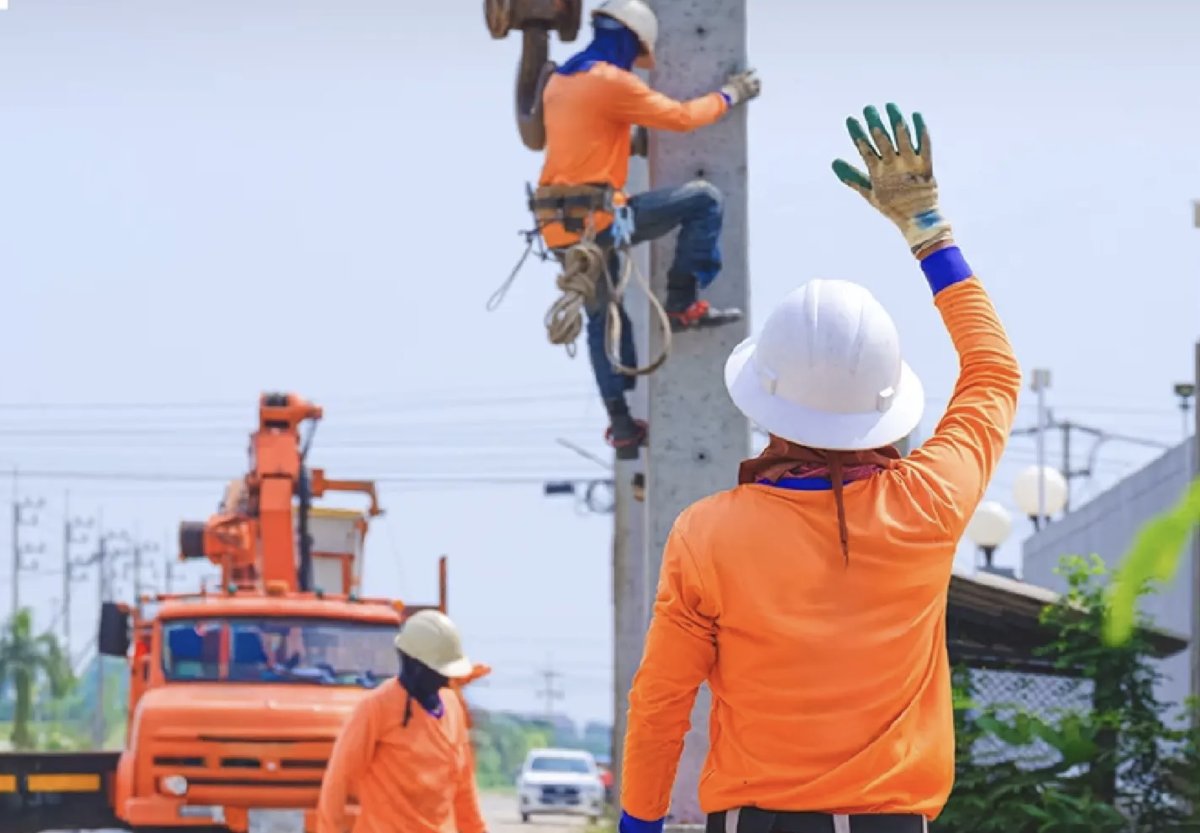
image.jpeg

Picture courtesy of The Nation

Join the discussion? image.png

Already a member? image.png

image.png Adapted by ASEAN Now Nation 2 May 2026


View full article

  • Popular Post

I don't understand that in this country that believes the teachings of the Buddha, the wages are almost not raised in 14 years, while the wealth of the few rich here have more than doubled...I don't believe that is in the teachings of the Buddha.

The indoctrination of the rich is going even further now the economy is declining and the tourist sector. Every time we read that people are encouraged to go on holiday, to spend more for the end of year gifts all to help the economy, but the wealthy keep their wallets closed....They will not accept less profit or no bonus or increase of their salaries. They forget, blinded by the money, that if the people can buy more their businesses will gain more and everybody will be happy. Instead they keep the economy down as they claim it will raise the prices of products, but if they only 1 year accepted no bonus and less profit they would see how things would go up even beyond their dreams... But 3 million less on their assets is not done.

If people can't buy anything these won't sell anything.. They are the cause of the declining economy by holding the money back from the ones who can help the economy grow

Edited by ikke1959

  • Popular Post
Just now, ikke1959 said:

I don't understand that in this country that believes the teachings of the Buddha, the wages are almost not raised in 14 years, while the wealth of the few rich here have more than doubled...I don't believe that is in the teachings of the Buddha.

Similar hypocrisy all over the world.

I recall an article a while ago stating the new minimum wage which was based on location. It is above 300 baht a day in most places.

From Google:

As of July 1, 2025, Thailand's daily minimum wage ranges from 337 to 400 baht, depending on the province and industry. The highest rate of 400 baht per day applies to major economic hubs like Bangkok, Phuket, and the Eastern Economic Corridor. A proposal for a uniform 400-baht rate nationwide was delayed due to lack of quorum.

Edited by emptypockets

n Thailand, the average 7-Eleven worker earns approximately 10,000 to 15,000 THB per month for full-time work, often involving 60-70 hour weeks. Hourly pay is generally low, ranging from 38-50 THB,

2 hours ago, Georgealbert said:

Thailand’s minimum wage has risen by an average of just 1.7% per year over the past decade, with limited improvement in real incomes as rising living costs offset gains

How about productivity though? I can't say that I've noticed any improvements there; Thais seem to be as inefficient at doing their jobs as 20 years ago. If not worse, because nowadays more of them are playing on their phones while "working".

Any talk of pay rises ,and the companies will have a fainting fit,

we cannot afford to pay them more ,while ordering a new Merc,

my daughter is a manager in a international hotel chain ,she never

gets paid any overtime ,she is begrudgingly offered hours off,

therebye no overtime is paid .

regards worgeordie

I see inflation everywhere I go, and though it's not as extreme as it is in America right now, it's still significant and I can't even imagine what it's like for a good percentage of Thai families to get by at this point.

Do the authorities care one iota? No. Are they doing anything to prevent this? No.

Though they're always making some excuses about the fuel subsidy fund, gas prices should have come down at least to a modest degree.

5 hours ago, Georgealbert said:

Thailand’s minimum wage has risen by an average of just 1.7% per year over the past decade, with limited improvement in real incomes as rising living costs offset gains, according to analysis by Bnomics, the research unit of Bangkok Bank. While nominal wages have increased, higher expenses for food, transport and housing have eroded purchasing power. As a result, many workers have seen little to no meaningful improvement in their quality of life.

Get today's headlines by email image.png

The nationwide minimum wage was set at 300 baht per day in 2012 and remained unchanged for several years, providing a baseline income guarantee. Over time, gradual increases in everyday costs reduced the real value of that wage level. Although adjustments have been made, they have largely allowed workers to keep pace with inflation rather than achieve financial progress.

The study highlights that minimum wages have effectively been “chasing” lost purchasing power, with increases often compensating for earlier cost rises. This has left many workers feeling no better off despite higher headline wages. Instead, they have largely maintained existing living standards without significant advancement.

The Covid-19 pandemic further exposed structural weaknesses in Thailand’s wage system, as living costs surged while wage growth lagged behind. Many households were forced to rely on borrowing, contributing to rising household debt and increased financial vulnerability. The findings point to a broader issue of slow income growth combined with limited opportunities for upward mobility.

Nominal income growth averaged 1.7% annually over the decade, while real income growth remained below 1%. This has created a widespread condition where workers are able to get by but struggle to move forward economically. Minimum wage policy has therefore functioned more as short-term support rather than a driver of long-term stability.

Bnomics suggests that future wage adjustments should better reflect actual living costs and consider regional differences to ensure improvements in purchasing power. It also emphasises the need to link wage policy with broader measures to boost productivity, expand economic opportunities and strengthen local economies. Without such integration, wage increases risk maintaining the status quo rather than delivering meaningful change.

The Nation reported that policymakers face the challenge of designing wage policies that go beyond nominal increases to address structural issues. The analysis underscores that raising wage figures alone will not resolve financial pressures faced by workers. A more comprehensive approach will be required to achieve sustainable economic progress.

image.jpeg

Picture courtesy of The Nation

Join the discussion? image.png

Already a member? image.png

image.png Adapted by ASEAN Now Nation 2 May 2026


View full article

Try tell that to the hookers down soi 6 see how far you get.

9 hours ago, Reddavy said:

Try tell that to the hookers down soi 6 see how far you get.

Their prices likely represent at least 20% annualized inflation.

It's worse than that in both the formal and informal economy - and the article doesn't address this.

It's quite common - in both formal/informal workplaces - to offer a job to someone with a 3 month probabtion - day to day salary only during that period. Only after the 3 month probabtion are they then eligible for health insurance, sick days, holiday pay, and any other benefits. But it's common for many workers to 'not pass' the probabtion on some weak excuse by their employer - and they are let go. The employer simply hires someone else and then does the same thing again. In the informal economy - smaller shops, but some medium-sized businesses too, have other shady/illegal practices - if you are sick one day and can't go to work, some employers will dock that day's pay, but then also reduce salary even more 'for the money the shop didn't make by the worker if they'd worked that day'. So salary docked by 400 baht or whatever daily pay rate, plus loss of say 1,000 baht lost in the shop's normal earnings by that employee. A real nasty scam.

Edited by ronnie50

18 hours ago, spidermike007 said:

I see inflation everywhere I go, and though it's not as extreme as it is in America right now, it's still significant and I can't even imagine what it's like for a good percentage of Thai families to get by at this point.

Do the authorities care one iota? No. Are they doing anything to prevent this? No.

Though they're always making some excuses about the fuel subsidy fund, gas prices should have come down at least to a modest degree.

You are totally right.. we go to a noodlesoup vendor and the prices went up with 5thb after Songkran. From 40 to 45 thb. That is an increase of more than 11% and this is not the only one. I don't care, it is just an example.

How is it possible that the inflation is so low? So they only calculate the prices of products that hardly went up?

Edited by ikke1959

Just now, ikke1959 said:

You are totally right.. we go to a noodlesoup vendor and the prices went up with 5thb after Songkran. From 40 to 45 thb. That is an increase of more than 11% and this is not the only one. I don't care, it is just an example.

How is it possible that the inflation is so low? So they only calculate the prices of products that hardly went up?

No they calculate the price of magnesium ore and corrugated steel and an infinite number of other commodities that have very minor effects on our lives.

And in addition to that the government doctors the numbers as much as possible to keep them very low.

The 70% of Thai people living in poverty still keep on returning the hi so party mp's when it comes to election time. This needs to change for Thailand to become a democracy.

4 hours ago, spidermike007 said:

Their prices likely represent at least 20% annualized inflation.

Sounds about the same as their waistlines.

On 5/2/2026 at 10:10 PM, redwood1 said:

n Thailand, the average 7-Eleven worker earns approximately 10,000 to 15,000 THB per month for full-time work, often involving 60-70 hour weeks. Hourly pay is generally low, ranging from 38-50 THB,

I see the workers there and they seemed to be married to their work. Never say hi or anything. But it is true, they live to work there. I guess their life must not be very fun.

Create an account or sign in to comment

Recently Browsing 0

  • No registered users viewing this page.

Account

Navigation

Search

Search

Configure browser push notifications

Chrome (Android)
  1. Tap the lock icon next to the address bar.
  2. Tap Permissions → Notifications.
  3. Adjust your preference.
Chrome (Desktop)
  1. Click the padlock icon in the address bar.
  2. Select Site settings.
  3. Find Notifications and adjust your preference.

