



Leaderboard
There are no members to show
Popular Content
Showing content with the highest reputation since 08/26/2026 in Article
-

 Vietnamese media outlets have claimed Thai women are hired as "rental wives" by retired Western men, particularly in tourist centres including Pattaya. However, the reports provide no official figures, named providers or evidence that such arrangements are a recognised or widespread practice in Thailand. The claims appeared in Vietnamese newspaper Tien Phong, which cited Chinese outlets Sina and Sohu. According to the reports, foreign visitors may pay Thai women to act as guides, partners and, in many cases, sexual companions. The term could cover very different situations, ranging from paid companionship and informal relationships to commercial sex work, with differing legal and personal consequences. Reports link claims to Vietnam War period Tien Phong traced the alleged practice to the Vietnam War, when US military personnel were stationed at air bases in Thailand. It said local intermediaries introduced Thai women to American servicemen for fees, while entertainment venues near the bases developed from serving drinks into arranging female companionship. The newspaper claimed comparable arrangements later became associated with Pattaya and other destinations as more Western men retired in Thailand. It portrayed the women involved as mainly coming from lower-income families seeking better earnings. It said such arrangements could run from a few days to one or two years. Foreign partners were generally said to pay for accommodation, food, entertainment and other costs, while some couples were eventually reported to have married legally. Prices and scale unverified Tien Phong cited prices of around 13,000 baht a day for arrangements of fewer than seven days, falling to 9,000 baht a day for longer bookings. It put the cost of a month-long arrangement at roughly 50,000 baht. But it did not identify the Thai media outlets said to have supplied those figures, name any service providers or produce official data. Nor did it cite a national survey or government statistics showing the scale of the alleged arrangements. The reports warned that women could face unintended pregnancies, abandonment and financial insecurity. They also said foreign men could lose money or property through fraudulent relationships. Thai abortion law misstated Tien Phong also incorrectly said abortion is illegal in Thailand, claiming many women are left with unwanted children. Termination is permitted without conditions during the first 12 weeks, and between 12 and 20 weeks after counselling with an authorised medical professional. Other grounds include health risks, severe foetal abnormalities and sexual assault. Join the discussion? 29 August 202622 points
 -
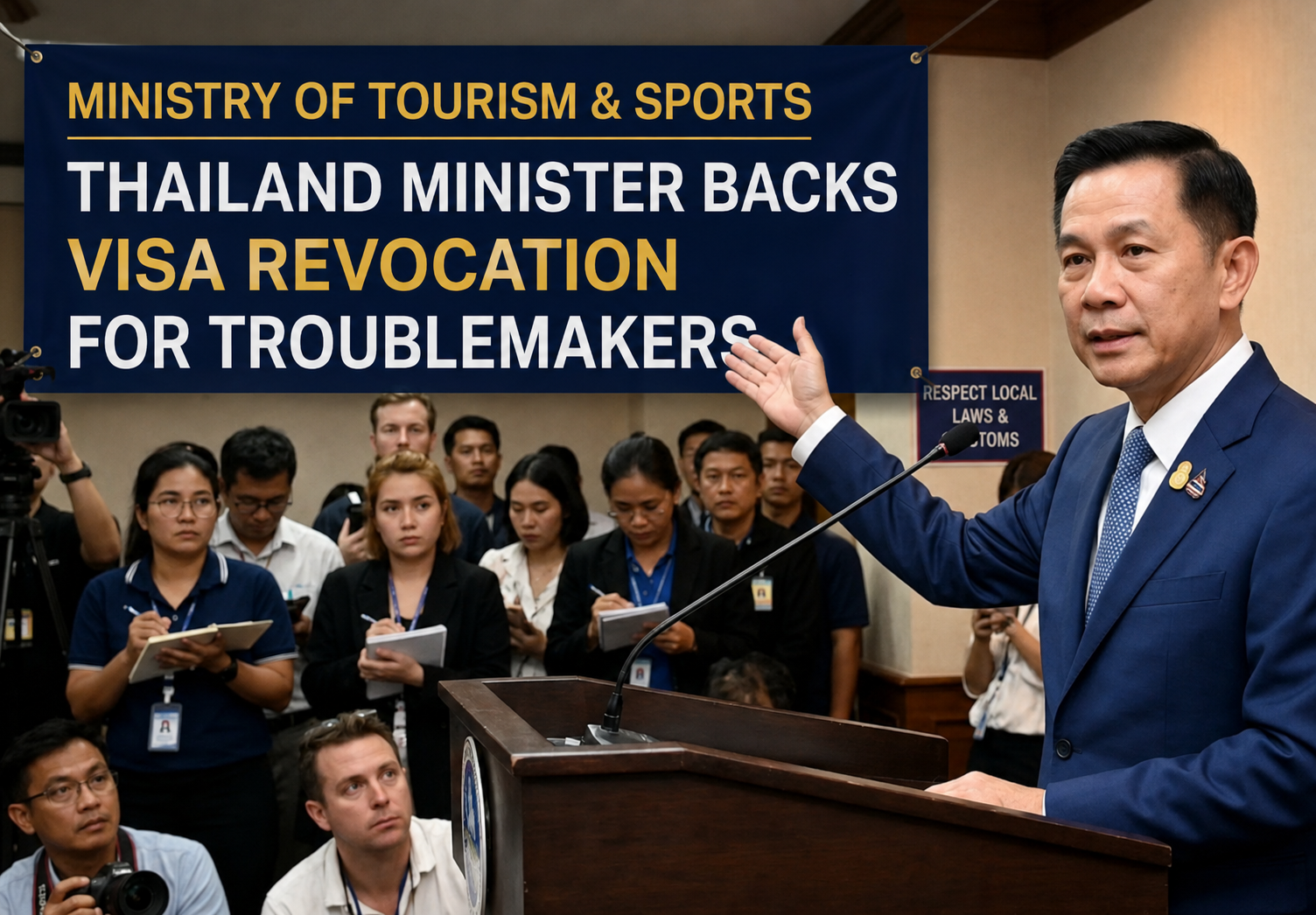 An Israeli national accused of offering a bounty against the owner of an open zoo on Koh Samui has had their permission to stay in Thailand revoked, according to Tourism and Sports Minister Surasak Phancharoenworakul. Speaking before the Cabinet meeting at Government House on 25 August 2026, Mr Surasak said he had received a report on the case, from authorities in Surat Thani province. The visitor involved had had their visa withdrawn and would not be allowed to remain in the country. He described the move as firm action intended to stop the matter escalating into further problems. Thailand remains open, but expects respect for laws The Tourism and Sports Minister also stated that he supported visa revocations where there are clear cases of foreigners breaking the law, ignoring social norms or traditional ways of life, or provoking conflict. Mr Sorawong said there had been a number of recent disputes in Samui and Phuket had reportedly involved Israelis and local people, but stressed that they concerned the behaviour of particular individuals rather than foreigners generally. "We definitely welcome tourists of all nationalities, but on the principle that they must respect and comply with our culture and laws. The recent conflicts in those two provinces could be regarded as involving individuals, which need to be properly addressed on a case-by-case basis," he said. He said explicit breaches should result in visa cancellation to help avoid further unrest in the affected areas. For expats and tourists, the practical message is that ordinary disputes can take more serious consequences if they involve threats, intimidation, public disorder or conduct judged to offend Thai laws and local customs. He also said Thailand would not accept foreigners promoting national ideologies that could create wider disputes. He described Thailand as a non-conflict country and said visitors should not use it as a platform for such activity. Minister also addresses southern security concerns Separately, he said attacks at several locations in the four southern border provinces during the week were not expected to affect Malaysian arrivals for Malaysia's National Day holiday on 31 August. Although the government had attempted to prevent violence, simultaneous attacks at a wide range of targets had made it difficult to protect every location fully, he said. Malaysian visitors were familiar with similar incidents and would understand that most tourist destinations had not been targeted. Picture courtesy of Komchadluek Related story Samui-visa-action-sought-over-Palestinian-flag-row Join the discussion? 26 August 202622 points
 -
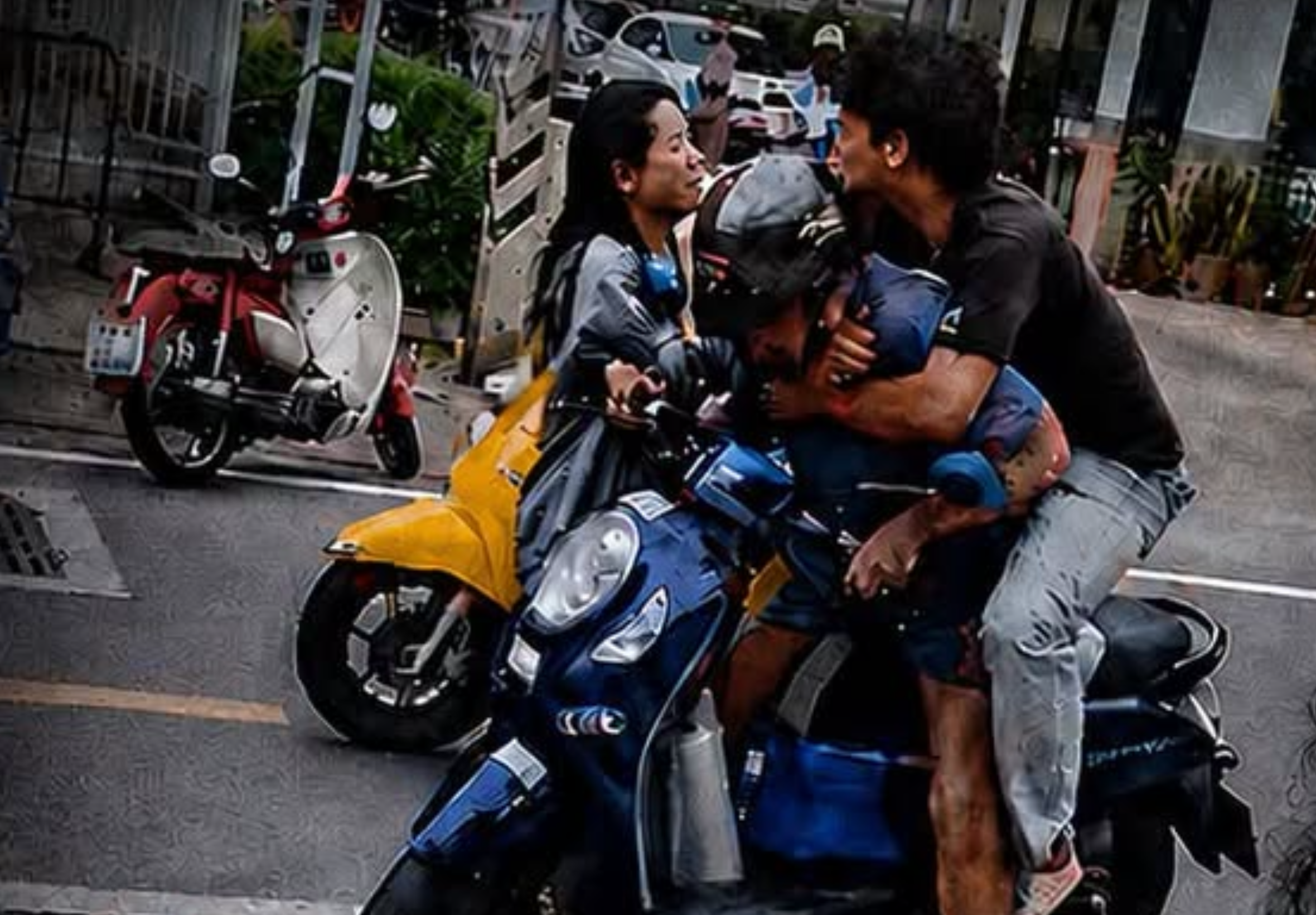 A Pattaya cannabis shop employee has been questioned over an assault after a video showed him punching a foreign man in the street. The worker says he acted in anger after discovering that the customer had allegedly used fake bank-transfer slips to obtain cannabis worth 29,200 baht. The confrontation happened at about 5.30pm on 30 August in Soi Bongkot, South Pattaya, Chonburi, according to Watcharapong, known as Ice, a 31-year-old employee at a cannabis shop in Pattaya. More than six minutes of video circulated online, showing Watcharapong restraining the foreign man on the road and repeatedly striking him as passers-by watched. A Thai woman who said she knew the foreigner stopped her car and attempted to intervene. Fake payment slips alleged Watcharapong told reporters on the evening of 31 August that the foreign customer had placed two orders through the shop's website, with the pair communicating on WhatsApp. He said the shop did not initially realise it had been deceived. During the second order, staff found that no money had arrived in the account and reviewed the payment slips from both transactions. Picture courtesy of แจ็ค โพธิ์แดง According to Watcharapong, the slips had altered times and sums but carried the same transaction reference number. He put the total loss at 29,200 baht, adding that the customer replied mockingly when the shop sought payment. The shop then posted appeals to locate the man for more than two to three weeks, he said, before a member of the public called with information on his whereabouts. Watcharapong said he went to the location and tried to hold the man, who appeared to be preparing to run away. Fearing he might flee on a motorcycle, he said he parked his vehicle, gave chase and struck him, as seen in the footage. Settlement payments under way Both sides later went to a police station to negotiate. The foreign man agreed to repay the loss in instalments, Watcharapong said. He said a first payment of 10,000 baht had been made on 31 August, while another 10,000 baht due today was still awaiting transfer. Watcharapong has also been summoned by police for questioning, with a report made in connection with an assault allegation. Worker apologises for violence Watcharapong apologised to the public, saying he had let anger take over and used excessive violence. He said he had not expected the recording to become viral. He also rejected online claims linking him to grey-area businesses or other drugs, saying the shop sold only cannabis and that he did not use narcotics. He said he was willing to undergo a hospital drug test. AQPWHl_6Aurw1Mbg4-3eVshJ1rGF38A63rtULc8W4v80IY5kTj5hr8YOm6x2vw0T12BwcZf7CdV54Gg8NG9tDKsc-Q0BgRzSjc5M4SWRzg.mp4 Join the discussion? 1 September 20268 points
 -
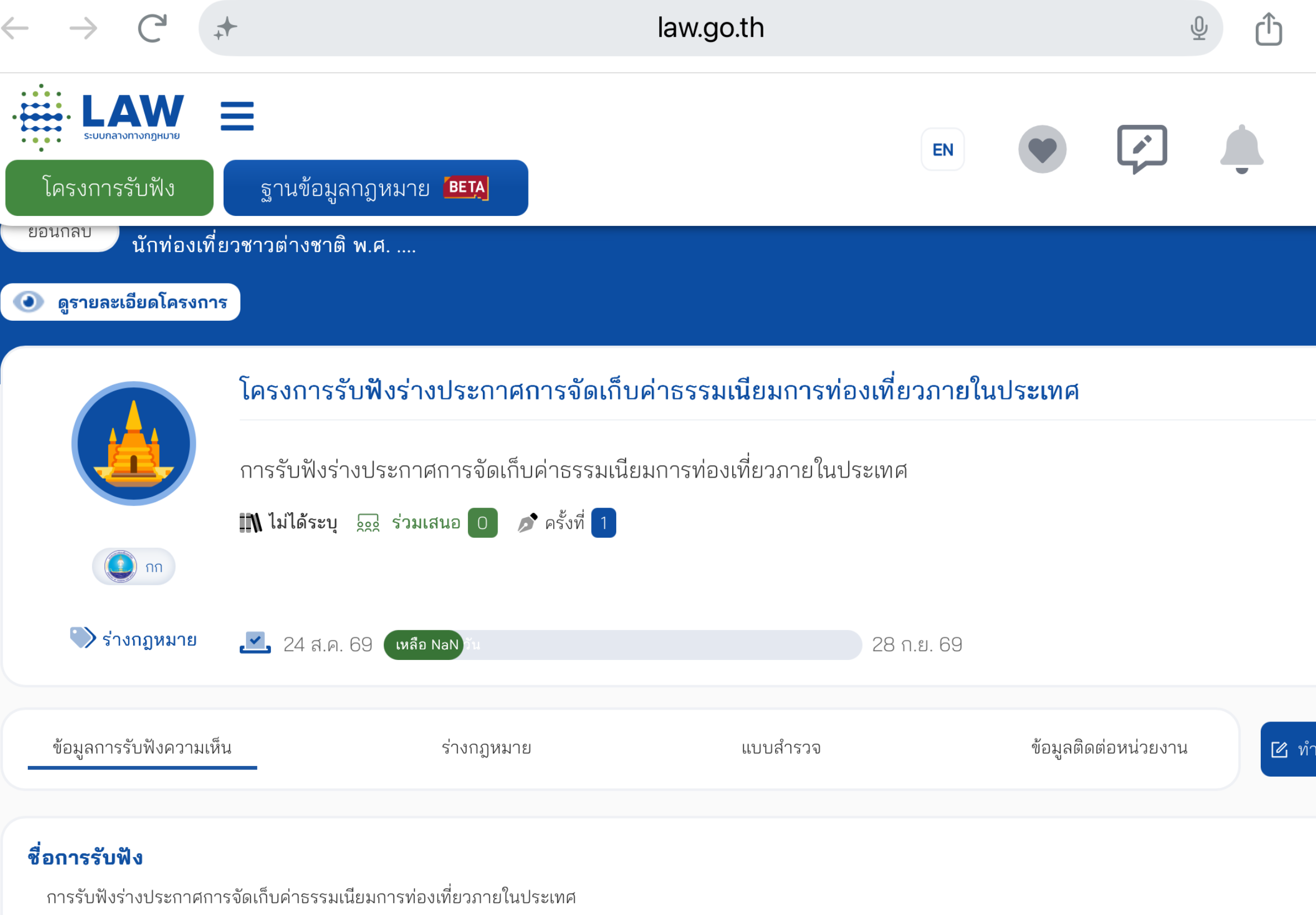 Thailand has opened an online public hearing on its proposed 450-baht tourism fee for foreign arrivals, but the 27-question survey is available only in Thai despite seeking views from overseas visitors. The consultation, hosted on the Council of State's Digital Government Development Agency law website, (ข้อมูลการรับฟัง) remains open until 28 September. Respondents can submit answers as representatives of state agencies, private entities or members of the public. Translation hurdle for foreign respondents The webpage has a language option in its top-right corner, but it cannot be clicked. A Thai-language message instructs users to right-click and ask their browser to translate the page instead. That may be manageable for users with browser translation tools enabled, but it requires visitors to identify the feature and ensure the translation is working before navigating what the Bangkok Post described as a dense and unintuitive form. The central opening question asks whether respondents agree with collecting a fee from foreign tourists to support tourism management and development, including insurance provision while they travel in Thailand. Other questions ask respondents to agree or disagree with legal definitions, including "foreign tourist", land and maritime checkpoints, and operators. The proposed definition of a foreign tourist is a non-Thai temporarily entering Thailand for travel without generating employment or compensation. Questions on exemptions and payment Question 10 allows multiple answers on whether the fee should apply to groups including diplomatic passport holders and work permit holders, although these groups would not ordinarily be classed as tourists. The questionnaire also asks whether the chairman of the National Tourism Policy Committee should act as the authority under the proposed announcement. It does not offer a "don't know" or "no opinion" choice alongside agree and disagree. Two questions have more immediate practical relevance for travellers. Question 14 asks whether visitors should receive a 30-day grace period when re-entering Thailand after paying on their first arrival, while question 17 asks which payment methods respondents prefer. No implementation date for the proposed 450-baht levy was given in the consultation details. Potentially billions for tourism fund The Ministry of Tourism and Sports has said Thailand aims to restore tourism revenue to its pre-pandemic level of 3 trillion baht within four years. Reaching that target would require tourist numbers approaching pre-2020 levels of around 40 million annually. Thailand recorded 33 million visitors last year. At 450 baht per arrival, that number would have raised 14.8 billion baht for the tourism fund had the levy been in force. Weerasak Kowsurat, adviser to Deputy Prime Minister Suphajee Suthumpun and chairman of a visitor economy development working group, said: "We need to listen to as many perspectives as possible in order to implement the foreign tourism fee efficiently." Related story Thailand-seeks-foreign-views-on-450-baht-tourism-fee Join the discussion? 30 August 20268 points
 -
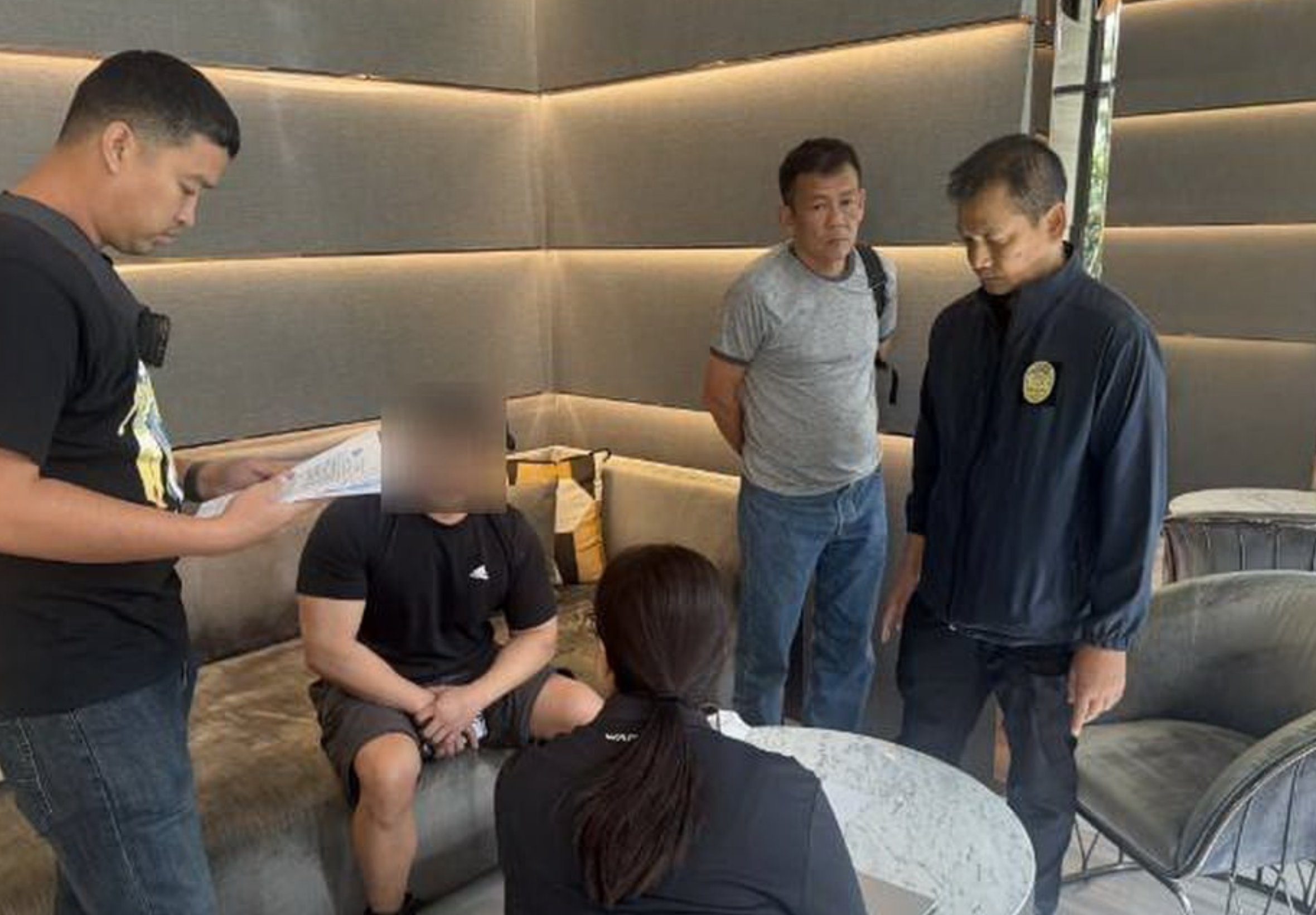 Thai Immigration officers have detained an American man identified by authorities, only as Mr Peter at a condominium in Bangkok's Asok area after cancelling his permission to remain in Thailand. The US authorities had asked Thailand to locate the man, who is wanted for allegedly breaching pre-trial release conditions in a firearms case. He is expected to be deported to face legal proceedings in the United States. US request led to Bangkok search The operation was carried out by Immigration Bureau Investigation Division 1 officers working with the US Embassy's overseas criminal investigations unit. According to Immigration police, US authorities said Peter had allegedly violated conditions imposed while he was awaiting trial in a weapons-related case. They also said he had previously been arrested in several criminal cases, including possession of and assault with a firearm, credit-card fraud, assaulting a spouse, unlawful detention, and intimidation linked to serious criminal activity. Thai officers found that he was still living in the country and that his existing permission to stay had not yet expired. However, Immigration police said he was considered a threat to security and submitted the case to the commander of the Immigration Bureau Investigation Division for his permission to remain in Thailand to be revoked under the law. Detained at Sukhumvit 21 condominium Investigators later traced Peter to the Asok area, in Soi Sukhumvit 21, Khlong Tan Nuea, Watthana district, Bangkok. Officers went to the condominium, presented him with the notification cancelling his stay permission and took him into custody. He was transferred to Immigration Bureau Investigation Division 3 for detention while officials coordinate his removal from Thailand. The authorities said they would work with the relevant agencies to send him back to the United States for the American justice process. The bureau said it would continue its policy of linking international data to block dangerous people from using Thailand as a hiding place. Picture courtesy of Naewna Join the discussion? 26 August 20268 points
 -
 Thailand is reportedly set to reduce visa-free stays from 60 days to 30 days for nationals of 60 countries during September 2026, following government approval of revised entry rules. The official documentation for the changes have now been submitted to the Royal Gazette (draft document) for publication. They will take effect 15 days after publication. The 60-day visa-free facility, introduced in 2024 for nationals of 93 countries to encourage longer tourist stays, will therefore be cut in half. Eligibility will also fall from 93 nationalities to 60. Who remains visa-exempt Nationals of the following countries will be eligible for a 30-day visa-free stay: Australia Austria Bahrain Belgium Bulgaria Bhutan Brunei Darussalam Canada Croatia Cyprus Czech Republic Denmark Estonia Fiji Finland France Georgia Germany Greece Hungary Iceland Indonesia India Ireland Israel Italy Japan Jordan Kuwait Kyrgyzstan Latvia Liechtenstein Lithuania Luxembourg Malta Malaysia Maldives Netherlands New Zealand Norway Oman Philippines Poland Portugal Qatar Romania Saudi Arabia Singapore Slovakia Slovenia South Africa Spain Sweden Switzerland Taiwan Türkiye Ukraine United Arab Emirates United Kingdom United States of America Mauritius and Seychelles nationals will be eligible for visa-free entry for 15 days. Visa on arrival will be available only to nationals of Azerbaijan, Belarus and Serbia. Existing bilateral visa-exemption treaties are not being repealed. Land crossings and visa runs Thailand will also maintain the limit of visa-exempt entries over land borders to two. The restriction does not apply to nationals of Malaysia, Brunei, Indonesia or Singapore. There will be no official limit on the number of entries by air, but entry will be subject to immigration approval on arrival. This information is based on the signed Ministry of Interior announcements dated 26 August 2026 and the Ministry’s forwarding letter to the Cabinet Secretariat dated 27 August 2026 containing the draft Royal Gazette document. Reminder the rules only come into effect 15 days after being announced in the Royal Gazette, which is still awaited. Related story Visa-exempt-reverting-to-30-days-imminent Join the discussion? 1 September 20267 points
 -
 Police detained 25 woman during a late-night prostitution crackdown in Pattaya on 29 August, as authorities prepare for the arrival of about 5,000 US military personnel in Chon Buri next week. The USS Abraham Lincoln is due to dock at Laem Chabang Port from 2 to 6 September. Its personnel are expected to spend time in the area for rest and recuperation, according to Rear Admiral Surasant Kongsiri, a Ministry spokesperson. Patrols intensified in tourist areas More than 20 officers from Pattaya City Police, Tourist Police, Immigration Police and Chon Buri Provincial Social Development and Human Security Office joined the operation. They carried out checks along Pattaya Beach and other public areas commonly used by residents and tourists. Officers reported finding 18 Thai nationals, five Lao nationals and two Ugandan nationals among the 25 offenders. Police said patrols would become more frequent and more intensive, particularly on the beachfront and in tourist zones regarded as vulnerable to illegal activity. Sailors to receive Thai law briefing Rear Admiral Surasant said the US personnel would not be taking part in joint military exercises or operations during the port call. Instead, the visit is limited to rest and recuperation. Sailors and Marines will be briefed on Thai laws and conduct requirements before going ashore. Thai police and military police will oversee the visit alongside US military police responsible for their own personnel. Police are also focusing on preventing the exploitation of children and young people. They said particular attention would be given to the street children and beggars who could be vulnerable to exploitation. Pictures courtesy of Daily News Join the discussion? 31 August 20267 points
 -
 A 51-year-old Scottish man, who was not named by authorities, was taken to hospital with a head wound after an argument with his Thai partner at a restaurant in Pattaya early on 27 August 2026. Pattaya City Police were called at 12.15am to the Pak Boong Loi Fah restaurant in Soi Chaloem Phrakiat 25. Sawang Boriboon Thammasathan Pattaya rescue workers were also sent to the scene. Man treated for head injury Police and rescue staff found the Scottish man sitting at a table with heavy bleeding and a large wound to his head. Rescue workers gave him first aid before taking him urgently to hospital. A crowd of Thai onlookers had gathered outside the restaurant. Inside, items had been damaged and broken glass was scattered across the floor. The situation remained tense when officers arrived, with the Thai woman involved reportedly still angry and shouting. She was later identified as Prang, a 49-year-old woman from Khon Kaen province; her surname was withheld. Partner describes four-year relationship Prang told police that the injured man was her Scottish boyfriend, was 51 years old and that the pair had been together for around four years. She said she had discovered him speaking privately with a woman who worked at a bar, and confronted him to find out what was happening. During the discussion, she said, he told her in front of her: "I love her." Prang said she became overwhelmed with anger and lost control, picking up a glass and a soda bottle and striking him several times. The blows left the man with a split head and substantial bleeding, according to her account. Authorities intervened to bring the disturbance under control and assist the injured man. Police took her to the police station for further questioning and will interview the man after treatment, before proceeding with legal action. Pictures courtesy of SiamChon Join the discussion? 27 August 20267 points
 -
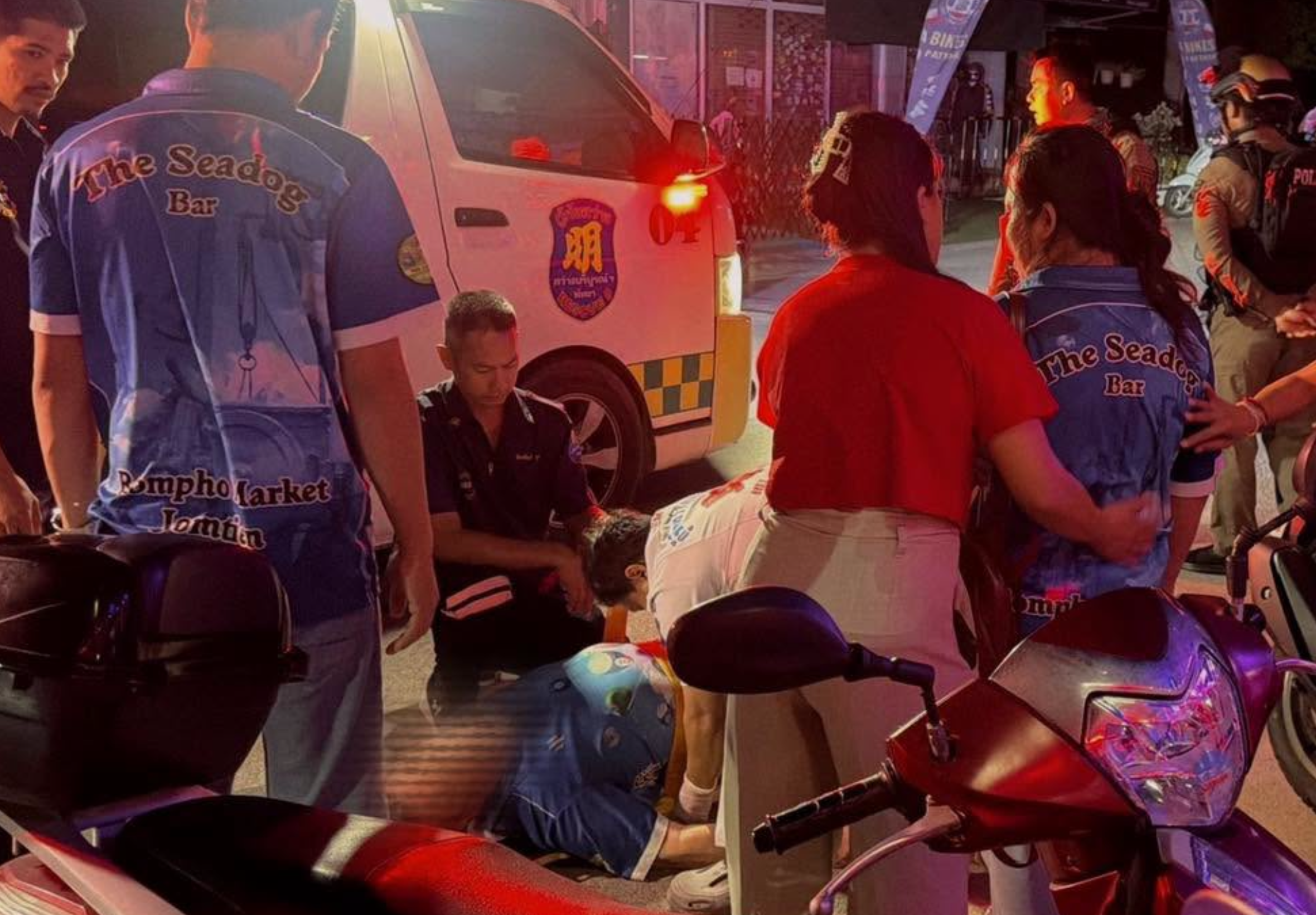 Two British nationals were hurt during a fight at a beer bar at Rompho Market on Jomtien Second Road, Pattaya, shortly after midnight, in the early hours of 29 August. Police detained another British man at the scene after he allegedly punched the pair. He told officers he had been angered by what he considered mocking or insulting remarks, according to initial information. The incident was reported to the Sawang Boriboon Thammasathan Pattaya rescue radio centre at 12.36am. Rescue volunteers and officers from Pattaya City Police Station went to the bar. Two men taken to hospital A large number of tourists had gathered outside when emergency workers arrived. One British man had a head wound, a cut lip and an injury to his right ankle. A second British man had bruising around his left eye socket. Rescue workers provided initial treatment before taking both men to hospital. The alleged attacker remained walking around the venue after the violence and was taken into custody by Pattaya police for questioning. Police to review CCTV footage Witnesses said the injured group had been drinking together as a group of three. The suspected attacker had arrived alone before sitting with them to drink and talk. They appeared likely to have known one another, witnesses said, as they were of the same nationality and had apparently spoken previously. A short time later, the man allegedly got up and began punching the first injured man. Friends who moved in to help were also assaulted and suffered injuries, witnesses told responders. The detained man claimed he had been upset by disparaging comments directed at him. Police have not yet confirmed the full circumstances and will examine CCTV footage from around the bar to establish the cause of the fight. Police had not released any names and said their investigation was continuing. Pictures courtesy of SiamChon Join the discussion? 29 August 20266 points
 -
 Thailand has published new regulations setting out how foreign nationals can be deported for immigration, employment and other offences, as well as conduct considered contrary to public order, morality or public wellbeing. The Prime Minister's Office Regulation on Deportation BE 2569 (2026) was published in the Royal Gazette on 27 August and takes effect on 28 August. The regulations say Thailand remains open to foreigners entering to travel, live, work and do business, provided they obey the law and uphold public order and good morals. However, they cite cases involving people who entered legally but later breached laws for personal gain, or behaved in ways considered disruptive to public order or morality. Who can face deportation Under the new rules, the Interior Ministry's permanent secretary, or a delegated official, must report cases to the Interior Minister where a foreigner is deemed to have acted against public order, good morals or the wellbeing of the public. The minister can then order deportation. The provision also applies to anyone who instigates or supports such conduct. Foreigners may also be deported after they have fully served a final court sentence and been released from prison for offences including illegal entry or stay, working without permission, unlawfully operating a business, forging or using forged official documents, or crimes carrying a prison term of five years or more. Those who organise, encourage or assist such offences can also be subject to deportation. Prison releases and possible re-entry bans The Corrections Department must provide the foreigner's name, nationality, case file and relevant evidence to the Interior Ministry at least 15 days before release from prison. Where a court gives a suspended prison sentence or imposes a fine, the Office of the Judiciary must urgently send relevant information to the Interior Ministry for consideration. Once informed, the permanent secretary or delegate must quickly refer the matter to the minister. A deportation order may also specify a period during which the person is barred from re-entering Thailand. The rules state that deportation decisions must take account of Thai laws, regulations, Cabinet resolutions and Thailand's obligations under relevant international law. Return to home country or third country Unless the Prime Minister revokes a deportation order or directs that removal should not proceed, an authorised official will send the person to their country of nationality through channels and methods set by the Interior Ministry. A person without confirmed nationality will be sent to the country where they said they last lived before entering Thailand. A third country or international organisation can request that a deportee be transferred elsewhere, through diplomatic channels, within seven days of the deportation order. This may apply where the request seeks to prevent torture, cruel, inhuman or degrading treatment, or enforced disappearance. The requesting party must accept all care and transfer costs, while the deportee must provide written consent. Such transfers should be completed within 30 days, with the minister able to grant up to two extensions of no more than 30 days each. Picture courtesy of Royal Gazette Related story Thailand-approves-first-deportation-rules-for-foreigners Join the discussion? 28 August 20266 points
 -
 A host bar in Bangkok's Pinklao area has apologised after a woman had her head shaved over an alleged unpaid bill of nearly 60,000 baht. The incident happened on August 25 and became public after Thai social activist Chalida Phalamat, known as Ton Aor Pen Nueng, shared details on TikTok. The venue later contacted Chalida to explain its side of the case. Agreement signed instead of police report According to Chalida, the bar said the woman had accumulated a bill of almost 60,000 baht but could not pay. It also alleged that she had used a fake identification card to enter the venue and had previously left other entertainment outlets without paying. Picture courtesy of Workpoint News Rather than filing a police complaint, the manager reportedly had the woman sign an agreement allowing her hair to be cut and shaved in return for 3,000 baht. That amount was deducted from her drinks and service bill before her head was shaved. The bar said the hair was given to one of its workers for donation, although it did not say where it would be donated. Activist questions consent and response Chalida questioned why the bar did not report the alleged unpaid bill to police and why the woman's head was shaved so extensively. She said she understood that the business faced costs and that its employees depended on their income, but believed the response had gone too far. She also raised concerns that the woman's agreement may have been made under pressure. Online reaction was divided. Some people said the bar's response was excessive, while others considered it justified. Bar promises help after apology The venue has apologised through Chalida and acknowledged that its manager acted rashly in anger. According to Chalida, the bar intends to contact the woman's family to discuss possible assistance following the incident. Chalida has also asked social development officials to check the woman's living conditions and wellbeing. Her age remains unclear and she may be a minor. She urged businesses dealing with unpaid bills or suspected fraud to contact police instead of imposing their own punishment. Lj05zNVtTqFJA7aVT5jw5TvoEbqzPOzfuYwtIdFUSzw.mp4 Join the discussion? 30 August 20265 points
 -
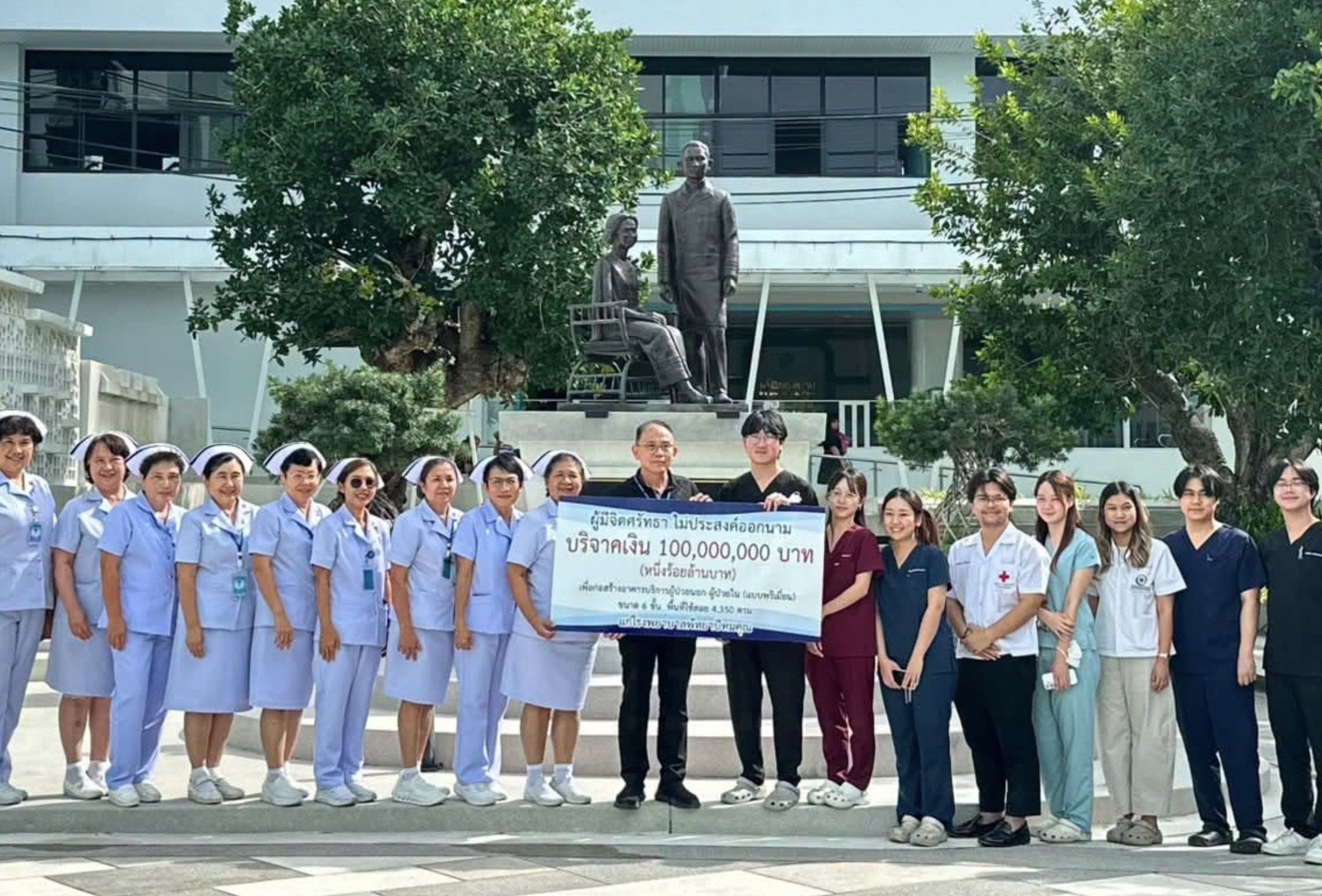 An anonymous donor has given 100 million baht to Pattaya Patamakun Hospital in Chon Buri, with the money earmarked for a new six-storey premium outpatient and inpatient building. The government hospital announced the donation on 27 August. It said the planned building will provide about 4,350 square metres of usable space. Hospital director Dr Wichai Thanasophon received the contribution on behalf of the hospital, together with doctors, nurses and other staff. Funds set aside for new building The hospital said the donation would support construction of the new facility and thanked the unnamed donor for helping improve healthcare services. No construction timetable, completion date or further details about the range of services to be provided in the building were announced. The proposed structure is intended to accommodate both outpatients, who attend for consultations or treatment without staying overnight, and inpatients requiring admission. Pattaya Patamakun Hospital was formerly known as Bang Lamung Hospital. It is located in Bang Lamung district of Chon Buri province and operates as a government hospital under Thailand's Ministry of Public Health. Hospital thanks unnamed benefactor The donor chose not to be identified. The hospital did not provide information about the person or organisation behind the 100 million baht contribution. Dr Wichai, doctors, nurses and hospital staff formally received the donation, according to the hospital's announcement. Picture courtesy of Khaosod Join the discussion? 28 August 20265 points
 -
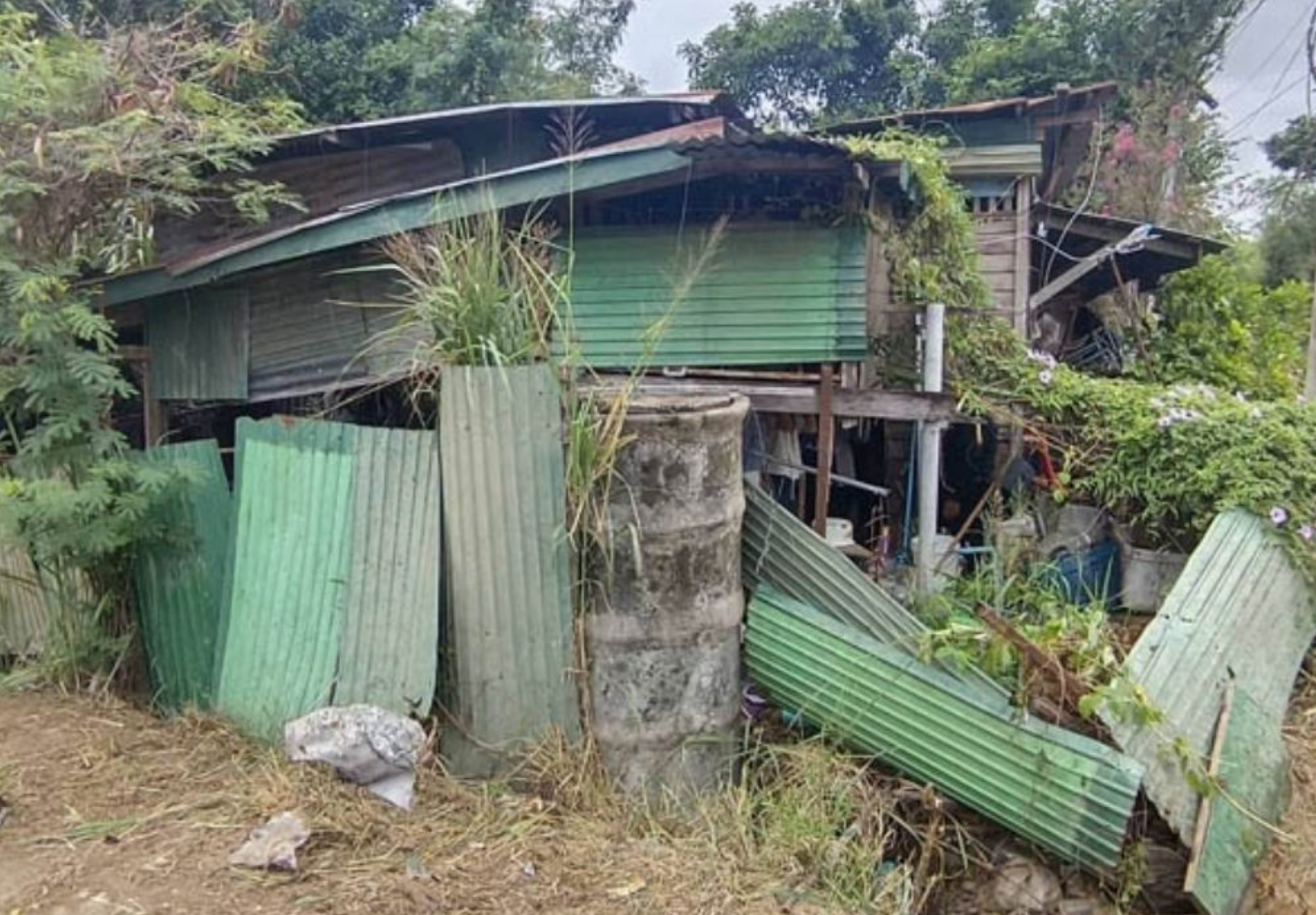 Thai authorities have offered help to a Thai-British man and his 85-year-old grandfather after footage of their rundown home in Nakhon Ratchasima spread widely on TikTok. The video, posted by TikTok user @top1968 showed Tar, who was identified only by his first name, and his grandfather, Watcharapong Thongtaem, living in poor conditions at a house on Muk Montri 22 Road. Home repairs funded after online appeal The property reportedly had no suitable bedroom or bathroom and few basic facilities. Tar is the main carer for Watcharapong, who is partly paralysed and struggles to move around. Watcharapong also has high blood pressure and gout. He had gone without medical treatment for about a year, as his limited mobility made trips to hospital difficult. After the post drew public attention, Nakhon Ratchasima Municipality Mayor Wannarat Chankunakul visited the home with staff from the municipality's Public Health and Environment Office and Social Welfare Division. Picture courtesy of TikTok/@top1968 Officials assessed the family's living situation and provided 80,000 baht to improve the house, with the aim of making it safer and more suitable for Watcharapong's needs. They also examined the elderly man's medical history and arranged further treatment through Public Health Centre 3. The centre obtained his records from Maharat Nakhon Ratchasima Hospital so doctors could prepare appropriate care. Tar thanked the TikTok user and the authorities for their help. He said his priority was to ensure Watcharapong could live comfortably, as his grandfather had raised him since childhood and was like a father to him. He said he had at times felt discouraged by his circumstances but had chosen not to give up. People could not choose the circumstances of their birth, he said, but could choose to improve their lives. Online commenters praised Tar's care for his grandfather. Some called on influencers and celebrities to consider employing him in livestream sales, while others urged local businesses to offer work that could help him support Watcharapong. ScreenRecording_08-25-2026 16-43-11_1.mp4 Join the discussion? 26 August 20265 points
 -
 A Jordanian tourist and a barber shop employee became involved in a physical confrontation in Patong, Phuket, on August 31, following a disagreement over an additional charge for hair services. Patong Police attended a report of a fight near the end of Soi Bangla, where officers found the tourist and the employee grappling with each other. The case was resolved after the tourist agreed to compensate the employee for damaged glasses, with neither side pursuing further action. Dispute followed extra hair services The incident first drew attention online after a Facebook post alleged that a foreign tourist had refused to pay for a haircut before punching the barber. Social media posts initially falsely identified the visitor as Israeli. According to the initial police inquiry, the tourist and the shop had agreed a price of 700 baht for a haircut. He subsequently received additional hair services, which led to an extra charge being added to the bill. Picture courtesy of MGR Online When the work was completed, the tourist reportedly wanted to pay only the originally agreed 700 baht and attempted to leave the shop. The barber shop employee followed him and asked for payment of the outstanding amount. Glasses reportedly damaged The argument escalated into a physical struggle, with the tourist and employee grabbing at one another. During the confrontation, the employee's glasses were reportedly damaged. Police brought both parties together to discuss the matter. The tourist eventually agreed to pay compensation for the damage, and neither the tourist nor the employee chose to take the matter further. AQOes-aWK6-u77prwwknYOuINSf7qfmDSwTCKDQTE_V4_usa_TluozoGsYcmgMGzy-IlxhsOXzYMYvEHIRVkdV187i5mQT4Cy3miHClKvQ.mp4 Join the discussion? 2 September 20264 points
 -
 Thailand's Tourism Authority (TAT) has brought 11 influencers and content creators from the UK, Australia and Japan to Phang Nga for its Amazing Thailand Surf & Wellness Journey. The visit is intended to generate international content promoting Phang Nga's beaches, nature, food, community life and health-focused tourism experiences. TAT wants to position the southern province as an emerging Asian destination for surf and wellness travel. For foreign residents and visitors, the campaign highlights a growing range of activity-based and wellbeing options beyond Phang Nga's established beach holidays, particularly around Khao Lak and Takua Pa. Surf, nature and wellbeing experiences Uthit Limsakul, director of the TAT Phang Nga Office, welcomed the group and presented the province's tourism products and services. He pointed to Phang Nga's surf-suitable beaches, intact natural surroundings and health and wellness services as strengths that match modern travel trends. The creators took part in Surf Therapy, a concept combining surfing with physical and mental wellbeing. Their programme also included a visit to The Board Factory, a surfboard manufacturing facility. Other activities included the Devasom Aqua Bath wellness experience at Devasom Khao Lak, a wellness and cooking class at La Vita Sana Khaolak, and Forest Bathing at Ton Chong Fa Waterfall. Pictures courtesy of kaoded The visitors also went kayaking through the ecosystem at Khlong Sang Neh, known as Little Amazon, and visited Takua Pa Old Town to learn about the province's culture, local way of life and identity. Tourism businesses meet overseas creators TAT also arranged The Wave of Healing Networking Dinner at La Solaya Khao Lak, bringing together Phang Nga tourism businesses, the influencer group and relevant sectors. The event was designed to encourage discussion on marketing and the development of surf and wellness products and services. Prin Pongcharoen, director of the International Public Relations Division, presented the campaign concept, "Healing is the New Luxury". The initiative forms part of TAT's effort to expand its quality-tourism market, using overseas creators to present Thailand's tourism potential to international audiences. Join the discussion? 1 September 20264 points
 -
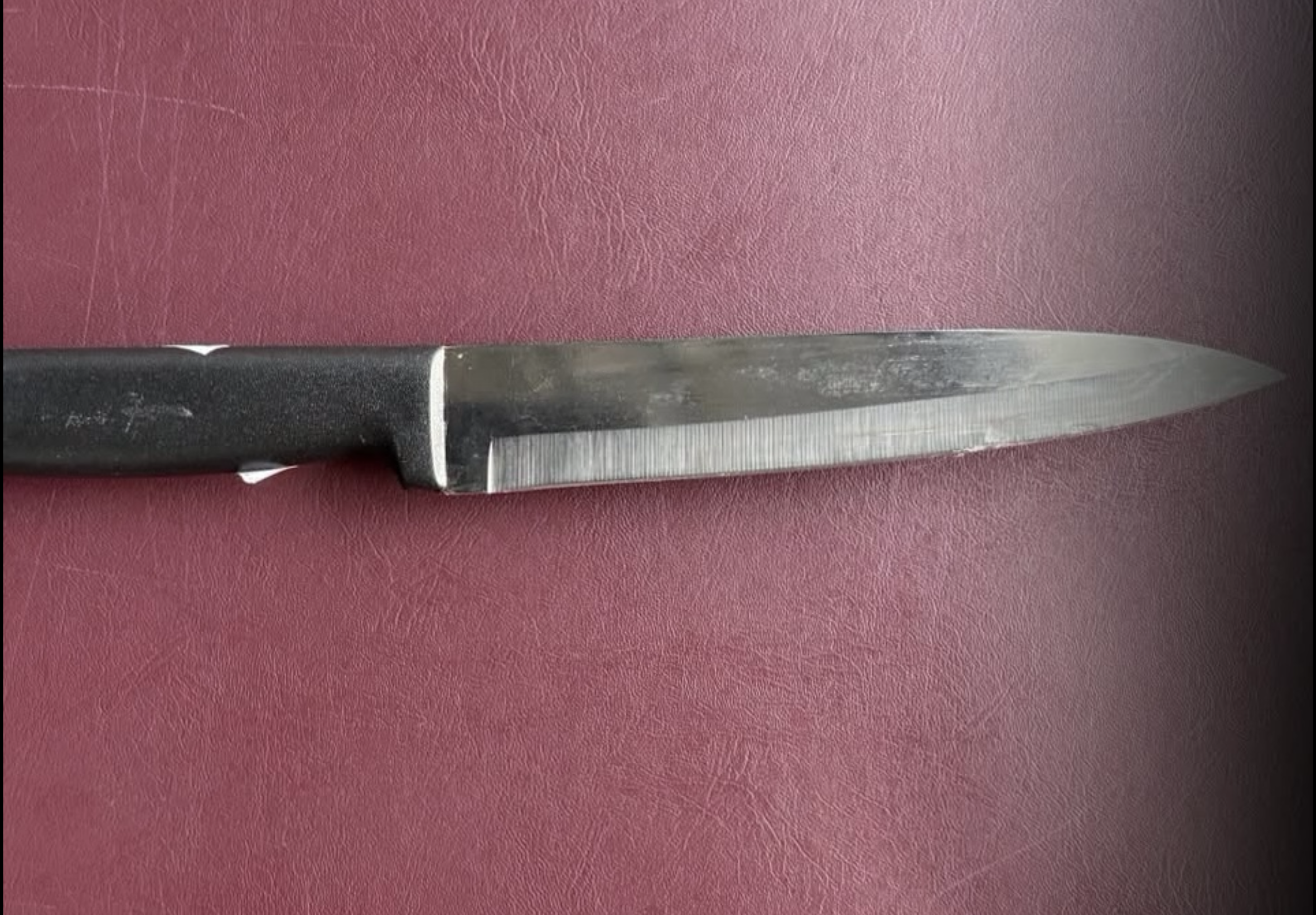 A French man was taken to hospital after suffering a cut to his right palm during a reported struggle over a knife with his Thai girlfriend at a monthly rental room in Patong, Phuket, early on Friday, 28 August. Police were called to the property at 63/1 Nanai Road, near Kasemsap Village in Patong, Kathu district, at about 07:00 following a report of a fight and assault involving the couple. Pol. Lt. Thanat Piyanut Khunthong, a deputy investigation officer at Patong Police Station, attended the scene. Patong Police Station chief Pol. Col. Kornkrit Khankrua was informed and later inspected the property. Argument reportedly began at 05:00 Officers found Montakarn, 23, from Si Sa Ket province, who identified herself as the injured man's girlfriend. She told police she had been in a relationship with the French national, Konate, 28, for about five months. The initial police investigation found that the pair had argued at around 05:00. Montakarn was reportedly holding a knife during the dispute. Konate tried to take it from her and grabbed the blade, leaving him with a cut on the palm of his right hand, according to police. Afterwards, he reportedly lay down to rest. When the bleeding did not stop, he walked to a nearby 7-Eleven convenience store, where rescue workers were called. Police continuing investigation Rescue personnel took the man to Patong Hospital for treatment. Investigators later went to the hospital to assess Moussa's condition and question him about what happened. Police said they would continue to examine the circumstances, gather evidence and take action in accordance with the law. Join the discussion? 29 August 20264 points
 -
 A Russian tourist was found unconscious in a toilet on Pattaya's Walking Street early on 28 August, while his heavily intoxicated friends initially prevented rescuers from treating him. White powder was seen inside the man's nostrils, but officials could not establish what substance it was. The group refused to allow him to be taken to hospital and instead took him back to their accommodation. Rescue workers blocked at Walking Street The Sawang Boriboon Thammasathan Pattaya rescue radio centre was alerted at 2.30am to reports of an unconscious foreign man in a toilet on Walking Street in South Pattaya, Nong Prue, Bang Lamung district, Chonburi. Pattaya special affairs officials, tourist police and volunteer rescuers attended. A crowd of tourists had gathered at the scene after the Russian man was found slumped and unconscious in the toilet. He later came around, but was speaking incoherently, appearing severely intoxicated. Friends of the same nationality, who were also reportedly heavily drunk, shouted at and obstructed the officers, initially refusing to let them assist. The group eventually carried the man outside to an area with better ventilation. However, they continued to oppose an ambulance transfer to hospital. Powder seen, but cause remains unclear Rescuers said the man's friends told them he had taken antidepressant medication and consumed alcohol before losing consciousness. During their examination, officers saw a white residue in his nostrils which resembled an illicit drug, although they could not identify it. The man remained confused and intoxicated, saying only that his "leg was missing" and insisting that he wanted to return to his accommodation rather than go to hospital. A witness, Kriangsak Thapkluea, 64, said the Russian group had come from a nearby Russian entertainment venue before using the toilets. He said one of the friends ran to ask him for help after the man collapsed. Kriangsak said his own shop had been closed for some time and that the group had only entered to use the toilet. He believed the man's condition resembled drug use after seeing what he described as a large amount of white powder in the nostrils, but said he did not know where any substance may have come from or whether it had been bought or sold. Officials were only able to record the identities of those involved, other than they were Russian. No clear cause of the man's collapse could be confirmed because his friends would not allow him to be taken to hospital. Pictures courtesy of SiamChon Join the discussion? 29 August 20264 points
 -
 Pattaya is preparing for a possible influx of US Navy personnel when the aircraft carrier USS Abraham Lincoln and two accompanying vessels are scheduled to dock at Laem Chabang from 2-6 September. Around 5,000 Navy and Marine Corps personnel are believed to be aboard the carrier. Pattaya Mayor Poramet Ngampichet said the city was ready to receive those who are permitted to come ashore for rest after a lengthy Middle East deployment. Thai Navy officials said the US carrier group is visiting Thailand's eastern coast for crew rest and recuperation, as well as logistical support. They stressed that the visit is not a joint military exercise with Thailand. A break after more than 200 days at sea Reports said personnel on USS Abraham Lincoln have not had a full port visit for more than 200 days during the latest deployment. The mayor said Pattaya had periodically welcomed US service personnel when warships visited the eastern seaboard, and that local businesses were willing to receive crews coming into the city after completing their duties. The visit is expected to bring business for restaurants, entertainment venues, transport providers and other service-sector operators. It could also mean a noticeable rise in customers at popular Pattaya venues during the port call, particularly if a substantial number of sailors are granted shore leave. Security plans for shore leave Poramet said Pattaya City would work with Pattaya police, municipal enforcement officers and relevant agencies on land and at sea to look after the safety of both tourists and visiting personnel. He estimated that each service member could spend about 1,000-3,000 baht while in Pattaya. If all 5,000 personnel entered the city and spent within that range, the resulting circulation in the local economy could be around 5-15 million baht. However, the estimate depends on the number of personnel actually allowed ashore and travelling to Pattaya. Picture courtesy of Matichon Related story USS-Abraham-Lincoln-plans-thailand-port-call Join the discussion? 27 August 20264 points
 -
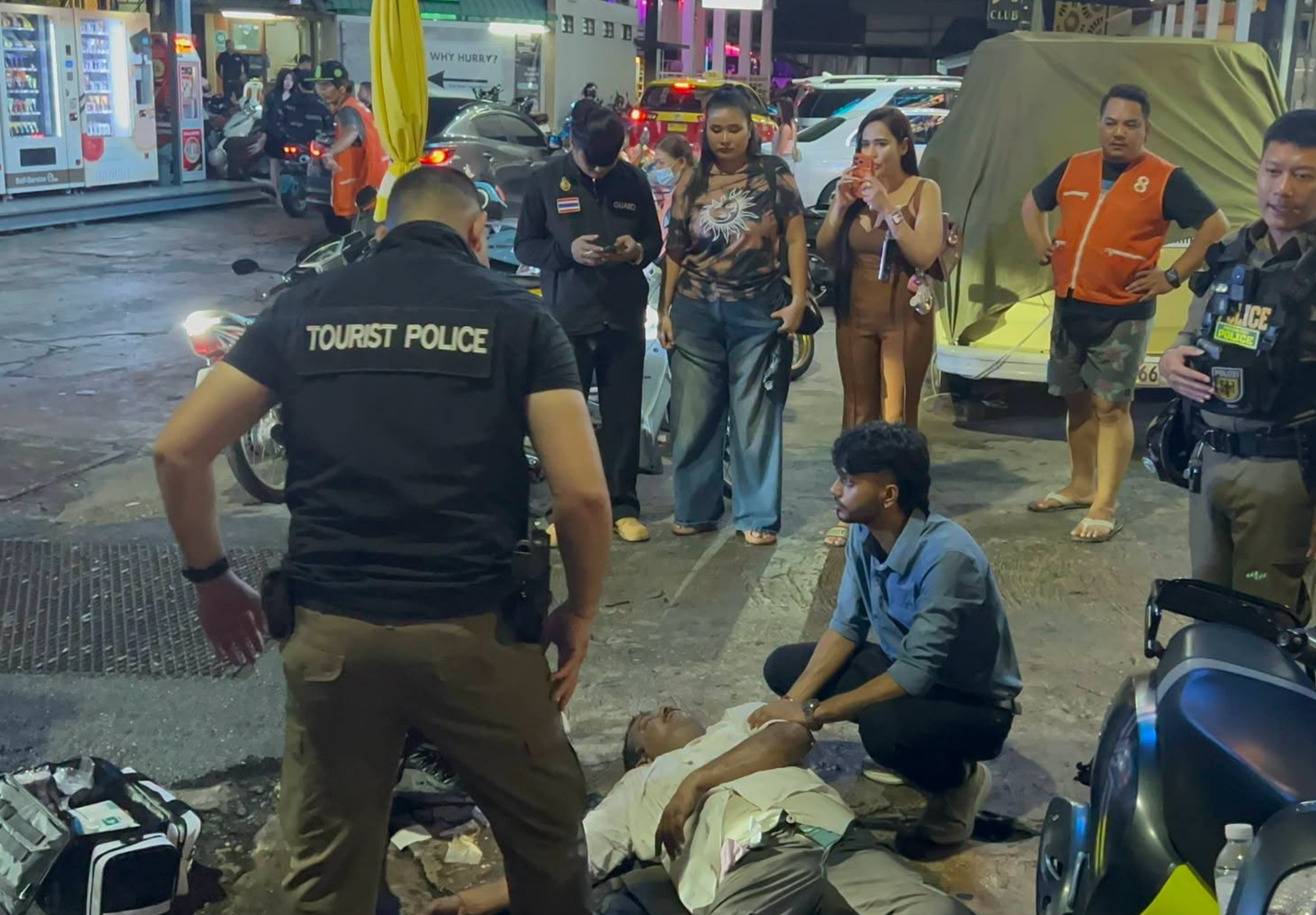 An Indian tourist was taken to hospital unconscious after an early-morning confrontation outside a seafood restaurant near Walking Street in Pattaya on Tuesday, 1 September. Police said Raval, 48, was reportedly heavily intoxicated and had vomited, when officers found him lying unconscious, in the roadway shortly after 4.20am. Those involved in the confrontation have been detained for questioning as police review CCTV footage. Officers from Muang Pattaya Police Station and Pattaya Tourist Police attended the scene after reports of an assault. Rescue volunteers from Sawang Boriboon Thammasathan Pattaya also responded and gave the man first aid before he was transferred to hospital. Clash near Walking Street A crowd of Thai and foreign tourists had gathered around Raval, an Indian national, when police arrived. Fellow Indian tourists were attempting to revive him after he lost consciousness. Pannaporn Ob-aun, 58, a fried-insect vendor working nearby, told police that she had seen the tourist staggering and apparently trying to pick fights with people in the area. She said he then walked towards a valet parking point used by restaurant customers. A disturbance followed, after which he collapsed and failed to get back up. Parking attendant's account Pornchai, 36, a parking attendant, said he had been watching customers' vehicles when the tourist approached a parked car and began pulling at it. According to Pornchai, he intervened because he believed the man might damage the vehicle. He said the tourist punched him once in the face, and that he responded with a single punch. A motorcycle taxi driver then pushed the Indian tourist, who fell to the ground and lost consciousness, Pornchai said. Police have not yet set out a full account of how the confrontation unfolded. They said CCTV footage would be examined as part of their ongoing investigation. Picture courtesy of พัทยา จุดเกิดเหตุ Join the discussion? 2 September 20263 points
 -
 A viral Facebook video has drawn fresh attention to a severely damaged section of Route 323 between Sangkhlaburi and Thong Pha Phum in Kanchanaburi province. Posted by Apirak Vanaruji, the footage shows a person dressed as an astronaut apparently examining the crater-like road surface near Noen Chang Rong and Noen Yao Curve in Nong Lu subdistrict, Sangkhlaburi district. Astronaut image highlights damaged surface The video was widely shared and discussed online. Its astronaut theme was used to underline the condition of the hillside route, where potholes cover parts of the carriageway and the asphalt has broken away in several places. Vehicles are seen having difficulty negotiating the affected stretch. The route runs along a steep hillside, adding to safety concerns for motorists travelling through the area. Picture courtesy of Khoasod Social-media users responding to the post called on the relevant authorities to inspect the road, carry out repairs and improve the route as a matter of urgency. Calls for urgent road repairs The post did not give details of any repair schedule or response from the authorities. Its rapid spread, however, has renewed public pressure for action on the badly worn section near Nong Lu. Route 323 is the road identified in the video, with the damaged section located around Noen Chang Rong and Noen Yao Curve in Sangkhlaburi district. Online commenters said the road should be inspected and repaired urgently after seeing vehicles struggle across the potholes and broken asphalt. AQOGcEVCnpK3KlSvxqWHknl0yrnepuRnIctFcoyRRARl04Nn6SmXbnVj2EM1lH7UPW3C7hM5gqv6lyrqU0arztoSCoqEtxD-Rc80vFRbHQ.mp4 Join the discussion? 31 August 20263 points
 -
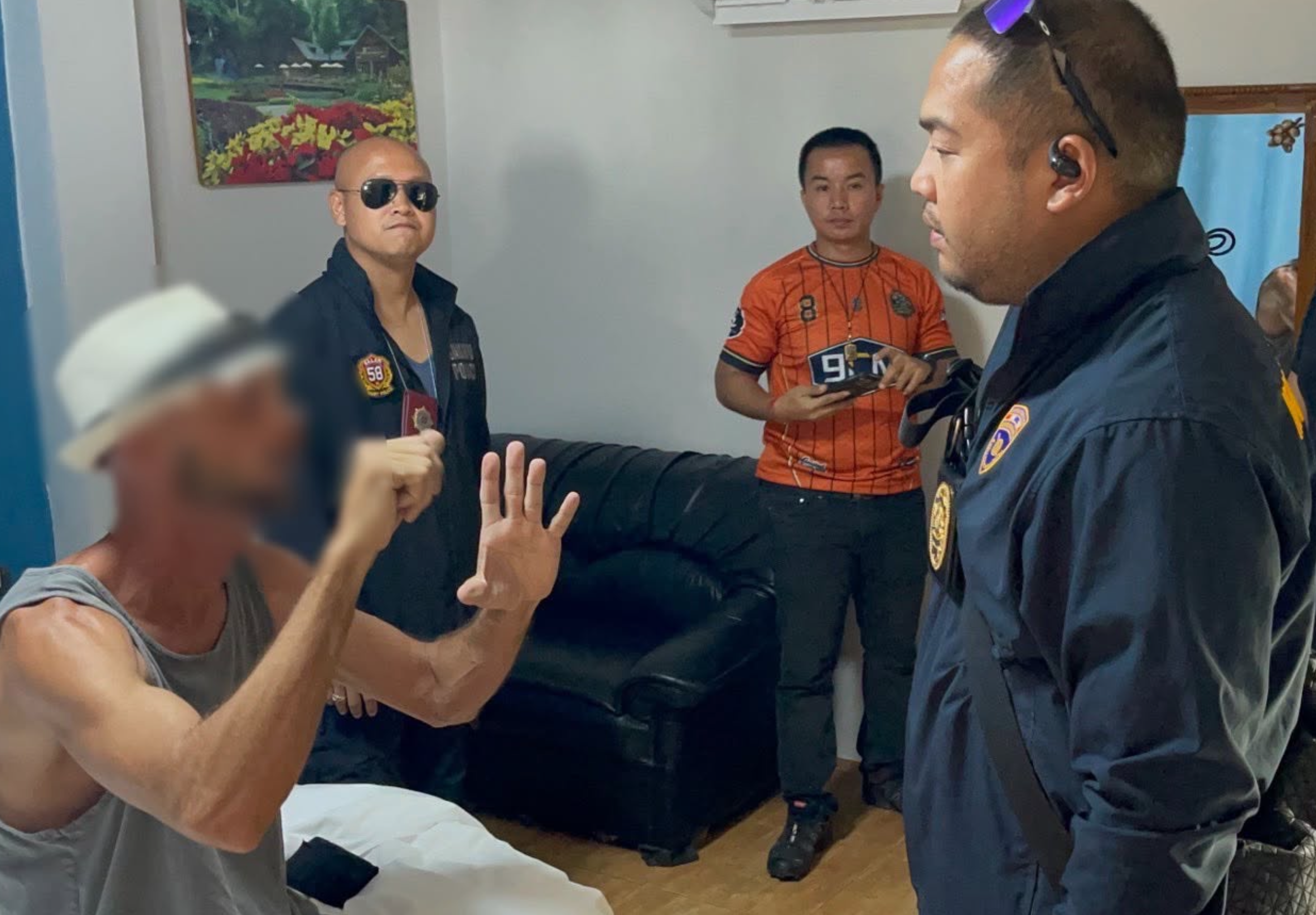 Thai police have detained a 48-year-old American man in Phuket after the FBI asked authorities to trace him over eight arrest warrants issued in Alabama, including one federal warrant. The man, identified as Lance Beck, is accused in the United States of offences involving the sexual abuse of a child under 14. Thai immigration authorities have revoked his permission to remain in the kingdom and transferred him to an Immigration Detention Centre pending his return to the US. FBI request led police to Phuket hotel The Royal Thai Police said it was contacted by the FBI on 27 August 2026 to help locate Mr Beck, who had allegedly fled to Thailand. The eight warrants comprise seven issued at state level in Alabama and one federal warrant. The allegations include sexual torture, rape, human trafficking, facilitating a child's travel for an unlawful sex act, sexual abuse and incest. According to police, the allegations relate to the abuse of a child aged under 14, with video recordings said to have been made. These remain allegations for the US legal process. The investigation was overseen by Pol Maj Gen Chotiwat Luangwilai, commander of the Metropolitan Police Investigation Division; Pol Maj Gen Songprod Sirisukha, commander of Immigration Division 3; and Pol Maj Gen Sinlert Sukhum, commander of Phuket Provincial Police. Investigators from the Metropolitan Police IDMB, Immigration Division 3 and Sakhu Police Station established that Mr Beck had entered Thailand through Phuket International Airport. They located him at a hotel in Nai Yang, Sakhu, Thalang district, Phuket. Pictures courtesy of Daily News Permission to stay cancelled Police attended the hotel at about 2.15pm on 29 August 2026. They said Mr Beck acknowledged that he was the person sought after officers informed him of the order cancelling his permission to stay in Thailand. He was then taken to the Immigration Detention Centre, where he will be held while arrangements are made to send him back to the United States to face proceedings. Thai authorities regularly cooperate with foreign law-enforcement agencies on cross-border cases, particularly where a suspect is believed to have entered or stayed in Thailand. The action in this case followed direct coordination with the FBI, police said. AQPKUXx4W8QGZVz8yWJdUQdcm85VEieGzDLDVZW3mZra3yt_-We_E9vVQHAqpW6iGomVj2kEZIyWWKhPgvPBVaUGdswHnThyyjZOfZFr3A.mp4 Video courtesy of Phuket Times Join the discussion? 31 August 20263 points
 -
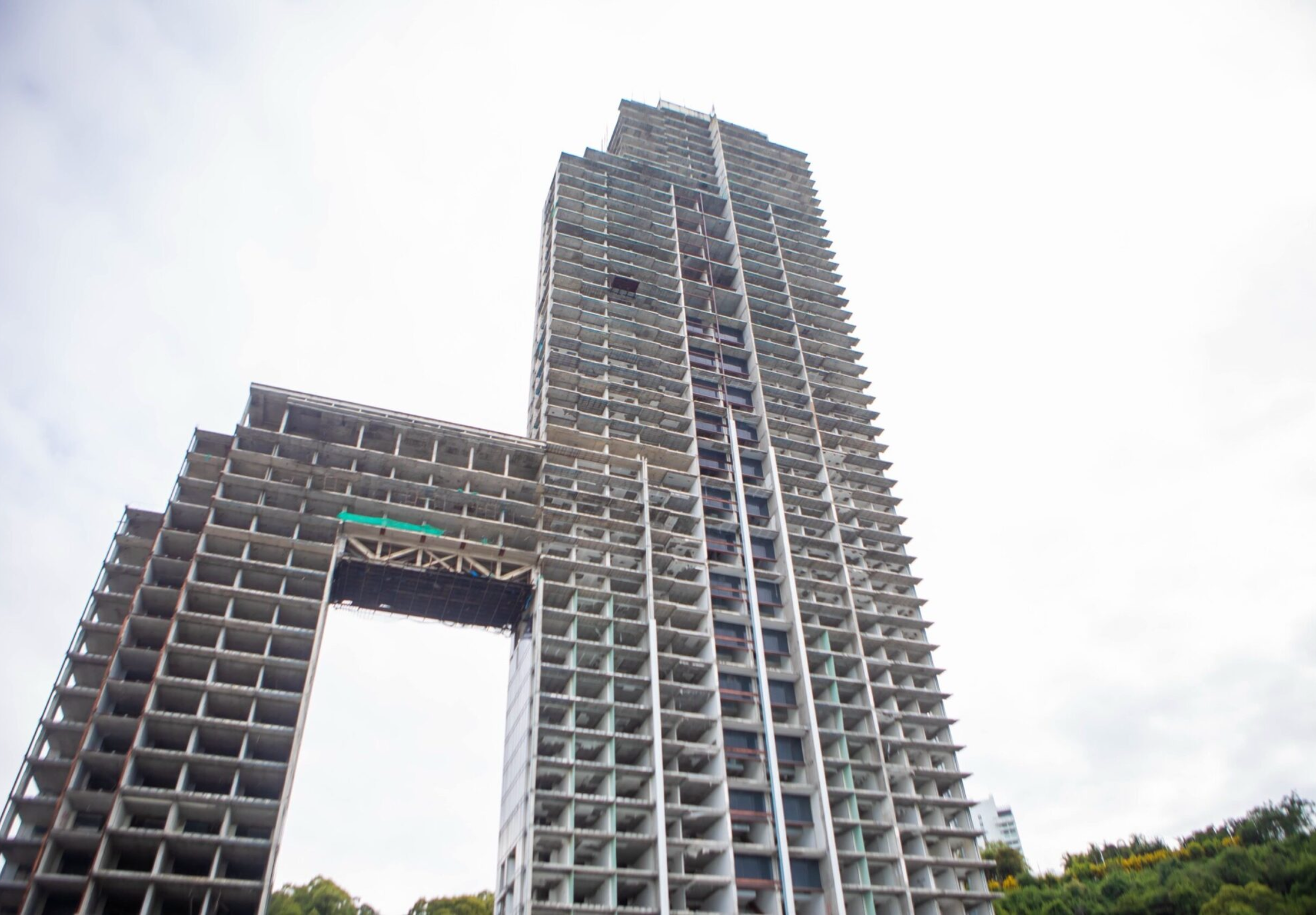 Pattaya's long-stalled Waterfront project at the foot of Pratumnak Hill could face demolition or a legally required redesign, depending on a pending decision by the Land Department over its land title documents. Pattaya Mayor Poramet Ngampichet said the city is still waiting for the department to rule on the documents, following an earlier opinion by the National Anti-Corruption Commission (NACC). The outcome will determine the next legal step for the unfinished building in Pattaya. The development has returned to public attention after the CSI LA page raised the matter online, prompting renewed debate on social media. Land ruling will decide the next step Poramet said Pattaya City had submitted the matter to the Land Department for consideration within its authority and is now awaiting the result. If the department concludes that the land title documents were improperly issued, the city will act under the law by ordering the project owner to demolish the building. Should the owner fail to comply, Pattaya City can begin demolition proceedings itself and seek to recover the costs from the owner. However, if the documents are found to have been lawfully issued, the owner will have to submit the building plans for review under building-control laws. That could require alterations to sections which do not meet legal requirements, potentially including reducing the structure's height or changing its design to bring it into compliance. Poramet said there are therefore two main possible outcomes: demolition or alterations to make the building lawful. He said the city is ready to proceed as soon as the Land Department reaches a conclusion and wants the long-running matter resolved quickly. Building remains off limits The mayor also warned that the Waterfront building is incomplete and remains subject to an order prohibiting its use. Vehicles and people should not be allowed inside because this could create a danger, he said. Pattaya City has already taken legal action over reports that cars and motorcycles had entered the project, to use it as a car park. On 23 February 2026, a person authorised by Pattaya City filed a complaint at Pattaya City Police Station after information circulated on social media on 22 February that a group of vehicles had parked on the lower area and second floor of the Waterfront building. The complaint states that the building is covered by Pattaya City's order under the Building Control Act BE 2522, which prohibits use of, or allowing people to use, a building that may be dangerous. Police at Pattaya City Police Station accepted the complaint for further legal action against the company owning the project and related parties and legal proceedings are ongoing. Pictures courtesy of Matichon Join the discussion? 31 August 20263 points
 -
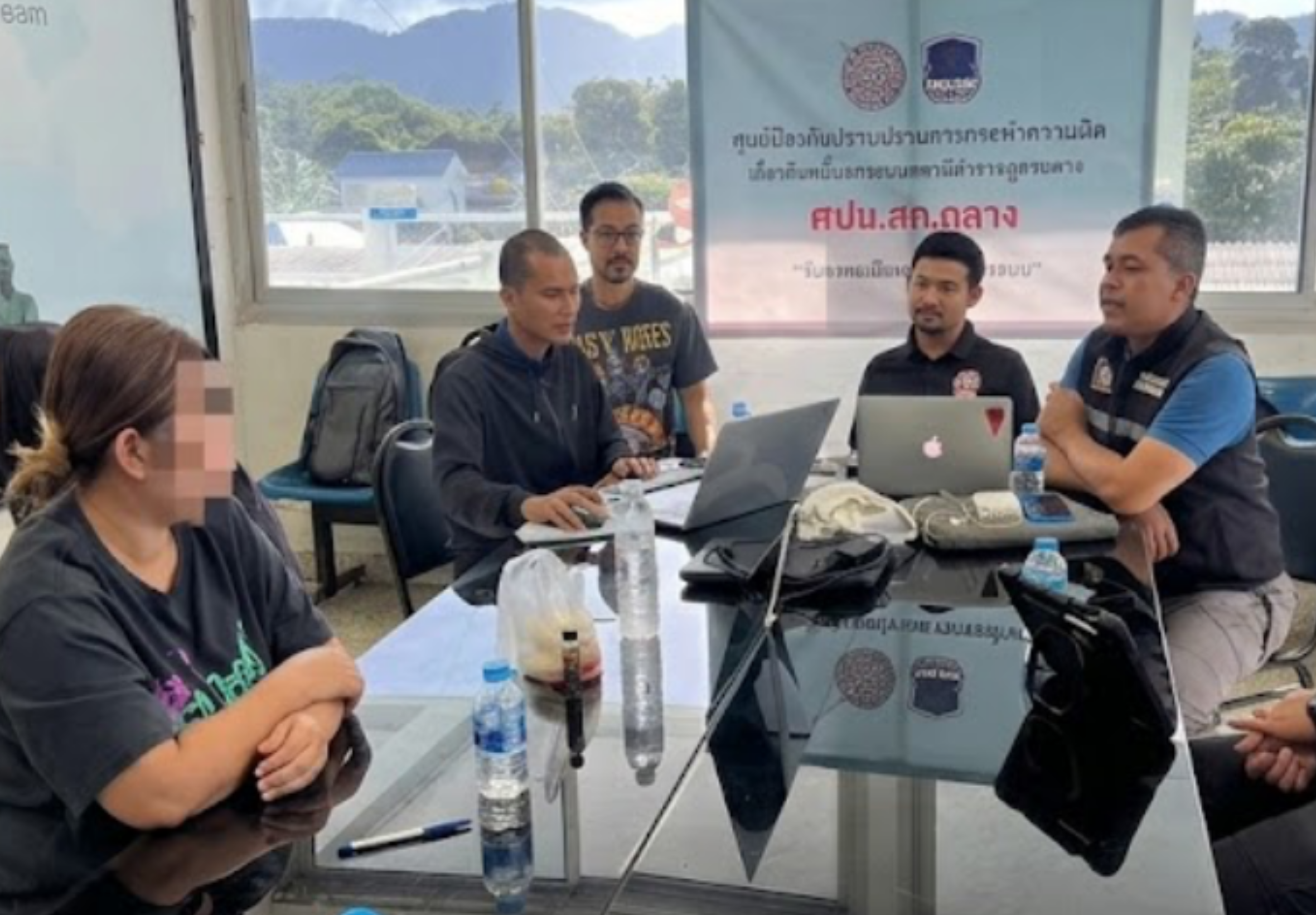 Thai police have arrested a woman in Phuket accused of taking advance payments for villa rentals that did not exist. The suspect, Thanaporn, also known as Yu, was arrested on August 26 after complaints from two Russian tourists. The tourists told police they had transferred 1.5 million baht and 500,000 baht respectively to secure villa accommodation before travelling to Phuket. On arrival, they reportedly found that no reservations had been made and were unable to contact the woman. Police say Thanaporn was already wanted under three arrest warrants linked to similar alleged fraud offences. The total amount she may have obtained is estimated at about 5 million baht. Russian tourists reported missing bookings The case began with reports by the two Russian visitors, who had arranged and paid for high-value villa stays before reaching the island. According to police, both tourists believed their accommodation had been booked in advance. However, there were no villa reservations in place when they arrived in Phuket, and the agent could no longer be reached. Police cite three outstanding warrants Police said Thanaporn was wanted on three warrants over similar fraud allegations before her arrest. They believe the alleged scheme may have generated around 5 million baht in total. No further details were given about the other cases or the number of people who may have been affected. Possible victims have been urged to contact Thalang Police Station and make a report. Anyone who believes they may have dealt with the same agent should retain payment records, booking messages and any advertised villa details when approaching police. Picture courtesy of Phuketinsta Join the discussion? 28 August 20263 points
 -
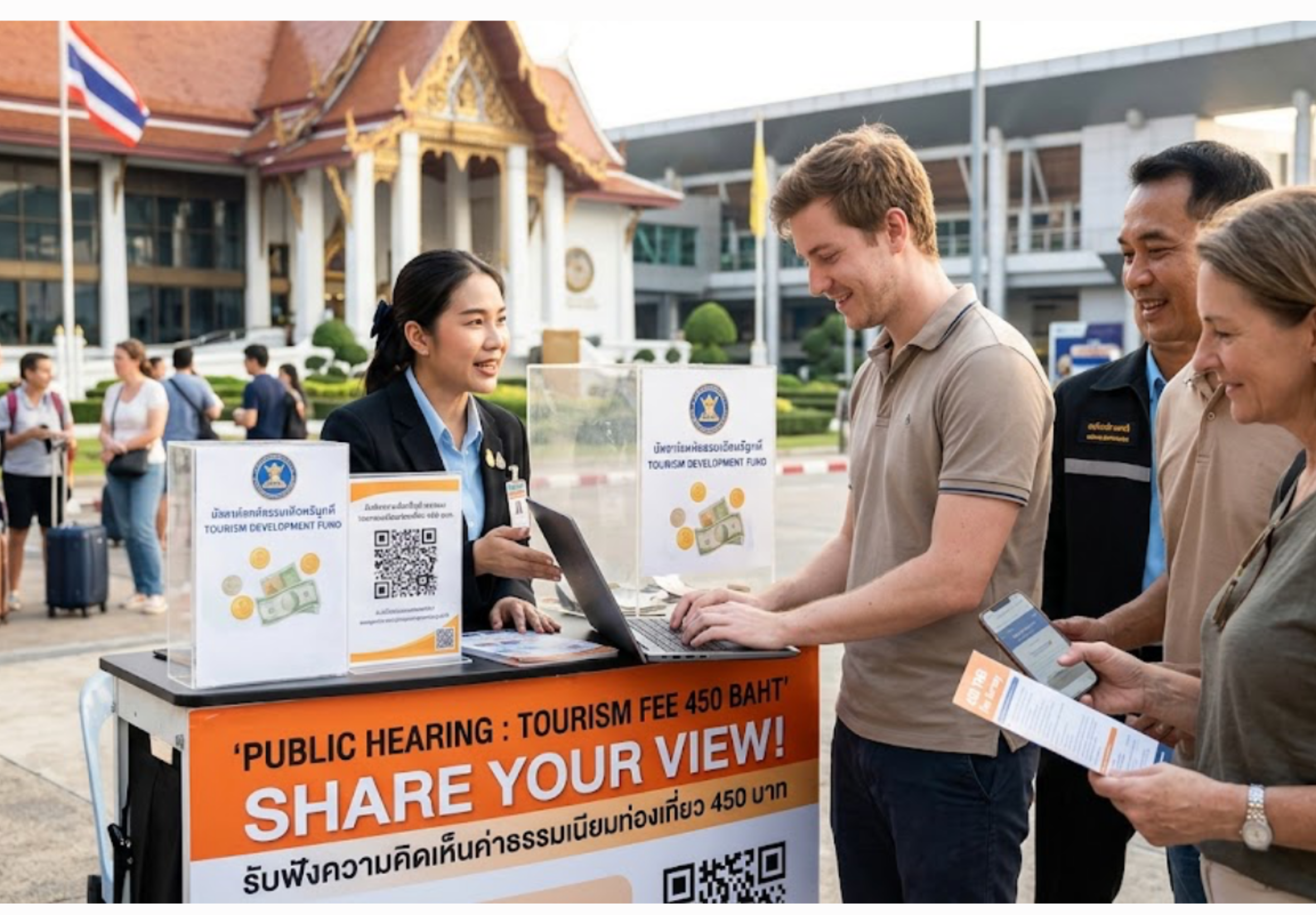 Thailand has opened an online public hearing on its proposed 450-baht tourism fee for foreign visitors, inviting comments from both Thai and foreign respondents until September 28. The government says the consultation will cover not only the proposed charge but also how money in the fund should be spent. The draft scheme and questionnaire are available at www.law.go.th Deputy Prime Minister and Tourism and Sports Minister Sarawong Poonlert, who chairs the working group on creative economy and tourism development, said the process must be open and subject to scrutiny. "We need to listen to as many perspectives as possible in order to efficiently implement the foreign tourist fee," he said. For foreigners living in Thailand, making regular trips abroad, or planning visits, the consultation is a chance to comment directly on the proposed rate, payment arrangements and the definition of who would fall within the scheme. Who would be covered The questionnaire includes multiple-choice and yes-no questions. Respondents can state whether they support the 450-baht rate and select their preferred method of collection. It also asks whether they agree with the proposed definition of a foreign tourist: someone who is not a Thai national and enters the kingdom temporarily for tourism or another purpose that does not generate income or compensation. A comment box is available for additional views. A recent National Tourism Committee meeting said the Tourism and Sports Ministry should gather opinions from a broad range of groups, including private businesses and foreign chambers of commerce in Thailand. An offline discussion panel is also planned at a later stage. How the fee could be paid Mr Sarawong said the most workable collection model would be a dedicated payment website, allowing travellers to pay in advance according to their preferences. Airlines could collect the fee at an airport kiosk as a processing charge for travellers who are not comfortable using technology, while those who are can pay through the website, he said. The tourism fee would be the first time the sector generated an annual budget of more than 10 billion baht through its own fund, separate from the normal fiscal budget. Thailand received about 33 million foreign tourists last year, which could produce a tourism fund worth 14.8 billion baht. Insurance and fund oversight The fund is expected to provide insurance for foreign tourists and to finance improvements to tourism infrastructure. Mr Sarawong said an assigned committee would manage the fund, with relevant stakeholders, including tourism operators and foreign chambers of commerce, permitted to observe management meetings. He acknowledged that the 450-baht charge could affect price-sensitive visitors, although not all travellers. "Many private operators are not opposed to the idea, and Thailand aims to position itself as a high-value tourism destination," he said. The government is also considering requiring foreign tourists to buy additional insurance for higher-risk activities, including diving and hiking, as well as third-party cover for rental vehicles. Join the discussion? 27 August 20263 points
 -
 Phuket singer and guitarist Nene Royal has secured a place in the America's Got Talent final after receiving Mel B's Live Golden Buzzer during the quarter-finals. The 16-year-old performed Soundgarden's Black Hole Sun at the Pasadena Civic Auditorium, prompting the crowd to rise to its feet as she delivered the rock classic. Cheers broke out during the performance. Mel B praised the young performer before pressing the Golden Buzzer. "Your vocals are on point. Your guitar is on point. Your look, your energy, your vibe, how could I not do this?" she told Nene. Picture courtesy of Khoasod Gold confetti then fell across the stage as Nene became visibly emotional, breaking down in tears before her parents joined her for an embrace. A direct route to the final The Live Golden Buzzer gives one act from each quarter-final an immediate place in the final, meaning Nene will not need to rely on the public vote to progress. It is her biggest moment so far on the US talent show, following viral performances of The Cranberries' Zombie and Muse's Hysteria. Phuket performer gains international platform Nene's appearance combines singing and electric guitar, with her choice of rock material helping set her apart during the competition. Her performance of Black Hole Sun drew a particularly strong response in Pasadena, where the audience reacted loudly as she worked through the song before Mel B made her decision. The Golden Buzzer moment also ensured that Nene's parents could join her on stage immediately after the result. The family embrace came as the gold confetti continued to fall. Join the discussion? 26 August 20263 points
 -
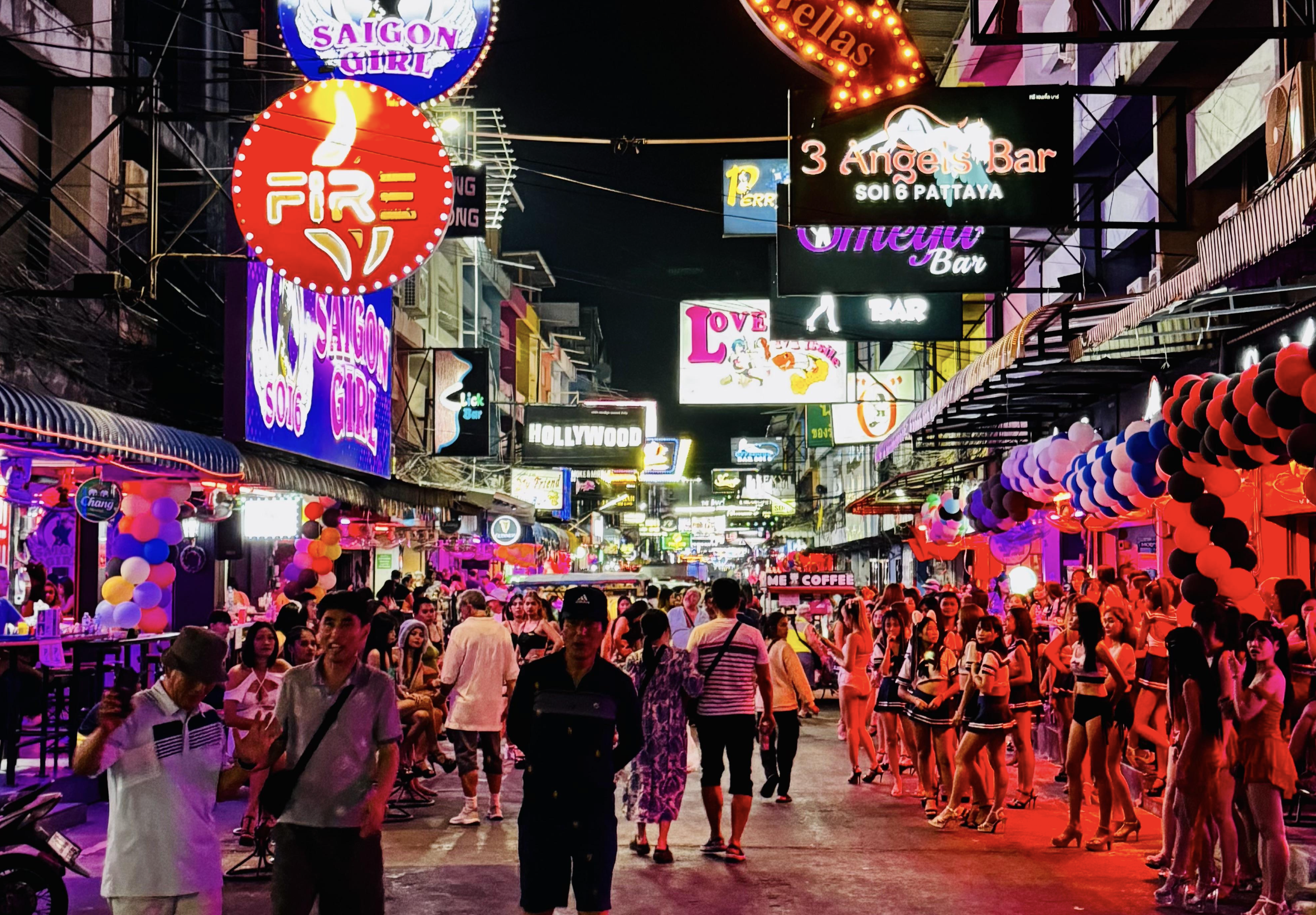 Pattaya authorities and US Navy security team, have barred visiting US Navy personnel from Soi 6, Soi 6/1 and Soi 7 during the USS Abraham Lincoln's port call in Chonburi from 2 to 6 September 2026. The restrictions were agreed at a meeting at Pattaya City Hall on 31 August, held to prepare security and visitor services for the expected arrival of more than 5,000 personnel aboard the aircraft carrier and three accompanying ships. Officials expect about 60 per cent of those arriving, or around 3,000 people, to travel to Pattaya and stay overnight. Areas and activities off limits Pattaya Mayor Poramese Ngamphichet assigned Bancha Kullawanich, the mayor's secretary, and Pattaya city clerk Kiatisak Sriwongchai to chair the meeting. Those attending included Pol. Col. Milin Pienchang, superintendent of Division 2 at Tourist Police Bureau 1; Phichet Thammahor, senior deputy district chief of Banglamung; representatives from Pattaya City Police Station, the ships' security team and other relevant agencies. The meeting set measures covering public safety, crime prevention and travel assistance. Navy personnel will not be permitted to enter Soi 6, Soi 6/1 or Soi 7, visit cannabis shops or pharmacies, or take part in water-based activities. Walking Street will remain open to sailors, although they must leave by 2am. Businesses urged to charge fairly Authorities also reminded businesses to charge fair prices during the visit and to strictly prevent sexual exploitation, particularly where anyone under 18 is involved. Officials also stressed that prostitution is strictly illegal in Thailand. Join the discussion? 1 September 20262 points
 -
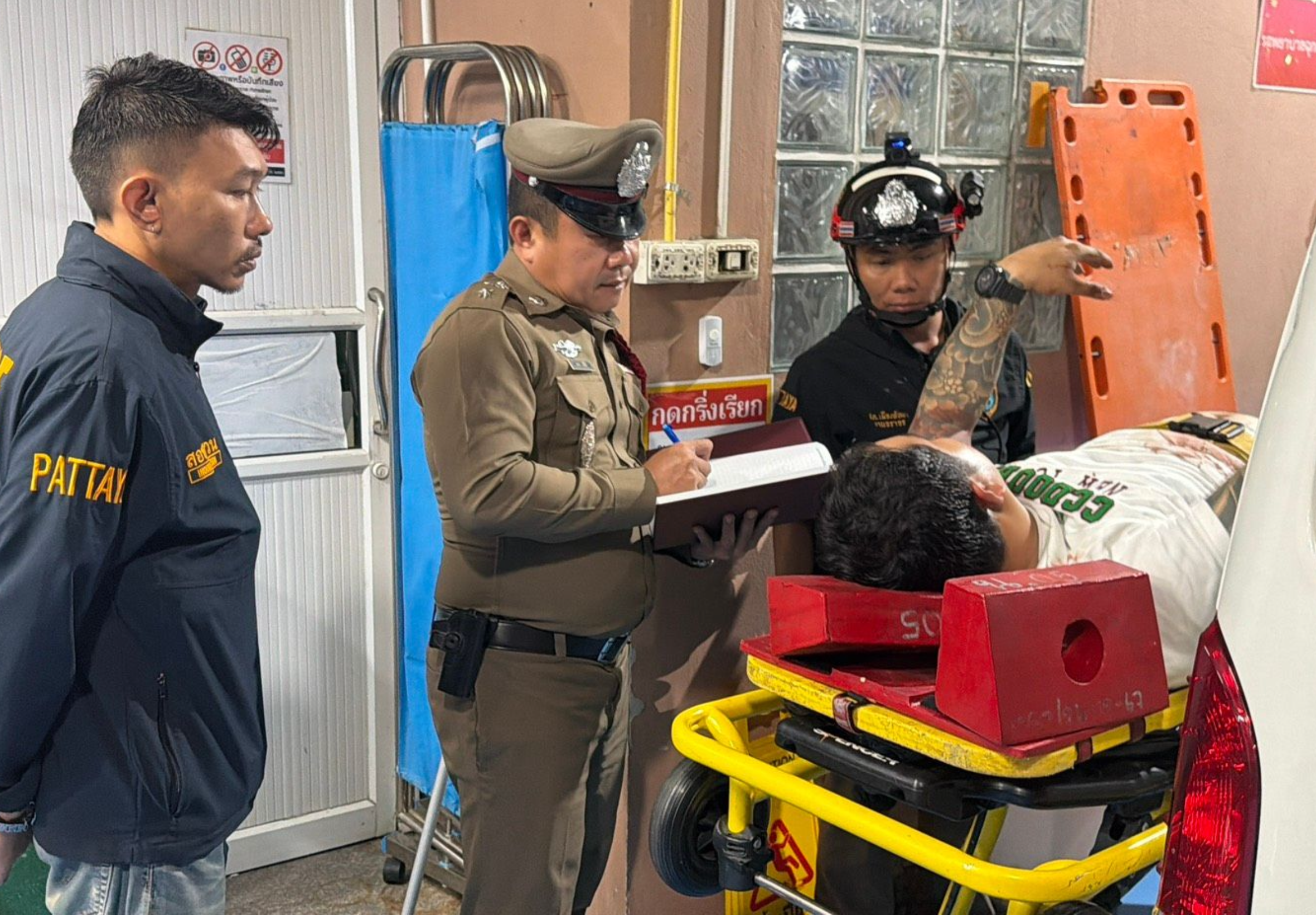 Two men were wounded in a shooting outside a nightclub in South Pattaya early on August 31, after a dispute that police said began inside the venue. Pattaya City Police were alerted at 2.36am. Officers, Banglamung district officials and Sawang Boriboon Thammasathan Foundation rescue volunteers arrived to find a crowd gathered and two men requiring treatment. The case remains under investigation. Police detained one after treatment, the other remains under guard at hospital. Authorities are reviewing CCTV footage, warning that everyone involved will face the full legal process. Two men taken to hospital Mongkol, 29, who was reported to be a former security and police volunteer with several official agencies, was shot in the right calf. The bullet remained lodged in his leg, and rescue workers gave him treatment at the scene before taking him to hospital for surgery. The other injured man, 36-year-old Ratchaphon, known as Ball, suffered a gunshot wound to his left foot as well as facial swelling. He was also given first aid before being taken to hospital. Police found a bullet hole in the inner driver-side door of Mongkol's pickup truck. A Glock 43 9mm pistol and ammunition were recovered as evidence. Mongkol's 35-year-old girlfriend, Atchara, stayed at the scene. She told officers she did not know what had caused the dispute, but reportedly confirmed that the pistol belonged to Mongkol. Conflicting accounts of shooting Witnesses told police that two groups had argued inside the entertainment venue before security staff ejected them. Gunfire then broke out outside, with several shots fired and people nearby dropping to the ground. They said they did not know what had prompted the original argument. Mongkol told police he did not know who he had been fighting with. He said he left the venue first, before a group of youths surrounded his pickup. He claimed he fired the weapon in self-defence to clear a route away from the scene. Ratchaphon gave a different version. He said he had an earlier dispute with Mongkol and saw him again inside the nightclub. According to Ratchaphon, the two groups became mixed up and followed each other outside, where Mongkol fired three shots from inside his pickup while driving away, injuring him. Police said a check of Mongkol's Facebook account found posts and video clips relating to firearms training, photographs of him wearing what appeared to be an agency identification card and clothing resembling an official uniform, and images with senior police officers. Officers will examine the material further to determine whether it is relevant to the shooting. Pictures courtesy of Siamrath Join the discussion? 1 September 20262 points
 -
 Thailand's Public Sector Anti-Corruption Commission (PACC) joined Phuket authorities on 31 August 2026 to observe inspections at hotel businesses applying for operating licences in the province. The visits covered multiple establishments and formed part of a wider effort to ensure hotel approvals are handled transparently, fairly and within the law. The inspection team was led by Phuket Vice Governor Romdon Haji-Awae. PACC Deputy Secretary-General Police Lieutenant Colonel Siripong Sritula and Anti-Corruption Operations Bureau director Police Lieutenant Colonel Sarawut Khamluang attended with PACC officers. Checks on hotel licence applications The provincial screening committee responsible for the Hotel Act 2004 carried out the inspections, examining buildings and operating premises against the details submitted with each licence application. Officials were gathering facts, assessing whether the premises matched the applications, and considering whether documentation and conditions complied with relevant laws and regulations before a hotel-business licence could be granted. Representatives from Phuket Provincial Police, the Phuket Provincial Prosecutor, local administrative bodies, the Provincial Public Works and Town and Country Planning Office, the Provincial Cultural Office and the Provincial Public Health Office also joined the exercise. Authorities did not identify the hotels inspected or report any penalties, closures or licence decisions. Operators raise concerns over approval process PACC officials also heard directly from hotel operators about practical problems and limitations they encounter during the licensing process. They asked relevant agencies about possible ways to resolve those difficulties. The commission said it had offered recommendations intended to make official consideration of applications transparent, fair and quicker, while remaining within the legal framework. It also called for unnecessary steps and obstacles to be reduced without weakening inspection standards or legal compliance. Part of anti-corruption drive The PACC said the Phuket inspections were part of its work on government approval and licensing procedures. Its focus is on preventing corruption risks and the improper use of official discretion, while helping state agencies provide services to residents and businesses efficiently and to consistent, reviewable standards. Join the discussion? 1 September 20262 points
 -
 A foreign female tourist was pulled from a drain after falling into it in Phuket's Kata area on 29 August, with footage of the incident prompting online criticism over pedestrian safety and local infrastructure. The incident was recorded in Kata, Karon subdistrict, Muang district. A local Facebook user shared video showing the woman inside the drain as a foreign man, believed to be her boyfriend, tried to help her out. He eventually managed to pull her clear. Video shows tourist being helped from drain The footage does not make clear exactly where in Kata the fall happened, what caused it, or whether the drain covered had collapsed as the woman stepped on it. The Facebook post accompanying the video questioned the condition of the area and its infrastructure. It included a sarcastic remark about the experiences tourists seek and find, when travelling in Thailand. Picture courtesy of Khaosod Kata is one of Phuket's best-known visitor areas, particularly among overseas holidaymakers. The video has therefore renewed online scrutiny of the maintenance of public spaces in a province that remains one of Thailand's major tourist destinations. Visitors who see an immediate hazard in a public area may wish to avoid it and alert nearby businesses, accommodation staff or local authorities where possible. In an emergency, Thailand's general medical emergency number is 1669. Online reaction focuses on safety The clip drew a large number of comments, with users criticising safety measures and the management of public areas. Comments included: "Is she badly hurt?", "Oh, this is Thailand," "Taxes are meant to be stolen for everything," and "Embarrassing." The online reaction has again placed attention on tourist safety and infrastructure upkeep in Phuket. AQPTr6VPnGLAuN18Vmhi-KqkHRNjK5YdQE0vtORFObZYhQwPrCicnqMDzp_N-bv7fbSlDvsJtH-gIodB5A8LGaVL1db6PxhQ0e42xO5wJw.mp4 Join the discussion? 29 August 20262 points
 -
 A group fight involving rival speedboat operators broke out on Tawaen Beach road on Koh Larn, off Pattaya, at about 5.30pm on 27 August 2026. Video shared online showed men who operate the Pattaya-Koh Larn tourist speedboats arguing before punches were thrown in front of beachgoers. The footage was posted with the description: "Battle of Pattaya-Koh Larn speedboat operators." Long-running dispute over passengers Reports said the dispute stemmed from competition for customers and fare-cutting among operators taking passengers back to Pattaya via Bali Hai Pier. One side was said to comprise speedboat operators based on Koh Larn who have worked in the trade for more than 30 years. The other group reportedly consisted of Pattaya-based speedboat operators who had crossed to Koh Larn to run the same business. The two sides had allegedly been in dispute for some time over attracting passengers and undercutting fares before the row escalated into the beachside fight. A group of Koh Larn speedboat operators later posted online that island residents had previously lived and worked peacefully, accusing newcomers of bringing problems to the island. "Koh Larn people live peacefully and make a living. We have never fought," the post said. "When you came, you brought problems to Koh Larn and fought like this. It damages Koh Larn's name. If it reaches the media, people will say Koh Larn is lawless again. If it is like this, please do not come and make a living on Koh Larn." Calls for Pattaya to regulate operators The local operators called on Pattaya City to take serious action to organise speedboat businesses on Koh Larn, saying this would help prevent further conflicts and protect the island's tourism image. For foreign residents and visitors, speedboats are a common way to travel between Pattaya and Koh Larn, particularly for day trips to beaches including Tawaen. The reported dispute centres on competing services and fares for the return journey to the mainland, rather than changes to official transport rules. Travellers choosing private speedboats may wish to agree the return fare, departure point and timing before setting off, particularly during busy periods when several operators are competing for passengers. AQOsDpS3wqfGd-VPn8unBoe3rBh_lT5JiAlzZgdhgNK1_MN2ddYUhHMCErzW7fCTSG_QyIlxCwzIlCPHJr3USWCNyYBqUL8YBC9JGH0erw.mp4 Join the discussion? 28 August 20262 points
 -
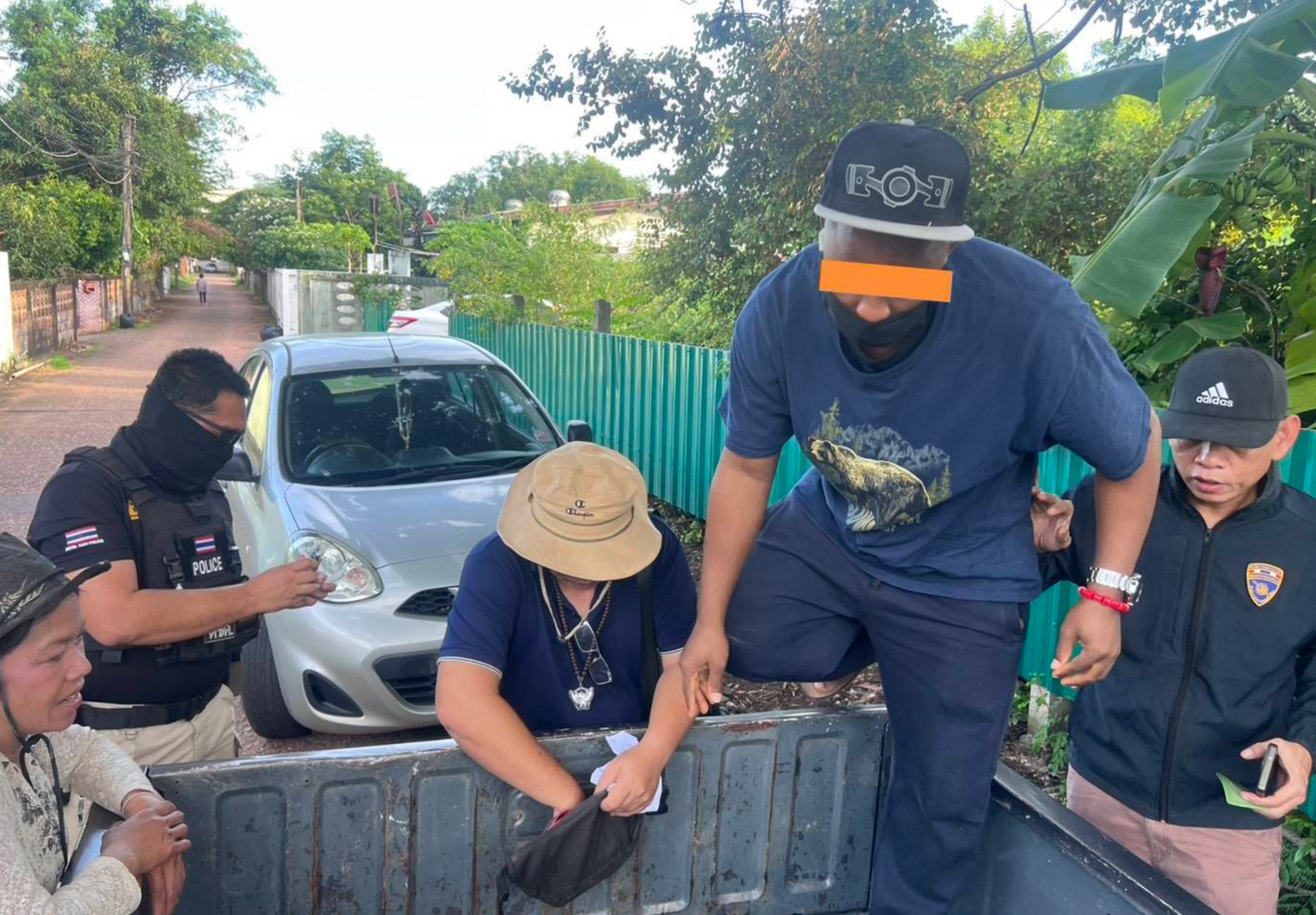 Immigration police in Nong Khai have arrested a 29-year-old Nigerian man accused of entering and remaining in Thailand without permission, after he was reportedly found waiting for transport near the Lao border. Mr Chidera Anthony Ejiogu was detained on 27 August after residents reported seeing a foreign man walking in Soi Ruenrom 3, Pho Chai subdistrict, in Nong Khai's Muang district. Police said checks found no record of his entry into Thailand. He was taken to Nong Khai Immigration for questioning before being handed to investigators at Muang Nong Khai Police Station for legal proceedings. Alleged plan to cross into Laos According to immigration police, Mr Ejiogu said he had entered Thailand illegally around two months earlier and had then stayed with his Thai girlfriend, identified as Yuwadee, in Bangkok. He told officers that he later contacted a male friend in Laos, identified as Akezey N., through WhatsApp. Mr Ejiogu allegedly paid 30,000 baht by transfer to a Siam Commercial Bank account for help arranging an illegal crossing into Laos. His Lao contact allegedly arranged for a Thai man to collect him outside his accommodation in Soi Nawamin 36. The man drove him to a hotel in Nong Khai, where he was told to wait for someone to take him across the border, police said. However, officers located and detained him before the alleged onward journey could take place. Charge filed after immigration check The operation was led by Police Lieutenant Colonel Theeyaphat Rangsiphramanakul, deputy superintendent of Nong Khai Immigration, and Police Lieutenant Colonel Apichat Koltha, an inspector with the unit, along with other officials. Mr Ejiogu has been charged with being a foreign national who entered and stayed in the Kingdom without permission. He has been sent to investigators at Muang Nong Khai Police Station for further action under the law. Pictures courtesy of SiamRath Join the discussion? 28 August 20262 points
 -
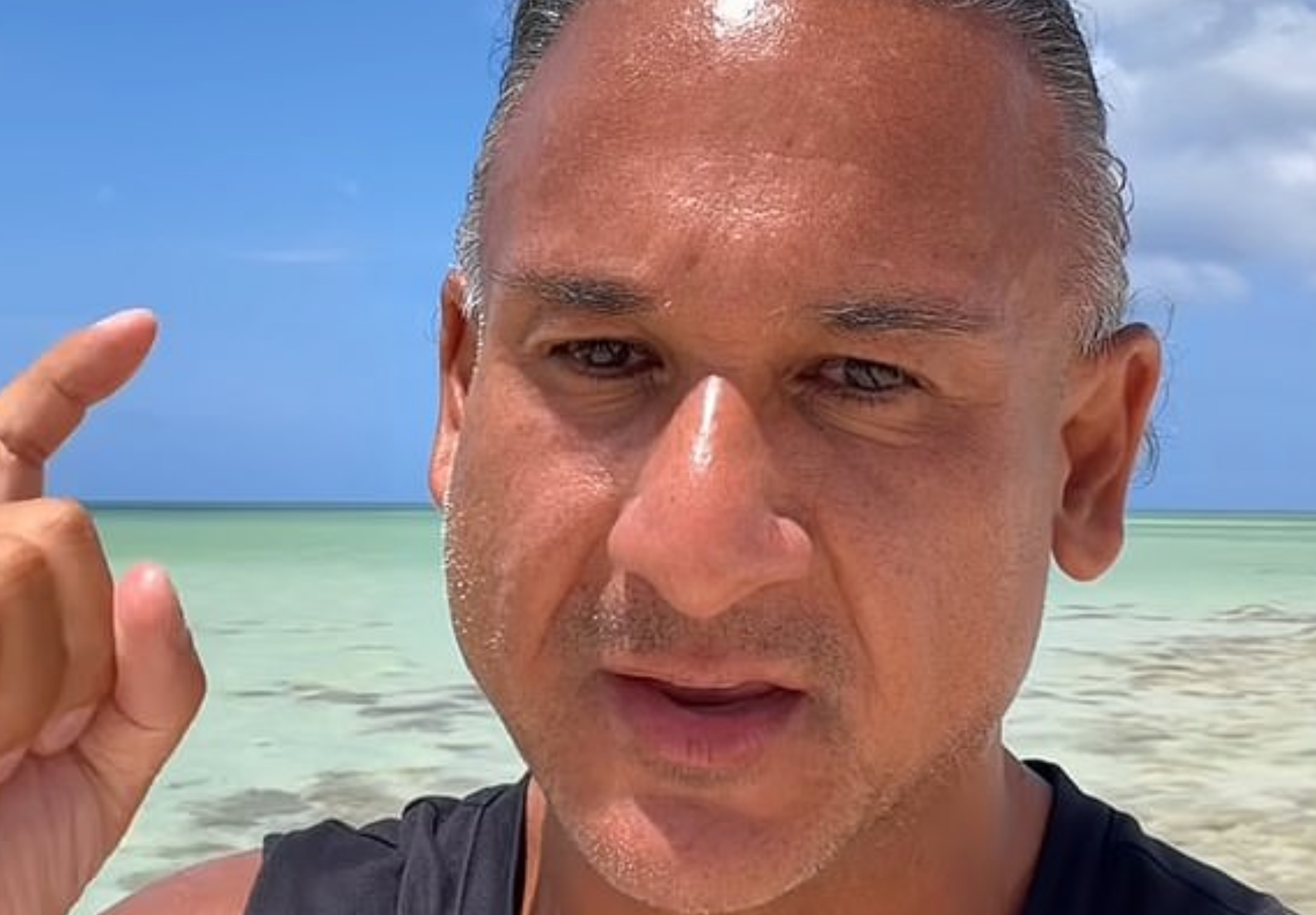 US sports betting figure David Oancea, known as Vegas Dave, posted photos and videos from Thailand's Koh Samui after failing to attend a Las Vegas court hearing on August 13. Clark County District Judge Joe Hardy issued a no-bail bench warrant for Oancea, 49, after he did not appear to be taken into custody over a contempt finding linked to a $30.2 million judgment. Court order over Mexican properties Oancea was ordered last July to pay Cabo Platinum, a Mexican vacation rental agency which alleged that he had sabotaged reservations for properties in Mexico. He was later directed to hand over assets including Hermes Birkin bags, cryptocurrency holdings, a Richard Mille watch valued at $400,000, and three luxury villas in the Los Cabos area. He was meant to comply within two weeks of a hearing last September, but subsequently claimed the properties no longer belonged to him. District Judge Tara Clark Newberry issued the contempt order on July 17, finding that parts of Oancea's testimony during a six-day evidentiary trial had been false. The order described his conduct as "willful noncompliance". Judge Newberry gave Oancea two ways to purge the contempt finding: surrender the bags and watch, or cash instead, plus more than $375,000 in cryptocurrency, and sign a power-of-attorney agreement giving Cabo Platinum principal Mishan Andre authority over his interests in the Mexican properties. Otherwise, he was required to surrender and remain in custody until he complied. His planned August 6 surrender was postponed for a week while the Nevada Supreme Court considered an emergency filing. The court declined to pause the contempt order a day before the rescheduled date. Posts from Bangkok and Koh Samui Oancea, who appeared in Showtime's 2019 sports gambling documentary series Action, first posted from Bangkok on Monday. He then shared footage of his arrival at Samui Airport, elaborate meals, private-jet travel and a high-speed boat ride. In a Tuesday Instagram slideshow for his 9.1 million followers, he posed beside a jet and later at a beachside villa with an illuminated pool. "Ko Samui, Asia is the best," he wrote. He also filmed a promotional video for an "early bird" package for NFL and college football betting while on a beach, saying: "Send me an email and jump on the money train." Pictures courtesy of Daily Mall Join the discussion? 28 August 20262 points
 -
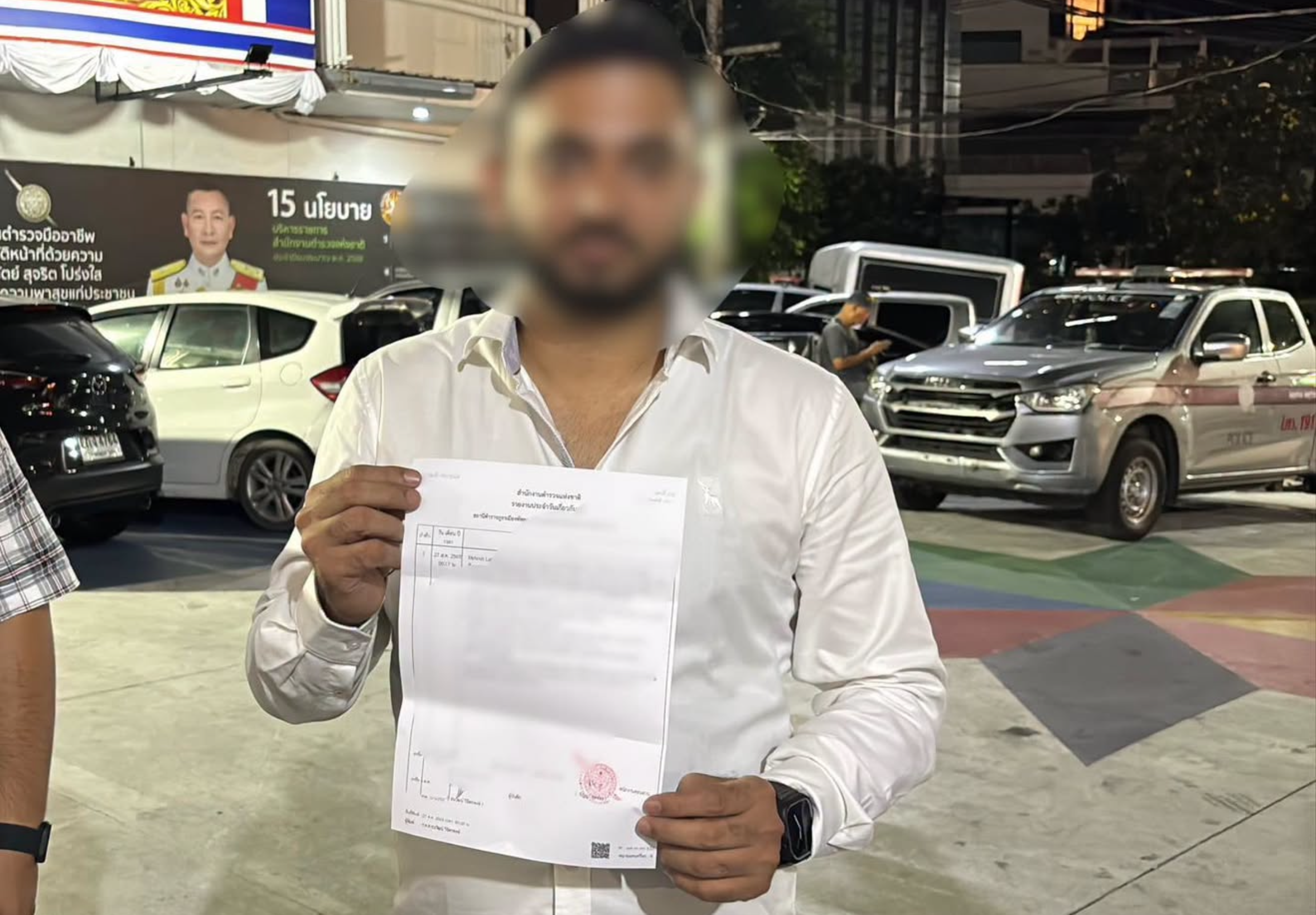 An Indian national identified only as Mr A has filed a complaint with Pattaya police after saying he paid 43,000 rupees, about 14,800 baht, for herbal hair-growth products sold to him by three foreign men. The complaint was made at 1.20am on 27 August 2026 to Police Lieutenant Colonel Thanya Udthong, an investigating officer at Pattaya City Police Station in Chonburi. Mr A said the men had claimed the products would restore hair growth and leave his hair thicker and darker. Their names and nationalities were not known. Approach on Pattaya Second Road According to his account, he was walking on Pattaya Second Road at about 9.00pm when the three men approached and began talking to him. They then encouraged him to buy what they described as medicine or herbal products for hair growth, claiming they could produce new hair and improve its appearance. Mr A said he was taken to a shop, where he agreed to buy the products for 43,000 rupees. It was only later, after a friend challenged the purchase that he became suspicious and felt he may have been deceived. He subsequently went to police to request an investigation and legal action. Complaints have surfaced repeatedly There are multiple similar cases involving foreign tourists being approached and sold products with exaggerated claims at high prices that have been reported and covered in the local news many times. Officials have carried out inspections on several occasions, it said, yet groups of foreign nationals have continued to gather to sell products while making claims about their benefits and charging what is described as inflated prices. Picture courtesy of Siamchon Join the discussion? 27 August 20262 points
 -
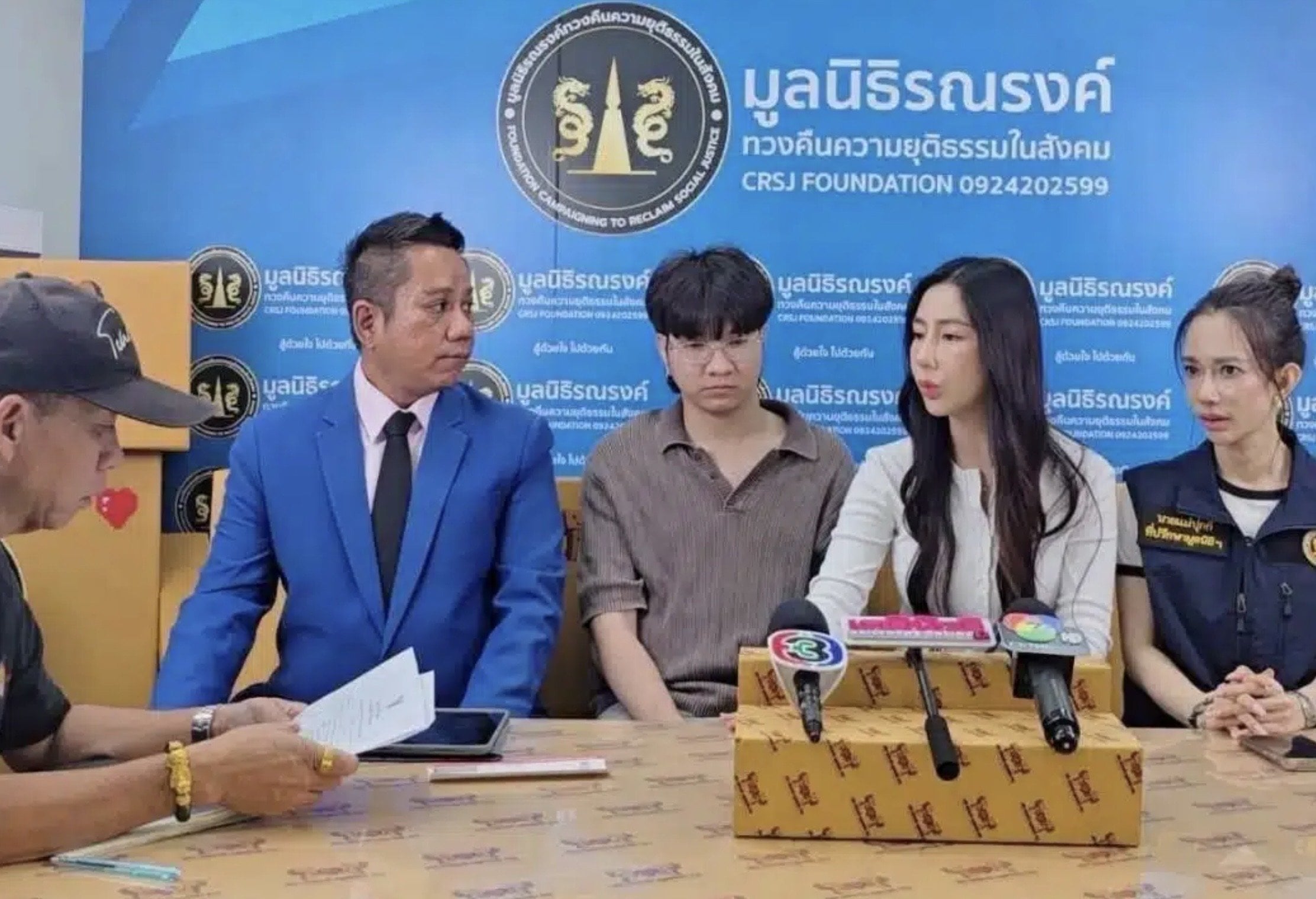 Two Thai social media influencers have sought legal help after reporting that two luxury watches, worth a combined 610,000 baht, disappeared from checked luggage on a flight from Bangkok to Krabi. Araya Trongklang and Kunlanan Udomphan say a Cartier watch valued at about 470,000 baht and a Hermes watch worth 140,000 baht were missing when they collected their suitcase at Krabi International Airport on 21 August. They travelled from Suvarnabhumi International Airport to Krabi at around 1.50pm that day. Damaged zip and empty watch box The couple posted video footage on 21 August showing them inspecting their luggage after recovering it in Krabi. They said they noticed the suitcase zip was broken and decided to check the contents immediately. In the video, Araya struggles to open the damaged suitcase before finding that the watch box inside was empty. She said she had seen X-ray images before departure showing both watches inside the suitcase. However, she said they were gone when the baggage arrived in Krabi. A friend travelling with the couple also said her suitcase appeared to have been searched. The video did not state whether anything had been taken from her luggage. Police complaints have made no progress The couple said airline staff advised them to make a police complaint so they could seek access to airport CCTV footage. They did so and reviewed the videos and images, but said they had received no update on the investigation. Pictures courtesy of ทุบข่าวนนท์ After reporting the case to the airline, Araya said staff offered to arrange Business Class flights back to Bangkok for her, her boyfriend and four friends. She said this was not what she wanted, adding that she wanted the watches returned. Ten days after the incident, the pair contacted Thai lawyer Ronnarong Kaewphet for assistance. Araya said the lack of progress left her concerned that she would not receive justice. Ronnarong said he would take the influencers to file a complaint with the Crime Suppression Division, as complaints Araya had made at two police stations had not progressed. AQMf-La9rEUzjhnycjyZaVlwK8gU1DrqfrzR1fBoDpYpZ293EgFr_uJTLEe-RtVkpw4DSk2j_nEfahhJkqouh5KewJseVGrRsgn1yJL2oQ.mp4 Related story Suvarnabhumi-investigates-600000-baht-baggage-loss Join the discussion? 2 September 20261 point
 -
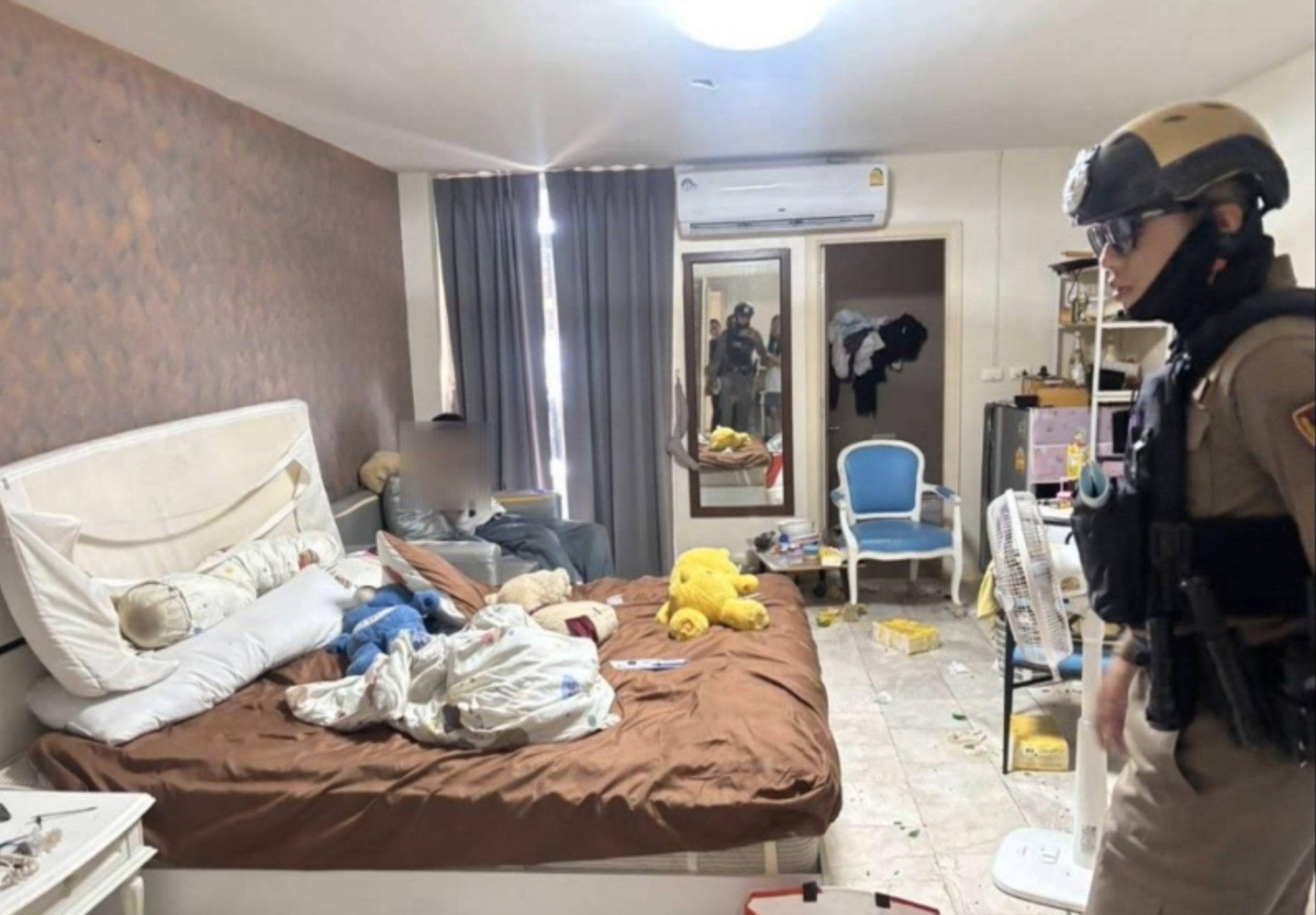 A Chinese man and a Thai woman have been arrested after police were called to a reported assault and knife standoff at an apartment in Bangkok's Huai Khwang district on 1 September 2026. Police said the man, identified as Mr Wang, was holding a 10-inch knife, waving it around and pressing it to his own neck while threatening to harm himself. Officers entered the room and brought the situation under control without reported injuries. Police find ice during room search The incident was reported at about 11.10am at room 1505 of an apartment building in Samsen Nok, Huai Khwang. The caller was Phetcharaphon, 24, from Chachoengsao province. According to Suthisan Police, Mr Wang had allegedly assaulted the woman inside the room before officers arrived. A search later found a bag containing about 0.30 grams of crystal methamphetamine, known locally as ice, drug-taking equipment, a cream-coloured square box and the knife. Both Mr Wang and Phetcharaphon were charged with jointly possessing a Category 1 narcotic, methamphetamine or ice. Mr Wang was also charged with entering and remaining in Thailand without permission, police said. Both suspects were informed of their legal rights and handed to investigators at Suthisan Police Station for further legal action. The operation was carried out under the direction of Suthisan station chief Pol Col Phonthep Chalermkiat and deputy superintendent Pol Lt Col Phitsanu Koetthong. Picture courtesy of Amarin Join the discussion? 2 September 20261 point
 -
 A 26-year-old Myanmar national was left with a split head and bruising after an alleged attack by a group of ladyboys on Pattaya Beach late on 30 August 2026. Pattaya City Police are investigating the confrontation on the beachfront pavement opposite Soi 13/1 on Beach Road. The ladyboys involved reportedly claimed that they had been harassed by the men before the violence. The Sawang Boriboon Thammasathan Pattaya City rescue unit received a report of an assault with injuries at 11.40pm and alerted police before sending volunteers to the scene. Rescuers found signs of a fight and three men who appeared shocked. One, identified as Mr. Khon Aye Maung, 26, from Myanmar, had a head wound as well as injuries and bruising to his body. He was given initial first aid at the scene. Two accounts of the confrontation Siriphong Namyu, 35, a Pattaya City special affairs officer, said he was driving along Beach Road when he saw a group of around three or four ladyboys cross the road towards the beach. He said they then assaulted the group of men. Siriphong stopped his vehicle, attempted to break up the fight and contacted the authorities. While he was intervening, the ladyboys said they had earlier been sexually harassed by the men. They said this had angered them and led them to return and attack the group before leaving the area. One of the injured men's group gave officers a different version. He said they had been walking along Beach Road and filming the surrounding area with a mobile phone when the recording included the ladyboy group. He said the group became unhappy, an argument followed, and the ladyboys later returned and assaulted them. Police seek those involved Police questioned those connected to the case and other witnesses while attempting to identify and locate the alleged attackers. Officials had not announced any charges or findings. Anyone caught up in a dispute should avoid escalating it, move to a safe place and contact police or rescue services if there is an immediate risk of violence or someone is injured. Picture courtesy of SiamRath Join the discussion? 1 September 20261 point
 -
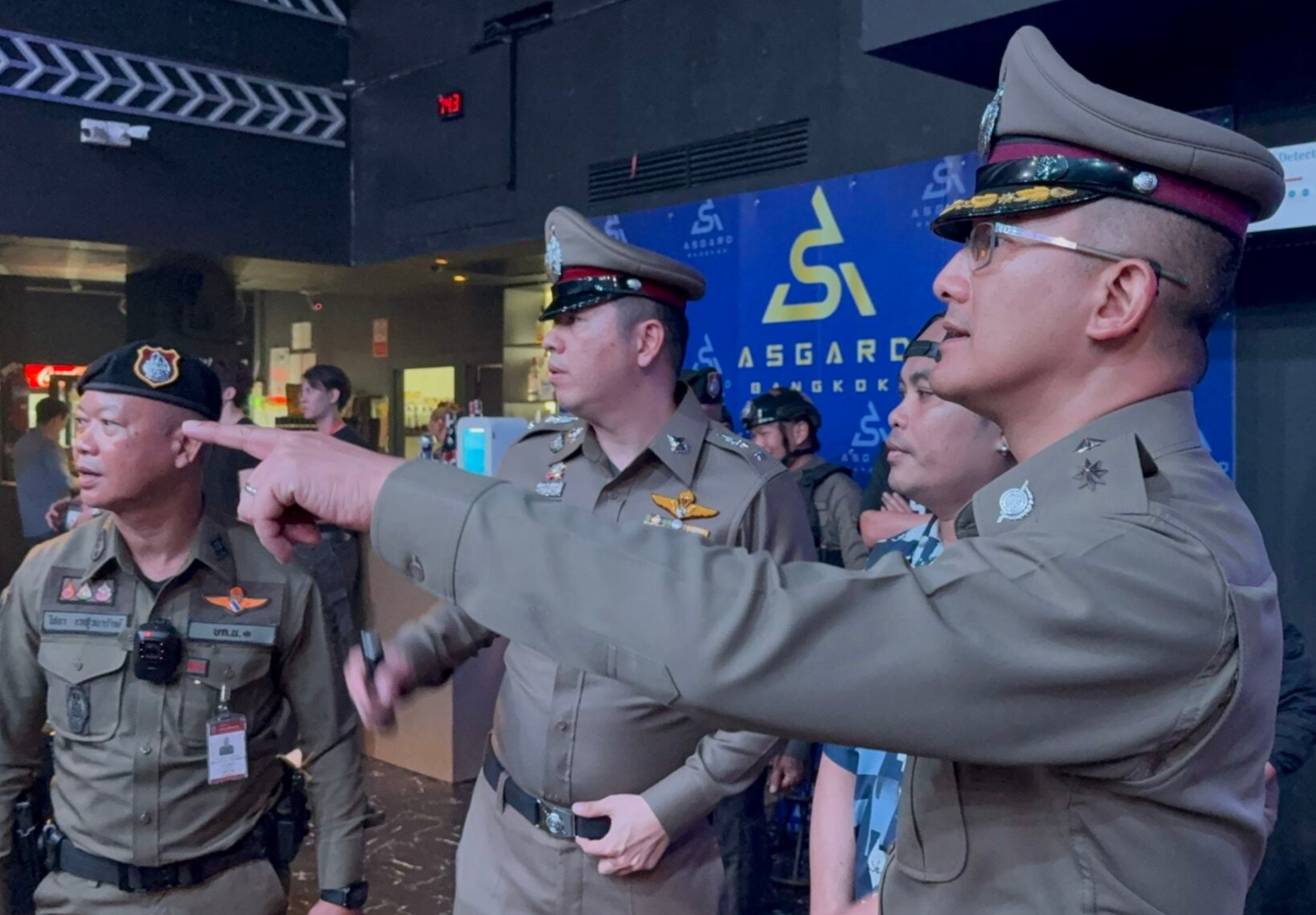 Police in Bangkok's Huai Khwang district have inspected nine entertainment venues and karaoke shops in a new crackdown targeting alleged nominee businesses, drugs, illegal workers, prostitution, weapons and violence. The first phase of the "Huai Khwang White: Restore 100% Confidence" operation began at 23.00 on 30 August. Pol Col Kamphon Rattanaprateep, acting superintendent of Huai Khwang Police Station, and Pol Lt Col Chaiya Welaowanaruk led officers across four high-risk zones. Checks covered drugs, weapons and immigration status Officers from Metropolitan Police Division 1's investigation unit joined Huai Khwang police detectives and prevention and suppression officers for the searches. The operation involved urine tests for drugs, searches for weapons and other illegal items, and screening of foreign workers for illegal employment or visa overstays. Police also revisited premises previously ordered permanently closed, including Mueang Tai and Baan Khao Fun, to ensure they had not quietly resumed trading. All officers were instructed to wear body cameras throughout their duties, police said, to ensure transparency and allow the operation to be reviewed. Initial results from all nine venues found no drugs in the bodies of tourists or staff, and no illegal items were discovered. Response to 577 Club raid Kamphon said the campaign followed action by Deputy Interior Minister Pholphee Suwanchawee, who previously led administrative officials in an inspection and arrest operation at 577 Club in the Huai Khwang police area. He described that case as an important warning that required the station to review and urgently strengthen its proactive work. Kamphon said the intention was not to close businesses or damage the district's economy, but to impose order and improve standards. He said police would distinguish between legitimate operators and alleged nominee networks concealing unlawful activity. "Huai Khwang is a vibrant economic and tourism centre," he said, adding that police would act decisively against disguised nominee groups, drugs, illegal foreign workers and all forms of illegal activity. Kamphon said shops and entertainment businesses would be offered advice and support to obtain correct licences, working with the district office and relevant agencies. Later this week, Huai Khwang police plan to join the Department of Provincial Administration, Immigration Bureau, Huai Khwang district office, Excise Department, Office of the Narcotics Control Board and Department of Business Development. The agencies will examine shareholder structures and financial routes in an effort to dismantle alleged grey-capital nominee networks. Pictures courtesy of Daily News Related story Bangkoks-577-club-raided-over-licence-and-drugs Join the discussion? 1 September 20261 point
 -
 Thailand's Finance Ministry is drawing up a framework to oversee the entire gold market, linking financial records with gold transactions to help trace suspected grey money and money laundering. The proposed system would cover online and shopfront trades, gold imports, bullion movements and physical delivery. Officials say it would allow them to follow funds from their source through to the final delivery of gold. The Fiscal Policy Office (FPO) is consulting state agencies and gold businesses before deciding the final rules, director-general Vinit Visessuvanapoom said. Closing gaps in gold-market supervision Vinit said the government faces two urgent problems: no single agency directly regulates the gold business, and the state does not have access to complete transaction data. "The gold market has two problems that need urgent attention. First, no agency directly regulates the gold business. Second, the state lacks the tools to obtain complete transaction data," he said. Without those links, authorities cannot fully establish whether money entering the financial system later moves into gold, or trace funds from their origins to their eventual destination. The Bank of Thailand has already issued some rules supporting the government's approach, while the FPO is working with other agencies on measures to widen supervision. Officials want records that can show whether the money and gold involved in a transaction actually exist, where purchase funds came from, and how both funds and bullion subsequently moved. The new framework would supplement the Anti-Money Laundering Office, which already has legal authority to monitor cash transactions and other dealings that meet statutory conditions. Online and physical gold trades linked The ministry does not believe online gold dealing and transactions at physical gold shops can be regulated separately. Vinit said money and gold may pass through both channels in a single transaction chain. The ministry says it wants access to essential information without placing unnecessary costs or disruption on a gold industry that remains important and popular in Thailand. Tax is not the only possible tool No decision has been made on a specific business tax for gold transactions. Vinit stressed that taxation was one possible way to obtain transaction records, rather than the main purpose of the policy. "I do not want the public to worry about tax, because that may create the impression that the government is trying to raise revenue when this is a separate issue," he said. "Tax is only one tool, but it gives us transaction data. There are several other tools, so oversight is more important in the bigger picture." The FPO aims to complete its work as quickly as possible, but Vinit said officials must first determine which measures would genuinely close loopholes without causing disproportionate harm to legitimate gold businesses. Join the discussion? 1 September 20261 point
 -
 A planned large data centre in Soi Ramkhamhaeng 28, Bang Kapi, Bangkok, is reported to have 429,000 litres of diesel reserved for backup generators, prompting public calls for disclosure of its permits and safety systems. Bangkok MP Suphanat Minchaiynunt of the People's Party and Nitipoomthanat Mingrujirala, known as Tutor Moo, have separately raised concerns about the project. The reported diesel volume is equivalent to that held by three or four large petrol stations, according to Suphanat. The claims concern a facility in a densely populated part of the capital, where nearby residents - including foreign tenants and homeowners - would want to know what emergency procedures, fire protection and environmental safeguards apply. No response from Bangkok Metropolitan Administration (BMA) has made. Questions over planning and fuel rules Suphanat said data centres have been built across Bangkok and other provinces without clear regulation because Thai building-control and town-planning laws do not define what category a data centre falls into. He said developers may classify them as warehouses, offices or commercial buildings. Since 2024, he said he has raised the matter with the House committee on economic development and called on the Department of Public Works to define data centres, while urging the BMA to regulate them through its revised city plan. However, he said there had been no progress after two years. He also criticised the BMA's draft new city plan, saying it would still allow private developers to build data centres without adequate controls. Suphanat said the Ramkhamhaeng facility's 429,000 litres of diesel falls below the 500,000-litre threshold under the Fuel Oil Control Act, and therefore does not meet the stated criterion. He also said an Environmental Impact Assessment, or EIA, was not required because relevant EIA listings cover petroleum development and petroleum transport. Calls for documents and safety details Nitipoomthanat said he wanted the project and relevant agencies to disclose the diesel type, authorised volume, storage location and safety measures. He said diesel has a higher flash point than petrol and is not easily ignited, but warned that a major fire involving such a quantity could produce intense heat, heavy smoke and combustion pollutants. He also raised the risk of leaks affecting soil, drainage and the surrounding environment. He said storage of a less-flammable fuel between 15,000 and 500,000 litres may fall under a type-three storage category requiring permission, and asked whether approval had been granted. His further questions covered the licence category, the agencies responsible for approval and inspection, the latest inspection date, tank and pipe leak prevention, firefighting systems, emergency plans and any assessment of local impacts. He also questioned whether the Bhumjaithai-led government under Anutin Charnvirakul required an EIA before authorising a project of this scale. Nitipoomthanat cited potential 24-hour noise from cooling equipment, fans, pumps, transformers and generators. Join the discussion? 31 August 20261 point
 -
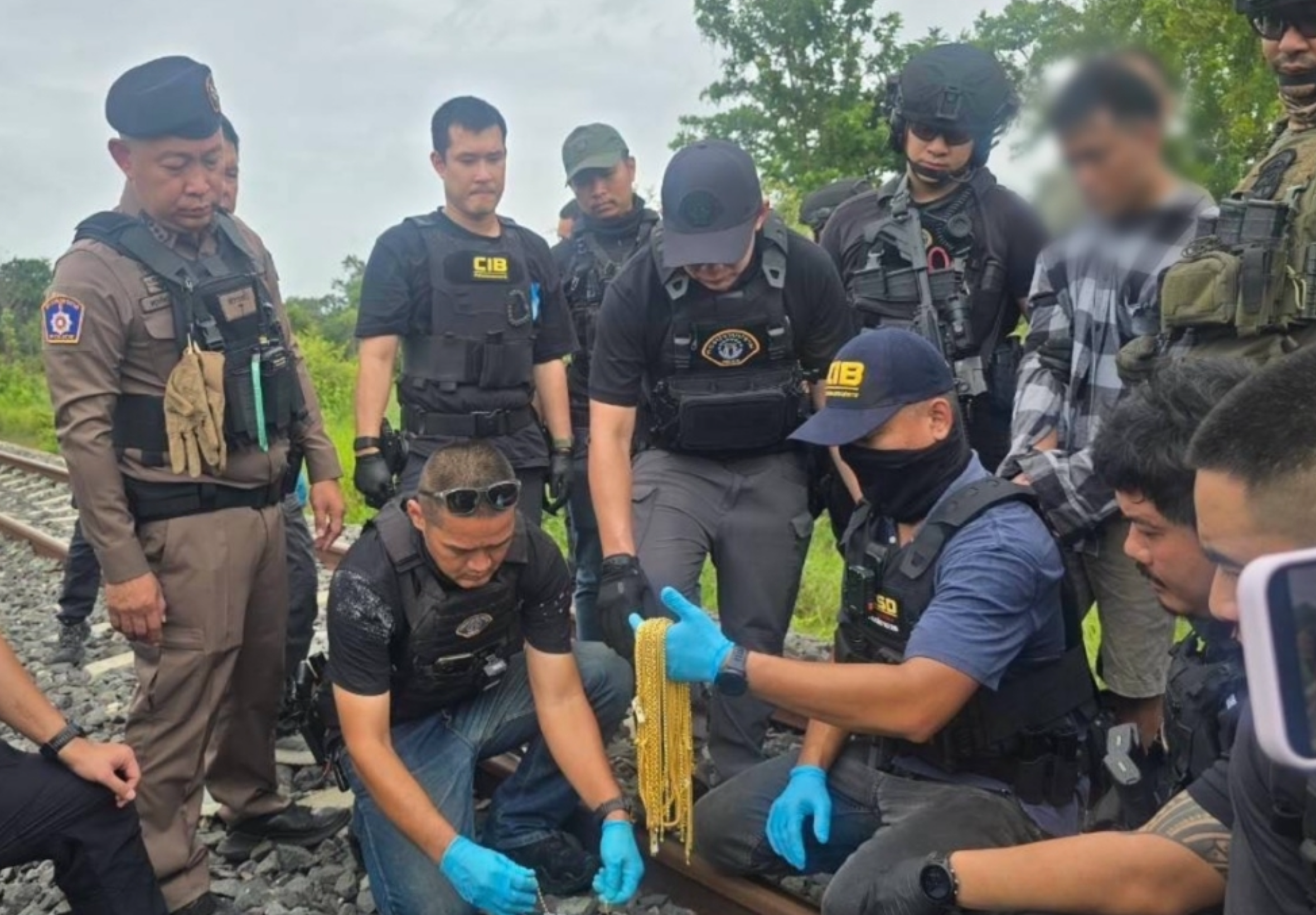 Thai police have arrested a 36-year-old man accused of robbing a gold shop inside a shopping mall in Aranyaprathet, Sa Kaeo, while armed with a handgun and carrying a homemade smoke bomb. Arnon Udtiram was detained by armed response teams, on 30 August 2026, with investigators saying he confessed to planning the robbery in advance. Police recovered about 50 gold necklaces and bracelets allegedly hidden in woodland beside a railway line. The robbery took place on 27 August at a Yaowarat gold shop in the Sa Kaeo border district. The suspect is accused of taking gold jewellery with a total weight of 72 baht, valued at about 5 million baht. Suspect held on armed robbery warrant The Sa Kaeo Provincial Court issued arrest warrant No. 233/2569 for Arnon on 30 August, charging him with armed robbery and using a vehicle to facilitate the offence, remove stolen property or avoid arrest. Police also obtained search warrant No. 131/2569 and searched a house in Moo 9, Tha Kham subdistrict, Aranyaprathet district. The operation was overseen by Pol Lt Gen Nattasak Chawanasai, commissioner of the Central Investigation Bureau, Pol Maj Gen Pattanasak Bupphasuwan, commander of the Crime Suppression Division, Pol Col Pongpanot Chukaew, deputy CSD commander, and Pol Col Netiwit Thanasitnitikul, superintendent of CSD Division 2. Police say robbery was well planned According to police, the masked robber entered the mall carrying a handgun and threw a homemade smoke bomb in front of the gold shop before taking numerous necklaces and bracelets. He then fled on a motorcycle that had been parked in readiness. During questioning, Arnon admitted obtaining a motorcycle for the crime and repainting it to alter its appearance. He also said he had bought clothing and a wig to conceal his identity. Police said that after the robbery he hid the motorcycle and stolen gold in wooded ground alongside the railway, before returning to his home and behaving normally. Investigators from CSD Division 2, Sa Kaeo Provincial Police Investigation Division and Aranyaprathet Police Station tracked the alleged escape route and gathered evidence before identifying Arnon as the suspect. The suspect, recovered property and other evidence have been handed to investigators at Aranyaprathet Police Station for further legal proceedings. Pictures courtesy of ThaiRath Related story Gold-shop-robbery-sparks-police-hunt-in-Aranyaprathet Join the discussion? 30 August 20261 point
 -
 The Bank of Thailand (BOT) has announced 18 nationwide holidays for financial institutions in 2027, producing eight long weekends of at least three days. The longest closure will be from Saturday, May 1, to Tuesday, May 4, combining the weekend, the substitute holiday for National Labour Day and Coronation Day. Songkran bank holidays will run for three consecutive days, April 13-15. For foreigners living in or visiting Thailand, the calendar is useful for planning branch transactions, bank paperwork, property payments and other tasks requiring in-person service. The announced dates apply to financial institutions; travellers and residents should check directly with their bank for arrangements at individual branches. Nationwide bank holidays in 2027 Friday, January 1: New Year's Day. Monday, February 22: Substitute holiday for Makha Bucha Day, which falls on Sunday, February 21. Tuesday, April 6: Chakri Memorial Day, commemorating King Buddha Yodfa Chulalok the Great and the Chakri dynasty. Tuesday, April 13: Songkran Day. Wednesday, April 14: Songkran holiday. Thursday, April 15: Songkran holiday. Monday, May 3: Substitute holiday for National Labour Day, which falls on Saturday, May 1. Tuesday, May 4: Coronation Day. Thursday, May 20: Visakha Bucha Day. Thursday, June 3: Birthday of Her Majesty Queen Suthida Bajrasudhabimalalakshana. Monday, July 19: Substitute holiday for Asalha Bucha Day, which falls on Sunday, July 18. Wednesday, July 28: His Majesty the King's Birthday. Thursday, August 12: Birth anniversary of Her Majesty Queen Sirikit The Queen Mother and National Mother's Day. Wednesday, October 13: Navamindra Maharaj Day. Monday, October 25: Substitute holiday for Chulalongkorn Day, which falls on Saturday, October 23. Monday, December 6: Substitute holiday for the December 5 observances: the birth anniversary of His Majesty King Bhumibol Adulyadej The Great, Thailand's National Day and National Father's Day. Friday, December 10: Constitution Day. Friday, December 31: New Year's Eve. Eight extended breaks for banks For institutions on a normal Monday-to-Friday schedule, the long weekends are: January 1-3: New Year. February 20-22: Makha Bucha. May 1-4: National Labour Day and Coronation Day. July 17-19: Asalha Bucha. October 23-25: Chulalongkorn Day. December 4-6: December 5 observances. December 10-12: Constitution Day. December 31-January 2, 2028: New Year's Eve and the weekend. August 12 remains the annual holiday for Queen Sirikit The Queen Mother's birth anniversary and National Mother's Day. Regional closures and discontinued holidays Islamic Bank of Thailand will additionally close for Eid al-Fitr and Eid al-Adha on dates announced by the Sheikhul Islam Office, where these do not coincide with nationwide holidays or weekends. Financial-institution branches in Narathiwat, Pattani, Yala, Satun and Songkhla will also receive holidays for Eid al-Fitr, Eid al-Adha and Chinese New Year, subject to the same condition. The BOT said the July 1 half-year closing holiday, abolished in 2019, and the April 1 annual-account closing holiday for the Bank for Agriculture and Agricultural Cooperatives, abolished in 2022, will not return. Improved accounting systems allow book-closing without disrupting services. Join the discussion? 30 August 20261 point
 -
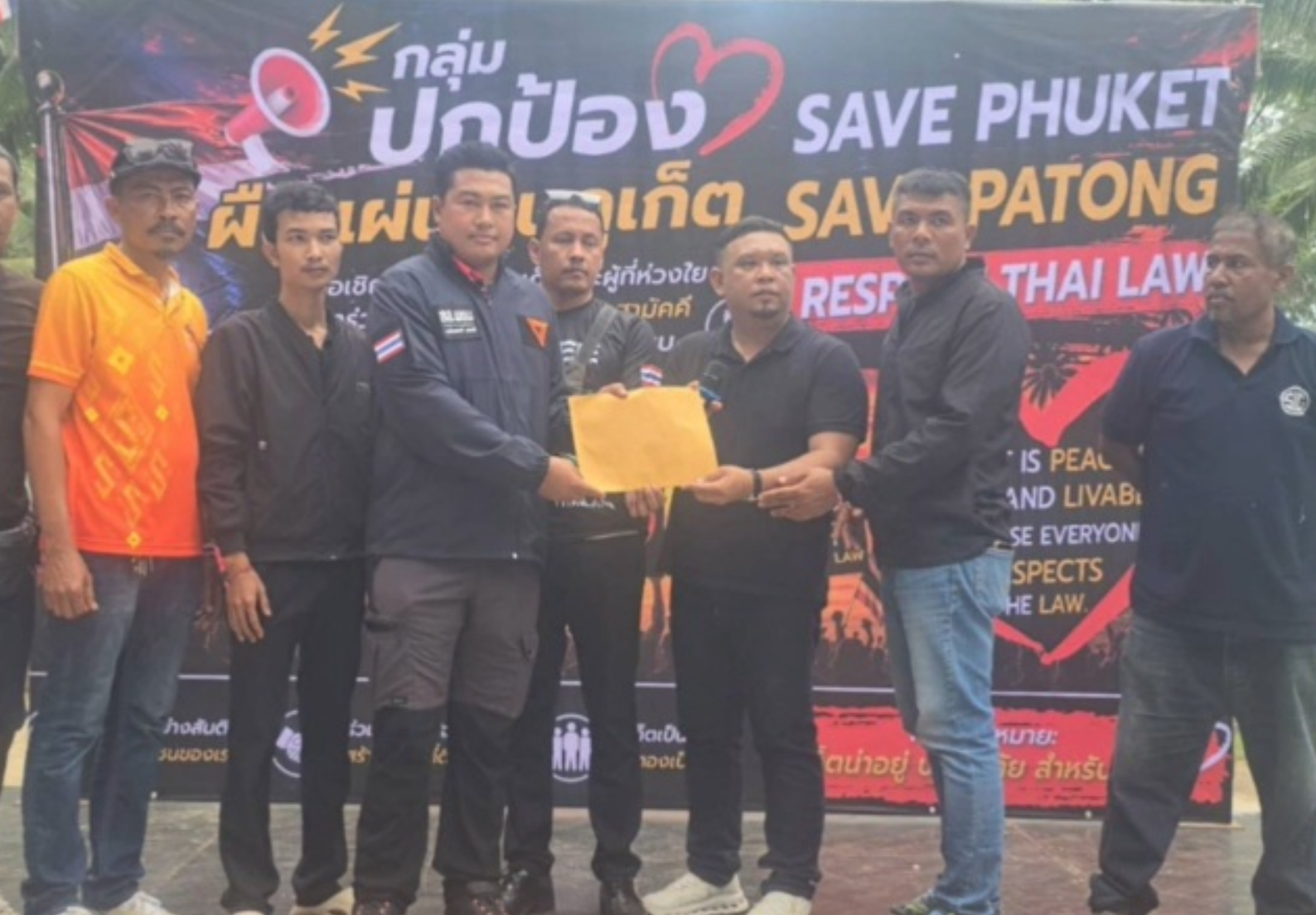 Around 200 to 300 Phuket residents gathered at Loma Park on Patong Beach on Friday, 28 August, calling on the government to restrict Israeli tourists to a maximum stay of 15 days. The demand was made at a forum titled "Save Phuket, Save Patong, Respect Thai Law", where attendees raised concerns about the conduct of some foreign visitors and alleged illegal business activity. The event was closely monitored by uniformed and plainclothes police. Tourism operators, hotel owners, tuk-tuk drivers, tour guides and local residents attended the meeting, organised by the Phuket Land Protection Group. Calls for tighter screening Participants said Phuket should more carefully screen arriving visitors and focus on what they described as high-quality tourist groups. They proposed stricter visa rules, including a 15-day limit for Israeli tourists, to ensure visitors are coming for holidays rather than to operate illegal businesses or take jobs from Thai people. One tourism operator told the forum that three flights a week bring Israeli visitors to Phuket, each carrying 200 to 300 passengers. According to the speaker, at least 1,000 Israelis arrive each week, with many staying for at least 15 days or more per trip. The operator acknowledged that Israelis are high-spending tourists, but said residents wanted visitors who holiday in Phuket and then leave rather than remaining for what they considered excessively long periods and competing for local work. Attendees also complained about what they termed low-quality tourism, saying some visitors use cheap accommodation, buy food from convenience stores and behave arrogantly or disregard the law. They further argued that a large Israeli presence could discourage European tourists from travelling to Phuket. Petition handed to Phuket MP Chalermpong Saendee, the People's Party MP for Phuket Constituency 2, received a petition from the Phuket Land Protection Group after listening to the views raised at the forum. He said Phuket was a world-class destination drawing visitors from around the globe each year, and that tourism creates income and economic opportunities for the island province. However, Chalermpong said problems needed to be addressed where people entered Thailand without respecting Thai law. He also referred to investment groups that had entered the market by taking advantage of local businesses, leaving Phuket SMEs and small entrepreneurs facing unfair competition. Picture courtesy of TNR Join the discussion? 30 August 20261 point
 -
 Phuket recorded a 52.5% year-on-year increase in Israeli visitors in July, with arrivals from Israel also up 1,205% on pre-Covid July 2019 levels, according to the Tourism Authority of Thailand's Phuket office. The figures were presented at a provincial meeting on August 27, chaired by Phuket Governor Chotinarin Kirdsom. While total visitor numbers were slightly lower over the first seven months of 2026, tourism income remained comparatively steady. Israeli market leads July growth Israel was the fastest-growing market among Phuket's 10 leading visitor source countries in July, rising by more than 12 times compared with the same month in 2019. Russia remained Phuket's largest overseas market between January and July, supplying 619,130 visitors. China was second with 383,918, followed by India on 354,066, Australia on 149,542 and the United Kingdom on 131,344. The rest of the top 10 consisted of Germany with 106,902 visitors, France with 103,752, Malaysia with 87,854, Kazakhstan with 81,673 and South Korea with 79,960. China was Phuket's leading single market in July itself, recording 58,634 visitors. That was a 19% increase on July last year, although still 63% below the July 2019 figure. Visitor total slips but spending holds up From January to July, Phuket welcomed 8,096,059 visitors, a 1.53% fall from the same period last year. Hotel occupancy averaged 75.56%, down 1.74%. Despite the lower visitor total, the province generated about 310,961.57 million baht in tourism revenue during the seven-month period, a decline of only 0.72% year-on-year. The TAT attributed the resilience in revenue to a steady flow of high-spending tourists. New direct services due this year Kuwait Airways is scheduled to start a Kuwait-Phuket service on October 27, operating twice a week. MIAT Mongolian Airlines will also operate flights between Ulaanbaatar and Phuket three times weekly from December 2026 until March 2027. The new Middle East and East Asian connections are expected to support Phuket tourism during the second half of 2026 by opening additional markets and giving travellers more direct options to reach the province. Picture courtesy of Manager Online Join the discussion? 29 August 20261 point
 -
 Bangkok has been named the world's best city for nightlife in 2026 by Time Out, climbing from 13th place last year to beat Berlin, New York City, Melbourne and Sao Paulo. The ranking was based on a survey of more than 24,000 residents in 150 cities, alongside views from more than 100 Time Out editors and city experts. It assessed nightlife quality and affordability, community, and whether a city feels exciting, lively, diverse, welcoming and safe after dark. Survey puts Bangkok at the top Some 73% of Bangkok respondents described the city's nightlife as either "good" or "amazing", according to Time Out. The same proportion said it was easy to find connection and community in the capital. Time Out's expert panel gave Bangkok a 95% approval score. The city was also eighth in Time Out's wider list of the world's best cities for 2026, and second among Asian cities. The top 10 nightlife cities were: Bangkok, Thailand Berlin, Germany New York City, US Melbourne, Australia Sao Paulo, Brazil Medellin, Colombia Johannesburg, South Africa Brighton, UK Beijing, China Amsterdam, Netherlands Bars, clubs and food after midnight Time Out pointed to Bangkok's breadth of after-dark choices, from major clubs and rooftop bars to small neighbourhood cocktail venues, roadside drinking spots and late-night food stalls. LGBTQ+ venues were also among the attractions cited. The guide singled out the Soi Nana area, where venues include G.O.D, Tep Bar and Ba Hao. Sing Sing Theater was also highlighted, along with newer rooftop venues: ÆTHER, on the 44th floor of Dusit Central Park, and Sato San, on the 32nd floor of Moxy Bangkok Ratchaprasong. Silom and street food add to the appeal Late-night food was another part of Bangkok's appeal, Time Out said. It noted that people can move between rooftop venues, local bars and street-food stalls serving dishes such as pad kaphrao well into the night. Silom was highlighted for its LGBTQ+-friendly nightlife scene. For newcomers, that variety may make Bangkok easier to explore than cities where bars, restaurants and clubs are concentrated in separate areas, although visitors should still make their own arrangements for getting back to their accommodation after a night out. Join the discussion? 29 August 20261 point
 -

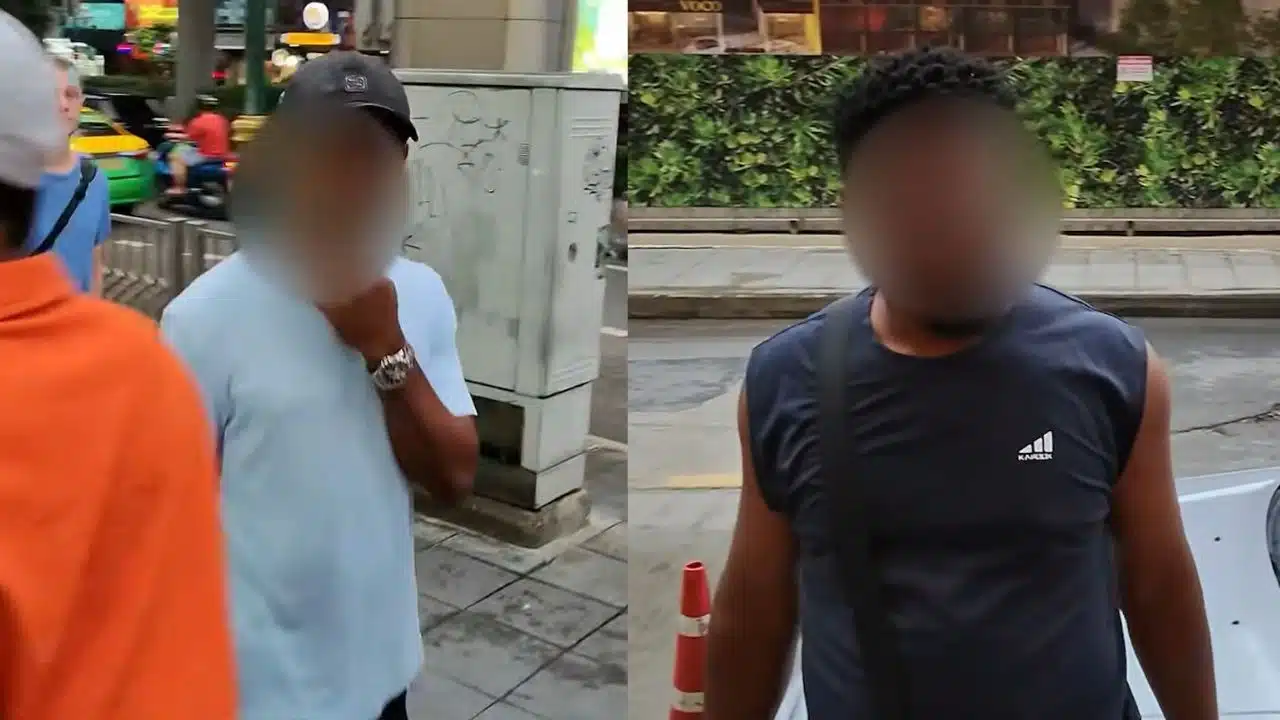 A foreign travel vlogger has raised concerns about apparent street-level drug dealing in central Bangkok after filming several men allegedly offering him cocaine while he walked along Sukhumvit Road with his nine-year-old son. YOUNG DAUGHTER THOUGHT DEALER MEANT COCA-COLAThe vlogger, known online as GlobetrotterJulez, said he decided to document the encounters after repeatedly being approached the previous day while carrying his four-year-old daughter. During one encounter, he claimed a man offered him “coke”, prompting his daughter to mistakenly believe the stranger was offering Coca-Cola. After being approached several times that day, the vlogger returned to Sukhumvit on August 18 to record what was happening. This time, he wore Meta smart glasses while his nine-year-old son accompanied him. NUMEROUS APPROACHES DURING SHORT WALKDuring a daytime walk lasting approximately 30 to 40 minutes, the vlogger recorded numerous men approaching or attempting to engage him. He estimated that he was approached at least 10 times, with several encounters allegedly involving offers of cocaine. The presence of his young son appeared to do little to discourage some of those approaching him. No drugs were shown changing hands in the footage, and the activities of the individuals recorded have not been independently verified. QUESTIONS OVER DEALING IN BUSY TOURIST AREAThe footage has nevertheless raised concerns about how openly suspected drug dealers appear able to approach foreigners along one of Bangkok’s busiest tourist and entertainment corridors. Sukhumvit Road and its surrounding sois attract large numbers of international visitors and contain some of the capital’s best-known hotels, bars, restaurants and nightlife districts. The vlogger stressed that his criticism was directed at the apparent drug dealing rather than the nationality or ethnicity of those shown in his footage. COCAINE REMAINS HEAVILY RESTRICTED IN THAILANDCocaine is classified as a Category 2 narcotic in Thailand, with trafficking, importing, exporting and selling the drug carrying severe criminal penalties. Thai authorities have made a number of arrests involving international cocaine trafficking networks operating through Bangkok and other parts of the country. The footage has since generated online discussion about drug enforcement in central Bangkok and whether a greater police presence is needed in parts of Sukhumvit where tourists are frequently approached. August 28. 20261 point
 -
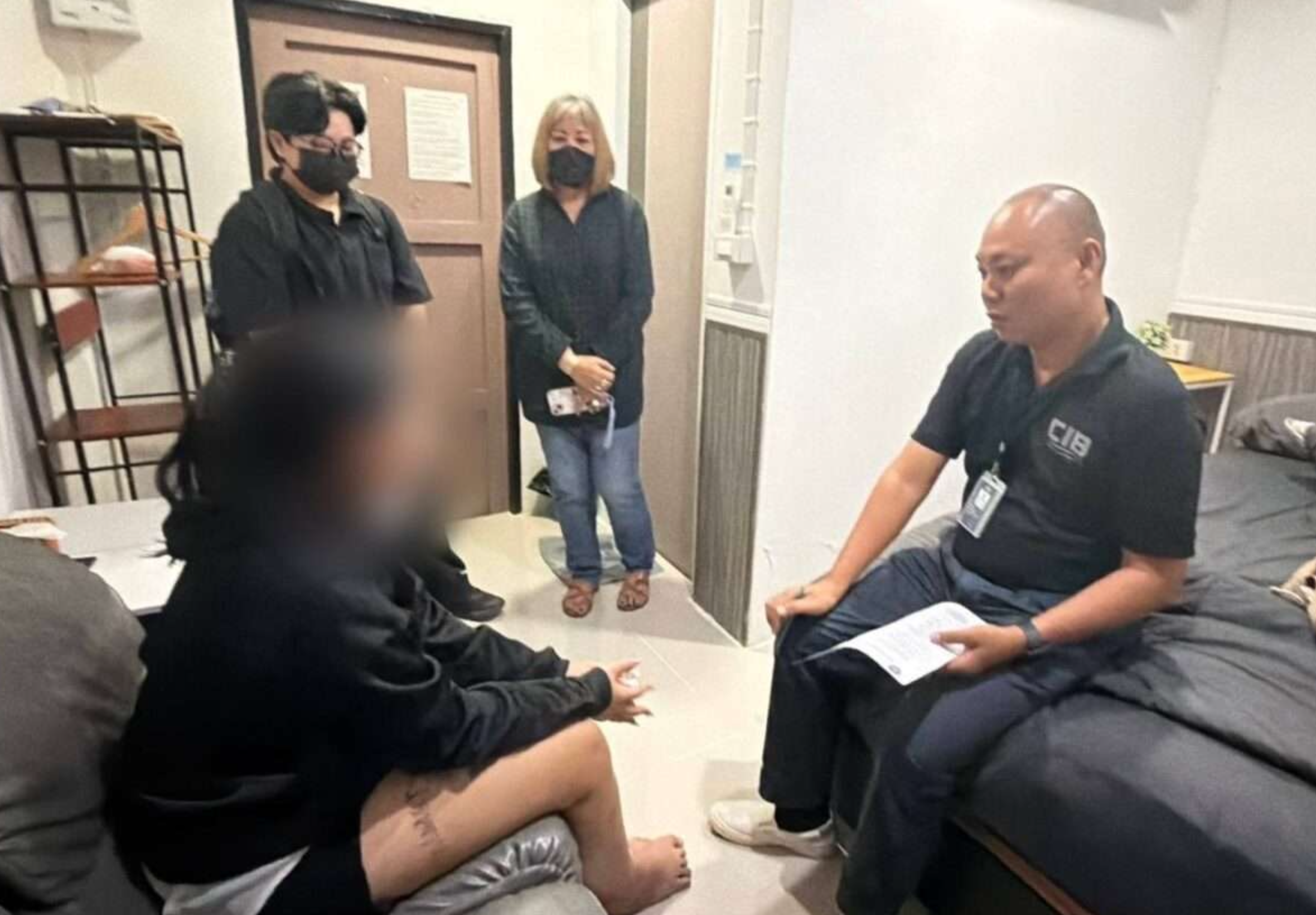 Police have arrested the 46-year-old owner of a karaoke venue in Nakhon Sawan after an undercover operation allegedly uncovered the sale of sexual services involving girls aged under 18. Four girls were removed from the premises and referred for protection after the raid in Nong Pling, Mueang Nakhon Sawan district, on Wednesday, 26 August. Wadi, also known as Ple, whose surname was withheld, faces allegations of child trafficking for sexual exploitation, procuring or taking a person under 18 for indecent purposes, encouraging or allowing children to engage in inappropriate conduct of a sexual nature, and operating an entertainment venue without a licence. The operation was ordered by Pol Maj Gen Witthaya Sriprasertphap, commander of the Anti-Trafficking in Persons Division. Officers from Division 4 worked with the International Protection Alliance, or IPA. Undercover officer arranged alleged booking Police said they received information that the karaoke venue was bringing in girls under 18 to provide sexual services. An undercover officer was sent in to investigate and, officers said, found that Wadi owned and managed the business, controlled staff, allocated rooms and collected payments. The undercover officer allegedly arranged sexual services with a 17-year-old girl for 2,000 baht. Payment was made by scanning the venue's QR code, according to police. The girl was then taken to a room at a resort, where officers identified themselves and arrested Wadi. The 17-year-old was taken into care. Four girls referred for care A second team searched the karaoke venue and found Wadi at the counter, along with nine female employees. Checks found that three more girls aged 16 were working there, police said. That brought the number of people under 18 assisted in the operation to four. During questioning, Wadi allegedly admitted that the venue deducted 500 baht from the payment received by each girl sent out to meet customers. She was handed to investigators from Division 4 of the Anti-Trafficking in Persons Division for legal action. The four girls have been placed into a screening and protection process involving a multi-disciplinary team and the Nakhon Sawan Provincial Social Development and Human Security Office. Authorities said they will receive rehabilitation, psychological support and assistance under child welfare provisions. AQPqXyIbO7kOGImQVUzanPCsiBG7OeQw2ONhPGTeGqPSTuhMm77SgQPRNO5GQN0OL4_A_gmU9kI3bwZU5DNjZAuY2xRqGn2nfbDe54VKUA.mp4 Join the discussion? 28 August 20261 point
 -
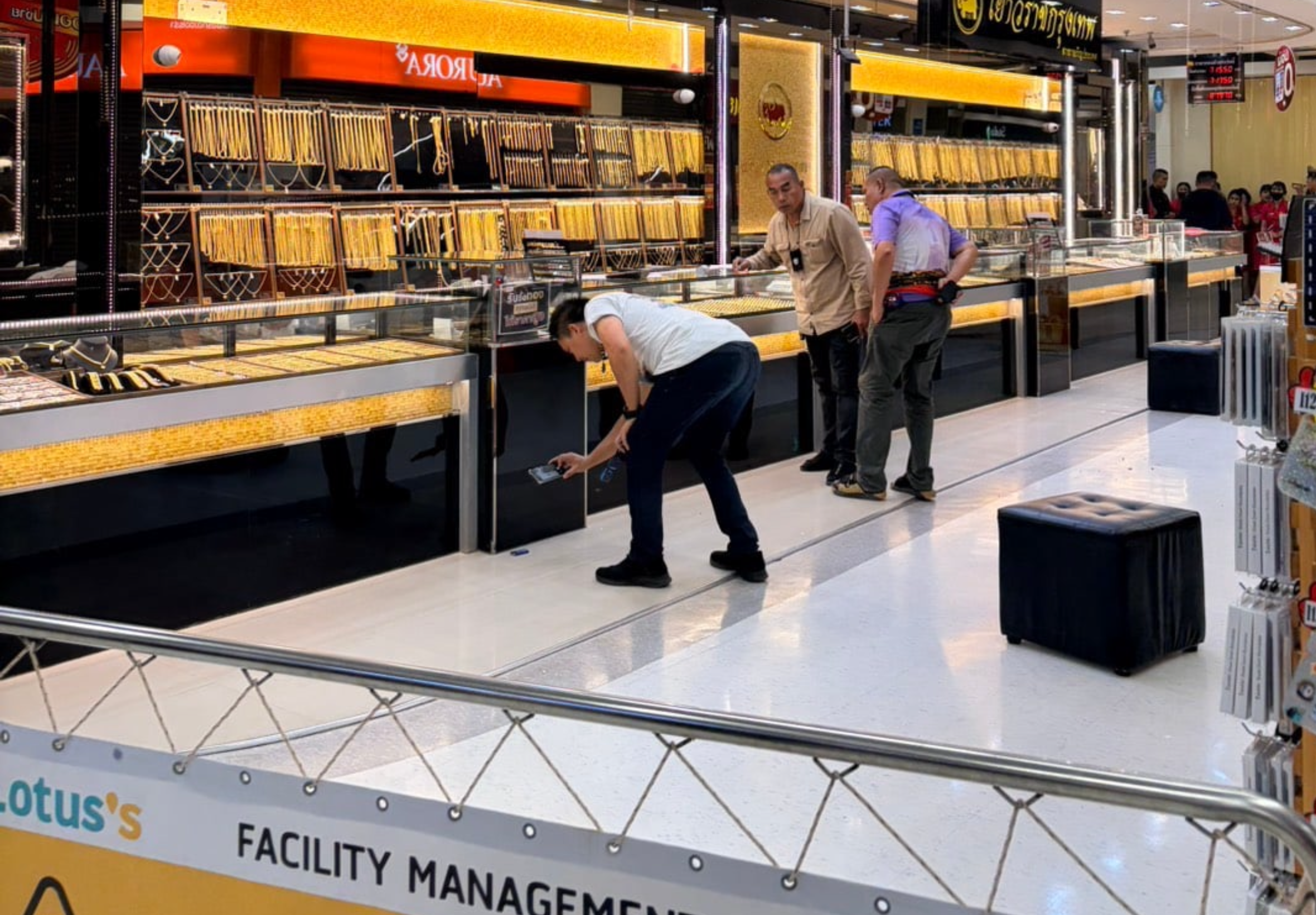 Picture courtesy of Daily News Police in Sa Kaeo are searching for a man accused of robbing a gold shop inside a shopping centre in Aranyaprathet district shortly after midday on 27 August. The suspect allegedly threw an object resembling a bomb into the shop, threatened staff with a firearm and escaped with around two trays of gold. Police have not yet established the weight of the gold or the value of the losses. The robbery was reported at about 12.30pm at the Aranyaprathet branch of a department store. Aranyaprathet is a major border town near Cambodia, used by many travellers and foreign residents moving through the eastern region. Suspect fled by motorcycle Initial police information described the suspect as a man wearing a cap, a long-sleeved shirt and jeans. He was said to have left on a motorcycle, heading towards Aranyaprathet town. In a later update at 1pm, Pol Col Jaturaphat Singhasthit, deputy commander of Sa Kaeo Provincial Police, described the suspect as tall and slim, wearing a black-and-white checked shirt and jeans, with his face fully covered by cloth. He said the man had approached the shop calmly before throwing the bomb-like object inside. Terrified gold shop employees dropped to the floor for safety, he said. The suspect then allegedly jumped over the counter, drew a firearm and used it to smash the display cabinets. He reportedly took a large quantity of gold necklaces before leaving through the rear entrance of the shopping centre. CCTV and escape route under review Pol Col Damrong Iampaorot, superintendent of the Sa Kaeo Provincial Police investigation division, led provincial investigators to the scene after the report. Pol Col Jaturaphat and investigation officers later inspected the shop and continued checking the suspected escape route. Police are gathering evidence at the scene and reviewing CCTV footage in an effort to identify the suspect and trace his movements. Officers have also asked members of the public to watch for the wanted man and provide information that may assist the investigation. Authorities said they are working to identify, locate and arrest him as quickly as possible. AQPUWDb2TGlEND_cromLoeDSpjwRawDQX25SJPf708w84kZA_3mi7x0lLfxRmogofiDEuj2pBEFsDjvI9fUqSuUGCmykRuuUu87-kSq6-g.mp4 Join the discussion? 28 August 20261 point
 -
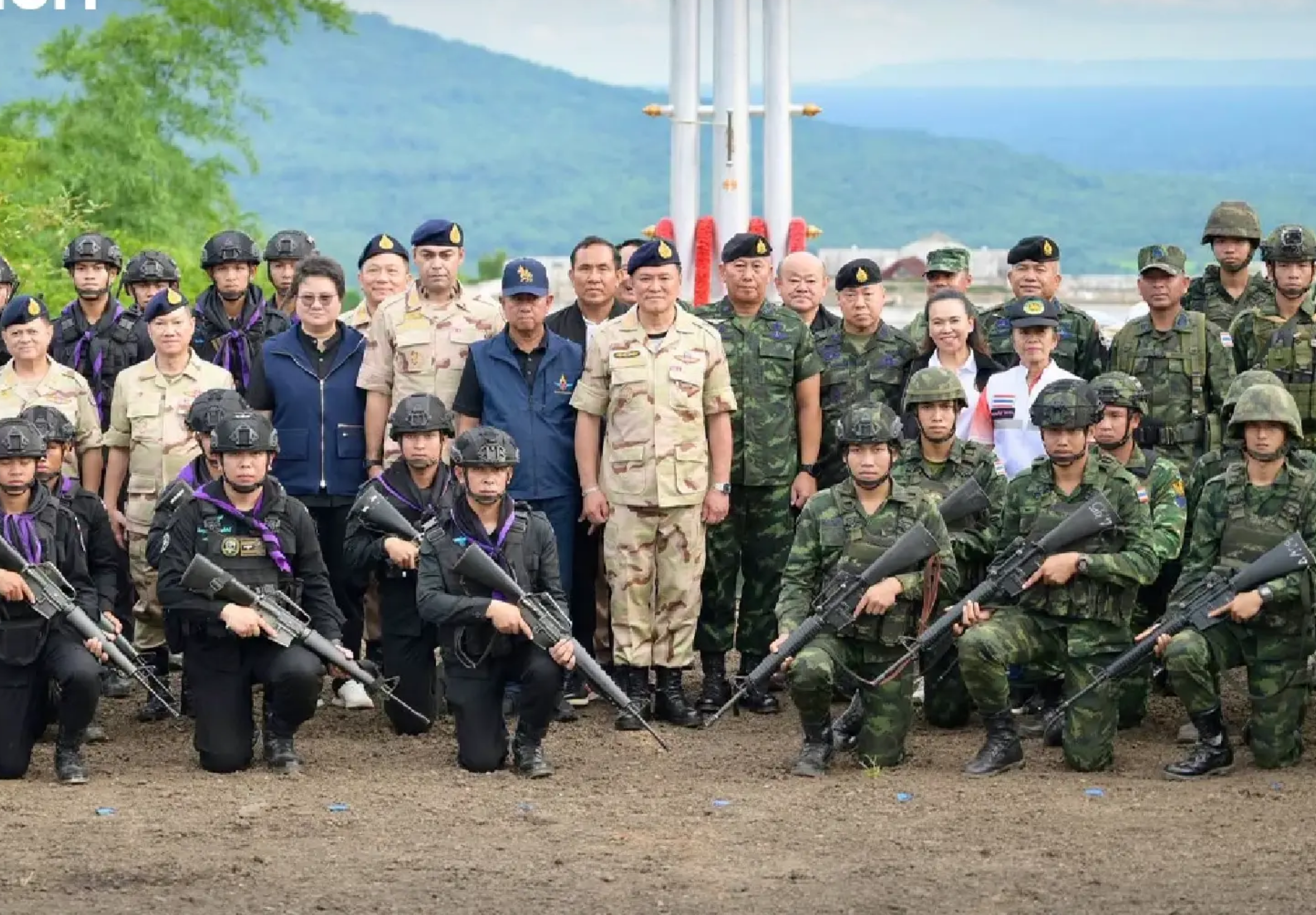 Thailand's Joint Information Centre has warned that threats in a Cambodian article to arrest Prime Minister Anutin Charnvirakul, for allegedly entering Cambodia illegally, coupled with references to using force, could undermine negotiations over disputed border areas. Air Chief Marshal Prapas Sonjaidee, director of the Thailand-Cambodia Joint Information Centre (JIC), said on Thursday, 27 August, that the rhetoric risked damaging the atmosphere needed to preserve peace between the neighbouring countries. The comments followed an article stating that Thai officials, including Anutin, could be arrested and prosecuted under Cambodian law as they entered territory claimed by Cambodia. The article also raised the possibility of force being used. Thailand rejects claim that visit changed the border Prapas said Anutin's visit was intended to inspect and support Thai personnel in areas held by Thailand under existing agreements. It did not amount to a border provocation, border demarcation or the creation of a new boundary, he said. Nor did the visit represent Thai acceptance of another party's sovereignty claim, according to the JIC director. For foreigners living close to the Thai-Cambodian border, or travelling through border provinces, the statement indicates that the disagreement remains unresolved but is being addressed through existing bilateral arrangements. The JIC said Thai forces remain at positions they held when a ceasefire took effect, under an agreement between the two countries. Prapas urged Cambodia to reconsider the Joint Statement signed at the third Special General Border Committee meeting on 27 December 2025. Under that agreement, both sides are to keep forces at their ceasefire positions, avoid moving troops or patrolling towards the other side's positions, and refrain from provocative actions that could increase tension. Call for talks through agreed mechanisms One side declaring an area to be under its sovereignty cannot settle a boundary dispute, Prapas said. Such unilateral claims should not be used to threaten arrests or prosecutions of the other country's officials, or to raise the prospect of force. He said disagreements should instead be handled through bilateral mechanisms already accepted by both countries, using maps, evidence, treaties, surveys and recognised procedures. "We should therefore ask whether talking about arresting the prime minister of a neighbouring country, or raising the possibility of using force, helps create an atmosphere for negotiations or instead destroys it," Prapas said. Thailand had chosen dialogue, bilateral mechanisms and adherence to agreements signed by both sides, he added, and wanted Cambodia to take the same approach. "Do not use threats in place of negotiations, or unilateral claims in place of border demarcation, and do not turn the border into an arena for escalating rhetoric," he said. Prapas said people in both countries wanted safety, peace and a border where differences were resolved through negotiations rather than threats. Picture courtesy of The Nation Join the discussion? 28 August 20261 point
 -
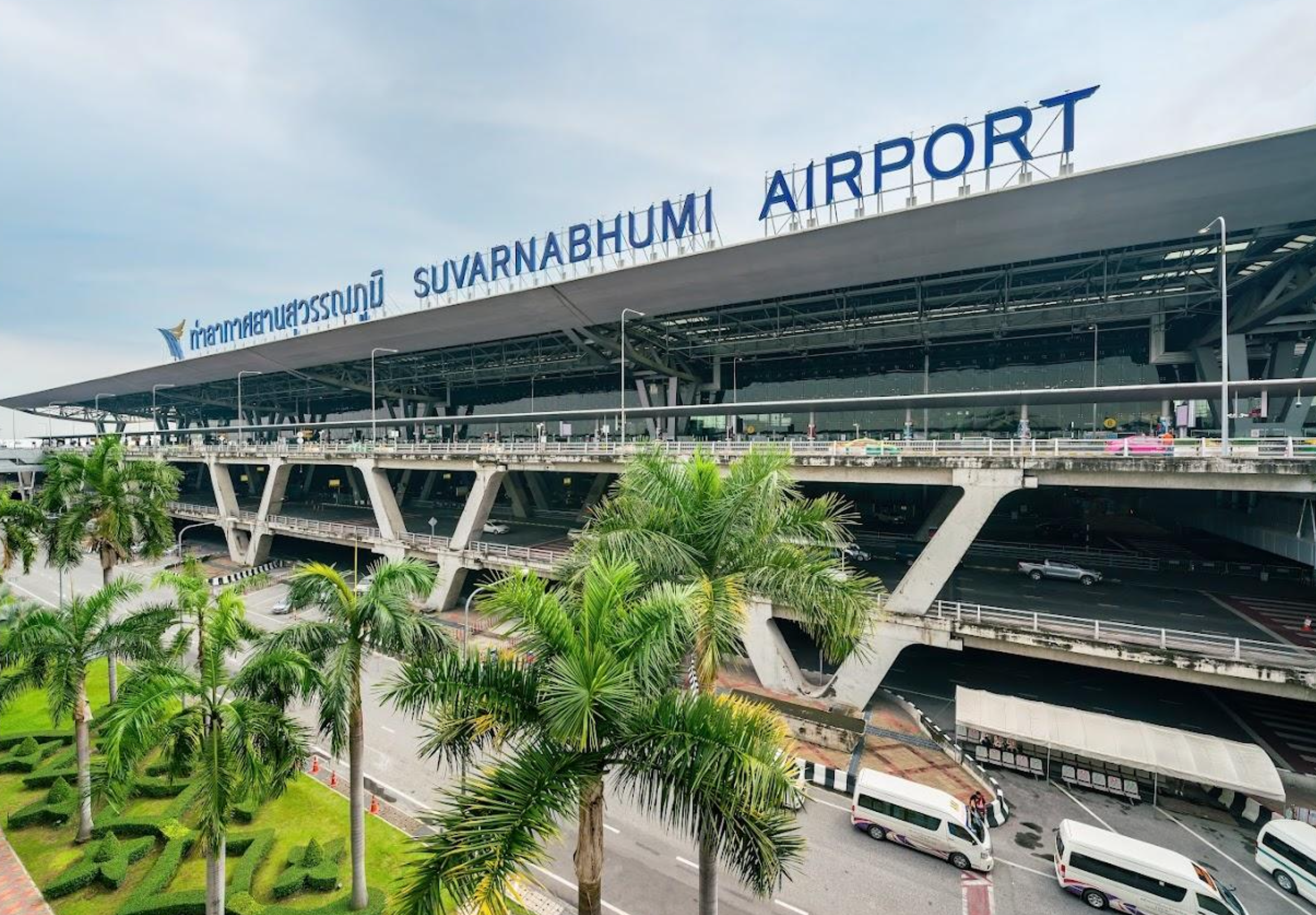 Passengers heading to Suvarnabhumi Airport face seven months of traffic diversions on the elevated roads serving the passenger terminal, starting on August 31, 2026. The maintenance programme will run until April 7, 2027, affecting elevated access routes to and from the terminal which connect with Motorway No. 7, the Bangkok-Chonburi route. Lanes to close in phases Three lanes in affected sections will be closed in phases during the work, leaving two lanes open through diversions. Airport authorities warned that this could lead to slower traffic, particularly at busy times. Work zones will move according to the project timetable, with diversions applying only to the sections currently being repaired. Traffic arrangements will be adjusted where appropriate in an effort to reduce the overall effect on journeys to and from the airport. The repairs are intended to improve safety standards and maintain the airport's access-road infrastructure, supporting efficient travel for passengers and other users in the longer term. Allow extra time for flights For foreign residents, visitors and business travellers using Bangkok's main international airport, the changes could be particularly important for early-morning departures, peak-hour journeys or trips made by taxi, private car or airport transfer. Suvarnabhumi Airport has advised all passengers and users to plan ahead and allow additional time to reach the terminal, reducing the risk of missing a flight. Travellers can also consider using the Airport Rail Link for journeys to and from the airport, avoiding road congestion around the terminal access roads. Those arriving in Thailand may similarly face longer transfer times if collecting a hired car, being picked up by friends or family, or taking a taxi directly from the terminal during busy periods. Drivers asked to follow signs Traffic officers will be stationed throughout the works, while warning signs will be placed around repair areas. Drivers have been asked to take particular care, reduce speed, avoid stopping or parking on road shoulders, and follow signs and instructions from officials. Suvarnabhumi Airport apologised for the inconvenience and said it would provide regular updates on repair progress and traffic diversions through its Suvarnabhumi Airport Facebook page. Further information is available from the AOT Contact Center on 1722, which operates 24 hours a day. Picture courtesy of Suvarnabhumi Airport Join the discussion? 27 August 20261 point
 -
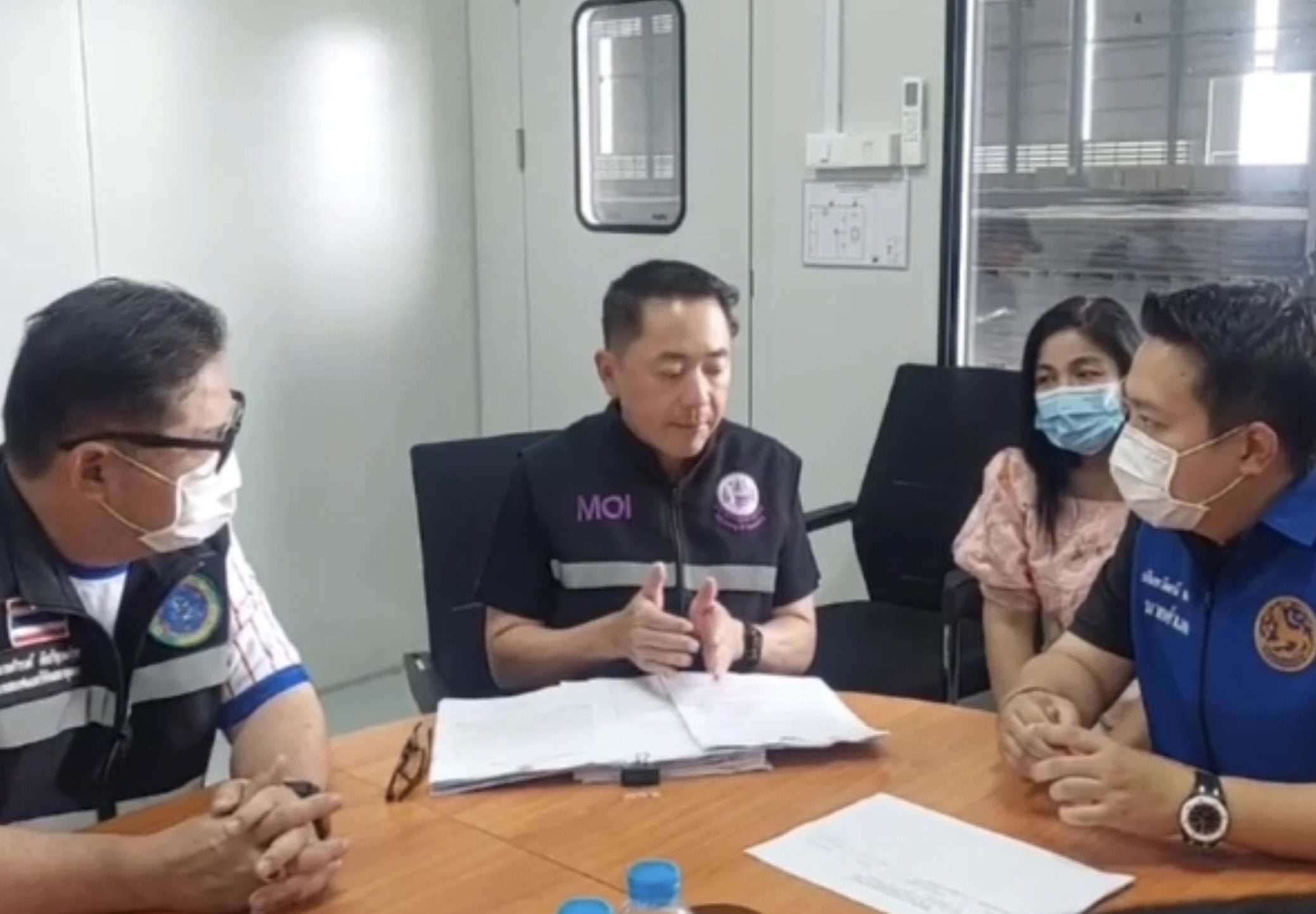 Authorities have ordered a Chinese-funded factory in Bo Thong district, Chonburi, to stop operating after reports that a huge quantity of industrial waste had been secretly buried on its grounds. Initial checks found an estimated 700 to 800 tonnes of waste at the factory in That Thong subdistrict. Officials are now awaiting laboratory results to establish what substances are present and whether they are hazardous. The order was issued on 26 August 2026 by Bo Thong district chief Nuntawat Thongchuang, Chonburi provincial industry chief Duangchan Unchat, and That Thong Municipality mayor Damrong Deecharoenwongkul. Factory ordered to halt operations The officials posted a notice prohibiting the factory from continuing its operations while the investigation proceeds. Picture courtesy of Amarin The case began after the Chonburi Provincial Industry Office and That Thong Municipality received a report alleging illegal disposal of industrial waste at the Chinese-owned facility. Authorities have not yet identified the type of waste or confirmed whether it contains dangerous chemicals. Further legal action will depend on the results of the testing, officials said. Tests will determine possible risks The scale of the suspected disposal has prompted an official response and the closure order remains in place while samples are examined. Any finding that the material is hazardous could lead to legal proceedings under Thai law. Officials have not said when the laboratory findings are expected, nor have they released details about the factory's business activity. Join the discussion? 27 August 20261 point
This leaderboard is set to Bangkok/GMT+07:00