



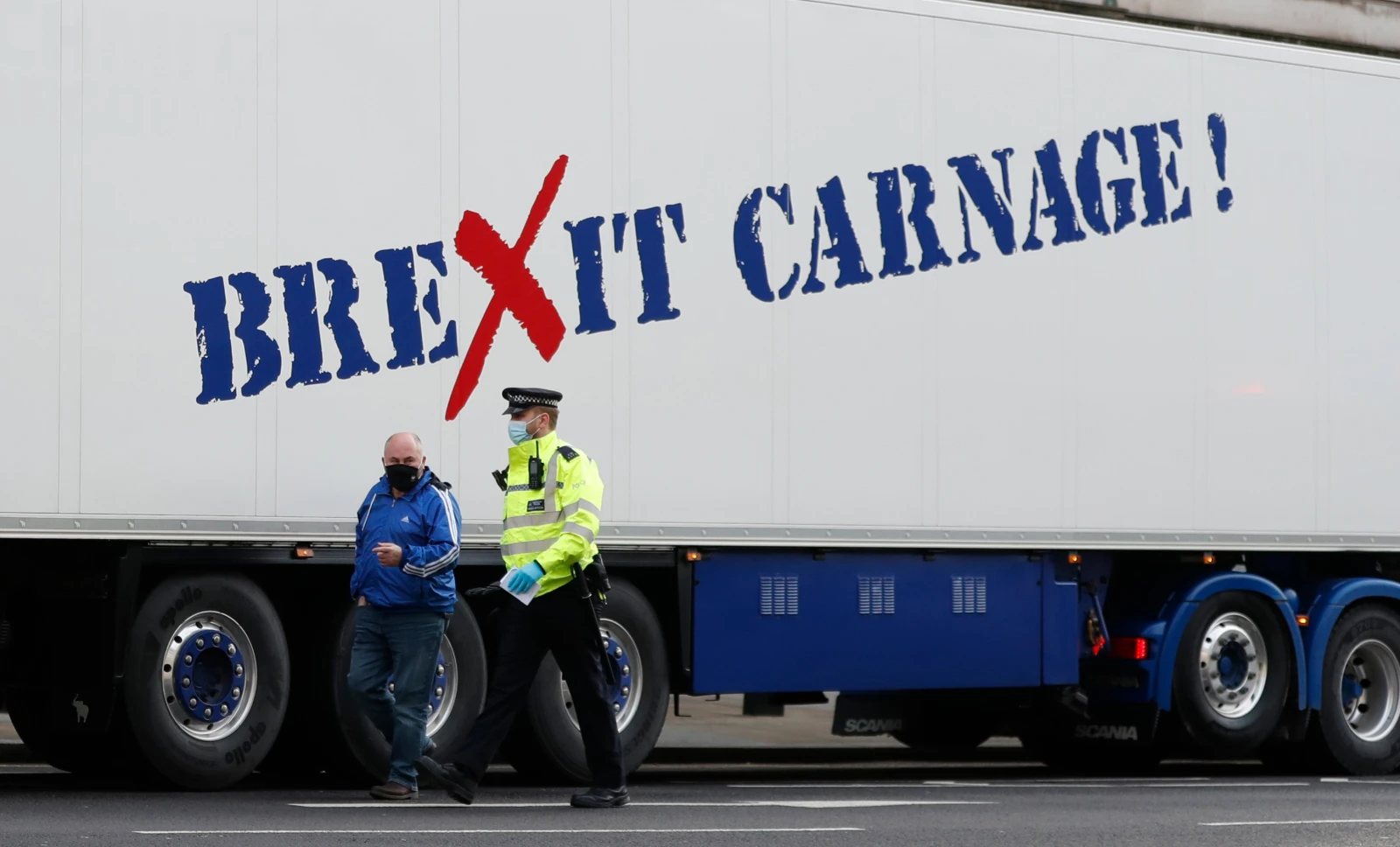

Ten years after voters chose to leave the European Union, Brexit remains one of the most consequential and divisive events in modern British history.
Get today's headlines by email 
In the June 23, 2016 referendum, 52% of voters backed leaving the EU, setting the United Kingdom on a path that ultimately ended nearly five decades of integration with the European bloc. Although the vote was close, it triggered sweeping political, economic and social changes. The formal departure process took almost five years to complete.
Brexit emerged amid growing public frustration with the EU and broader dissatisfaction following the 2008 global financial crisis. Supporters argued that Britain would regain control of its affairs and unlock new economic opportunities outside the bloc. Critics warned that leaving would damage trade, weaken economic growth and reduce the country's international influence.
Economic Impact Remains a Key Debate
Brexit supporters envisioned a more agile economy able to thrive independently through new trade relationships and greater policy flexibility. However, the expected economic revival has yet to materialize.
Businesses have faced additional barriers when trading with the EU, which remains the UK's largest trading partner. While British exports are not subject to EU tariffs, firms must contend with customs procedures, certification requirements and other regulatory checks. Several trade agreements promoted during the Brexit campaign, including a major deal with the United States, have not been achieved.
Economists estimate the British economy is between 4% and 8% smaller than it would have been if the country had remained in the EU. Critics say this has reduced living standards and limited funding available for public services, including the National Health Service.
According to analysts, Brexit's effects have been gradual rather than sudden, weighing on trade, investment and productivity over time.
Supporters of Brexit counter that the long-term benefits should not be judged solely on short-term economic performance, arguing that greater national control over policies, particularly immigration, remains a significant achievement.
Immigration Remains a Flashpoint
Ending free movement between the UK and EU was a central Brexit objective. Migration from EU countries has fallen sharply, but arrivals from outside Europe increased after visa rules were expanded to address labor shortages in sectors such as social care.
Overall net migration has declined significantly, falling from more than 900,000 in 2023 to 171,000 last year.
However, public concern remains focused on irregular migration, particularly migrants crossing the English Channel in small boats. Although these arrivals represent only a small share of total migration, the issue has become a major political battleground. Protests have taken place outside accommodation facilities housing asylum seekers, with some demonstrations turning violent.
Public Opinion Has Shifted
Britain's political landscape has been reshaped by Brexit. Support for the traditionally dominant Conservative and Labour parties has weakened, while the anti-establishment Reform UK party, led by Nigel Farage, has gained ground and led many opinion polls.
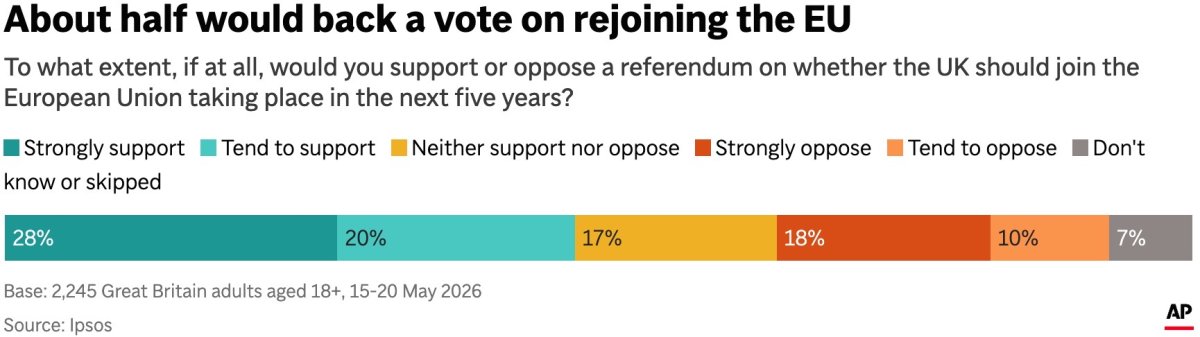
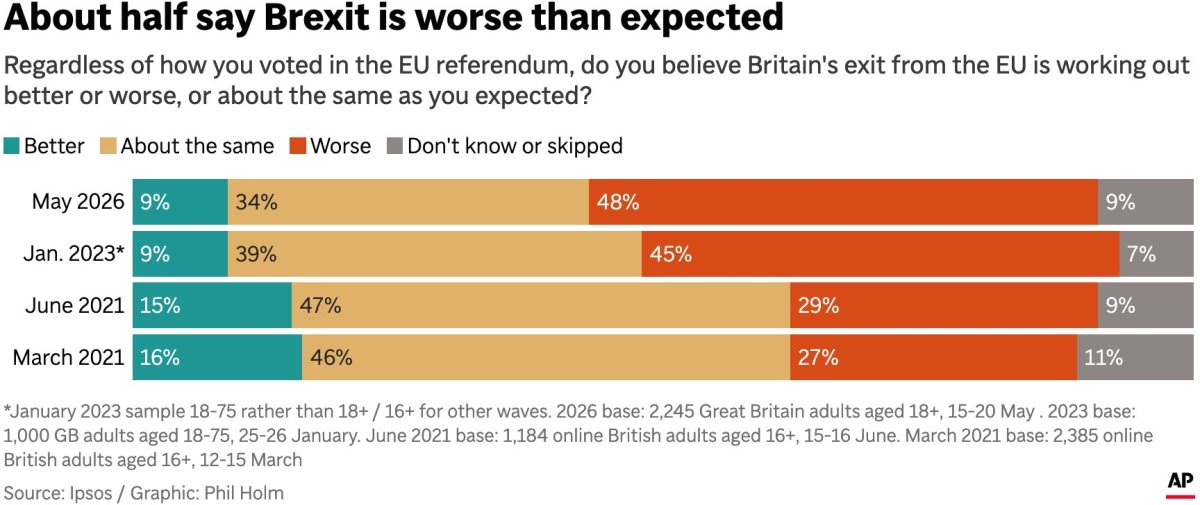
Surveys suggest public sentiment has become increasingly skeptical about Brexit. Recent polling indicates a majority of Britons would support rejoining the EU, while many believe Brexit has produced worse outcomes than expected.
Rejoining the EU Remains Unlikely
Despite growing public dissatisfaction, a return to the EU appears politically difficult.
The governing Labour Party has ruled out reversing Brexit or re-entering the EU's single market. Prime Minister Keir Starmer has instead pursued a limited reset of relations with Brussels aimed at improving cooperation and reducing trade friction.
His potential successor, Andy Burnham, has also rejected calls to seek renewed EU membership, arguing that the result of the 2016 referendum should be respected.
A decade after the vote, Brexit remains unresolved in one important sense: while the UK has left the EU, the debate over whether it was the right decision continues to shape British politics and public opinion.
Join the discussion? 
Already a member? 
 Adapted by ASEAN Now. Source 22 June 2026
Recommended Comments
Create an account or sign in to comment