



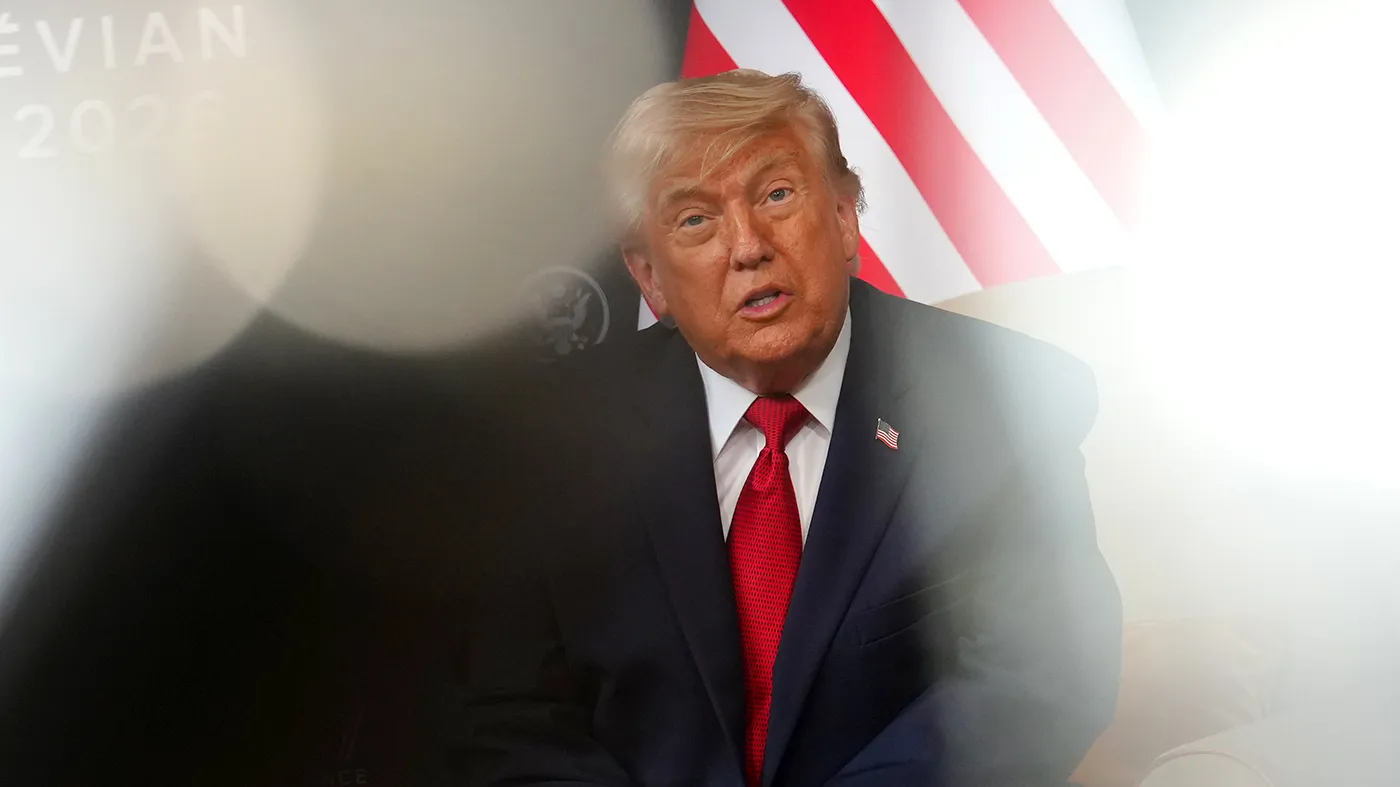

Senate Republicans are voicing growing concerns over President Trump’s agreement with Iran to reopen the Strait of Hormuz in exchange for sanctions relief, warning that the deal could strengthen Tehran while offering too little in return for the United States.
Get today's headlines by email 
The criticism comes after more than 100 days of conflict involving the United States, Israel and Iran, a campaign that cost the lives of 13 American service members and required more than $100 billion in military spending, according to lawmakers.
Concerns Over Sanctions Relief
Several Republican senators argue that the agreement provides Iran with significant economic benefits while failing to secure major concessions on nuclear activity, missile development or regional influence.
Sen. Bill Cassidy of Louisiana sharply criticized the outcome, describing it as a major foreign policy mistake. He argued that Iran’s nuclear ambitions remain intact and warned that Tehran had learned it could use threats to the Strait of Hormuz as leverage in future negotiations.
Sen. Ted Cruz of Texas also questioned the wisdom of easing sanctions, saying that providing financial relief to Iran’s leadership could have serious consequences.
The memorandum of understanding would immediately ease restrictions on Iranian oil exports and could lead to the release of frozen Iranian assets held abroad, a prospect that has alarmed some lawmakers.
Questions Over Nuclear and Missile Programs
Critics say the agreement leaves major uncertainties surrounding Iran’s nuclear and missile capabilities.
According to senators who reviewed the deal, it does not explicitly prohibit Iran from continuing uranium enrichment. It also leaves unresolved questions about Tehran’s future role in administering traffic through the Strait of Hormuz.
Lawmakers further pointed to intelligence assessments indicating that Iran retains much of its missile capability despite weeks of U.S. and Israeli strikes. A classified CIA assessment reportedly found that Iran still possesses roughly 70% of its pre-war missile stockpile and 75% of its mobile missile launchers.
Sen. John Cornyn of Texas argued that the deal fails to address Iran’s support for regional proxy groups and could provide additional resources that might be used to fund them.
Under the agreement, Iran is prevented from imposing tolls on vessels using the Strait of Hormuz for 60 days. After that period, Oman and Iran are expected to negotiate arrangements governing the waterway’s future administration and maritime services.
Debate Over the Cost of the Conflict
Some Republicans have questioned whether the military campaign achieved enough to justify its cost.
Sen. Thom Tillis of North Carolina said the agreement appeared weak and suggested that the benefits currently outlined do not match the financial and human toll of the conflict.
He noted that the United States initially sought to eliminate Iran’s nuclear capabilities but has since shifted toward negotiations that leave many issues unresolved.
Cassidy compared the new agreement to the 2015 Joint Comprehensive Plan of Action (JCPOA), the nuclear accord negotiated under former President Barack Obama. Trump withdrew from that agreement in 2018, arguing at the time that it provided economic benefits to Iran without adequately restricting its activities.
The new memorandum also outlines plans for the United States and regional partners to develop a reconstruction and economic development programme for Iran valued at at least $300 billion.
Supporters See Opportunity for Diplomacy
Not all Republicans oppose the agreement.
Sen. Bernie Moreno of Ohio has defended the deal, arguing that reopening the Strait of Hormuz could lower global energy prices and reduce costs for American consumers.
Speaking on the Senate floor, Moreno said the agreement could create a path toward a lasting arrangement that prevents Iran from acquiring a nuclear weapon.
Sen. Lindsey Graham of South Carolina, a close Trump ally, acknowledged that reaching a comprehensive nuclear agreement with Iran may be difficult but argued that diplomacy remains worth pursuing.
He said the memorandum helps maintain the suspension of hostilities and provides an opportunity to seek a broader settlement on Iran’s nuclear programme.
Pressure Builds for Next Phase
Republican lawmakers say the administration now faces significant pressure to secure a stronger agreement within the next 60 days.
Sen. Lisa Murkowski of Alaska said lawmakers need a clearer understanding of the deal’s details and what benefits it delivers to the United States before making a final judgment.
Several Republican senators and senior aides also said they were unaware of any plans to provide a full Senate briefing on the agreement or on the negotiations expected to follow.
Join the discussion? 
Already a member? 
 Adapted by ASEAN Now. Source 18 June 2026
Recommended Comments
Create an account or sign in to comment