



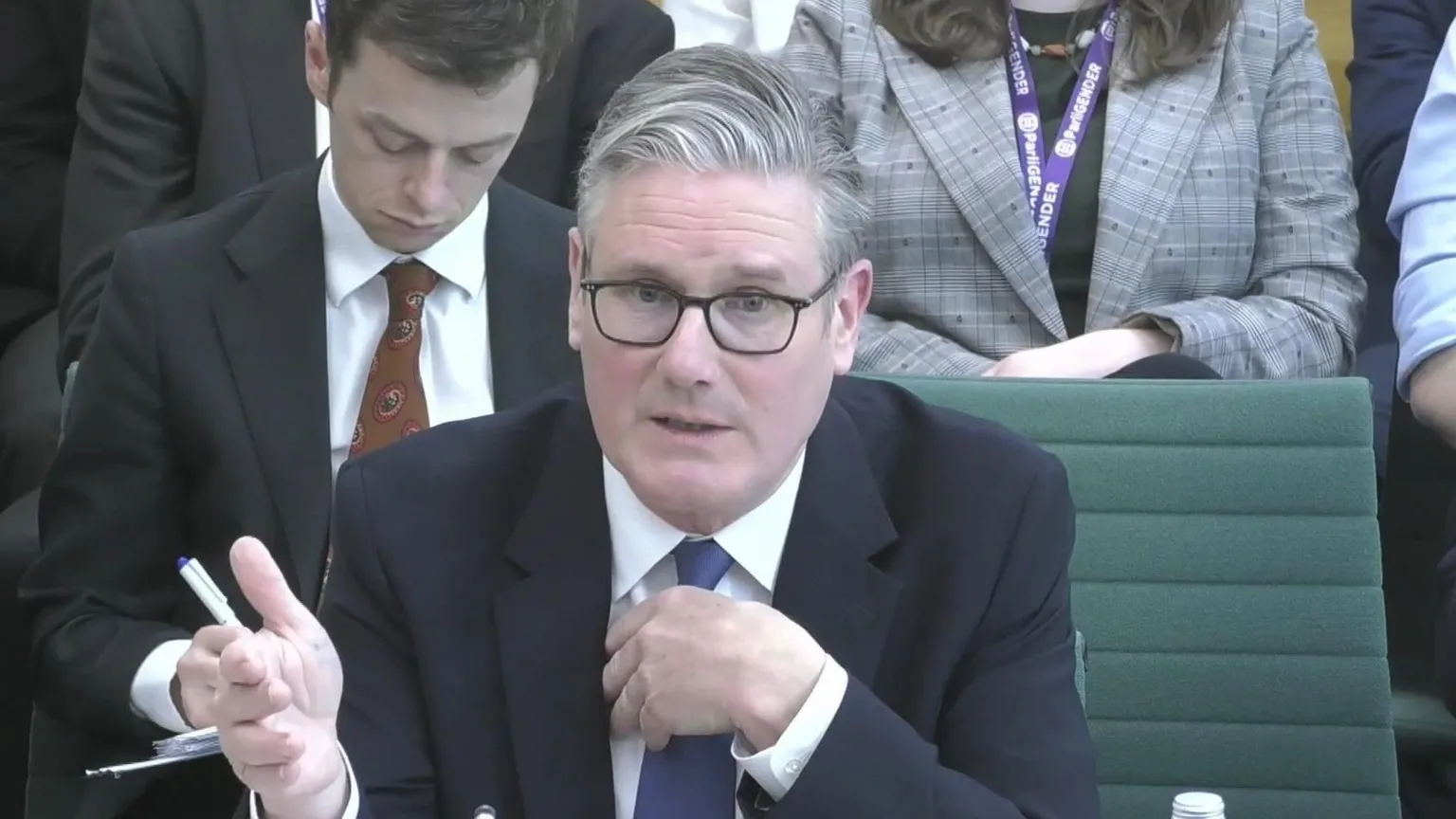

UK Prime Minister Keir Starmer has warned against assuming a swift end to the ongoing conflict involving Iran, telling senior MPs that the situation could persist despite diplomatic efforts.
Get today's headlines by email 
Speaking before the parliamentary Liaison Committee, Starmer said his government must avoid “false comfort” about the prospect of a quick resolution. While expressing hope for a “swift de-escalation", he stressed the need to prepare for a longer-lasting crisis.
Caution Over Duration of Conflict
He reiterated that the conflict was “not our war” and emphasised that any UK involvement would require a clear legal justification and a carefully considered plan.
His comments came shortly after Donald Trump said discussions between Washington and Tehran were “very strong” and that there was a “serious chance” of reaching an agreement. However, Iranian officials have denied that negotiations are taking place.
Economic Concerns and Energy Prices
The conflict has already disrupted global energy markets, particularly after restrictions on shipping through the Strait of Hormuz. Starmer said the government was assessing potential support measures for households as energy costs rise, especially ahead of increased demand later in the year.
He confirmed that Chancellor Rachel Reeves would update Parliament following an emergency Cobra meeting involving ministers and the governor of the Bank of England.
Starmer indicated that any intervention would likely be targeted, citing concerns about public finances and the high cost of previous energy support schemes introduced during earlier crises.
The government is also considering stronger action against price manipulation. Starmer said regulators such as the Competition and Markets Authority could be given enhanced powers to tackle profiteering. Downing Street later confirmed plans for a new anti-profiteering framework.
Political Pressure and Policy Debate
Domestically, the government is facing pressure from opposition parties. Kemi Badenoch called for increased North Sea drilling and tax cuts on fuel, while Zack Polanski urged higher windfall taxes on oil and gas companies alongside greater investment in renewable energy.
Starmer also addressed criticism from Trump over the UK’s refusal to allow US forces to use British bases for initial strikes on Iran. He said such remarks were intended to exert pressure but insisted he would remain focused on national interests.
Defence Readiness Under Scrutiny
During the committee session, Starmer faced sharp questioning over the UK’s military preparedness. Concerns were raised about delays in deploying the HMS Dragon to the eastern Mediterranean and the timing of the government’s defence investment plan.
Labour MP Tan Dhesi described aspects of the response as “embarrassing,” while Conservative MP Bernard Jenkin criticised what he called a lack of urgency.
Starmer rejected these claims, arguing that years of underinvestment by previous governments had weakened the armed forces. He said the defence investment plan was nearing completion.
Separately, Defence Secretary John Healey confirmed that two Iranian missiles had been launched towards the joint UK-US base on Diego Garcia, though neither came close to the facility.
He also said HMS Dragon had now reached the region and begun operations alongside allied forces.
Join the discussion? 
Already a member? 
 Adapted by ASEAN Now. Source 24 March 2026