



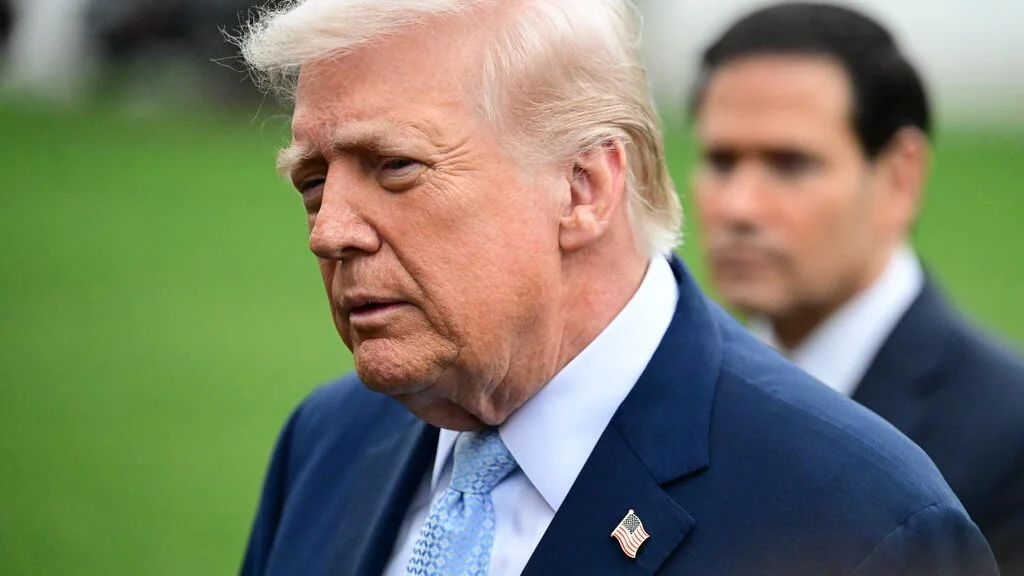

The administration of Donald Trump is examining options to secure or remove Iran’s nuclear materials, according to officials familiar with internal discussions. The deliberations come as the US-led military campaign alongside Israel enters a more uncertain phase, with no clear timeline for further escalation.
Get today's headlines by email 
Sources said no final decision has been taken on whether such an operation would proceed. However, planning has focused on potential involvement by the Joint Special Operations Command, a highly specialised US military unit tasked with sensitive missions, including counter-proliferation efforts.
A White House spokesperson confirmed that contingency planning falls within the Pentagon’s responsibilities but did not provide further detail.
Shift in military objectives
Initial phases of the conflict centred on weakening Iran’s conventional military capabilities, including air defences, missile systems and infrastructure linked to the Revolutionary Guard. Despite extensive airstrikes, Iran has continued to launch retaliatory attacks across the region and disrupt key shipping routes.
More recently, attention has turned to a longer-term objective repeatedly outlined by Trump: preventing Iran from acquiring a nuclear weapon. In a social media post, the president said the US was “very close to meeting our objectives” while also suggesting military operations could be scaled back.
Nuclear material poses complex challenge
According to the International Atomic Energy Agency, Iran had accumulated roughly 972 pounds of uranium enriched to 60% purity as of last year. While not weapons-grade, the material is considered close to the threshold required for nuclear weapons.
Much of this stockpile is believed to be stored underground at sites previously targeted in US strikes, complicating any effort to access or remove it.
IAEA Director-General Rafael Grossi warned that handling such material would be technically demanding. He described the uranium, stored as uranium hexafluoride gas, as difficult to transport safely, noting that any mission to retrieve it would be highly complex.
Risks and uncertainties remain
US officials have indicated that seizing the nuclear material remains one of several options under consideration. However, experts caution that such an operation would involve significant logistical and security risks, particularly in an active conflict zone.
Previous intelligence assessments have suggested that Iran was not actively pursuing a nuclear weapon, and Tehran has consistently maintained that its nuclear programme is for peaceful purposes. Nonetheless, its enrichment activities have raised international concern.
Diplomatic efforts to curb Iran’s nuclear programme had been under way before the conflict escalated, including proposals to dilute enriched uranium stockpiles. Those talks have since stalled.
As the situation develops, the question of how to address Iran’s nuclear capacity remains central to US strategy, with military and diplomatic paths both carrying considerable uncertainty.
Join the discussion? 
Already a member? 
 Adapted by ASEAN Now. Source 21 March 2026