
Bacon1
Global Moderator
-
Joined
-
Last visited
Everything posted by Bacon1
-
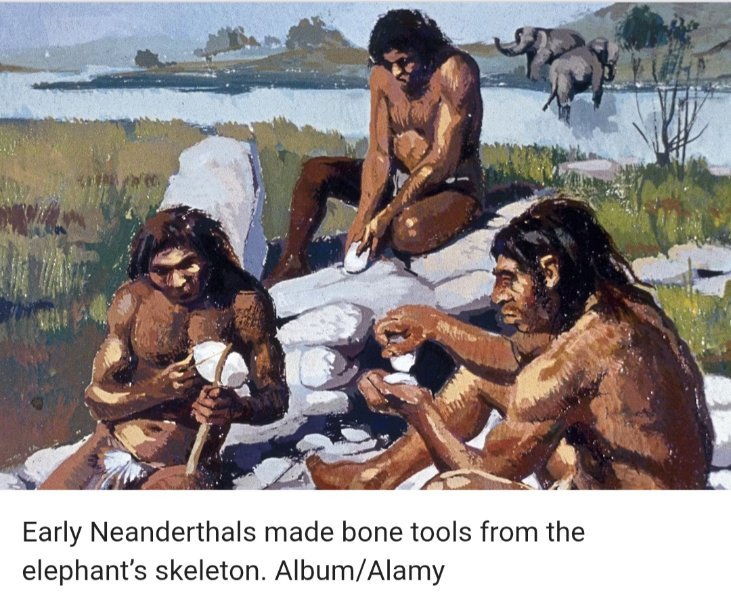
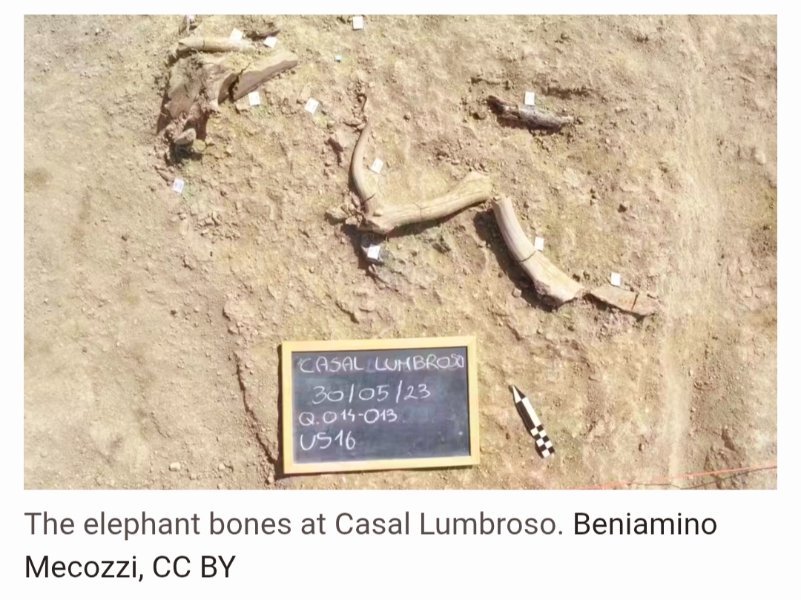
A newly analysed elephant skeleton, dated to around 404,000 years ago and excavated near Rome, has shed light on how early humans exploited large mammals—not just for meat but also as raw material for tools. The site, Casal Lumbroso, produced over 300 skeletal fragments and more than 500 stone tools. Remarkably, many of the elephant bones bear fracture marks consistent with intentional modification. The research suggests that early hominins used small flint tools (less than 30 mm) to butcher soft tissues, while transforming parts of the elephant’s bones into larger implements. Geochemical and stratigraphic evidence (volcanic ash layers above and below the carcass) allow precise dating, placing the event during a warmer interglacial period of the Middle Pleistocene. The combination of bones and tools provides a rare snapshot of behaviour: how early humans responded to a bonanza resource when large flint tools were limited locally. The authors propose that the animal may have died naturally (e.g. in a mud trap), rather than being hunted and driven to death using primitive tools. Hominins likely collected and processed the carcass opportunistically. The findings challenge traditional assumptions that early humans only targeted medium-sized prey. Instead, they show that 400,000 years ago, human ancestors (probably Homo heidelbergensis or Homo erectus) were already capable of integrating scavenging, resource engineering, and adaptive tool use. The study enhances our understanding of early human behavioural flexibility, including opportunistic resource use and bone reuse. Key Takeaways: A 400,000-year-old elephant skeleton from Casal Lumbroso reveals hominins butchered carcasses and made tools from bones. Small flint tools were used to process tissues; larger bone pieces were repurposed to compensate for limited stone tool supply. The discovery suggests early humans were flexible in exploiting large animals—not just for food but also for materials. Adapted From: https://theconversation.com/how-a-400-000-year-old-elephant-skeleton-solved-a-tantalising-puzzle-of-early-human-behaviour-267137

-
Flame post removed @emptypockets
-
Had it for the last 10 days, felt absolutely vile. Fever, cough, sneezing, not eat. Finally getting better today. Lost just under a kg, so not all bad...🤣
-
Flame post removed @Yagoda 9. You will not post disruptive or inflammatory messages. You will respect other members and post in a civil manner. Personal attacks, insults or hate speech posted on the forum or sent by private message are not allowed.
-
Keep it clean, please gentlemen
-
Flame post removed & reply also Please keep it friendly & informative. 🙂
-
Maybe Ian Paisley would have said: "I tell you, this scourge, this abomination called clickbait—it is a blight upon our minds, a curse that drags the intellect into the gutter! Mark my words, it poisons the very soul of discourse!" 🤣
-
Digestive discomfort—whether bloating, indigestion or sluggish digestion—is not just annoying; over time it can affect your energy and health. Fortunately, research and tradition both point to a handful of herbs and spices that may offer gentle support for your gut. 1. Peppermint Its active component, menthol, can relax the muscles of the intestines, which may ease bloating, gas or mild cramping. It also might reduce the sensitivity of nerves in the gut, calming discomfort. 2. Chamomile Known for its soothing properties, chamomile may help calm digestive irritation and reduce spasms. It has mild anti-inflammatory and antioxidant effects in the digestive system. 3. Carom seeds (Ajwain) These seeds are believed to stimulate digestive secretions, speeding up digestion and reducing gas. In animal studies, they’ve increased enzyme activity and aided the movement of food through the gut. 4. Fennel Fennel seeds contain compounds (like anethole) that help relax intestinal muscles and reduce gas and cramping. The fibre component may also help prevent gas buildup. 5. Cumin Cumin may boost digestive enzyme activity and encourage bile release, helping break down fats and improve digestion. It’s also suggested to shorten transit time of food through the gut. Key Takeaways Peppermint and chamomile can help relax intestinal muscles and soothe minor digestive discomfort. Ajwain (carom seeds), fennel, and cumin may boost digestion by improving enzyme secretion, promoting bile flow, and reducing gas. Adapted From: https://theconversation.com/five-herbs-and-spices-that-could-help-improve-your-digestion-262768

-
The U.S. has increasingly used military power in Latin America—especially in the Caribbean—to confront drug cartels now branded “narco-terrorists.” Recent strikes destroyed vessels that allegedly trafficked narcotics, killing at least 21 people. The Trump administration frames these as part of an “armed conflict,” claiming legitimacy under self-defense and counterterrorism logic. But experts warn this militarised strategy is bound to fail. First, many cartels adapt quickly—they splinter, relocate, or switch trafficking routes. Second, the root causes are deeper: persistent U.S. demand for drugs, corruption in local governments, weak institutions, and socioeconomic inequality. Without tackling those, military action is a band-aid. Third, the legal and ethical grounds are shaky. Striking ships in international waters, categorising non-state actors as terrorists without solid evidence, and bypassing congressional oversight all raise concerns of violating international law and sovereignty. Latin American nations strongly resist foreign military involvement. Mexico outright rejects troops on its soil, reaffirming its sovereignty. Regional cooperation, institutional reform, demand reduction, and social investment are more sustainable paths. Military force may yield dramatic spectacles, but it rarely produces lasting cure. Key Takeaways 1. Military strikes are reactive, not structural. Cartels evolve; force alone can’t break their networks. 2. Root causes must be addressed. Demand, corruption, and inequality are as crucial as supply. 3. Legal and diplomatic risk is high. Unilateral military tactics can violate sovereignty and international norms. Adapted From: https://theconversation.com/why-us-military-action-against-latin-americas-cartels-wont-win-the-war-on-drugs-266933


-
Pope Leo XIV has sharply criticised clickbait, describing it as a “degrading” aspect of modern journalism that undermines public trust and ethical reporting. Speaking at a private audience in the Vatican on Thursday, the pontiff addressed around 150 members of Minds International, a global alliance of news agencies, including representatives from Australian media. In his remarks, Pope Leo praised journalism as a “public good that we all should protect,” highlighting the crucial role of accurate and responsible news in a world flooded with misinformation. He urged media professionals to prioritise truth and integrity over online traffic and sensationalism, warning that the pursuit of clicks often leads to distortion and manipulation. “Communication must be freed from the misguided thinking that corrupts it, from unfair competition and the degrading practice of so-called clickbait,” the Pope said. He added that true journalism “requires competence, courage and a sense of ethics” — values that must guide media workers in resisting the pressure to chase viral engagement. Pope Leo’s statement continues his early push to reshape global media culture, aligning with his previous calls for transparency, compassion, and respect for human dignity in public discourse. By denouncing clickbait, he positioned the Catholic Church as an advocate for ethical media standards in an increasingly digital world. The pontiff’s words were welcomed by many journalists present, who saw the address as a timely reminder of their moral duty to inform, not exploit. Key Takeaways Pope Leo XIV called clickbait a “degrading” form of journalism. He urged reporters to prioritise ethics, accuracy, and courage over traffic. The speech reinforces his view of journalism as a public good that protects truth and democracy. Adapted From: https://www.theguardian.com/australia-news/2025/oct/10/you-wont-believe-what-degrading-practice-the-pope-just-condemned
.png.bc487c231b4a2aeb970ca5f0382f82ee.png)
-
Troll meme removed @NickyLouie
-
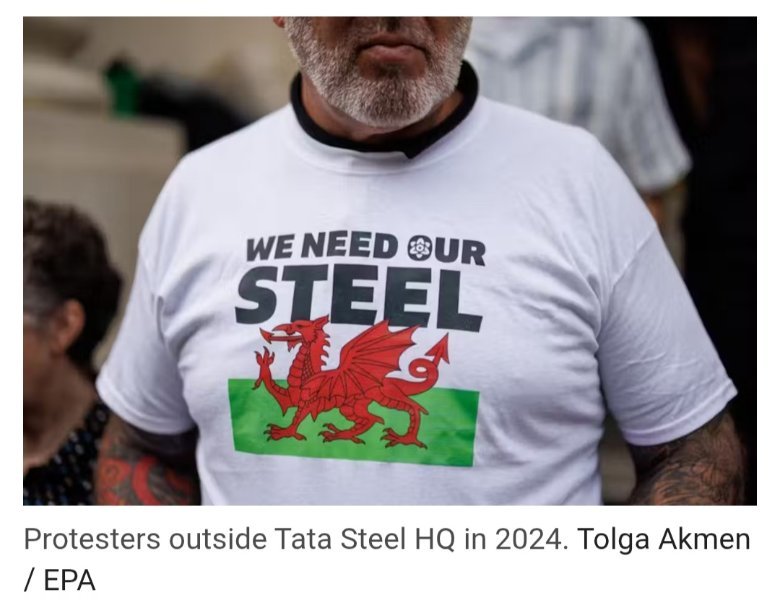
One year after the closure of the last coal-fired blast furnace at Port Talbot steelworks in Wales, the region is still grappling with economic and social fallout. Tata Steel shut the furnace on 30 September 2024, citing high energy costs and competition from cheaper Chinese steel, despite government support of £500 million to transition to lower-emissions electric arc furnaces. The closure directly affected 2,800 workers, with up to 9,500 additional jobs at risk in the supply chain. The shutdown highlights a growing disconnect between government promises of a net zero economy and the lived reality of industrial communities. While successive governments have promoted green energy transitions as opportunities for skilled, well-paid jobs, surveys show only one in five voters believe net zero initiatives will create employment locally. Many new green jobs are in services and small businesses, offering lower pay and less security, while greener industrial technologies like electric furnaces require fewer workers due to automation. Political parties, particularly Reform, have seized on this frustration, portraying net zero as costly and job-destroying, even as the UK remains committed to climate action. Heavy industries from steel to oil, gas, and fertiliser are under pressure, and communities like Port Talbot risk feeling abandoned as industrial decline coincides with the green transition. Experts warn that without a clear plan for a “just transition” that delivers tangible local benefits, the public’s support for climate policy may erode. A meaningful net zero approach must address both environmental and economic needs, ensuring that decarbonisation does not come at the expense of communities that have long powered the UK economy. Key Takeaways: Port Talbot’s steelworks closure cost thousands of jobs, exposing local economic vulnerabilities. Net zero jobs often offer lower pay and fewer positions than traditional heavy industry roles. A “just transition” is essential to maintain public trust and ensure green policies benefit communities. Adapted From: https://theconversation.com/port-talbot-one-year-on-steelworks-closure-shows-why-public-is-losing-trust-in-net-zero-265906


-
So you won't be purchasing a Thatcher mug...? 😁
-
A newly released image captures King Charles amid greenery at his Highgrove estate as part of promotional material for his forthcoming Amazon Prime documentary on nature and harmony. The photo, shot in the arboretum during filming, signals a shift in royal media strategy — from traditional broadcasters toward global streaming platforms. The documentary, tentatively titled Finding Harmony: A King’s Vision, is slated for a 2026 release and aims to chart Charles’s lifelong environmental advocacy. He stresses the message that humanity is not separate from nature: “What we do to her, we do to ourselves.” Through a mix of personal reflections, archival footage, and interviews, the film will explore how Charles’s once-controversial views — on plastics, pollution, sustainability — have become increasingly mainstream. The project will spotlight the work of The King’s Foundation, including sustainability initiatives at Dumfries House and Highgrove House, and extend to conservation efforts in places like Guyana and India. Documents suggest that few people understand the full depth of Charles’s environmental commitments — and the film aims to bridge that gap. The documentary also reflects a broader trend of the royal family embracing streaming to reach wider global audiences. Key Takeaways 1. New portrait unveiled — A fresh image from the King’s Highgrove estate accompanies the announcement of his upcoming nature documentary. 2. A personal environmental plea — The film presents Charles’s environmental commitment and his “Harmony” philosophy in new depth. 3. Streaming outreach — The shift to Amazon Prime signals a new media approach for royal messaging. Adapted From: https://www.express.co.uk/news/royal/2118868/new-picture-king-charles-amazon-prime-nature
.png.5e2dc703042580b7a12988a31a1f0c8d.png)
-
At the 2025 Conservative Party conference in Manchester, the veneer of revival barely conceals a party in crisis. The “Boris-wave” myth — nostalgia for Johnson-era bravado — gave way to bitter reality: low polling, internal fractures, and an electorate drifting toward Reform. Analysts warn the Conservatives are courting electoral oblivion unless they reset their narrative. Kemi Badenoch, the party leader, attempted to marshal coherence by rejecting alliances with Reform UK and presenting a slew of bold policy pledges — from slashing tax burdens to reworking public services — aimed at reasserting identity. Yet critics say her proposals echo failed past orthodoxies, while Reform feasts on disillusioned Tory supporters. The conference exposed deep ideological confusion: a party split between its establishment past and populist future. On the exhibition floor, stalls hawked party memorabilia — from Margaret Thatcher prints to logos-branded merchandise — a nostalgic nod that contrasted sharply with the party’s fragile present. Observers see a pattern: the Conservatives are hemorrhaging relevance in a changed political landscape. With Labour resurgent and Reform surging, the Tories risk being squeezed from both sides. The conference, once meant to rejuvenate the party, is increasingly read as a political eulogy. Key Takeaways Nostalgia for the “Boris wave” can’t mask the Conservatives’ falling support and identity crisis. Kemi Badenoch’s policy gambit faces internal scepticism and external critique as politically unconvincing. Reform UK is capitalising on voter disaffection, placing the Tories in danger of being electorally squeezed. Adapted From: https://www.theguardian.com/commentisfree/2025/oct/07/tory-conference-boriswave-reform-electoral-annihilation



-
Completely untrue. Basal Cell carcinoma (cancer) & SCC (squamous) are most definitely linked to UV radiation. Melanoma is the most prevalent skin cancer. https://www.cancer.org/cancer/types/basal-and-squamous-cell-skin-cancer/causes-risks-prevention.html https://www.cancercouncil.com.au/wp-content/uploads/2023/04/melanoma-skin-cancer-guide-for-medical-practitioners.pdf?utm_source=chatgpt.com
-
Quoted from the above link: "The stored data amounts to 858TB (terabytes)" Wow!
-
Trolling meme removed @marin
-
Comment on Moderation removed. @matta01 13. You will not publicly comment on moderation in an open forum. You will not comment on actions taken by individual moderators or on specific or general policies and issues. You will not post a negative emoticon in response to a public notice made by a moderator. You may send a private message to a moderator to discuss individual actions or you can email support (at) aseannow.com to discuss moderation policy and account suspensions.You will not block communication from moderators or Admin. Aggression, personal attacks, or any form of abuse toward moderators will not be tolerated and will result in strict consequences. There is absolutely no excuse for abusive behavior.
-
A deliberate misspelling has been removed. @Chomper Higgot Reply removed
-
Post removed @MalcolmB 29. You will not discuss the specifics of prostitution. Although Thailand has a visible sex industry and acknowledgement of that fact is not forbidden, ASEAN NOW is not the place to seek or give specific information on this topic. ASEAN NOW seeks to protect children and other at risk groups from exploitation on the internet. Any content that appears to be inappropriate or exploitative will be removed.
-
A striking green fireball was observed blazing over parts of the UK, captivating skywatchers in Scotland, Northern England, and Northern Ireland. Eyewitnesses say it glowed brilliantly for nearly 20 seconds before breaking apart mid-air, leaving behind a trail of glowing fragments. The unusual green hue is likely caused by vaporising metals such as magnesium in the meteoroid as it entered Earth’s atmosphere. Observers across multiple counties submitted videos and photos, which are now being used to help triangulate its trajectory. Amateur astronomy networks and scientific groups are combing through submitted footage and sky-monitoring data to reconstruct its path. The fragmentation suggests that pieces may have reached lower altitudes, but no meteorite recoveries have been confirmed yet. Searches are ongoing in areas beneath the estimated trajectory. This fireball’s long duration and vivid hue make it stand out among typical UK meteor sightings. While spectacular, phenomena like this are valuable scientifically—fragments, if recovered, could shed light on the composition of the parent space rock. Meanwhile, experts encourage people to review dash-cam footage, security cameras, and any night-sky images they’ve captured to see if they caught more of the event. Key Takeaways: A bright green fireball streaked across UK skies for almost 20 seconds before fragmenting mid-air. The green glow likely results from vaporised metals like magnesium in the meteoroid’s composition. No meteorites confirmed yet; searches and trajectory analysis are underway in the estimated impact zone. Adapted From: https://www.express.co.uk/news/uk/2118482/incredible-green-fireball-snapped-major
.png.219d4f5892c9893ed7fcef5678c18ec6.png)
-
The Danish prime minister, Mette Frederiksen, has unveiled a proposal to ban children under 15 from using social media, accusing smartphones and platforms of “stealing our children’s childhood.” She made the announcement during her address at the opening of the Folketing, Denmark’s parliament, warning that children and youth are increasingly suffering from anxiety, depression, and concentration deficits because of excessive screen use. Frederiksen did not name specific platforms but said the ban would cover “several” social networks. Under her plan, parents could grant permission for children aged 13 and 14 to access social media. The law could take effect as early as next year. This move follows earlier policies: Denmark already intends to ban mobile phone use in schools and after-school clubs, following a recommendation from a government wellbeing commission that children under 13 should not own smartphones or tablets. Internationally, countries like Australia and Norway are pursuing similar age limits. Australia plans to prevent under-16s from using platforms like Facebook, TikTok, Snapchat and YouTube, while Norway’s prime minister has called for raising the minimum age from 13 to 15. Supporters of the Danish proposal argue that social media exposes children to harmful content, erodes wellbeing, and creates addictive behaviour. Critics warn of possible enforcement challenges, parental opposition, and questions about children’s rights. The debate foreshadows growing global tension over how much regulation governments should impose to protect minors online. Read the original article: The Guardian — Denmark plans social media ban for under-15s as PM warns phones ‘stealing childhood’ Key Takeaways 1. The Danish government proposes banning social media use for children under 15, with parental opt-in from age 13. 2. The policy is framed as a response to rising mental health and attention problems among youth tied to screen overuse. 3. Similar age-limit efforts are underway internationally (e.g. Australia, Norway), raising questions about balancing protection and digital rights. Adapted From: https://www.theguardian.com/world/2025/oct/07/danish-pm-plans-to-ban-social-media-for-under-15s-warning-it-is-stealing-childhood

-
That's not from the CDC.
-
Please provide evidence that the CDC states: "measles is hard to detect"