



Skip to content
View in the app

A better way to browse. Learn more.

Thailand News and Discussion Forum | ASEANNOW

A full-screen app on your home screen with push notifications, badges and more.

To install this app on iOS and iPadOS
  1. Tap the Share icon in Safari
  2. Scroll the menu and tap Add to Home Screen.
  3. Tap Add in the top-right corner.
To install this app on Android
  1. Tap the 3-dot menu (⋮) in the top-right corner of the browser.
  2. Tap Add to Home screen or Install app.
  3. Confirm by tapping Install.

Briton Died in Phuket Scooter Crash, Inquest Hears

A 28-year-old British man died in a road traffic collision while travelling in Thailand, an inquest in Liverpool has heard. Liam Anelay, from Liverpool, was riding a scooter in Phuket on January 28, 2026, when he was involved in a fatal crash while on his way to meet friends.

Get today's headlines by email image.png

The inquest at Gerard Majella Courthouse in Liverpool on Thursday 11 June 2026, heard that Mr Anelay had been exploring Thailand with friends for around three weeks before the crash. The court was told that a parked car, suddenly moved forward and carried out a u-turn as he approached on his scooter.

According to evidence presented at the hearing, the driver is believed to have been unaware that Mr Anelay was approaching before making the manoeuvre. Following the collision, the driver stopped and remained at the scene, reportedly cradling Mr Anelay until emergency services arrived.

Mr Anelay was taken to Chalong Hospital but was pronounced dead later that afternoon. The inquest heard that he suffered multiple fractures throughout his body, including injuries to his skull, ribs and legs. His cause of death was recorded as multiple injuries sustained in a road traffic collision.

Area Coroner Helen Rimmer told the hearing: “Liam died on the 28 January, 2026, in Thailand. Liam was travelling on a scooter in Thailand when he was hit by a car that was completing a u-turn.”

She added: “The driver of the car remained with Liam until emergency services arrived.” Ms Rimmer also stated: “Liam suffered multiple injuries as a result of the road traffic collision.”

The coroner concluded that Mr Anelay’s death was the result of a road traffic collision. Offering her condolences, Ms Rimmer said: “I would be grateful if my condolences could be forwarded to all of Liam’s family after the tragic accident that led to his death.”

At the time of his death, Mr Anelay was living in the area south of Liverpool city centre and worked as a production line operator.

His mother, Christina, paid tribute to her son on social media following his death. She wrote: “How the hell can this even be possible me writing this but my baby boy, my heart is so badly shattered into a million pieces, it still can’t sink in to my brain that I have lost you.”

She added: “My life will never be the same ever, I really don’t know how I can do this Liam. My baby boy please keep shining down on me, untill we meet again my beautiful gorgeous smiling boy, I love you so much and my heart will ache for you untill I see you again.”

Anelay's tragic passing highlights the persistent and grave danger facing international tourists. Thailand's roadways are statistically among the most perilous on the planet, particularly for operators of two-wheeled vehicles. According to the World Health Organization, the country frequently records upward of 20,000 road fatalities annually, with motorcyclists accounting for the vast majority of the death toll.

For British nationals traveling to Southeast Asia, the allure of cheap, accessible motorbike rentals often masks the severe risks inherent in navigating unfamiliar traffic ecosystems. Differences in local driving culture, inconsistent enforcement of traffic regulations, and the chaotic nature of urban thoroughfares in tourist hotspots like Phuket create a highly volatile environment for inexperienced riders.

The Express reported that the inquest has now concluded with a formal finding that Mr Anelay died as a result of a road traffic collision in Thailand.

Join the discussion? image.png

Already a member? image.png

image.png Adapted by ASEAN Now Express 15 June 2026

User Feedback

Recommended Comments

Xonax Gold Member

Xonax

Advanced Member

After decades of driving in Thailand, there is one thing I have learned. That in any u-turn or junction you should expect, that a car or motorbike could pull out right in front of you.

Xonax Gold Member

Xonax

Advanced Member
15 hours ago, Georgealbert said:

According to evidence presented at the hearing, the driver is believed to have been unaware that Mr Anelay was approaching before making the manoeuvre.


After decades of driving in Thailand, there is one thing I have learned. That in any u-turn or junction you should expect, that a car or motorbike could pull out right in front of you.

golfho Apprentice Member

golfho

Member

Manslaughter. 20 years in prison for car driver.

GmailJen Explorer Member

GmailJen

Member

Just what does the government do about Road Safety ??? 15 years I see absolutely little change !

JohnO958 Rookie Member

JohnO958

Member

Let me guess - No Helmet??

JJ-Thailand Silver Member

JJ-Thailand

Advanced Member
32 minutes ago, golfho said:

Manslaughter. 20 years in prison for car driver.

Probably not in this case. If the driver of the car had left the scene immediately, maybe.

Keeenok Powell Silver Member

Keeenok Powell

Advanced Member

Learned early about u- turns on Suk rd.

They opened one across from Makro in Pattaya and the first few weeks there were a few serious accidents.

Better to carry on to the lights on any main rd in Thailand.

SOTIRIOS Platinum Member

SOTIRIOS

Advanced Member

...Gotta Begin To Wonder... (?)

jcmj Gold Member

jcmj

Advanced Member
2 hours ago, Keeenok Powell said:

Learned early about u- turns on Suk rd.

They opened one across from Makro in Pattaya and the first few weeks there were a few serious accidents.

Better to carry on to the lights on any main rd in Thailand.

Yes, that was a crazy U-turn and sometimes straight across the traffic to get into Makro. Luckily that was closed years ago.

wensiensheng Platinum Member

wensiensheng

Advanced Member

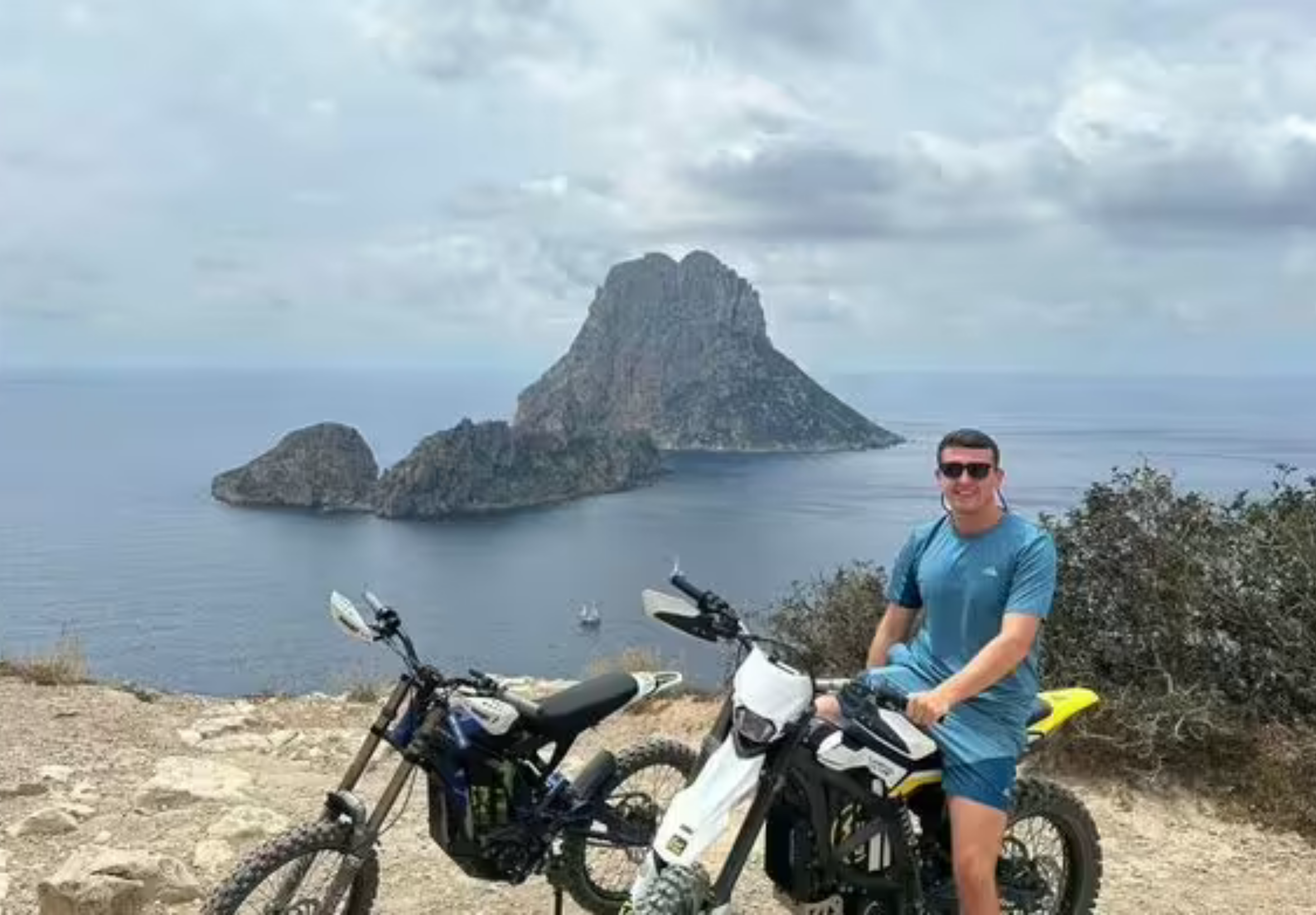
It’s a minor detail, but in the picture this guy is sitting on a dirt bike. Not a scooter. They handle quite differently on the road.

FigLeaf Senior Member

FigLeaf

Member
5 hours ago, Xonax said:


After decades of driving in Thailand, there is one thing I have learned. That in any u-turn or junction you should expect, that a car or motorbike could pull out right in front of you.

According to the article, the car was parked.

GammaGlobulin Star Member

GammaGlobulin

Advanced Member

image.png

https://www.liverpoolecho.co.uk/news/liverpool-news/man-28-died-tragic-accident-34106470

There is a very nice image available here at this link, which can be enlarged to a huge size.

Apparently, the man had been in Thailand for only three weeks before a U-Turn Driver put an end to his short life.

Never ride a motorbike in Thailand, ever.

This is a sure way to increase one's life expectancy.

I am surprised that insurers even offer insurance to those who ride bikes here.

Perhaps, it might be acceptable in areas where there are zero cars.

off road pat Gold Member

off road pat

Advanced Member
38 minutes ago, wensiensheng said:

It’s a minor detail, but in the picture this guy is sitting on a dirt bike. Not a scooter. They handle quite differently on the road.

And no helmet in sight !?!?

richard_smith237 Star Member

richard_smith237

Advanced Member
16 minutes ago, FigLeaf said:
5 hours ago, Xonax said:


After decades of driving in Thailand, there is one thing I have learned. That in any u-turn or junction you should expect, that a car or motorbike could pull out right in front of you.

According to the article, the car was parked.

No - according to the article - the parked car, suddenly moved forwards and carried out a U-Turn.

21 hours ago, Georgealbert said:

The court was told that a parked car, suddenly moved forward and carried out a u-turn as he approached on his scooter.

Xonax is correct. Driving anywhere carries risk, but in Thailand that risk is amplified by the simple reality that at any moment, from any junction, side street or hard shoulder, a vehicle may pull out, cut across traffic, make an unexpected U-turn, or change direction with little or no warning.

What still surprises me is the contrast in rider behaviour. Some motorcyclists display a healthy sense of self-preservation, slowing and anticipating that a vehicle emerging from a side soi may edge into traffic. Others do the exact opposite, blasting past at speeds that leave virtually no margin for error.

The safest mindset here is to assume the unexpected will happen. Assume that bike will pull out. Assume that car will cut across you. Assume that truck will turn right across your path without warning. Defensive driving isn't optional; it's essential.

In this case, another young life has been lost in tragic and completely needless circumstances. My condolences to his family.

Now - difficult questions need to be asked: not only of Thailand, but also of the information tourists receive before arriving.

Firstly, enforcement.

Thailand already has laws. The problem is inconsistent enforcement.

Rather than roadside checkpoints that often appear focused on revenue collection, authorities should target the source of the problem:

  • Prohibit motorcycle rentals to anyone without a valid motorcycle licence.

  • Impose substantial penalties on rental companies that ignore the law.

  • Shut down repeat offenders - close them - shut their business down for repeat offenses.

  • Confiscate motorcycles being ridden illegally - any motorcycle - the rental company has to pay a heave fine for its return.

  • Enforce helmet laws properly for both Thais and foreigners.

  • Require genuinely compliant helmets, not the flimsy plastic "bucket" helmets that offer little meaningful protection.

A foreign driving licence alone is not a motorcycle licence. To ride legally, visitors should hold a valid motorcycle entitlement from their home country and the appropriate international documentation.

If that standard were actually enforced, the number of inexperienced tourists riding motorcycles would fall dramatically overnight (it proves they can actually ride properly - have been guided and educated of the risks).

Secondly, education.

The information exists, but too many visitors either never see it or choose to ignore it.

The message needs to be unavoidable:

  • Motorcycle accidents are one of the leading causes of tourist fatalities in Thailand.

  • Riding illegally will invalidate travel insurance (medical costs can be extreme).

  • Serious injuries can result in life-changing medical bills.

  • Death is not a remote possibility; it happens with alarming regularity.

Ultimately, individuals are responsible for their own decisions. However, Thailand cannot continue to ignore the role that weak enforcement plays in enabling the problem.

The laws already exist. Enforce them properly.

- No licence? No rental.

- No compliant helmet? No riding.

Hit the rental companies that profit from breaking the rules instead of endlessly targeting the low-hanging fruit.

If existing laws were enforced consistently and without exception, lives would be saved - this has been the case for decades, and had action been taken decades ago, hundreds of thousands of lives would have already been saved, all lives (Thai's and tourists).

Geoff914 Gold Member

Geoff914

Advanced Member
22 hours ago, Georgealbert said:

According to evidence presented at the hearing, the driver is believed to have been unaware that Mr Anelay was approaching before making the manoeuvre. Following the collision, the driver stopped and remained at the scene, reportedly cradling Mr Anelay until emergency services arrived.

Well he is hardly likely to say that he was aware and just U turned anyway. So he a did a U turn without checking.

wensiensheng Platinum Member

wensiensheng

Advanced Member
9 minutes ago, off road pat said:

And no helmet in sight !?!?

Sadly not in that photo. One can only hope that he might have one when riding, but I personally wouldn’t bet on it.

Quite a few details noted by the coroner, but no mention of motorbike licence or helmet. I would have thought both were relevant to the findings of the inquest, although clearly a ruling of death by road traffic accident.

This statement by the coroner also intrigued me.

“when he was hit by a car that was completing a u-turn.”

It’s possible the car pulled out to do a u turn at exactly the moment he was passing it, but mostly I would say that a car pulls out and the motorbike hits the car. So no mention of the speed of the motorbike surprised me because once again it could have been a factor.

At the end of the day I think the coroner just wanted the hearing over with and saw no point in causing distress to the family by mentioning aspects that might have cast a shadow over the deceased.

rattlesnake Diamond Member

rattlesnake

Advanced Member
20 minutes ago, richard_smith237 said:

The safest mindset here is to assume the unexpected will happen. Assume that bike will pull out. Assume that car will cut across you. Assume that truck will turn right across your path without warning. Defensive driving isn't optional; it's essential.

And it's taught during formal, proper motorcycle training. Most foreigners who die or are injured here obviously don't have that training. It boils down to a simple principle: if you can't drive a motorbike, don't.

There should be awareness campaigns on plane ticket booking websites, just a few photos and a couple of paragraphs would make a difference.

rattlesnake Diamond Member

rattlesnake

Advanced Member
13 minutes ago, wensiensheng said:

Sadly not in that photo. One can only hope that he might have one when riding, but I personally wouldn’t bet on it.

Quite a few details noted by the coroner, but no mention of motorbike licence or helmet. I would have thought both were relevant to the findings of the inquest, although clearly a ruling of death by road traffic accident.

This statement by the coroner also intrigued me.

“when he was hit by a car that was completing a u-turn.”

It’s possible the car pulled out to do a u turn at exactly the moment he was passing it, but mostly I would say that a car pulls out and the motorbike hits the car. So no mention of the speed of the motorbike surprised me because once again it could have been a factor.

At the end of the day I think the coroner just wanted the hearing over with and saw no point in causing distress to the family by mentioning aspects that might have cast a shadow over the deceased.

It is reported he suffered a skull fracture, so he probably wasn't wearing one, or in any case not a proper one.

robert2 Senior Member

robert2

Member

Skull fracture indicates no helmet.

richard_smith237 Star Member

richard_smith237

Advanced Member
1 minute ago, robert2 said:

Skull fracture indicates no helmet.

I was recently in a major tourist area and was genuinely surprised by the number of tourists riding motorcycles without helmets.

The obvious question is: where is the enforcement?

The level of apathy appears astonishing. It's difficult to avoid the impression that it's easier to run occasional checkpoints, collect a few thousand baht in fines from whoever happens to be caught that day, and then return to business as usual.

Cynics might even argue that widespread non-compliance has become part of the business model. After all, if everyone wore helmets, carried the correct licence and complied with the law, one revenue stream would disappear overnight.

That said, personal responsibility cannot be ignored.

Anyone who chooses to ride a motorcycle without training, without a licence and without a helmet is knowingly accepting a substantial degree of risk. Adults are free to make foolish decisions if they wish.

The problem is that the consequences are rarely confined to the individual.

Families are left devastated. Drivers involved in fatal collisions may carry the psychological burden for the rest of their lives despite having done nothing wrong. Medical resources are consumed treating entirely preventable injuries, placing additional strain on hospitals and emergency services.

It is in that latter respect that I believe the authorities must shoulder some responsibility.

Not legal responsibility perhaps, but certainly moral and administrative responsibility.

If a government creates laws, recognises a danger, understands the consequences, yet repeatedly fails to enforce those laws, it cannot wash its hands entirely of the outcome.

Imagine your wife is driving entirely lawfully when an unlicensed, uninsured rider without a helmet pulls out in front of her and is killed. She may suffer years of emotional trauma despite being blameless. We would never suggest she shares responsibility for the rider's decision.

Yet what of the authorities who allowed the behaviour to become normalised through years of inconsistent enforcement?

At what point does failure to enforce the law become a contributing factor in the very tragedies those laws were designed to prevent?

Perhaps that is the question Thailand should be asking itself - if authorities gave an fff.... and its clear they don't because they do not ask such questions.

richard_smith237 Star Member

richard_smith237

Advanced Member
32 minutes ago, Geoff914 said:

Well he is hardly likely to say that he was aware and just U turned anyway. So he a did a U turn without checking.

That could be attributed to many factors and and has been evaulated and named in the west (UK).

Its most commonly used term is "Looked But Failed To See" (LBFTS).

Its actually a documented phenomenon where a driver genuinely looks in the direction of a motorcycle, bicycle, or even a pedestrian, but the brain fails to register the hazard. In other words, the eyes see it, but the mind doesn't process it.

Related terms include:

- Inattentional blindness – when a person fails to notice something visible because their attention is focused elsewhere.

- Perceptual blindness or perceptual error – a broader term for failing to correctly interpret what is seen.

- SMIDSY – an acronym often used by motorcyclists: "Sorry Mate, I Didn't See You" It's become shorthand for the classic car-pulls-out-in-front-of-a-bike collision.

One reason motorcycles are particularly vulnerable is that they present a much smaller visual profile than a car. Drivers are often subconsciously scanning for vehicles the size and shape of cars, vans and trucks. A motorcycle can therefore be overlooked even when it is plainly visible.

There's also a phenomenon called "size-arrival effect" whereby a small object approaching head-on can appear further away and slower than it really is. A driver may see the motorcycle but incorrectly judge that there is sufficient time to pull out.

So when a driver says, "I looked right at him and never saw him", they are not necessarily lying. The more accurate explanation is often: "I looked at him, but my brain failed to recognise him as an immediate hazard"

That's essentially the basis of LBFTS, and it accounts for a significant proportion of motorcycle collisions worldwide - its likely what happened in this case - a quick glance and the brain didn't register a hazard.

FigLeaf Senior Member

FigLeaf

Member
12 minutes ago, richard_smith237 said:

No - according to the article - the parked car, suddenly moved forwards and carried out a U-Turn.

As you have reiterated, the car was parked. So that would be a yes.

A parked car carrying a u-turn does not necessarily indicate that it was at a place dedicated to u-turns nor a junction. It might be a road without a divider. Without further details, I don't know and neither do you. I hope that helps.

wensiensheng Platinum Member

wensiensheng

Advanced Member
27 minutes ago, FigLeaf said:

As you have reiterated, the car was parked. So that would be a yes.

A parked car carrying a u-turn does not necessarily indicate that it was at a place dedicated to u-turns nor a junction. It might be a road without a divider. Without further details, I don't know and neither do you. I hope that helps.

On that basis every car on the road and moving, is actually a parked car because it was parked before it started to move. Not logical.

It seems clear that this “parked car was moving at point of impact. Whether the bike rider could have stopped is another question.

PeeJayEm Senior Member

PeeJayEm

Member
1 hour ago, wensiensheng said:

Sadly not in that photo. One can only hope that he might have one when riding, but I personally wouldn’t bet on it.

Quite a few details noted by the coroner, but no mention of motorbike licence or helmet. I would have thought both were relevant to the findings of the inquest, although clearly a ruling of death by road traffic accident.

This statement by the coroner also intrigued me.

“when he was hit by a car that was completing a u-turn.”

It’s possible the car pulled out to do a u turn at exactly the moment he was passing it, but mostly I would say that a car pulls out and the motorbike hits the car. So no mention of the speed of the motorbike surprised me because once again it could have been a factor.

At the end of the day I think the coroner just wanted the hearing over with and saw no point in causing distress to the family by mentioning aspects that might have cast a shadow over the deceased.

There are also practical limits of what a coroner an establish in an event on the other side of the world without being able to call all witnesses. He/she established the recordable cause of death which is the basic job of a coroner and the details questions that intrigue you probably can't possibly be investigated by a coroner in England.

richard_smith237 Star Member

richard_smith237

Advanced Member
4 minutes ago, FigLeaf said:
52 minutes ago, richard_smith237 said:

No - according to the article - the parked car, suddenly moved forwards and carried out a U-Turn.

As you have reiterated, the car was parked. So that would be a yes.

A parked car carrying a u-turn does not necessarily indicate that it was at a place dedicated to u-turns nor a junction. It might be a road without a divider. Without further details, I don't know and neither do you. I hope that helps.

Your quote: "According to the article, the car was parked."

You are correct - the car 'was' parked - it matters little what the car 'was' doing before the impact - all cars are parked at some point...

.... The reality is the car cut across the motorcycle, whether that was at a dedicated U-Turn or a junction is irrelevant in this example - the car cut across the motorcyclist - it was not parked when it carried out the manoeuvre.

SAFETY FIRST Star Member

SAFETY FIRST

Advanced Member
56 minutes ago, richard_smith237 said:

I was recently in a major tourist area and was genuinely surprised by the number of tourists riding motorcycles without helmets.

Not just not wearing helmets, most are disobeying all road rules. Riding dangerously, swerving in and out of traffic, at speed etc.

The most dangerous rider on the road are the tourists (and some expats). When I'm on Thai roads I keep my distance from the foreigners.

rocketboy2 Gold Member

rocketboy2

Advanced Member
3 minutes ago, SAFETY FIRST said:

Not just not wearing helmets, most are disobeying all road rules. Riding dangerously, swerving in and out of traffic, at speed etc.

The most dangerous rider on the road are the tourists (and some expats). When I'm on Thai roads I keep my distance from the foreigners.

Nah.

Thai's are far worse than the expats and tourists on the roads here.

SAFETY FIRST Star Member

SAFETY FIRST

Advanced Member
2 minutes ago, rocketboy2 said:

Nah.

Thai's are far worse than the expats and tourists.

I've been riding/driving Thai roads for more than 25 years.

I've learnt how the Thai's ride/drive, how they react etc.

I'd much rather be around the Thai's than an inexperienced foreigners on Thai roads.

FigLeaf Senior Member

FigLeaf

Member
17 minutes ago, richard_smith237 said:

Your quote: "According to the article, the car was parked."

You are correct - the car 'was' parked - it matters little what the car 'was' doing before the impact - all cars are parked at some point...

.... The reality is the car cut across the motorcycle, whether that was at a dedicated U-Turn or a junction is irrelevant in this example - the car cut across the motorcyclist - it was not parked when it carried out the manoeuvre.

You could have saved yourself a lot of trouble by taking note of the comment about which my initial post was in response.

7 hours ago, Xonax said:

After decades of driving in Thailand, there is one thing I have learned. That in any u-turn or junction you should expect, that a car or motorbike could pull out right in front of you.

The simple point being, that those things can happen even when you are not nearing a u-turn or a junction.

I hope it's clear enough for you now.

FigLeaf Senior Member

FigLeaf

Member
35 minutes ago, wensiensheng said:

On that basis every car on the road and moving, is actually a parked car because it was parked before it started to move. Not logical.

It seems clear that this “parked car was moving at point of impact. Whether the bike rider could have stopped is another question.

Refer to my reply to @richard_smith237

Create an account or sign in to comment

Account

Navigation

Search

Search

Configure browser push notifications

Chrome (Android)
  1. Tap the lock icon next to the address bar.
  2. Tap Permissions → Notifications.
  3. Adjust your preference.
Chrome (Desktop)
  1. Click the padlock icon in the address bar.
  2. Select Site settings.
  3. Find Notifications and adjust your preference.

