



Skip to content
View in the app

A better way to browse. Learn more.

Thailand News and Discussion Forum | ASEANNOW

A full-screen app on your home screen with push notifications, badges and more.

To install this app on iOS and iPadOS
  1. Tap the Share icon in Safari
  2. Scroll the menu and tap Add to Home Screen.
  3. Tap Add in the top-right corner.
To install this app on Android
  1. Tap the 3-dot menu (⋮) in the top-right corner of the browser.
  2. Tap Add to Home screen or Install app.
  3. Confirm by tapping Install.

Bus Hit by Train Near Rama 9 Bursts Into Flames

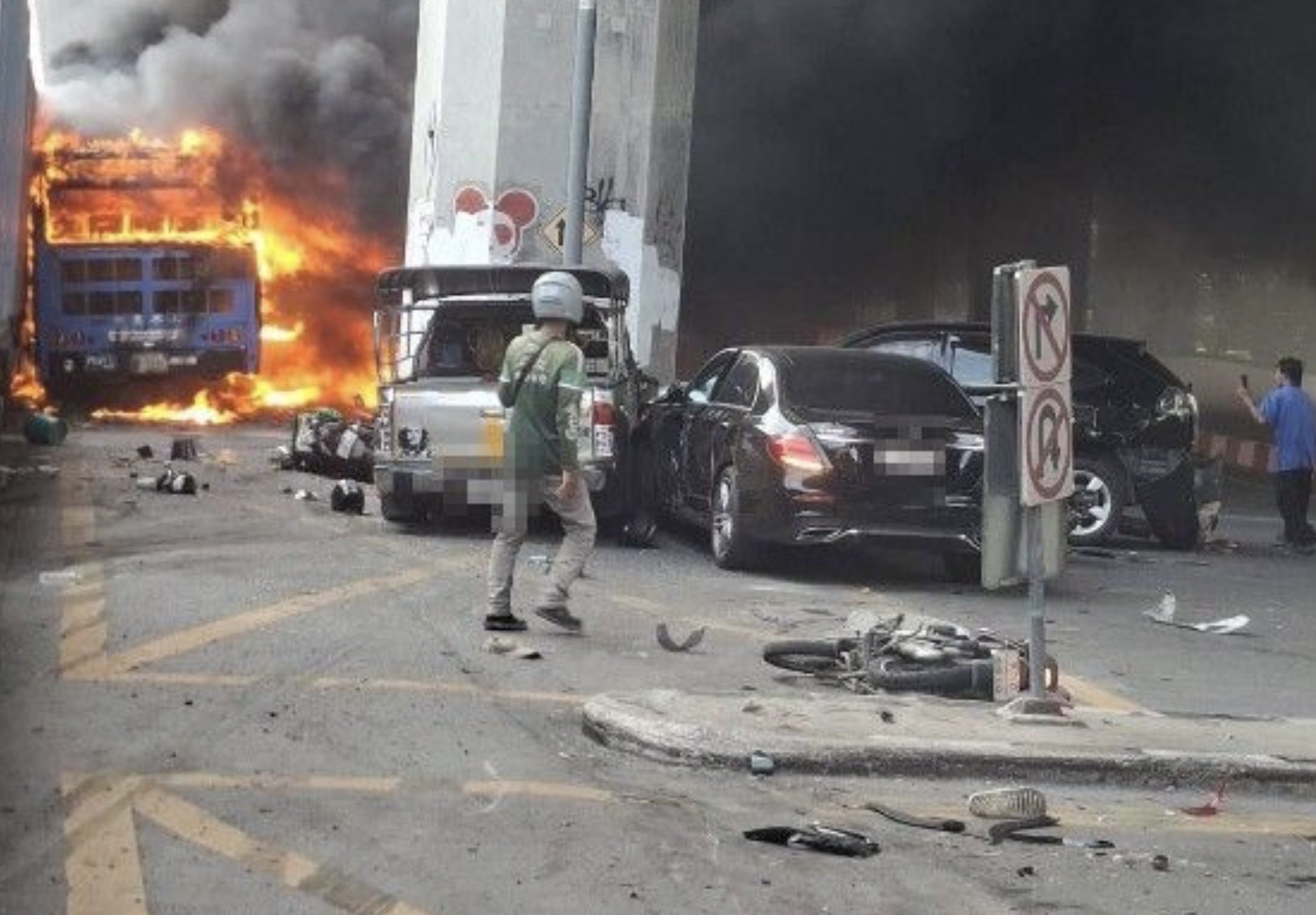
A passenger bus burst into flames after being struck by a train near the Rama 9 junction in Bangkok on Saturday afternoon, causing major traffic disruption along the Asok-Din Daeng route.

Get today's headlines by email image.png

The crash happened at about 3.40pm on 16 May 2026 near the Makkasan railway crossing on the Asok-Din Daeng road. According to FM91 Trafficpro, the train collided with a public bus travelling from the Rama 9 intersection towards Asok Phet junction.

The impact triggered a fire, with flames rapidly engulfing the bus at the scene. Emergency responders and rescue teams were dispatched to contain the blaze and assess the situation.
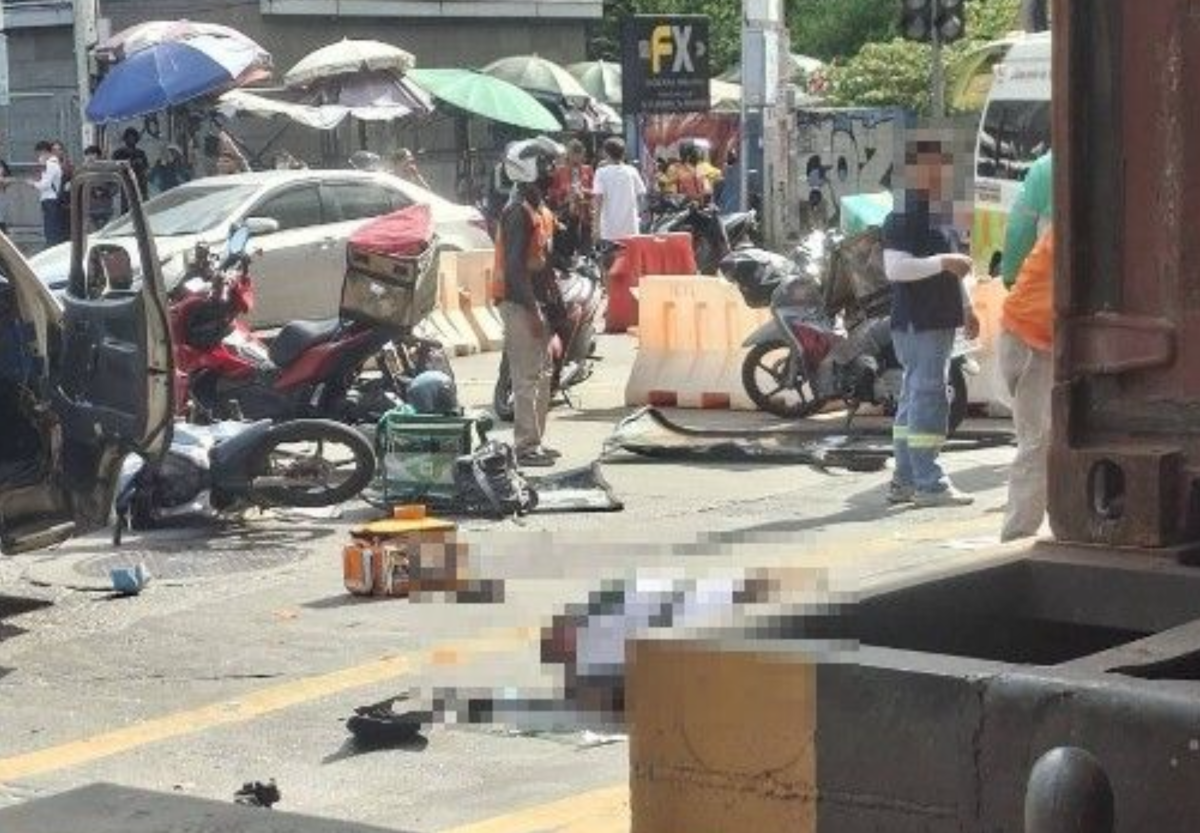
image.png

Authorities warned motorists to avoid the Asok-Din Daeng road and nearby areas unless absolutely necessary, as the accident was expected to cause significant traffic congestion. Delays were reported on surrounding routes as emergency crews worked to bring the fire under control.

At the time of reporting, officials had not confirmed the number of casualties or injuries linked to the collision. The cause of the crash also remained under investigation.

The incident occurred on one of Bangkok’s busiest transport corridors, where road traffic and railway crossings regularly intersect. The Makkasan area is a key link between central business districts and eastern parts of the capital, meaning disruptions can quickly spread across the city road network.

Naewna reported that emergency services continued operations at the site into the afternoon, while traffic police monitored diversions around the affected junctions. Commuters were advised to seek alternative routes while access to the area remained restricted.

Further updates are expected once investigators complete an initial examination of the scene and authorities release information regarding injuries, damage and the circumstances leading to the collision.
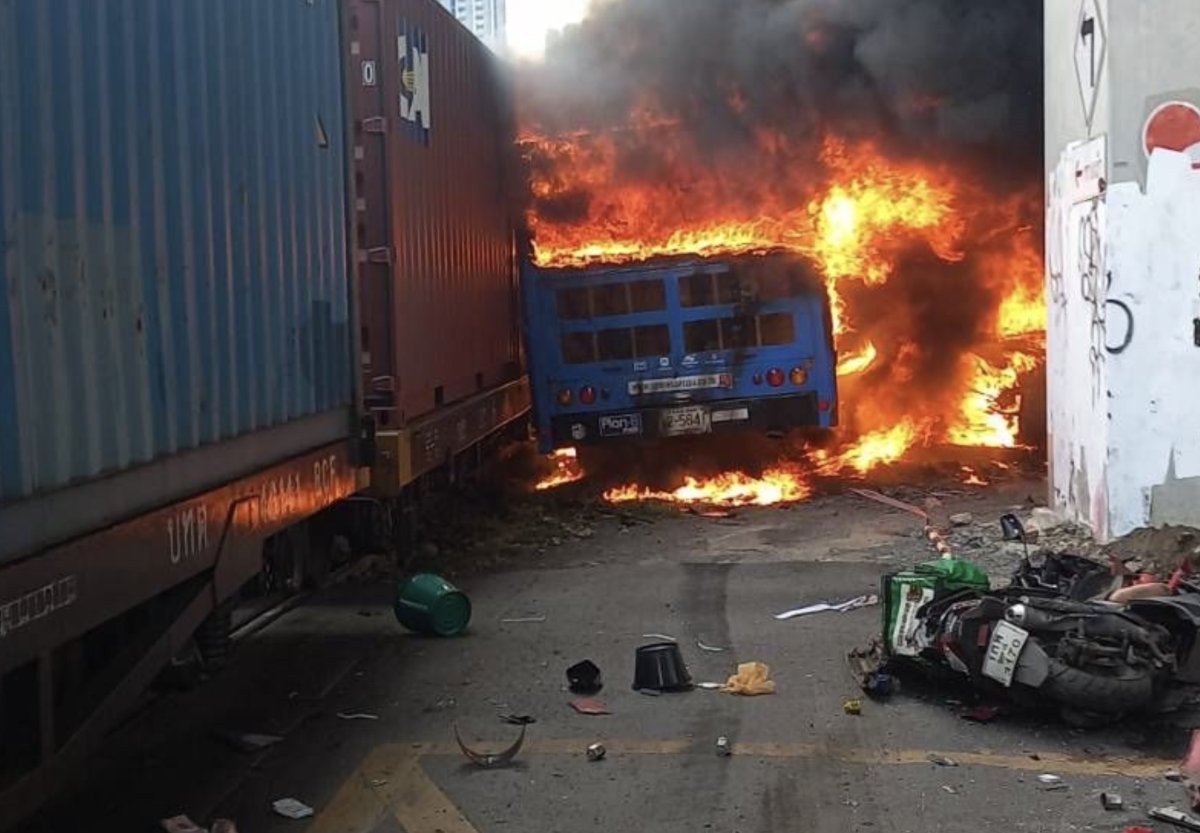
image.jpeg

Pictures courtesy of Naewna

Join the discussion? image.png

Already a member? image.png

image.png Adapted by ASEAN Now Naewna 16 May 2026

User Feedback

Recommended Comments

Stargeezr Platinum Member

Stargeezr

Advanced Member

The train worker may have been to blame, but the bus driver should have stopped before reaching the tracks.

He should have seen that the traffice ahead was stopping, and in my opinion the bus driver should have been fired

and banned for life from ever driving another commercial vehicle. In My Opinion anyway. i am just glad that I do not live in Thailand

and only risk my life a couple times if my Thai family is not available to drive me around. i do take the BTS and feel fairly safe.

Briggsy Diamond Member

Briggsy

Advanced Member
10 minutes ago, Stargeezr said:

The train worker may have been to blame, but the bus driver should have stopped before reaching the tracks.

He should have seen that the traffice ahead was stopping, and in my opinion the bus driver should have been fired

and banned for life from ever driving another commercial vehicle. In My Opinion anyway. i am just glad that I do not live in Thailand

and only risk my life a couple times if my Thai family is not available to drive me around. i do take the BTS and feel fairly safe.

I can see you are not familiar with this crossing. It is multi-lane and located between two extremely busy and chaotic intersections and in central Bangkok with its stop-start traffic. Thousands of vehicles are forced by Thailand's chaotic road system to stop on the tracks every day, thousands. There is effectively no choice.

You cannot impose first world law and order onto Asian roads, however much you may wish to.

The trains stop before the crossing multiple times a day due to the fact the crossing cannot be cleared quickly enough before the train arrives.

Train (non-) driver at fault here.

VocalNeal Star Member

VocalNeal

Advanced Member
On 5/17/2026 at 8:01 AM, Bangkok Barry said:

if he survived

That's an interesting question. Did the bus driver survive.

?

If not it would explain the search for another culprit.

Upnotover Ruby Member

Upnotover

Advanced Member
12 minutes ago, VocalNeal said:

That's an interesting question. Did the bus driver survive.

?

If not it would explain the search for another culprit.

They arrested him on Sunday (as reported in this thread), together with the train driver.

richard_smith237 Star Member

richard_smith237

Advanced Member
44 minutes ago, Upnotover said:
56 minutes ago, VocalNeal said:

That's an interesting question. Did the bus driver survive.

?

If not it would explain the search for another culprit.

They arrested him on Sunday (as reported in this thread), together with the train driver.

Correct - it was confirmed that the bus driver survived, though injured (extent unknown) and has been charged alongside the train driver and signalman. It was also reported that the bus driver tested negative for illegal substances.

Briggsy’s explanation for why the bus ended up on the tracks is entirely plausible. The real issue is not simply what the driver did in that moment, but the systemic failures that allowed the situation to develop in the first place - and responsibility for that starts much higher up the chain.

Ultimately, at a junction like this - one already notorious for chronic gridlock - the safety process cannot rely solely on motorists behaving perfectly - this is a city-wide issue, not just this junction.

When the crossing becomes blocked, the crossing controller should alert signalmen further up the line, who would then radio the train driver, set signals to danger, and “red-flag” the line if necessary so the train stops well before the crossing.

This is essential because freight trains have very long stopping distances 400 up to 800m, in some cases 1.5km and cannot brake suddenly once an obstruction becomes visible.

The train theoretically only proceed once the junction is fully cleared and the barriers lowered - this is the SOP and requires a huge amount of human input.

IF the signal man fails to signal with the lights and flag - then is the fault with the train driver ? - thats why the investigation is running of course - to find out who did what.

The train driver testing positive for a substance may be a complete red herring.

But expecting bus drivers not to enter the crossing until the entire exit beyond the tracks is completely clear is simply unrealistic in Bangkok traffic at junctions like this.

NoDisplayName Ruby Member

NoDisplayName

Advanced Member
1 hour ago, Briggsy said:

Thousands of vehicles are forced by Thailand's chaotic road system to stop on the tracks every day, thousands. There is effectively no choice.

Of course, there IS a choice.

Thousands of drivers are not forced, they choose wrong.

Don't proceed into the yellow box, or onto the tracks, if traffic prevents clearing it.

That's, like, in the driver training manual.

Drivers must stop behind the stop line, leaving space before the tracks to wait until the vehicle ahead has fully cleared the tracks and be sure that the opposite side "has enough room to clear the tracks" before proceeding.

Dtbezn3nNUxytg04ayx6M9QdAenvGiwwPYP1Pq5p

https://en.thairath.co.th/scoop/interview/2933237

Briggsy Diamond Member

Briggsy

Advanced Member
5 hours ago, NoDisplayName said:

Of course, there IS a choice.

You have selectively quoted my post.

Are you familiar with the crossing in question? I suggest you are not.

I am not talking about level crossings in general. The crossing where the accident happened is extremely busy and chaotic and in a permanent state of congestion. There is an accepted way of crossing the junction that is used by tens of thousands of motorists every day.

I used to live near a level crossing in Sri Racha. The barrier came down and everybody waited behind it. Great. No significant congestion. However, in the crossing where the accident occurred in central Bangkok, the traffic is gridlocked and cannot move. The barriers cannot descend. There is an obligation on the slow-moving train to stop and in this case, he was told to stop by the flagman.

The cause of the crash is a train driver on meth.

You can sanctimoniously quote the highway code at me but that is not the reality in central Bangkok.

NoDisplayName Ruby Member

NoDisplayName

Advanced Member
12 minutes ago, Briggsy said:

You have selectively quoted my post.

Are you familiar with the crossing in question? I suggest you are not.

I am not talking about level crossings in general. The crossing where the accident happened is extremely busy and chaotic and in a permanent state of congestion. There is an accepted way of crossing the junction that is used by tens of thousands of motorists every day.

I used to live near a level crossing in Sri Racha. The barrier came down and everybody waited behind it. Great. No significant congestion. However, in the crossing where the accident occurred in central Bangkok, the traffic is gridlocked and cannot move. The barriers cannot descend. There is an obligation on the slow-moving train to stop and in this case, he was told to stop by the flagman.

The cause of the crash is a train driver on meth.

You can sanctimoniously quote the highway code at me but that is not the reality in central Bangkok.

You're saying the "accepted way of crossing in Bangkok" is to drive onto the tracks despite being unable to proceed if needed, cause everybody does it? Don't follow the highway code = FAFO.

If the traffic is gridlocked, then don't drive onto the tracks. It's that simple.

richard_smith237 Star Member

richard_smith237

Advanced Member
42 minutes ago, NoDisplayName said:

You're saying the "accepted way of crossing in Bangkok" is to drive onto the tracks despite being unable to proceed if needed, cause everybody does it? Don't follow the highway code = FAFO.

If the traffic is gridlocked, then don't drive onto the tracks. It's that simple.

That is exactly what he is saying, because that is exactly what happens at virtually every 'major' box junction and 'major' rail crossing junction across Bangkok.

We all know the rules regarding box junctions. The point Briggsy is making is not about theory, but reality - whereas your observation rather suggests you may not have spent much time in Thailand at all.

If you attempted to drive in Bangkok while rigidly applying every rule to the letter, you would barely get anywhere.

That, in itself, is part of the deeper road-safety problem in Thailand. It is not simply an issue of isolated individuals behaving badly, but a broader cultural issue surrounding enforcement, compliance, and accepted behaviour on the roads.

It is why drivers routinely fail to stop at pedestrian crossings. It is why multiple vehicles continue through red lights at almost every major junction. It is why many motorcyclists still ride without helmets, why drink-driving remains common, why heavy lorries continue entering the city during prohibited hours, and why overloaded open pickups can still be seen speeding along expressways.

The pattern is the same throughout: rules are routinely bent, ignored, or treated as optional until a major tragedy occurs. Only then is there a temporary display of enforcement and concern, before behaviour gradually returns to normal once public attention fades.

So, if you ever attempted to drive here and approached a box junction, standard junction, or rail crossing without entering until your exit was completely clear, you would fail to make progress across that junction - because other drivers would immediately fill any gap you left. By the time you attempted to move forwards, the space you were waiting for would already be gone - you wouldn't move at all.

Georgealbert Star Member

Georgealbert

News Team

UPDATE

Thai Union Demands Reform After Bangkok Crash

Georgealbert Star Member

Georgealbert

News Team

UPDATE

SRT Staff Test Positive For Drugs, Suspended in Bangkok

Create an account or sign in to comment

Account

Navigation

Search

Search

Configure browser push notifications

Chrome (Android)
  1. Tap the lock icon next to the address bar.
  2. Tap Permissions → Notifications.
  3. Adjust your preference.
Chrome (Desktop)
  1. Click the padlock icon in the address bar.
  2. Select Site settings.
  3. Find Notifications and adjust your preference.

