Skip to content
View in the app

A better way to browse. Learn more.

Thailand News and Discussion Forum | ASEANNOW

A full-screen app on your home screen with push notifications, badges and more.

To install this app on iOS and iPadOS
  1. Tap the Share icon in Safari
  2. Scroll the menu and tap Add to Home Screen.
  3. Tap Add in the top-right corner.
To install this app on Android
  1. Tap the 3-dot menu (⋮) in the top-right corner of the browser.
  2. Tap Add to Home screen or Install app.
  3. Confirm by tapping Install.

Thailand News

All the latest news stories from Thailand are written in English. Fresh news and stories from around the kingdom brought to you daily.
Tourism and Sports Minister Surasak Phancharoenworakun has ordered a sweeping crackdown on criminal networks and illegal activities on Thailand’s major tourist islands following a series of safety incidents involving foreign visitors.

Get today's headlines by email

Speaking on 4 June, Surasak said the ministry would coordinate with local authorities, tourism police and other agencies to arrest offenders and strictly enforce the law in key tourism destinations, including Koh Samui and Koh Samet. The measures are aimed at improving visitor safety and maintaining confidence in Thailand’s tourism sector after several violent incidents involving foreign tourists, including a recent assault on a Japanese visitor.

The minister said authorities would carry out extensive inspections of businesses operating on tourist islands, including shops, restaurants, hotels and public transport operators. The campaign is intended to eliminate mafia-style control and illegal activities, particularly in southern tourism areas. Surasak warned that any government officials found to have facilitated, ignored or been involved in criminal activity would face legal action.

The crackdown also targets nominee businesses and foreign nationals who overstay their visas. The initiative follows the government’s tougher security policy led by Prime Minister Anutin Charnvirakul and Deputy Prime Minister Suphajee Suthumpun. The Interior Ministry and Commerce Ministry will expand investigations into nominee business operations, including cases similar to entertainment venues in Pattaya, to prevent foreigners from exploiting Thailand and transferring profits overseas.

Tourism police have been instructed to strengthen security measures and increase monitoring of foreign visitors. Authorities are considering the use of technology to help screen visitors, detect visa overstays and ensure compliance with visa conditions and permitted lengths of stay.

Surasak also confirmed he had recently met with Zhang Jianwei, Chinese Ambassador to Thailand. He said the Chinese embassy had expressed its willingness to cooperate in screening and supervising Chinese nationals to support the goal of attracting quality tourists while protecting the image of both countries.

The latest measures come amid growing pressure on authorities to address safety concerns in popular tourist destinations. Recent inspections in Pattaya uncovered entertainment venues operating without proper licences and businesses allegedly using Thai nominees, reinforcing calls for stricter enforcement and greater scrutiny of tourism-related operations.

“When problems arise, we will move quickly to address them. Individuals who break the law will be prosecuted, while business operators that fail to maintain safety standards or contribute to harmful incidents will be required to correct deficiencies immediately,” Surasak said.

He added: “It is time to take safety control seriously. If an ordinary person commits an offence, they must be arrested immediately. But if an operator is negligent and causes losses, they must be ordered to correct the problem in line with the law as quickly as possible.”

Khaosod reported that authorities are expected to continue inspections and enforcement operations across major tourist destinations in the coming weeks, focusing on crime prevention, business compliance and visitor safety.


Picture courtesy of Khaosod

Join the discussion?

Already a member?

Adapted by ASEAN Now Khaosod 5 June 2026
Georgealbert
Georgealbert
Thailand’s tourism industry faces a fresh setback after the Association of Thai Travel Agents (ATTA) cut its 2026 forecast for Chinese visitor arrivals from 9 million to 7 million. The downgrade reflects growing safety concerns among Chinese travellers, alongside rising travel costs linked to higher oil prices caused by conflict in the Middle East.

Get today's headlines by email

ATTA president Thanapol Cheewarattanaporn said on Thursday, 4 June 2026, that Chinese arrivals this year are now expected to reach around 7 million, well below projections made at the start of the year. He identified two key factors behind the weaker outlook: damage to Thailand’s safety image and increasing travel expenses.

According to Thanapol, safety concerns have become the biggest obstacle in the Chinese market. Reports involving Chinese nationals allegedly being held for ransom or disappearing after arriving in Thailand, along with fears connected to call-centre scam networks, have undermined confidence among potential visitors.

He said such reports have spread rapidly across Chinese social media and short-video platforms, further damaging Thailand’s reputation as a safe destination. Confidence has also been affected by online claims that some Thai state officials or police officers may have links to criminal groups, regardless of whether individual allegations have been fully proven.

Thanapol said Chinese travellers place safety above all other considerations when choosing overseas destinations. He argued that Thailand’s response has not yet appeared strong or clear enough to reassure the Chinese market.

ATTA is urging the government to introduce concrete safety measures and communicate them clearly at the national level. Thanapol said authorities should present a step-by-step strategy explaining what actions will be taken, how incidents will be addressed and how success will be measured.

The uncertainty has made Chinese tour operators increasingly cautious. Some agencies now see Thailand as a weaker market and are less willing to spend resources reassuring customers about safety issues. As a result, investment and marketing activity promoting Thailand have slowed.

Higher oil prices have added further pressure by increasing aviation costs and making charter flight operations more difficult. More expensive air fares are also discouraging travel.

Despite the challenges, ATTA is seeking new opportunities by targeting emerging markets in China. The association has launched roadshows in Urumqi in Xinjiang and Lanzhou in Gansu, areas viewed as having strong potential and less exposure to negative news about Thailand.

ATTA is also pushing for charter flights from Urumqi to Thailand from August. Thanapol said Xinjiang could serve as a strategic gateway linking travellers to other destinations, including Dubai and Europe.

The Nation reported that ATTA has called for a broader review of Thailand’s tourism promotion strategy. Thanapol said the country should encourage both inbound Chinese tourism and outbound travel by Thais to improve aviation balance and strengthen tourism exchanges. He also warned that Thailand must move more quickly to compete with rivals such as Malaysia, which has actively promoted itself in China and launched direct flights between Kuala Lumpur and Urumqi.

Join the discussion?

Already a member?

Adapted by ASEAN Now Nation 5 June 2026
Georgealbert
Georgealbert
Thailand is set to launch the 1.621-billion-baht TH-AI Passport project, providing one year of professional-grade artificial intelligence access to five million citizens aged 15 and above. The initiative, administered by the Office of the National Digital Economy and Society Commission (ONDE), aims to boost AI adoption and digital skills across the country, but has already attracted scrutiny over its cost, procurement process and expected value for money.

Get today's headlines by email

The scheme will aggregate 12 AI models developed in partnership with Google, Microsoft and OpenAI into a single platform. Eligible users will gain access to advanced AI tools alongside training courses under a “Learn to Earn” framework, with completion of upskilling programmes required before higher-tier AI capabilities can be unlocked. Registration is scheduled to open on 5 June.

The project comes as Thailand seeks to address a significant gap in AI adoption. According to the report Global AI Adoption in 2025: A Widening Digital Divide, Thailand’s AI usage rate stands at 10.7 per cent of the population, below the global average of 16.3 per cent and ranking 89th worldwide. Within Southeast Asia, Singapore leads with a 60.9 per cent adoption rate, followed by Vietnam at 23.5 per cent, Malaysia at 19.7 per cent, the Philippines at 18.3 per cent and Indonesia at 12.7 per cent.

Government officials argue the project will remove financial barriers to advanced AI use. While professional subscriptions to major AI platforms typically cost around US$19 to US$20 per month per service, the government says national-scale procurement has reduced the cost to an estimated 27 baht per user per month.

The initiative has drawn political attention. The opposition People’s Party has referred the project to anti-corruption agencies over procurement concerns. However, Minister Chaichanok Chidchob has denied any irregularities and confirmed that the programme will proceed as planned.

Supporters of the project say professional-grade AI can help businesses analyse markets, create marketing materials, generate visual content and improve productivity. Students, freelancers and early-career workers could also benefit from tools that assist with job applications, portfolio development and career planning.

The government views the programme as an investment in human capital rather than a simple software subsidy. Plans include roadshows across four regions, training activities and promotional campaigns aimed at encouraging registrations and participation.

The Nation reported that whether TH-AI Passport succeeds in narrowing Thailand’s digital divide will depend on how effectively users adopt the technology and apply it to generate economic value. The outcome of the project will become clearer once registrations begin and participation levels emerge in the months ahead.


Picture courtesy of The Nation

Join the discussion?

Already a member?

Adapted by ASEAN Now Nation 5 June 2026
Georgealbert
Georgealbert
Thailand’s Civil Aviation Authority (CAAT) has issued new regulations tightening controls on power banks carried by airline passengers, aiming to improve flight safety and reduce the risk of lithium battery fires onboard aircraft. The new rules, announced on 4 June 2026 under Regulation No. 122, align Thailand’s aviation safety standards with the International Civil Aviation Organisation’s (ICAO) guidelines for the safe transport of dangerous goods by air.

Get today's headlines by email

Under the regulations, power banks may only be carried in hand luggage and are strictly prohibited in checked baggage. Passengers may carry power banks with a capacity of up to 100 Wh (20,000 mAh) without restriction, while units between 100 Wh and 160 Wh require prior airline approval and are limited to two per passenger.

The rules also prohibit passengers from using power banks to charge electronic devices during a flight or charging power banks from an aircraft power source. Power banks must not be stored in overhead lockers and instead should be kept in easily accessible locations such as a seat pocket, under the seat in front, or on the passenger’s person. Devices without a clearly stated energy rating, or with information that cannot be verified, are banned from aircraft.

The move follows a series of lithium battery-related incidents involving airlines in Thailand and abroad. One of the most significant occurred in early 2025 when a South Korean Air Busan aircraft preparing to depart for Hong Kong caught fire inside the cabin. Preliminary findings suggested a power bank stored in an overhead compartment may have caused the blaze, resulting in injuries, a full evacuation and severe damage to the aircraft.

Other incidents included a power bank fire aboard an IndiGo flight in India after landing in Chandigarh, prompting an emergency evacuation and safety inspections. Thailand has also experienced similar events, including a Bangkok Airways flight from Samui to Hong Kong where a passenger’s power bank overheated, emitted smoke and caught fire, forcing the pilot to divert and make an emergency landing in Bangkok. A separate incident on a Thai AirAsia flight between Don Mueang and Nakhon Si Thammarat was successfully contained by cabin crew.

CAAT Director General ACM Manat Chavanaprayoon said lithium batteries and power banks are widely carried by air travellers but can overheat, emit smoke or catch fire if damaged or used improperly. He said the new measures are intended to proactively reduce risks and protect passengers, crew and aircraft operations.

The Nation reported that the regulator stressed that the rules are not designed to inconvenience travellers but to establish safety standards consistent with international practices. Passengers are also required to take precautions against short circuits by storing power banks in their original packaging or protective pouches and should check airline-specific requirements before travelling.


Picture courtesy of CAAT

Join the discussion?

Already a member?

Adapted by ASEAN Now Nation 5 June 2026
Georgealbert
Georgealbert
Thailand’s Immigration Bureau has revealed the results of its proactive enforcement campaign, reporting that 29,490 foreign nationals were denied entry, during the first five months of 2026 under its “Three No’s” strategy aimed at tackling transnational crime and preventing foreign offenders from operating in the country.

Get today's headlines by email

On 4 June 2026, Pol Maj Gen Cherngron Rimphadee, deputy commissioner and spokesperson for the Immigration Bureau, said National Police Chief Pol Gen Kitrat Phanphet had ordered a nationwide crackdown on transnational criminal networks and foreigners posing as tourists who may threaten Thailand’s security, economy and society.

Immigration Bureau Commissioner Pol Lt Gen Phanumas Boonyalak said all immigration divisions nationwide had been enforcing the policy since the start of 2026 through the “Three No’s” approach: no entry, no stay, and no escape.

The first measure, “No Entry”, focuses on preventing unwanted individuals from entering Thailand. Authorities use the Advance Passenger Processing System (APPS) to block foreign nationals listed on Thailand’s blacklist, including those previously imprisoned in the country and individuals subject to Interpol notices. The blacklist currently contains 169,506 names, preventing those individuals from boarding flights to Thailand, while anyone attempting to enter through land border checkpoints is refused entry.

Immigration officers have also increased scrutiny of travellers entering under visa-free schemes. Those interviewed and found to display behaviour suggesting they intended to work illegally or may have links to scam operations relocating from neighbouring countries were denied entry. Between January and May 2026, a total of 29,490 people were refused entry under this measure.

The second measure, “No Stay”, targets foreigners who violate the conditions of their visas. Authorities have revoked visas for individuals who entered legally but engaged in activities inconsistent with their visa category, particularly student visa holders not undertaking genuine studies. From 1 January to May 2026, 668 people were denied permission to remain and were deported.

Immigration authorities have also conducted nationwide inspections and enforcement operations against foreign offenders. Between 1 January and April 2026, a total of 14,161 foreign nationals were arrested for various offences.

The final measure, “No Escape”, involves intelligence gathering and cooperation with local police forces. Between January and May 2026, immigration officers identified 190 foreign-related targets in communities considered at risk of affecting public order, particularly in major tourist destinations.

The targets included 147 in Chonburi, two in Mae Hong Son, nine in Chiang Mai, 22 in Surat Thani and 10 in Phuket. Searches have so far resulted in 31 arrests, while investigations into the remaining targets continue.

Khaosod reported that authorities said immigration and police units will continue monitoring high-risk individuals and communities as part of ongoing efforts to prevent criminal activity and strengthen enforcement across Thailand.

Join the discussion?

Already a member?

Adapted by ASEAN Now Khaosod 5 June 2026
Georgealbert
Georgealbert
A foreign man carrying a knife in Pattaya’s busy Soi Buakhao area was detained by police after causing alarm among residents and tourists on the evening of 2 June 2026.

Get today's headlines by email

Police patrol officers from Pattaya City Police Station responded after receiving a report from the radio communications centre that a foreign man was behaving erratically while carrying a knife in an alley connecting to Soi Buakhao in Pattaya, Chon Buri.

Following the report, Patrol Unit 2 and additional officers rushed to the scene. They found the man standing near a public roadside while holding a knife, prompting concern among members of the public and tourists passing through the area.

Officers moved in to contain the situation and exercised caution while attempting to communicate with the man. Police were able to bring the situation under control and detain him safely without any injuries being reported.


The incident caused alarm in the area because Soi Buakhao is a popular tourist district with significant pedestrian traffic. Witnesses and passers-by were forced to keep their distance while officers dealt with the situation.

The detained man was taken to Pattaya City Police Station for questioning and further investigation. Police said they would establish the facts surrounding the incident and proceed in accordance with legal procedures.

Authorities have not released further details about the man’s identity or the circumstances leading up to the incident. No injuries or property damage were reported,

Police said that legal action will be taken and they would continue to strengthen safety measures in Pattaya and maintain a visible presence in busy tourist areas to help ensure the safety of residents and visitors.


Pictures courtesy of ฉลาม นิวส์

Join the discussion?

Already a member?

Adapted by ASEAN Now ฉลาม นิวส์ 4 June 2026
Georgealbert
Georgealbert
A police sergeant wanted in connection with a methamphetamine trafficking case has been arrested in Songkhla after nearly three years on the run. Officers from Chumphon Provincial Police and the Office of the Narcotics Control Board (ONCB) tracked down and detained Pol Snr Sgt Sudi, who is accused of directing and assisting a drug transport operation linked to the seizure of 100,000 methamphetamine tablets.

Get today's headlines by email

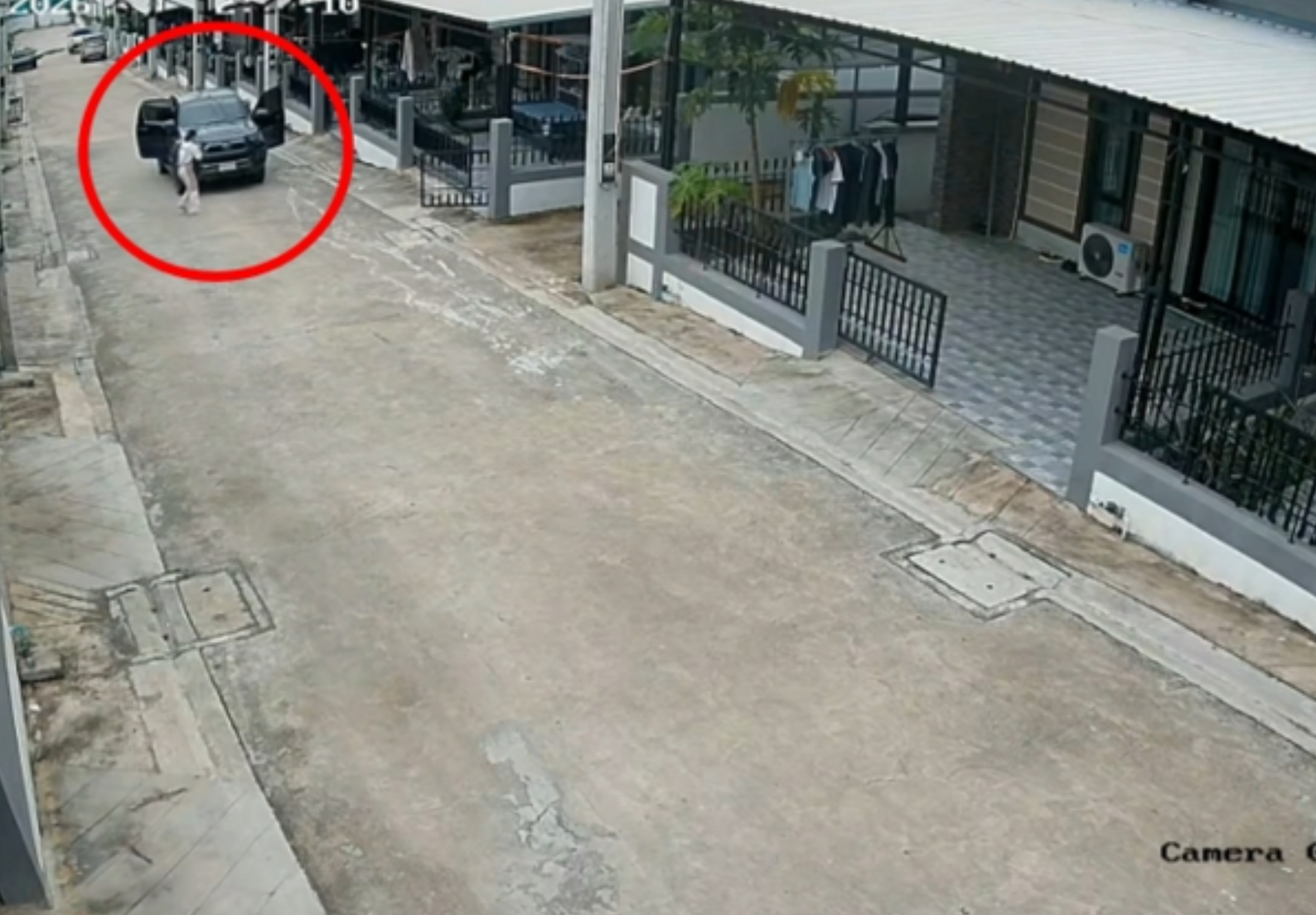
The arrest followed an investigation stemming from a police operation on 17 June 2023 at approximately 6.40pm. Officers from Ban Map Ammarit Police Station seized 100,000 methamphetamine tablets at a PT petrol station in Moo 3, Khao Chai Rat subdistrict, Pathio district, Chumphon province.

The drugs were allegedly intended for distribution and commercial sale, with authorities stating the offence contributed to the spread of narcotics among the public and affected national security. Investigators from Chumphon Provincial Police later expanded the inquiry and gathered evidence identifying Abbas and Wansulaiman as transporters involved in moving the drugs.

Arrest warrants were subsequently issued by the Chumphon Provincial Court for Abbas and Wansulaiman on charges of conspiring with two or more persons to commit a serious narcotics offence and jointly distributing a Category 1 narcotic. Following their arrests, both men allegedly told investigators that Pol Snr Sgt Sudi had directed the operation and participated in the drug transportation.

Based on those statements and additional evidence, investigators sought and obtained an arrest warrant for Pol Snr Sgt Sudi from the Chumphon Provincial Court. Senior police commanders, including Deputy National Police Chief Pol Gen Samran Nuanma, ordered action against state officials involved in narcotics offences in line with government policy.

On 1 June 2026, Pol Col Denduang Thongsrisuk, Deputy Commander of Chumphon Provincial Police, received intelligence indicating that Pol Snr Sgt Sudi was hiding in Songkhla province. The information was reported to senior officers, who instructed the major narcotics investigation team and ONCB officers to locate and arrest the suspect immediately.

Authorities eventually found Pol Snr Sgt Sudi driving a grey Mitsubishi Pajero sport utility vehicle into the Senanarong military camp golf course. Officers approached him, presented the arrest warrant and confirmed his identity. He reportedly acknowledged that he was the person named in the warrant and stated that he had not previously been arrested.

Khaosod reported that Pol Snr Sgt Sudi was taken into custody and handed over to investigators at Ban Map Ammarit Police Station for legal proceedings. The case will now continue through the criminal justice process.


Picture courtesy of Khaosod

Join the discussion?

Already a member?

Adapted by ASEAN Now Khaosod 4 June 2026
Georgealbert
Georgealbert
A 31-year-old construction worker has been charged after allegedly attempting to sexually assault a female tourist at a resort on Samet Island, Rayong, prompting renewed scrutiny of accommodation security on the popular tourist destination.

Get today's headlines by email

The incident was reported to police in Phe, Rayong, on 3 June 2026 after a 32-year-old female tourist was allegedly targeted while staying at a resort. Officers reviewed CCTV footage and identified the suspect as Nattaphong, known as Lek, a construction worker employed at a nearby building site.

Police later arrested the suspect while he was reportedly gambling online on his mobile phone. During questioning, he allegedly confessed that he had seen the victim staying in a room near his work area and acted on impulse. He admitted entering the area behind the room during the night with the intention of sexually assaulting the woman but fled after she woke up and screamed for help.

The victim told police she was travelling with a group of 12 friends and relatives. While resting in her room, she heard unusual noises behind the property and saw a man attempting to force his way inside. Her screams alerted others and caused the suspect to run away before authorities were contacted.


Picture courtesy of Khaosod

The case follows widespread online criticism after a member of the group posted details of the incident on Facebook. The post claimed that 12 people, including children and a pregnant woman, were staying at a four star resort when an outsider allegedly entered a private room and attempted to sexually assault a female guest. The group also claimed resort staff were slow to respond after calls for assistance.

The resort later issued a statement online, which was subsequently removed, expressing regret over the incident. It stressed that the suspect was not a resort employee and was not a resident of Samet Island. According to the resort, staff helped identify the suspect, who was detained within approximately 30 minutes of the report being made and presented to guests for identification in the presence of three police officers.

The resort said it had not ignored or concealed the matter and remained in contact with those affected. Management explained that staff accommodation was located about 200 metres away, contributing to delays in reaching the room, while police reportedly arrived around 15 minutes after being contacted.

Police have charged the suspect with attempted rape, night-time trespassing and illegal online gambling. The investigation remains ongoing.

Khaosod reported that authorities are now reviewing security arrangements on the island. Rayong Provincial Police Commander is scheduled to visit Samet Island on 4 June to inspect the scene and discuss enhanced safety measures aimed at preventing similar crimes in the future


Join the discussion?

Already a member?

Adapted by ASEAN Now Khaosod 4 June 2026
Georgealbert
Georgealbert
A 24-year-old British man has been arrested after allegedly causing a second public disturbance in Phuket’s Chalong area within two days. Police said the latest incident took place at about 12:00 on 2 June 2026 in Soi Ta-iad, a popular fitness and Muay Thai training district in Mueang Phuket district.

Get today's headlines by email

Officers responded after receiving reports from members of the public that a foreign man appeared heavily intoxicated, was speaking incoherently and causing a nuisance in the area. A patrol team led by Sub-Lieutenant Bandit Khamkaew arrived and found the man displaying signs of intoxication and behaving erratically.

According to police, officers attempted to search the man, but he allegedly resisted and tried to flee. Police detained him, citing concerns that his behaviour could pose a risk to residents and visitors nearby and took him to Chalong Police Station for further investigation.


Authorities later confirmed he was the same individual involved in a separate incident on 1 June. During that earlier event, police said the man, identified only as Mr Brown, was found sitting outside a house in Soi Ta-iad after allegedly banging on a resident’s door and attempting to take a raincoat and motorcycle helmet left outside the property.

The homeowner reported feeling frightened and concerned for the safety of their family and belongings. Officers who attended the scene found that Mr Brown held valid identification and immigration documents and had travelled to Phuket to study Muay Thai.

Police said he was able to communicate clearly during questioning and claimed his actions were intended as a prank. As the homeowner decided not to file a complaint, officers issued a warning and escorted him back to his accommodation.


Pictures courtesy of Khaosod

Following the second disturbance, police charged Mr Brown with becoming intoxicated and behaving disorderly in a public place. He was handed over to investigators at Chalong Police Station for legal proceedings.

Khaosod reported that the case highlights police concerns about public safety in busy tourist and training areas. Authorities have urged members of the public to report individuals whose behaviour causes disturbances or may present a danger to the community.

2600020213757164511.mp4
Video courtesy of Phuketinsta

Related story

Foreign-tourist-enters-Phuket-property-police-intervene

Join the discussion?

Already a member?

Adapted by ASEAN Now Khaosod 4 June 2026
Georgealbert
Georgealbert
A 21-year-old Chinese student, from Hong Kong, was safely rescued by Thai police after falling victim to a cross-border “virtual kidnapping” scam in Thailand, where international fraudsters allegedly manipulated the student into staging an abduction and demanded a ransom of HK$3 million (12.5 million baht) from the family.

Get today's headlines by email

The case was announced on 3 June 2026 by Pol Gen Thatchai Pitaneelaboot, Deputy Commissioner-General of the Royal Thai Police and Director of the Anti-Human Trafficking Centre, alongside senior officers from the Central Investigation Bureau. The operation followed a request for assistance from the Hong Kong Police Force after the student’s family reported receiving threats and ransom demands.

According to investigators, Miss Wang, aged 21, disappeared after travelling to Thailand from Hong Kong. Her father was contacted via WeChat by an unknown man claiming to be holding her captive. The suspect demanded HK$3 million and sent images showing the student bound and appearing to have been assaulted, prompting the family to seek help from Hong Kong police.


Police discovered that before the alleged kidnapping, scammers had persuaded the student to request money from her father under the pretext that it was needed as proof of financial support for overseas studies. Between 19 and 20 May 2026, her father transferred HK$1.4 million, into her Bank of China account. The funds were later dispersed to multiple accounts believed to be linked to the scam network.

The student travelled alone on Hong Kong Airlines flight HX767, arriving in Thailand at 2.36am on 1 June 2026. She initially checked into a hotel in Bangkok’s Lat Krabang district, where investigators reviewed CCTV footage and found no evidence that she had been abducted.

Further investigation revealed that she had hired a vehicle to purchase ropes, a knife, body paint and red lipstick before creating injuries and restraint marks herself. She then photographed and filmed the staged scenes and sent the material to the scammers, who used it to pressure her family into paying the ransom.


Pictures courtesy of Thaitabloid

Police later traced the student to another hotel in Bang Phli district, Samut Prakan, where she had checked in using a fake passport, allegedly supplied by the scammers. Officers located her and secured her safety.

The Royal Thai Police said the student had been subjected to psychological manipulation by criminals posing as government or law enforcement officials. Investigators described the case as a “virtual kidnapping”, a growing scam in which victims are coerced into isolating themselves and staging abductions while fraudsters extort money from relatives.

Thaitabloid reported that authorities said they will continue working closely with Hong Kong police and international law enforcement agencies to pursue those responsible and prevent similar crimes.

AQPf03L6xFNEyb8LZ3YiNsgJghze75iGjTRUBCqyZ88k-7--NX2tHijOfr7zG4XO9Jwukr_IytXbL-2FHKXczCcI3npUBRLU-WZH2aY2lg.mp4

Join the discussion?

Already a member?

Adapted by ASEAN Now Thaitabloid 4 June 2026
Georgealbert
Georgealbert
A Korean tourist has reported being robbed by two ladyboys on Pattaya’s Walking Street after a designer bag containing cash and personal belongings was allegedly stolen during the early hours of 3 June 2026.

Get today's headlines by email

The complaint was brought to the attention of reporters at 9.30pm on 3 June 2026 by a concerned citizen who requested anonymity. The individual reported that a group of ladyboys had targeted a foreign tourist on Walking Street in Pattaya, Chonburi, during the early hours of the same day. The victim later filed a formal complaint with investigators at Pattaya City Police Station.

The concerned citizen also provided video footage of the alleged theft, showing the suspects approaching and surrounding the tourist before allegedly stealing property. The footage was shared as a warning to visitors and with a request for authorities to take stronger action against pickpocket gangs operating in the area.

Reporters visited the scene on Walking Street and found that the area is used as an operational point by Pattaya Tourist Police, who provide assistance to visitors from 8pm until 4am daily. After the end of operations, officers gradually leave the area and traffic is permitted to resume along the route leading to Bali Hai Pier.

It is believed the suspects may have chosen this period to act because it falls immediately after tourist assistance points close and police presence is gone. The area remains busy with tourists at that time, while security coverage may not be as intensive as during normal operating hours.

Police records confirm that the incident occurred at approximately 5am on 3 June 2026 outside an entertainment venue on Walking Street. The victim was identified as 38-year-old Korean tourist Dong Chan Shin.

According to the police report, the tourist was walking along the popular entertainment district when one ladyboy approached, initiated conversation, offered an embrace and made physical contact. A second ladyboy, believed to be part of the same group, then moved in to distract the tourist, allowing the suspects to allegedly steal a Gucci bag.

The bag reportedly contained 10,000 baht in cash, an identity card and a room key. The suspects then fled the scene.

Investigators from Pattaya City Police Station have acknowledged the complaint and are reviewing CCTV footage from the area. Officers are gathering evidence and working to identify and locate those responsible in order to pursue legal action as quickly as possible.

AQMKPnCLxG3lDYv-dksxAfIlkJvF4V-6IxI-D_2rIsScQeUKEVly8c504ZeSDCFP9nbFrOM-3KBm94KDhnol6a7vtQxHqr1iWqvO0GuECw.mp4

Join the discussion?

Already a member?

Adapted by ASEAN Now แจ็ค โพธิ์แดง 4 June 2026
Georgealbert
Georgealbert
Thailand’s Cabinet has approved a draft Memorandum of Cooperation (MOC) that will allow Thai workers to take part in Japan’s new Employment for Skill Development (ESD) programme, a scheme designed to improve skills, strengthen worker protection and provide fairer labour rights. The agreement was endorsed on June 2 and authorises the permanent secretary for labour and the director-general of the Department of Employment to sign the deal.

Get today's headlines by email

The ESD system is scheduled to take effect on April 1, 2027, as part of Japan’s broader effort to reform the way it recruits foreign workers. The programme is intended to address labour shortages across key sectors while offering foreign workers a clearer route to developing professional skills and accessing higher-skilled employment opportunities.

Under the framework, Thai workers sent to Japan will be able to build occupational skills through three years of work experience. The Thai government said the programme would help participants achieve skills equivalent to Japan’s Specified Skilled Worker No 1 level, providing a pathway to more advanced employment while gaining practical workplace experience.

A key element of the agreement is improved worker protection. Thai employees participating in the programme will receive labour and workplace safety protections under Japanese law on the same basis as Japanese workers, including safeguards against discrimination and unfair treatment. The scheme is also expected to provide greater flexibility than previous arrangements by allowing workers to request transfers or change employers under specified conditions.

The new ESD model will replace Japan’s Technical Intern Training Programme, which has faced criticism in the past. Japan has increasingly relied on foreign labour to offset workforce shortages linked to demographic decline, prompting reforms aimed at improving rights protection and creating a more direct route to skilled-worker status.

The demand for foreign labour continues to grow. Japan’s foreign workforce reached 2.57 million in 2025, surpassing 2.5 million for the first time. The ESD programme is expected to cover up to 426,200 workers during its first two years. Labour shortages have also affected the food-service sector, where approvals under the Specified Skilled Worker Type 1 programme were suspended after the sector approached its 50,000-worker limit.

The Nation reported that the MOC will remain in force for five years and will automatically renew for further five-year periods. Deputy government spokesperson Patdarasm Thongsaluaykorn said the Ministry of Foreign Affairs had confirmed the agreement is not considered a treaty under Section 178 of the Constitution, allowing it to proceed without parliamentary treaty approval.

The government said the agreement would expand overseas employment opportunities for Thai workers, improve welfare and protection standards, and allow participants to return to Thailand with valuable skills that can contribute to national development. Thai authorities and the Thai embassy in Japan are also expected to work together to support workers and their families when returning home at the end of the programme.


Picture courtesy of The Nation

Join the discussion?

Already a member?

Adapted by ASEAN Now Nation 4 June 2026
Georgealbert
Georgealbert
A Chinese resident in Thailand has sparked debate online after claiming a Chinese restaurant in Bangkok’s Huai Khwang district refused to accept Thai baht and would only accept payment in Chinese yuan. The allegation, shared in a TikTok video posted on 3 June 2026 by user JaideeBing and Bao, has raised questions about whether the restaurant’s payment practices comply with Thai regulations.

Get today's headlines by email

In the post, the Chinese national, who said he has lived in Thailand for many years, questioned whether a restaurant operating in Thailand could legally function without a Thai bank account. He wrote that the business accepted only cash and WeChat Pay, prompting him to ask whether such an arrangement was permitted.

According to the video, the man had recently eaten at a noodle restaurant in Huai Khwang and attempted to pay using local payment methods. He said restaurant staff informed him that they did not accept Thai QR-code payments and did not have a Thai bank account.

The customer claimed staff then asked whether he had another currency available. He eventually paid in Chinese yuan and said he was charged the equivalent of 375 baht for a bill that had originally totalled 325 baht, resulting in an additional cost of 50 baht.


Picture courtesy of Khaosod

In the video, he expressed confusion about the policy, asking: “This restaurant only accepts yuan. I’m confused. Can they really do this?” He also urged businesses operating in Thailand to comply with Thai laws and tax regulations.

The man added that he was not unfamiliar with local practices, saying: “They may think I’m new to Thailand, but I’ve been here a long time. Half of me is Thai already.”

The video quickly attracted attention across social media, with many users questioning whether businesses in Thailand can legally refuse to accept Thai currency or operate without a Thai payment system. The discussion has focused on payment regulations, taxation and whether foreign-owned businesses should be required to use local banking services.

No response from the restaurant had been reported as of 3 June 2026. Relevant authorities had also not issued any immediate statement regarding the allegations.

Khaosod reported that the case is likely to draw further scrutiny as questions continue over the legality of payment practices used by some businesses catering primarily to foreign customers. Any official response from regulators or the restaurant could help clarify the rules governing accepted payment methods in Thailand.

video_616883308836159489-gvYKu7E1.mp4

Join the discussion?

Already a member?

Adapted by ASEAN Now Khaosod 4 June 2026
Georgealbert
Georgealbert
A food delivery rider was injured after being struck by lightning while riding a motorcycle on the Ratchavipha flyover in Bangkok during heavy rain on 2 June. The incident occurred at around 3.40pm on the elevated section of Vibhavadi Rangsit Road heading towards the Ratchayothin intersection.

Get today's headlines by email

According to initial reports, the rider was travelling across the flyover amid a thunderstorm when lightning struck the middle of the body while on the motorcycle. The impact caused the motorcycle to lose control and fall off, leaving the rider with multiple injuries.

Rescue volunteers from the Poh Teck Tung Foundation and an emergency medical team from Chulabhorn Hospital rushed to the scene and provided urgent assistance. The injured rider was found with burns consistent with a lightning strike, including singed hair and visible lightning marks on the body. The helmet also showed burn damage.


Pictures courtesy of Matichon

The rider was transported to Kasemrad Prachachuen Hospital for emergency treatment. Further images later circulated online showing a long burn wound across the neck and chest. Reports also noted that a necklace worn by the rider had broken during the strike, while the helmet sustained a prominent burn mark on the top.

The incident attracted widespread attention on social media, with some users questioning whether items such as the rider’s necklace or helmet could have attracted the lightning strike. In response, Associate Professor Dr Jessada Denduangboripant, a lecturer in the Department of Biology at the Faculty of Science, Chulalongkorn University and a science communicator, said the items did not attract the lightning.

Dr Jessada explained that the strike was simply a matter of bad luck, as the motorcycle was travelling across a prominent elevated structure at the exact location where lightning happened to strike. He stated that if the rider had not been at that point, another vehicle passing through the area could have been hit instead.


He added that the burn marks along the line of the necklace were caused by electrical current passing through the metal, generating heat and causing severe burns. He compared the effect to when charging mobile phones, that have been damaged or exploded after lightning strikes, stressing that such objects do not attract lightning but are affected by the electrical discharge.

The incident has also served as a reminder of the dangers of travelling during severe thunderstorms, particularly on exposed elevated roads. Authorities advise motorists to slow down and seek shelter in sturdy buildings when lightning activity is present.

Matichon reported that the rider remains under medical care, while the incident continues to be discussed online as experts reiterate that lightning strikes are unpredictable and can affect anyone caught in the wrong place at the wrong time.


Join the discussion?

Already a member?

Adapted by ASEAN Now Matichon 4 June 2026
Georgealbert
Georgealbert
The Thai government has announced that Phuket International Airport will officially launch an automated passport control system for departing passengers on 13 June, aimed at reducing waiting times and improving passenger processing during busy travel periods.

Get today's headlines by email

The move follows reports circulating on social media about congestion at immigration checkpoints at Phuket International Airport, as well as allegations that fees were being charged to facilitate faster passage through immigration. The government said it had ordered an investigation into the claims while accelerating measures to improve efficiency and passenger services.

Deputy Government Spokesperson Ploythalee Laksamisaengchan said authorities are working to address overcrowding, particularly during peak periods when multiple flights arrive or depart within a short timeframe.

To improve convenience for travellers, Phuket Immigration is preparing to officially open the outbound automated passport control system on 13 June. The new system is intended to speed up passport processing, reduce queue times and enhance the overall efficiency of immigration services in line with international standards.

Officials said the upgrade will help accommodate growing passenger and tourist numbers passing through Phuket International Airport, one of Thailand’s busiest gateways for international visitors.

Ploythalee stressed that immigration services at Phuket International Airport operate under the procedures and standards established by relevant government agencies. She also reiterated that there is no policy allowing additional payments in exchange for special privileges or expedited immigration processing.

The government said the airport remains focused on balancing convenience, speed and security while improving the passenger experience. The initiative forms part of wider efforts to strengthen airport operations and support continued growth in tourism and air travel.

ThaiRath reported that the automated passport control system is expected to become operational as scheduled on 13 June, providing departing passengers with a faster alternative to traditional immigration counters and helping ease pressure during periods of high passenger demand.


Picture courtesy of ThaiRath

Related story

Phuket-airport-denies-priority-immigration-fee-claims

Join the discussion?

Already a member?

Adapted by ASEAN Now ThaiRath 4 June 2026
Georgealbert
Georgealbert
Thailand’s Deputy Prime Minister and Foreign Minister Sihasak Phuangketkeow has warned that Cambodia’s decision to pursue compulsory conciliation under the 1982 United Nations Convention on the Law of the Sea (UNCLOS) could undermine broader efforts to restore relations and address border security issues between the two countries.

Get today's headlines by email

Speaking in Paris, while attending the OECD (Organisation for Economic Co-operation and Development) Ministerial Council Meeting 2026, Sihasak responded to Cambodian Prime Minister Hun Manet’s letter to Thailand and the United Nations secretary-general seeking compulsory conciliation over overlapping maritime claims.

Sihasak said Thailand does not believe Cambodia’s chosen approach will genuinely help resolve the dispute. He argued that several Cambodian claims were inconsistent with the facts and rejected Cambodia’s assertion that Thailand terminated the 2001 Memorandum of Understanding (MoU) because it did not intend to meet its obligations.

According to Sihasak, Thailand ended the 2001 MoU because more than 20 years of negotiations had failed to produce progress. He said the intention was to restart discussions on overlapping maritime areas on a new basis and within the UNCLOS framework.

Thailand believes bilateral negotiations should be given an opportunity before moving to other mechanisms. Sihasak said that if talks failed, both countries could consider voluntary conciliation or compulsory conciliation, but direct negotiations should come first.

He noted that compulsory conciliation can take considerable time, citing the case between Timor-Leste and Australia, which took nearly two years. During that period, maritime boundary delimitation and joint development of overlapping areas could not progress.

Sihasak questioned Cambodia’s motives, saying the move appeared designed to create an advantage for itself. He warned that Cambodia’s decision could affect discussions on restoring relations, border security and land-boundary issues because trust between the two countries was essential.

The minister said Thailand had anticipated Cambodia might pursue compulsory conciliation and had already begun preparations, including identifying potential conciliators and consulting legal experts. He added that he would meet Thailand’s French legal adviser during his visit to discuss possible scenarios.

Sihasak said the current situation contradicted understandings reached during talks between the two countries’ prime ministers at the ASEAN summit in Cebu, Philippines, where both sides emphasised dialogue and trust-building as the basis for resolving disputes.

He also revealed that he had previously raised the matter with Cambodia’s Deputy Prime Minister and Foreign Minister Prak Sokhonn in New York, asking why the two countries could not first attempt negotiations before resorting to international mechanisms.

Sihasak stressed that Thailand was prepared to proceed through the compulsory conciliation process if necessary and remained confident in its ability to defend the country’s interests. However, he noted that any final findings from compulsory conciliation would not be legally binding and could still require further negotiations between the two sides.

The Nation reported that Thailand’s foreign minister is expected to return one day earlier than planned from the OECD meeting and arrive in Thailand on June 5. He is scheduled to brief foreign diplomats and hold an official press conference following recent statements by Cambodian leaders.

Related story

Cambodia-launches-unclos-process-over-gulf-dispute

Join the discussion?

Already a member?

Adapted by ASEAN Now Nation 4 June 2026
Georgealbert
Georgealbert
A Thai woman suffered injuries after falling from the third floor of a recently opened beer bar in Soi Buakhao, Pattaya, late on the night of 3 June 2026. Emergency responders rushed to the scene after receiving reports of the fall, while police launched an investigation into the circumstances leading up to the incident.

Get today's headlines by email

Rescue workers from the Sawang Boriboon Thammasathan Foundation in Pattaya were alerted to the incident at 11.30pm. Police from Pattaya City Police Station also attended the scene at a five-storey commercial building that had recently opened as a beer bar.

Large numbers of Thai and foreign tourists gathered at the location, causing traffic congestion along Soi Buakhao. Officers asked bystanders who were not involved in the incident to leave the area so emergency personnel could carry out their work.

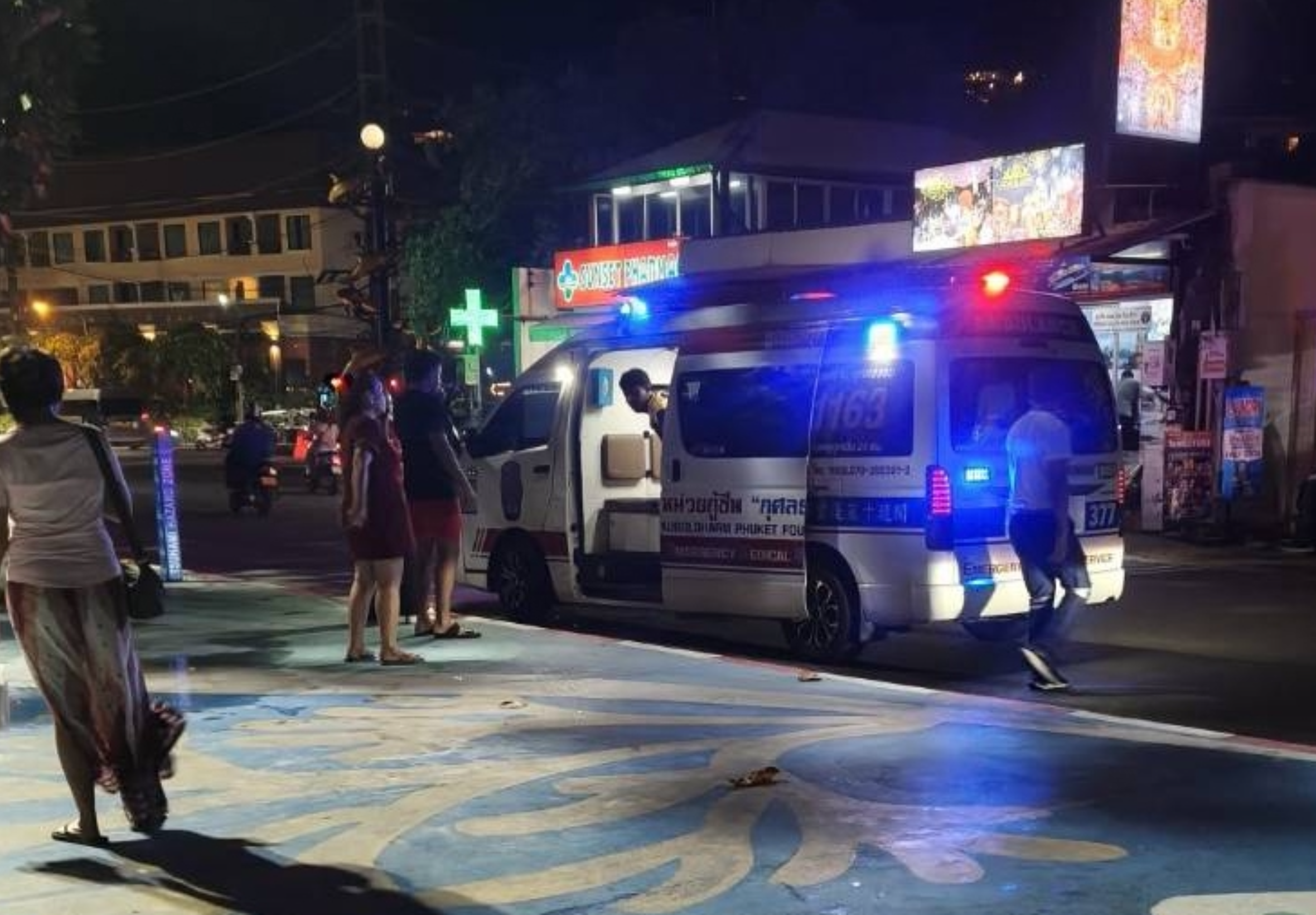
The injured woman was later identified as Natthanida, it is believed it was her birthday. She was found with abrasions on her body and complained of pain in her back. Rescue workers provided first aid before transferring her to Pattaya City Hospital for urgent treatment and full assessment of her injuries. She was also reported to be intoxicated.


Witnesses told police that the woman is the girlfriend of an Australian man who owns the bar. They said the couple regularly drank alcohol together and that she had previously attempted to jump from the building, but her boyfriend had managed to stop her.

Initial investigations found that she fell from the third floor of the building. Her body struck and broke through an awning before landing on the ground below.

Witnesses also stated that the couple frequently argued and that the woman had appeared stressed for several days. However, they said they did not know the cause of her distress, describing it as a private matter.

While journalists were recording the scene, the injured woman’s boyfriend, who appeared to be intoxicated, reportedly became upset, shouted at those present and attempted to prevent filming inside the area.

Pattaya City Police have documented the scene and collected evidence. Officers plan to interview the injured woman at hospital once her condition improves sufficiently for her to provide a statement. Authorities said they will wait until she is able to speak with investigators before completing the inquiry into the facts of the case and determine the cause of the incident.

If you or anyone you know is in emotional distress, please contact the Samaritans of Thailand 24-hour hotline: 02 713 6791 (English), 02 713 6793 (Thai) or the Thai Mental Health Hotline at 1323 (Thai). Please also contact your friends or relatives at this time if you have feelings of loneliness, stress or depression. Seek help.


Picture courtesy of แจ็ค โพธิ์แดง

Join the discussion?

Already a member?

Adapted by ASEAN Now แจ็ค โพธิ์แดง 4 June 2026
Georgealbert
Georgealbert
Thailand could face an additional 12.5% tariff on exports to the United States under a new proposal from the administration of US President Donald Trump, which targets imports from 60 countries over concerns about forced labour in global supply chains.

Get today's headlines by email

The proposal, announced by the Office of the United States Trade Representative (USTR), would impose extra import duties of either 10% or 12.5% depending on whether countries have effective measures in place to prevent the import of goods produced using forced labour. Thailand is among 45 countries identified for the higher 12.5% rate, potentially increasing costs for Thai exporters selling goods to the US market.

The measure is the latest outcome of a Section 301 unfair trade investigation and comes as the Trump administration seeks to restore emergency tariff measures that were struck down by the US Supreme Court in February. The proposed tariffs are intended to address what US officials describe as an unfair competitive advantage gained through the use of forced labour in international supply chains.

According to the USTR, a lower 10% tariff would apply to imports from countries and regions including Canada, Ecuador, the European Union, Indonesia, Mexico, Pakistan, Argentina, Bangladesh, Cambodia, El Salvador, Guatemala, Malaysia, Taiwan and the United Kingdom. The agency said these jurisdictions either prohibit imports made with forced labour, have relevant commitments under trade agreements, or have implemented measures aimed at preventing such imports.

For the remaining 45 countries, including Thailand, the USTR said existing laws and enforcement mechanisms do not effectively prohibit imports linked to forced labour. US Trade Representative Jamieson Greer stated: “The failure of some of our most important trading partners to address imports made with forced labour is unacceptable.”

Greer added: “This creates a dynamic in which American workers are forced to compete globally on an uneven playing field.” The USTR is also proposing separate textile measures that would allow specified quantities of clothing and textile products to enter the US at reduced tariff rates, although no rates or volume limits have yet been disclosed.

The announcement comes ahead of 24 July, when a temporary 10% tariff introduced by the Trump administration on 20 February is due to expire. That same day, the US Supreme Court overturned tariffs imposed under the International Emergency Economic Powers Act.

Manager Online reported that the USTR will accept comments on the proposed tariffs and other remedies until 6 July, with hearings scheduled for 7 July. The agency has also exempted several categories from the proposed duties, including energy products, rare earth minerals and certain metals, beef, coffee, selected fruits and vegetables, pharmaceuticals, organic chemicals and aircraft parts.

Join the discussion?

Already a member?

Adapted by ASEAN Now MGRonline 4 June 2026
Georgealbert
Georgealbert
A fire broke out at Sataa resort in Phu Phiang district, Nan province, on 3 June 2026, causing damage to the resort’s office building, restaurant and coffee shop. Emergency services responded to the blaze and prevented it from spreading to other buildings within the property.

Get today's headlines by email

The fire was reported during the morning when Pol. Lt. Pornthep In-ai, an investigator at Phu Phiang Police Station, received a notification from the Nan 191 radio centre. He informed Pol. Col. Chanyut Chaimano, superintendent of Phu Phiang Police Station, and relevant agencies before travelling to the scene in Tha Nao subdistrict, Phu Phiang district.

Firefighters and emergency personnel from several local organisations attended the incident. These included teams from Tha Nao, Fai Kaeo, Muang Tit and Na Pang Subdistrict Administrative Organisations, Nan Provincial Administrative Organisation, local rescue units and the Nan Municipality Disaster Prevention and Mitigation Office. Acting Major Natt Thiansut, Deputy Mayor of Nan Municipality, directed the firefighting operation.


Investigators found that the fire had started in the resort’s office building before spreading to a wooden structure housing the restaurant and coffee shop. Fire crews worked for approximately two hours before bringing the blaze under control and preventing it from reaching other buildings.

Initial assessments showed that the office building and some other structures suffered serious damage. The total financial cost of the fire has not yet been determined and remains under evaluation.


Authorities believe the fire may have been caused by an electrical short circuit. However, police and relevant agencies are continuing to examine the scene and gather evidence to establish the exact cause.

The incident has highlighted the importance of regular electrical system inspections and fire safety measures at hotels, resorts, restaurants and other businesses. Emergency preparedness plans and properly maintained fire prevention equipment can help reduce the risk of damage to property and potential loss of life. ThaiRath reported that officials will continue their investigation in the coming days.


Pictures courtesy of ThaiRath

Join the discussion?

Already a member?

Adapted by ASEAN Now ThaiRath 3 June 2026
Georgealbert
Georgealbert
A Japanese tourist and a ladyboy were fined after a fight broke out on Pattaya Beach in the early hours of 3 June 2026, attracting the attention of tourists and passers-by before both were taken to Pattaya City Police Station.

Get today's headlines by email

The incident occurred at 12.50am on 3 June 2026 along Pattaya Beach. Good Samaritans stepped in to stop the altercation and escorted both parties to Pattaya City Police Station to report the matter. The confrontation unfolded in front of numerous tourists, many of whom recorded the incident on video.

Police found the Japanese tourist with blood on the face and injuries including a wound above the left eyebrow. The injured tourist was later identified as 40-year-old Japanese national Naona Sumoto. The other party was identified as 30-year-old Thai national Mintra Buran, a ladyboy.


Pictures courtesy of FM91

According to Mintra, the pair met on Walking Street in Pattaya and spent time talking before agreeing to continue the evening together. Mintra said a fee of 3,000 baht had been discussed for companionship, adding that an Indian tourist had previously offered 5,000 baht, but the decision was made to accompany the Japanese visitor instead.

The pair later walked along Beach Road near a shopping centre. During the walk, Mintra learned that the tourist’s hotel was located in the Pattaya-Naklua area, more than 1.5 kilometres away. Feeling tired, Mintra suggested taking a taxi rather than continuing on foot.

According to Mintra’s account, the tourist insisted on walking to the hotel and said that if there was no intention to continue, it would be better to leave. Mintra then decided to return and requested 1,000 baht as compensation for time already spent. The request was refused, leading to a heated argument that escalated into a physical fight on the beachfront.


Witnesses gathered as the confrontation unfolded, with many recording videos of the incident. Bystanders eventually intervened and escorted both parties to Pattaya City Police Station, where the dispute continued with a loud argument inside the station. Police officers warned both parties against causing a disturbance in a government office.

Police charged both individuals with participating in a public affray and imposed fines of 500 baht each. The injured party was instructed to seek medical treatment and obtain a medical report to support any further legal proceedings.

Mintra was released after paying the fine. Police said they are awaiting the medical examination results and if the Japanese tourist decides to pursue additional legal action, Mintra will be summoned to acknowledge any further charges and face legal proceedings in accordance with the law.

AQN4EBqXCRhTIkpVXelHQb7gP16vtfYujtAwWdZQtUAdCLhfK-8E8EmB25LBuq_5raRl6bdrzEA3tuQr9j32wth-g6TU45aHUklCnVS-ow.mp4

Join the discussion?

Already a member?

Adapted by ASEAN Now fm91 3 June 2026
Georgealbert
Georgealbert
A Thai taxi driver returned more than 320,000 baht in cash to two Sri Lankan tourists after they accidentally left a bag containing EUR8,500 and personal belongings in his vehicle in Bangkok.

Get today's headlines by email

The handover took place on 2 June 2026 at the FM91 Trafficpro radio station headquarters, operated by the Royal Thai Police Communications Division on Phahonyothin Road in Bangkok. Representatives from FM91, including Dr Jaiton Sriwangpol, Deputy Managing Director of Vilai Center and Sons Co Ltd, and senior station executives, witnessed the return of the cash and belongings to their owners.

Earlier that morning, at 8.35am, taxi driver Pathapee Yamsanor, 50, from Samut Prakan, contacted FM91 after discovering a black Biaowang shoulder bag in his green-and-yellow taxi. Inside were EUR8,500 in cash, a pair of white Tommy Hilfiger trainers and a room key.

Pathapee explained that he had picked up foreign passengers from Suvarnabhumi Airport and dropped them off at Silom Soi 19 at approximately 8.10am. He only noticed the bag afterwards, as it had been left on the rear shelf behind the passenger seats. Unsure of the owner’s identity, he decided to take the property directly to FM91 to help locate the rightful owner.


Picture courtesy of Thaitabloid

The driver said he was shocked by the amount of money inside the bag and wanted to return it immediately. He explained that keeping it would only create a burden, adding that the money did not belong to him. Pathapee noted that he had previously returned lost mobile phones and smaller amounts of cash to passengers and wanted to demonstrate that taxi drivers act honestly when finding property left behind.

FM91 subsequently broadcast an appeal to locate the owner. Staff from the tourists’ accommodation later contacted the station after learning that guests had reported missing property, allowing arrangements to be made for its return.

The owners, Sri Lankan nationals Mr Mohammed Aashif and Mr Mohammed Onaiz, said they had become extremely worried after realising the bag had been left behind. They explained that they were tired and sleepy during the journey and had placed the bag behind the headrest before forgetting it when leaving the taxi.

The tourists reported the loss to police but were unable to enter their accommodation because the room key was inside the missing bag. They thanked both the taxi driver and FM91 for helping recover the cash and belongings and said they would offer the driver a reward as a gesture of appreciation.

Thaitabloid reported that the case serves as another example of cooperation between taxi drivers, police-affiliated media services and the public in returning lost property to its rightful owners.


Join the discussion?

Already a member?

Adapted by ASEAN Now Thaitabloid 3 June 2026

Georgealbert
Georgealbert
The National Economic and Social Development Council (NESDC) has recommended a restructuring of Thailand’s alcoholic beverage tax system as part of efforts to reduce alcohol consumption and limit its impact on public health. The proposal comes after data from the first quarter of 2026 showed increased consumption of both alcoholic beverages and cigarettes.

Get today's headlines by email

Speaking during a briefing on the country’s social conditions, NESDC secretary-general Danucha Pichayanan said alcohol consumption was rising and that the existing tax structure should be reconsidered. The recommendation is intended to strengthen the effectiveness of taxation as a tool to reduce alcohol-related harm.

Thailand currently applies a two-tier alcohol tax system. Excise duty is calculated using both an ad valorem tax, based on a percentage of the retail price or value, and a fixed volumetric tax based on the volume of pure alcohol. The higher of the two calculated amounts is applied.

According to a study by the Thai Health Promotion Foundation (ThaiHealth) on alcohol taxation and consumption behaviour, the current system has significant limitations. The study found that fixed-rate volumetric taxes, such as the levy of 1,000 baht per litre of pure alcohol on wine, lose real value over time, reducing their long-term effectiveness in controlling consumption.

The study also cited research by Wilson et al (2025), which found that increasing alcohol prices through appropriate tax mechanisms can significantly reduce consumption. ThaiHealth recommended that authorities revise the tax structure so that it better reflects health risks and includes systematic, continuous tax adjustments to maintain effectiveness over time.

The debate follows recent changes to alcohol sales regulations. Regulators completed a pilot programme that removed the long-standing afternoon alcohol sales ban between 2pm and 5pm. Since 29 May, alcohol sales have been permitted continuously from 11am until midnight.

The Department of Disease Control reported that monitoring conducted during the first 90 days of the pilot found alcohol-related deaths between 3 December 2025 and 1 March 2026 increased by 4.8 times compared with 2023, after controlling for confounding factors. The department said the findings suggest extended sales hours may present greater risks to public safety and human life than initially anticipated.

The Bangkokpost reported that officials said any decision to continue or expand the extended sales policy should be considered carefully. The department also called for vendors to take greater responsibility by checking that buyers meet age requirements, are not visibly intoxicated, and are not purchasing alcohol on behalf of minors. It added that penalties should be imposed on operators who fail to comply.

Join the discussion?

Already a member?

Adapted by ASEAN Now Bangkokpost 3 June 2026
Georgealbert
Georgealbert
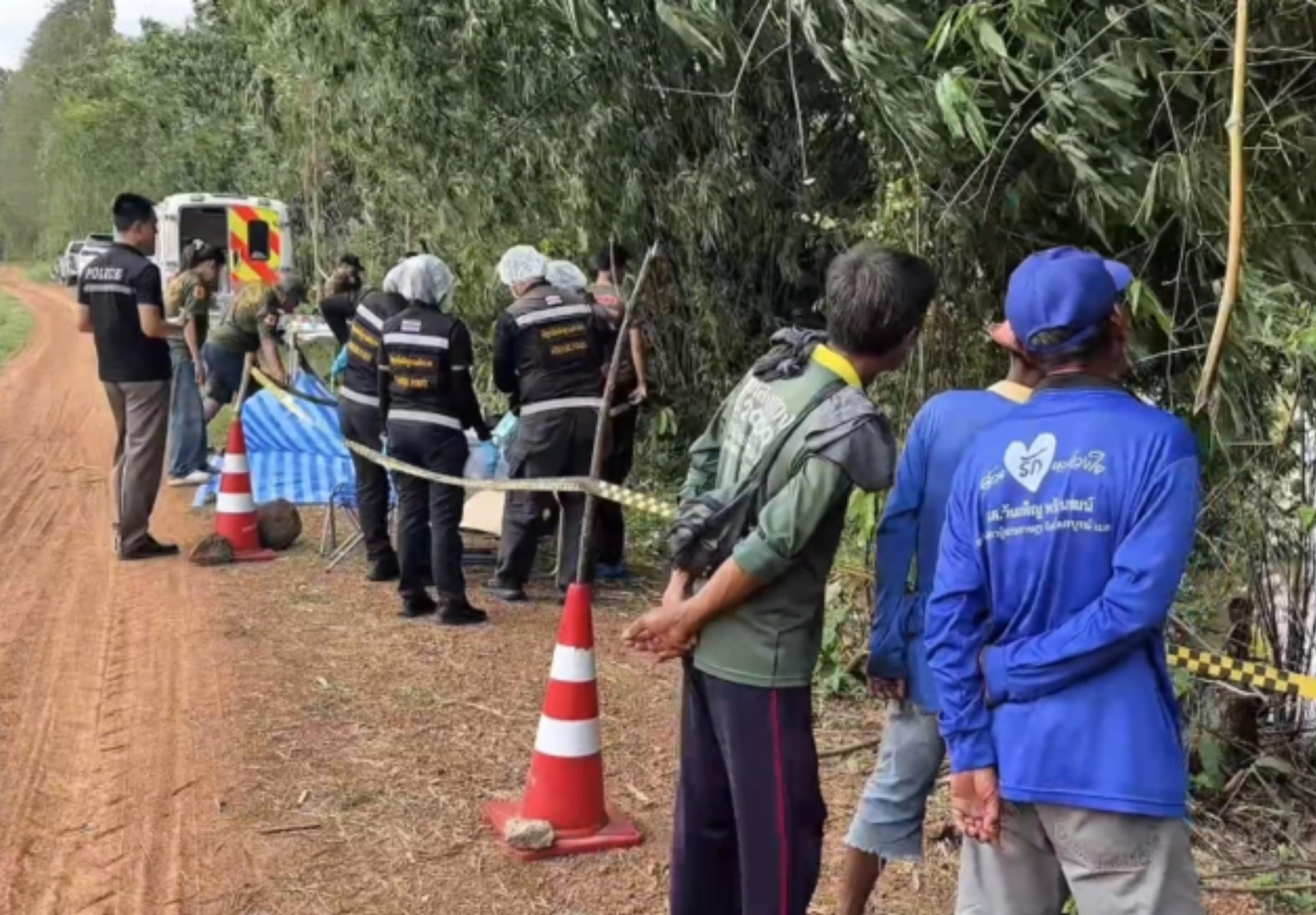
Three Myanmar migrant workers, a mother, father and their 11-year-old son, were killed and two others seriously injured after an explosive believed to be from a suicide drone detonated in a chilli field near the Thai-Myanmar border in Tak province.

Get today's headlines by email

The explosion occurred on 2 June 2026 in a chilli plantation near Ban Moger Thai, Village 1, Wa Le subdistrict, Phop Phra district, Tak. Police, military personnel and security officials led by Pol. Col. Anusorn Dangkong, superintendent of Phop Phra Police Station, were dispatched to investigate the scene after reports of multiple casualties.

Officials found a medium-sized suicide drone lying damaged beside a tree near a road running along the border. Around 10 metres away, they discovered a blast crater and the body of Myanmar worker Ma Khae, who died at the scene from severe injuries.

Four other people suffered serious shrapnel wounds and were rushed to hospital by local residents. Among them were Ma Khae’s husband, Tu Ya, 37, and their 11-year-old son, both of whom later died from their injuries. Two survivors, Chi To, 31, and Ma Hnway, 30, remain in serious condition at Mae Sot Hospital.


According to the initial investigation, heavy fighting had been taking place throughout the day on the Myanmar side of the border. While workers were harvesting in the Thai field, a suicide drone carrying explosives reportedly crossed into Thailand, struck a large tree and crashed near the roadside.

Authorities believe the explosive payload became detached and landed in the chilli field. Ma Khae, members of her family and fellow workers, a group of five people in total, approached the object to inspect it before it exploded.


Pictures courtesy of Daily News

The incident has prompted heightened concern in border communities as conflict-related hazards continue to affect areas close to the frontier. Police and security agencies cordoned off the site and designated it a danger zone pending a detailed forensic examination.

Daily news reported that authorities in Phop Phra have also issued a warning to residents living along the border. Members of the public are being urged not to approach, move or handle any suspicious objects and to immediately notify officials for inspection to prevent further loss of life.

AQPYsATfAWgttGz1JRdLek_REpwRdrsjM6pAfdnsRzQkcA7cBwZ0aYkJhzfvAEFTqjG7E8grKjLn1izvfN4O3QWYHfVDx2TxlCW21pBSXQ.mp4

Join the discussion?

Already a member?

Adapted by ASEAN Now Dailynews 3 June 2026

Georgealbert
Georgealbert
Authorities in Krabi have searched a pool villa on a 2.5-rai plot of land amid allegations that Thai nominees were used to hold property on behalf of foreign investors. The operation was led on June 2 by Krabi Governor Angkoon Silathevakul and Pol. Maj. Gen. Sukkasem Nakhonwilai, commander of Krabi Provincial Police, alongside police, provincial administration officials and other agencies.

Get today's headlines by email

The raid targeted a villa in Moo 7, Nong Thale subdistrict, Mueang Krabi district, following an investigation by Krabi’s task force on offences involving foreign business ownership through nominee arrangements. Officials believe the case may involve violations linked to the use of Thai nationals as nominees for foreign interests.

Investigators did not locate the company’s owners during the search. Examination of land ownership documents found that the property is held under the name of a private company whose directors and controlling parties include two Spanish nationals and one Thai national. Authorities said the company’s structure may constitute the use of Thai shareholders acting on behalf of foreigners to circumvent legal restrictions, potentially classifying it as a foreign entity under Thailand’s Land Code, which prohibits foreign ownership of land.

Officials have instructed Krabi Land Office personnel to file a complaint with investigators at Ao Nang Police Station. Authorities will seek to identify and summon those involved to acknowledge the allegations and face legal proceedings.


Further inspection found that the villa had been operating as a daily rental property for foreign tourists without a hotel licence as required under the Hotel Act 2004. The property reportedly required a minimum stay of three nights and charged 60,000 baht, while having operated in this manner for approximately three years.

Authorities are also examining whether the villa complied with reporting requirements for foreign guests under Section 38 of the Immigration Act 1979. Officials said a detailed review will determine whether further legal action is warranted.

Governor Angkoon said authorities have already searched six other businesses suspected of nominee ownership arrangements. These include accommodation businesses, hotels, restaurants, a zoo and a cannabis cultivation facility, all of which remain subject to ongoing legal action.

Matichon reported that the investigation forms part of a wider review of foreign-linked businesses in the province. According to information from the Department of Business Development, there are 401 companies in Krabi with foreign participation that authorities intend to examine.


Pictures courtesy of Matichon

Join the discussion?

Already a member?

Adapted by ASEAN Now Matichon 3 June 2026
Georgealbert
Georgealbert
Police in Chiang Mai have arrested a Chinese man and his Thai wife for allegedly selling etomidate-laced vape products, known locally as “pod K”, to customers at entertainment venues in the city. Authorities said the operation was part of a wider crackdown on drugs and entertainment venues, with officials warning that those involved face prison sentences of 10 to 15 years.

Get today's headlines by email

The arrests were announced on 2 June at the CCOC (Command and Control Operation Centre) operations room of Provincial Police Region 5 in Chiang Mai. The case was presented by Pol Lt Gen Kritthapol Yeesakorn, Commissioner of Provincial Police Region 5, and Chiang Mai Governor Ratthaphon Naradisorn.

According to police, the suspects admitted importing the substance from China for use in vape products. Investigators said the products contained etomidate, described as a new type of narcotic mixed into electronic cigarettes. The suspects reportedly told officers they had been selling the products since April, around two months before their arrest, and were making profits of more than five times their costs.

Pol Lt Gen Kritthapol said the arrests followed an ongoing campaign to suppress drug trafficking and tighten controls on entertainment venues throughout the region. He stated that the drug causes users to display behaviour similar to “zombies” and is difficult to treat. He added that those convicted of selling the substance face prison terms of between 10 and 15 years.

Governor Ratthaphon described the drug as expensive but warned that falling prices could increase the risk of wider use among children and young people. He said any entertainment venue operators found to be involved would face legal action.

Authorities further warned that businesses linked to the trade could be ordered to close and face asset seizures under existing laws and government policy. The case forms part of broader efforts by officials to tackle drug-related activity in entertainment districts across Chiang Mai.

Matichon reported that investigators are continuing legal proceedings against the suspects while authorities examine whether any venue operators or additional individuals were involved in the distribution network. Police also confirmed that the Chinese suspect’s passport and permission to stay, had not expired at the time of the arrest.


Picture courtesy of Matichon

Join the discussion?

Already a member?

Adapted by ASEAN Now Matichon 3 June 2026
Georgealbert
Georgealbert

Account

Navigation

Search

Search

Configure browser push notifications

Chrome (Android)
  1. Tap the lock icon next to the address bar.
  2. Tap Permissions → Notifications.
  3. Adjust your preference.
Chrome (Desktop)
  1. Click the padlock icon in the address bar.
  2. Select Site settings.
  3. Find Notifications and adjust your preference.