Skip to content
View in the app

A better way to browse. Learn more.

Thailand News and Discussion Forum | ASEANNOW

A full-screen app on your home screen with push notifications, badges and more.

To install this app on iOS and iPadOS
  1. Tap the Share icon in Safari
  2. Scroll the menu and tap Add to Home Screen.
  3. Tap Add in the top-right corner.
To install this app on Android
  1. Tap the 3-dot menu (⋮) in the top-right corner of the browser.
  2. Tap Add to Home screen or Install app.
  3. Confirm by tapping Install.

Thailand News

All the latest news stories from Thailand are written in English. Fresh news and stories from around the kingdom brought to you daily.
AllClear, a UK-based insurance company, has released research highlighting the prevalence of taxi scams across various countries. The study, conducted since December 2025, involved analyzing over 450 Reddit posts and 30,000 comments to pinpoint regions with the highest traveler complaints. The findings reveal that Turkey leads with 4,224 comments about taxi scams, significantly outpacing India, which recorded 2,301 comments.

Get today's headlines by email

The analysis ranked Thailand third with 2,169 comments regarding taxi scams. Vietnam and Egypt followed with 1,741 and 1,715 comments, respectively. Other countries in the top ten include Australia (1,598), Mexico (1,367), Morocco (1,329), the United States (1,283), and Canada (995). The list of places travelers reported issues with also extends to France, Colombia, the Philippines, Italy, and Norway, all showing notable figures.

AllClear's recommendations emphasize the importance of understanding local taxi rates before embarking on a journey. The insurance company also advises travelers to report any suspicious activities to the local authorities. These suggestions aim to help tourists mitigate the risks associated with unfamiliar taxi practices and prevent potential scams.

Experts suggest that the transparency of platforms like Reddit plays a crucial role in bringing these scams to light, facilitating a wider awareness among international travelers. This visibility can help improve travel experiences by encouraging more robust regulatory measures in affected countries.

Looking forward, AllClear emphasizes the need for travelers to remain vigilant when using taxi services abroad. They underscore the importance of being informed and cautious, which can significantly reduce the likelihood of falling victim to these scams. Authorities and travel organizations might also consider enhancing educational resources to further safeguard tourists, reported Khaosod.

Key Takeaways
Turkey, India, and Thailand are reported as the most problematic for taxi scams.
AllClear advises checking local rates and reporting scams to local authorities.
Traveler awareness is crucial in reducing the impact of taxi scams worldwide.

Join the discussion?

Already a member?

  Adapted by ASEAN Now · Khaosod · 23 Feb 2026
snoop1130
snoop1130
The Thai government has approved the opening of its domestic market to four agricultural products as part of its commitments under the World Trade Organization (WTO) framework. The products—onion seeds, dried onions, seed potatoes, and fresh potatoes—will have reduced tariffs for imports starting from 2026. The resolution approved by the cabinet allows for a 0% tariff on imported quantities within specified annual quotas.

Get today's headlines by email

This decision follows Thailand's obligations under the WTO, aiming to enhance international trade cooperation. The specifics include a 0% tariff on imported onion seeds up to 3.15 tonnes, with a 218% tariff applied beyond the quota. Dried onions can be imported duty-free up to 1,256.50 tonnes, with a subsequent 142% tariff on excess imports. Seed potatoes and fresh potatoes are also included, with similar tariff structures. The policy is designed to take effect for a two-year span from January 2026 to December 2028.

Reactions to this decision are varied. Some industry experts express concerns that local farmers may face increased competition from cheaper imports, potentially impacting their livelihoods. Conversely, the move is seen as a positive step towards greater market openness, which could lead to lower prices for consumers. Economists suggest that adhering to WTO rules will strengthen Thailand's trading position globally.

Looking ahead, the government will monitor the effects of this policy on domestic agriculture and market prices. Agencies will evaluate the need for any adjustments or support measures for local producers. The focus will be on ensuring that the benefits of international trade align with the country's economic interests, reported Thai PBS.

Key Takeaways
Tariff Reduction: Tariffs reduced to 0% for specified import quotas from 2026 to 2028.
Impact on Farmers: Concerns over increased competition for local producers.
Economic Strategy: Part of Thailand's commitment to WTO trade agreements.

Join the discussion?

Already a member?

  Adapted by ASEAN Now · Thai PBS · 23 Feb 2026
snoop1130
snoop1130
Thailand's Civil Aviation Authority (CAAT) plans to revise airport screening procedures, transitioning from handheld metal detectors to manual searches by October. This change aims to enhance safety following recommendations from the United States Aviation Security Assessment Program (USAP). However, airport workers have expressed concerns about passenger reactions to the new process.

Get today's headlines by email

The revised screening, planned for full implementation by January 2027, follows the USAP's recommendations for improved security standards. Reportedly, the CAAT has yet to announce these changes officially. The new approach will include manual searches performed by officers of the same gender as passengers, in addition to walk-through metal detectors and body scanners.

Airport officers are authorized to search bags deemed suspicious without notifying passengers beforehand. These searches must be recorded and can be shown to passengers upon request. Concerns about delays and discomfort have been raised, as manual searches involve physical contact and could lead to complaints, especially if valuables are lost.

In addition to these screening changes, Airports of Thailand (AOT) has announced an increase in passenger service charges (PSC) for international flights, from 730 baht to 1,120 baht, effective June 20. This has sparked debate, with some warning it could deter international travelers, as the charges may exceed those at major global airports.

Former Democrat Party leader Samart Ratchaphongsit emphasized that increased PSCs should enhance airport facilities rather than increase profits, reported The Thaiger.

Key Takeaways
Thailand will shift to manual airport passenger searches by October.
Officers can search bags without prior notice, leading to concerns.
International flight service charges will rise on June 20.

Join the discussion?

Already a member?

  Adapted by ASEAN Now · The Thaiger · 23 Feb 2026
snoop1130
snoop1130
A foreign tourist named Farah sparked controversy online after posting a TikTok video on February 21, where she claimed that Thai locals were rude to her due to language barriers. In her video, Farah expressed her fondness for Thailand but complained about locals ignoring her questions during her visit, which she found disrespectful.

Get today's headlines by email

Farah compared her experience in Thailand to her travels in Turkey and Egypt, stating that Thais were even more disrespectful. She suggested that locals use tools like Google Translate or simply indicate they don't speak English, rather than ignoring visitors. Her comments appear to relate to her experiences in Phuket, identified through clues like a restaurant near Freedom Beach and a staff member wearing a 'Patong' shirt.

1.mp4

The video drew mixed responses from Thai and foreign TikTok users, with some defending Thai people as generally polite, while others criticized her account. Several users questioned Farah’s approach, suggesting she might have provoked such reactions by shouting or displaying rude behavior herself. One commenter reminded her that translation tools are available for her as well.

In a subsequent TikTok video, Farah recounted another incident, claiming a Thai baht bus driver acted rudely and attempted to assault her during a fare dispute. She was seen negotiating a fare of 500 baht and alleged the driver became violent. This incident also prompted varied reactions—some urged her to file a police complaint, while others suspected the fare dispute was exacerbated for video content.

ssstik.io_@fdontcare_1771840090161.mp4

Farah has not elaborated on the details of the incident with the driver, leaving questions unanswered.

Key Takeaways
A foreign tourist criticized Thai locals for ignoring her due to language issues.
Controversy arose with mixed reactions from online users defending or questioning her behavior.
Farah claimed a bus fare dispute escalated into an attempted assault by the driver.

Join the discussion?

Already a member?

  Adapted by ASEAN Now · The Thaiger · 23 Feb 2026
snoop1130
snoop1130
Similan Islands National Park in Phang Nga has temporarily closed a swimming area after officials detected blue button jellyfish along the shoreline. The park announced on February 22 that the jellyfish, known as Porpita Porpita, were primarily sighted along the eastern beach of Ko Si. The jellyfish can cause skin irritation, prompting the closure to ensure visitor safety.

Get today's headlines by email

The brightly colored Blue Button jellyfish have a central disc with numerous tentacles and are often carried ashore by ocean currents. Their sting, although less severe than that of a box jellyfish, can result in a burning sensation and symptoms such as redness, swelling, itching, or blisters. Even after washing up on the beach, the jellyfish can still irritate the skin, leading park officials to caution visitors against direct contact.

The park issued first-aid guidance for those who encounter the jellyfish. It is recommended to rinse the affected area with seawater, avoiding fresh water initially, and to carefully remove any tentacle fragments without rubbing. Severe reactions require immediate notification to park staff, who are prepared to assist.

In response to the jellyfish presence, the swimming zone on the eastern side of Ko Si has been closed until conditions are deemed safe again. Visitors are urged to report any jellyfish sightings to park officials and adhere to safety instructions. This precaution aims to prevent any adverse incidents and prioritize visitor welfare.

Looking ahead, the park will continue to monitor the situation closely. The swimming area will remain closed until the jellyfish are no longer perceived as a threat, ensuring a safe environment for tourists. Park officials are prepared to act promptly on new reports and provide updates as needed, reported The Thaiger.

Key Takeaways
Blue button jellyfish sightings have led to a temporary closure of a swimming area on Ko Si.
The jellyfish can cause mild to moderate skin irritation if touched.
Visitors must report sightings and follow park instructions for safety.

Join the discussion?

Already a member?

  Adapted by ASEAN Now · The Thaiger · 23 Feb 2026
snoop1130
snoop1130
A Thai man was arrested in Songkhla after beating and setting fire to a Siberian Husky on February 13. The male suspect, identified as 56-year-old Charoen, confessed to attacking the dog in retaliation for killing one of his roosters. The dog, Molly, died from her injuries on February 20 after efforts to save her in Bangkok.

Get today's headlines by email

Molly, a two-year-old Husky, had escaped her home with another dog, Betsy, on February 12. She was found in critical condition after being beaten and set alight, later retreating to a pond before being discovered. Betsy returned home safely, while Molly received treatment under royal patronage before succumbing to her injuries.

Police investigations traced the attack to Charoen's residence after finding engine oil traces near a rental house. Charoen admitted the incident occurred at 3am on February 13, claiming Molly returned to his rooster coop after initially being chased away. In his confession, Charoen detailed pouring engine oil over Molly and igniting it with fire.

The incident sparked debate online, with divided opinions on accountability. Some sympathized with Molly’s owners, while others argued their negligence allowed the dog to escape, leading to the unfortunate events. Charoen has been charged with animal abuse, setting fire to another person’s property, and causing property damage.

Police have cleared Charoen for temporary detention, and he is set to be presented before Songkhla Court today, February 23. The case has captured public attention and highlighted concerns over pet safety responsibilities and animal cruelty, reported The Thaiger.

Key Takeaways
Charoen was arrested for attacking Molly after she killed his rooster.
Molly succumbed to injuries despite treatment in Bangkok.
The case ignited online debates about pet ownership responsibilities.

Join the discussion?

Already a member?

  Adapted by ASEAN Now · The Thaiger · 23 Feb 2026
snoop1130
snoop1130
The Thai army on February 22 rejected claims by a US media outlet that Thailand violated international law and used excessive force during the border conflict with Cambodia. The response followed a report published by The New York Editorial and shared on Facebook on Friday, February 20. Army spokesperson Maj. Gen. Winthai Suvari said the report lacked clear sources and presented distorted information inconsistent with facts on the ground.

Get today's headlines by email

He said the report appeared to rely solely on Cambodian sources, which he alleged had consistently provided false information to the international community. The army reaffirmed that Thailand strictly adheres to international law. Military operations, he said, were conducted under rules of engagement and constituted legitimate self-defence under Article 51 of the United Nations Charter.


Addressing allegations that Thailand escalated the conflict despite Cambodia initiating it, the army said actions were based on the severity of the situation and were unrelated to claims that the dispute was used to influence the February 8 general election. On accusations of excessive force, including the deployment of F-16 fighter jets after a single soldier was injured by a landmine, the army stated operations were coordinated across all branches to protect sovereignty and civilians.

It said air support was requested in response to heavy weapon attacks by Cambodia on Thai troops and civilian areas, and because civilian buildings were allegedly used as military bases. The army maintained it targeted only military objectives and acted proportionally to limit damage within the combat zone.

Regarding claims that Thailand used illegal weapons such as cluster munitions, the army said 155mm dual-purpose improved conventional munition (DPICM) shells were used against military targets and leave no long-term residue. It noted Thailand is not a signatory to the Convention on the Prohibition of Cluster Ammunition. The army said the death of 10-year-old Son Sovanh near the Preah Vihear temple area resulted from dismantling an old explosive device outside the conflict zone and was unrelated to Thai operations.

The army also denied conducting psychological warfare involving loud sounds and funeral music at 3am, stating this was carried out by Thai civilians and was not a military operation. It rejected claims the conflict was used to win votes and disputed reports that nearly 98,000 Cambodians remain displaced by the Thai army preventing them accessing their homes, saying only three villages in Sa Kaeo province were affected, involving no more than 1,000 households.

The army said Cambodia had long been aware the three villages were within Thai territory and accused Cambodian civilians and soldiers of expanding communities into Thai land. It stated Thailand had repeatedly sought resolution through working groups.

The Thainewsroom reported that the Thai army said Cambodia initiated the situation and used long-range weapons against Thai civilians. It maintained Thailand’s response complied with international standards and avoided adverse effects on citizens of both countries.


Pictures courtesy of TNR

Key Takeaways

• The Thai army denies violating international law and says actions were lawful self-defence under Article 51.
• It rejects claims of excessive force, illegal weapons use, psychological warfare, and election interference.
• The army disputes reports of 98,000 displaced Cambodians, stating only several thousand were affected in three villages.

Join the discussion?

Already a member?

Adapted by ASEAN Now Thainewsroom 23 Feb 2026
Georgealbert
Georgealbert
Police from the Natural Resources and Environmental Crime Division (NED) raided a house in Bangkok on 21 February and discovered more than 100 protected wild animals. Officers seized 19 Indian star tortoises after the homeowner admitted failing to declare their possession as required by law. The animals have been sent for DNA testing as part of an investigation into a transnational wildlife trafficking network.

Get today's headlines by email

The operation was ordered by Pol Maj Gen Anek Taosuphap, commander of the NED, who instructed Pol Col Permwut Pratumrat, superintendent of Division 1, and Pol Lt Col Pradit Prompan to execute a Criminal Court of Thon Buri search warrant. The property searched was located in Soi Pracha Uthit 89, Thung Khru subdistrict, Thung Khru district, Bangkok. The raid followed an expanded investigation into the arrest of four Taiwanese nationals previously detained for alleged involvement in cross-border wildlife trafficking.


Investigators had gathered information indicating that the house was being used to house and breed protected wildlife without permission. During the search, officers identified the homeowner, referred to only as Mr A and found six species listed under the Convention on International Trade in Endangered Species of Wild Fauna and Flora (CITES) Appendix II. These included 19 African spurred tortoises (Centrochelys sulcata), 44 leopard tortoises (Stigmochelys pardalis), 12 green iguanas (Iguana iguana), eight black spiny-tailed iguanas (Ctenosaura similis) and six ball pythons (Python regius).

Although CITES Appendix II species require trade controls, possession does not require notification but remains regulated under Thai law. Officers also discovered 19 Indian star tortoises (Geochelone elegans), a CITES Appendix I species that must be declared under the Wildlife Preservation and Protection Act. Violations carry penalties of up to one year’s imprisonment, a fine of up to 100,000 baht, or both.

When asked to produce documentation declaring possession, Mr A admitted he had not registered the Indian star tortoises. Authorities seized all 19 tortoises and submitted them for genetic testing at the Wildlife Forensic Science Centre under the Wildlife Conservation Office of the Department of National Parks, Wildlife and Plant Conservation. The tests aim to confirm their origin and determine links to the wider transnational trafficking network.

Thaitabloid reported thatMr A told investigators that the animals did not belong to him but to his stepchild, who had left them at the property. Officers are continuing to gather evidence to pursue legal action against those involved and to expand the investigation into the network behind the operation.


Pictures courtesy of Thaitabloid

Key Takeaways

• Police seized more than 100 protected animals during a 21 February raid in Bangkok.
• Nineteen Indian star tortoises were confiscated for failing to meet declaration requirements.
• DNA testing is under way to establish links to a transnational wildlife trafficking network.

Related stories

Indian-man-held-at-airport-with-15-wild-animals

Korean-man-caught-with-410-live-animals-at-airport

Join the discussion?

Already a member?

Adapted by ASEAN Now Thaitabloid 23 Feb 2026
Georgealbert
Georgealbert
The State Railway of Thailand (SRT) board has approved a 579,135 million baht investment framework for fiscal year 2027, advancing three major rail projects including double-track lines, Red Line extensions and the Thai–Chinese high-speed railway Phase 2. The decision was made at a board meeting on 18 February 2026. The proposal will be submitted to the Ministry of Transport before further consideration by the National Economic and Social Development Council and the Cabinet.

Get today's headlines by email

Anan Photinimdaeng, SRT Deputy Governor and Acting Governor, said the FY2027 operating budget estimates revenue of 12,764 million baht and expenditure of 47,759 million baht, resulting in an operating loss of 34,995 million baht. The fiscal year runs from 1 October 2026 to 30 September 2027. The investment plan has been adjusted in line with government policy priorities.

The first key component covers Phase 2 double-track railway construction across six routes spanning 1,249 kilometres, with a total investment of approximately 297,924 million baht. The projects aim to shift freight transport from road to rail, reduce travel times by 30% by eliminating train passing delays, improve punctuality and lower logistics costs while reducing accidents.

The second component includes three extensions of Bangkok’s suburban Red Line system. These are the Rangsit–Thammasat University (Rangsit Campus) section with a budget of 6,474 million baht; the Siriraj–Taling Chan–Salaya route and three additional stations (Rama VI Bridge, Bang Kruai–EGAT and Ban Chim Phli) costing 15,176 million baht and the Missing Link between Bang Sue–Phaya Thai–Makkasan–Hua Mak plus the Bang Sue–Hua Lamphong section, with a combined budget of 44,574 million baht.

The third major project is Phase 2 of the Thai–Chinese high-speed railway from Nakhon Ratchasima to Nong Khai, covering 357.12 kilometres with an investment framework of 341,351 million baht.

Regarding the high-speed rail project linking Don Mueang, Suvarnabhumi and U-Tapao airports, valued at over 224,544 million baht, the state is expected to contribute around 120,000 million baht in civil works subsidies. Although funds were allocated in the FY2026 budget, payments have not commenced as the project has yet to start. If contractual amendments with Asia Era One Co., Ltd., of the CP Group are completed in July 2026 and the notice to proceed is issued, disbursement could begin in FY2027, with approximately 14,000 million baht in the first year using carried-over FY2026 funds.

Manager online reported that the board also approved a revision to the FY2026 investment budget, increasing total implementation funding from 368,886 million baht by 144,966 million baht to 513,852 million baht. The FY2026 disbursement ceiling rises from 35,244 million baht by 14,416 million baht to 49,660 million baht, pending further review by the Ministry of Transport and the national planning agency.


Picture courtesy of MGR

Key Takeaways

• SRT approved a 579,135 million baht investment plan for FY2027.
• Three priority projects include Phase 2 double-track rail, Red Line extensions and the Thai–Chinese high-speed railway Phase 2.
• FY2026 investment funding was revised upward to 513,853 million baht following increased disbursement capacity.

Join the discussion?

Already a member?

Adapted by ASEAN Now MGRonline 23 Feb 2026
Georgealbert
Georgealbert
A new social media trend has gone viral as foreign tourists conclude their visits to Thailand by posting “Thank you Thailand” videos, drawing widespread attention online. The clips show visitors bowing in gratitude and sharing detailed accounts of their trips. The trend has prompted positive reactions from Thai social media users and renewed discussion about the country’s tourism appeal.

Get today's headlines by email

According to Khaosod English on 22 February 2026, many travellers use the videos to summarise their experiences in detail. They recount how many days they spent in Thailand, how many steps they walked and how much money they used during their stay. Some also specify the number of tuk-tuk and Grab rides they took, visits to 7-Eleven, Thai massages received and plates of pad Thai and mango sticky rice consumed.


In addition, several tourists mention the number of mosquito bites they endured or instances of food poisoning, before concluding with reflections on the memories they are taking home. Despite minor inconveniences, most reviews express admiration for Thai cuisine, traditional massage, scenic attractions and the warmth of local people. The format of the videos has become widely replicated across platforms.

Thai netizens have responded with appreciation, commenting that the posts highlight aspects of the country that locals may overlook. Some online users observed that European tourists in particular appear to be returning in large numbers this year. They suggested that maintaining good hospitality standards and avoiding taking advantage of visitors would help sustain positive word of mouth.

The trend emerges amid continued efforts to support Thailand’s tourism sector, which relies heavily on international visitors. Positive online exposure may reinforce the country’s reputation as a welcoming destination. Social media trends have increasingly influenced travel decisions and perceptions among global audiences.

It remains to be seen how long the “Thank you Thailand” format will maintain momentum online. However, the volume of posts suggests that travellers are keen to publicly document and quantify their experiences. Industry observers will be watching whether the trend translates into measurable tourism growth in the months ahead.


Pictures courtesy of Khaosod

Key Takeaways

• Foreign tourists are posting detailed “Thank you Thailand” videos at the end of their trips.
• Most reviews praise Thai food, traditional massage, attractions and local hospitality.
• Thai netizens say sustained good hosting could strengthen tourism through positive word of mouth.

Join the discussion?

Already a member?

Adapted by ASEAN Now Khaosod 23 Feb 2026
Georgealbert
Georgealbert
A 23-year-old woman was seriously injured after her car crashed into the rear of a six-wheel delivery lorry stopped at a red light in Sattahip, Chonburi province, on 22 February 2026. Emergency crews were forced to cut her free from the wreckage before rushing her to hospital. Police have launched an investigation and questioned witnesses at the scene.

Get today's headlines by email

At 06.30am on 22 February 2026, Pol Lt Col Mintharath Thongsai, Deputy Inspector (Investigation) at Sattahip Police Station, received a report of a collision at the Bang Saray traffic lights on Sukhumvit Road, inbound to Sattahip, in Bang Saray subdistrict, Sattahip district. The report stated that a person was trapped inside a vehicle. He attended the scene with rescue personnel from Queen Sirikit Naval Hospital, Sattahip Naval Base, and the Sawang Rojanathammasathan Sattahip Rescue Foundation.


Officers found a white saloon car with its front end extensively damaged. Inside, the driver, identified as 23-year-old Thanyaporn, had sustained head injuries including a large open wound, as well as other injuries to her body and legs, and was trapped inside the vehicle.

Rescue workers used hydraulic cutting equipment for more than  25 minutes to safely extract her from the wreckage. Medical staff provided first aid at the scene before urgently transferring her to Queen Sirikit Naval Hospital, Department of Naval Medical Services.

A short distance away, a six-wheel lorry was found with rear-end damage. The driver, 34-year-old Chaimongkol, remained at the scene to give a statement to police. Chaimongkol told officers he had been stationary at the red light at the Bang Saray intersection, heading towards Sattahip, when the car struck the rear of his vehicle with force.

He said he immediately got out to check the situation and alerted authorities to provide assistance. Khoasod reported that police documented the scene and gathered details as part of their investigation. Witnesses were questioned and further legal proceedings will follow in accordance with the law.


Pictures courtesy of Khaosod

Key Takeaways

• A 23-year-old woman was injured after crashing into a stationary six-wheel lorry at a red light in Sattahip on 22 February 2026.
• Rescue teams spent 25 minutes cutting her free before transferring her to Queen Sirikit Naval Hospital.
• Police have recorded evidence, questioned witnesses and are proceeding with legal steps.

Related Stories

Five-dead-six-injured-in-Chainat-pickup-crash

Four-dead-as-SUV-hits-pole-in-Prachuap-crash

Join the discussion?

Already a member?

Adapted by ASEAN Now Khaosod 23 Feb 2026
Georgealbert
Georgealbert
Thailand recorded 839 fire hotspots on February 21, 2026, according to satellite data from the Geo-Informatics and Space Technology Development Agency (GISTDA), with more than half detected in forest areas. The figures, gathered by the Suomi NPP satellite using the VIIRS system, underline continued concerns over haze and PM2.5 pollution. Regional hotspot levels in neighbouring countries remain significantly higher, raising the risk of cross-border haze depending on wind direction.

Get today's headlines by email

GISTDA reported that forest zones accounted for the largest share of Thailand’s hotspots. National forest reserves registered 253 hotspots, while conservation forests recorded 172. Together, these two categories totalled 425 hotspots, or over 50% of the national figure.

Other affected land-use areas included agricultural land reform zones with 171 hotspots and general agricultural areas with 154. Communities and other areas accounted for 83 hotspots, while roadside and highway areas recorded six. GISTDA-linked reporting described the concentration in forest areas as a major driver of the current haze and PM2.5 problem.

The wider regional situation remains severe. Cambodia recorded 2,315 hotspots, Myanmar 1,093, Laos 775, Vietnam 435 and Malaysia five on the same date. These levels could affect Thailand’s air quality depending on prevailing wind patterns.

The forest-fire situation has remained a recurring concern during the dry season, particularly in northern and north-eastern Thailand where forested areas are extensive. Authorities have linked hotspot concentrations to deteriorating air quality in affected provinces. Monitoring efforts continue as officials assess both domestic and cross-border sources of haze.

GISTDA urged close monitoring of hotspots, especially in forest areas in the North and Northeast. The agency said the public can track real-time hotspot data and wildfire-risk maps through its online disaster monitoring platform. Officials have not announced new measures but continue to provide updates based on satellite observations.

https://disaster.gistda.or.th/fire

The Nation reported that attention is expected to remain on daily hotspot counts and regional wind conditions in the coming days. Cross-border cooperation and domestic fire prevention efforts are likely to play a role if hotspot numbers remain elevated. Further satellite assessments will determine whether the trend eases or intensifies.


Picture courtesy of The Nation

Key Takeaways

• Thailand recorded 839 hotspots on February 21, 2026, with 425 located in national forest reserves and conservation forests.
• Cambodia and Myanmar reported 2,315 and 1,093 hotspots respectively, raising cross-border haze concerns.
• GISTDA is urging close monitoring and providing real-time hotspot and wildfire-risk data via its online platform.

Join the discussion?

Already a member?

Adapted by ASEAN Now Nation 23 Feb 2026
Georgealbert
Georgealbert
A 38-year-old Bangladeshi man has been arrested in Sa Kaeo province after allegedly entering Thailand illegally from Cambodia, with officers discovering 11 mobile phones concealed in his belongings. Immigration police said he had entry stamp and no permission to stay in the Kingdom and was intercepted while travelling towards Bangkok. The suspect has been charged and handed to investigators for further legal action.

Get today's headlines by email

The arrest took place on 22 February at a checkpoint operated by Burapha Task Force officers in Huai Jot subdistrict, Watthana Nakhon district, Sa Kaeo. Pol Col Rung Thongmon, superintendent of Sa Kaeo Immigration, ordered an integrated operation between immigration officers and the Burapha Task Force to intensify efforts against illegal border crossings. During the operation, officers stopped a passenger van heading to Bangkok and carried out an inspection.

Inside the vehicle, authorities identified the suspect as Mr Monir Hossam, aged 38, a Bangladeshi national. A document check confirmed that he did not have permission to remain in the Kingdom. A subsequent search of his person and luggage revealed 11 mobile phones hidden among his belongings, which officers seized as evidence.

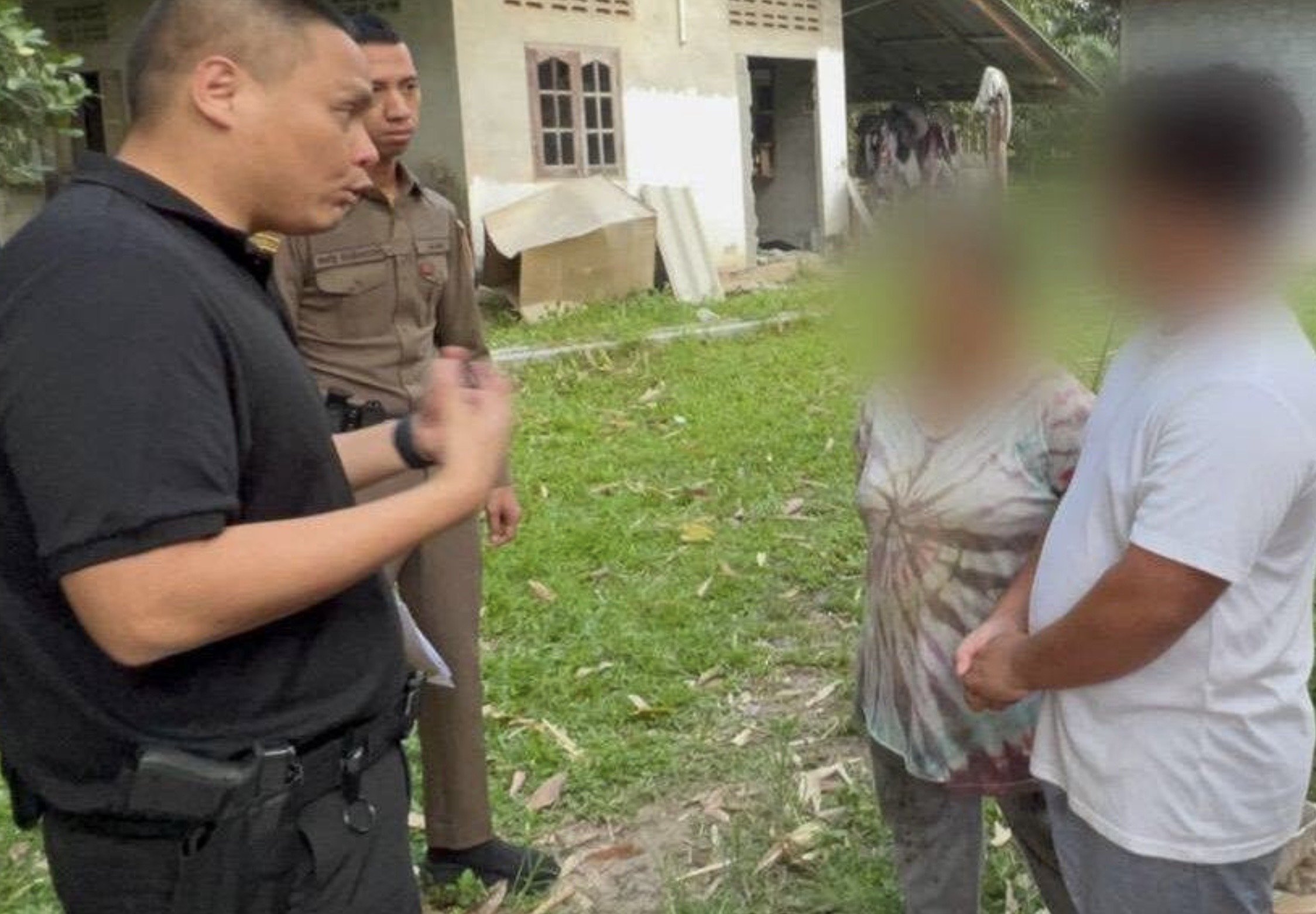
During questioning, Mr Hossam reportedly admitted that he had crossed into Thailand from Cambodia through a natural border channel. He told investigators that he paid 9,000 baht to a Cambodian national to facilitate his illegal entry. He claimed his intention was to travel back to Bangladesh.

He has been charged with being a foreign national entering and staying in the Kingdom without permission. Officers transferred him, along with the seized mobile phones, to investigators at Watthana Nakhon Police Station for further legal proceedings. Authorities said the case would be expanded to determine whether others were involved in facilitating the border crossing.

Daily News reported the operation forms part of ongoing measures to prevent illegal border crossings and unlawful entry into Thailand. Officials have reiterated their commitment to tightening border controls in Sa Kaeo, a province that shares a border with Cambodia.

Key Takeaways

• A Bangladeshi man, Mr Monir Hossam, was arrested in Sa Kaeo on 22 February for illegal entry.
• Officers found 11 mobile phones concealed in his belongings during a checkpoint inspection.
• He allegedly paid 9,000 baht to cross from Cambodia and has been handed to police for legal action.

Related stories

Navy-arrests-six-Chinese-over-border-scam-escape

Myanmar-nationals-arrested-crossing-from-Cambodia

Join the discussion?

Already a member?

Adapted by ASEAN Now Dailynews 23 Feb 2026
Georgealbert
Georgealbert
Vietnam’s retail and services market reached a five-year high in 2025, prompting Thailand’s Department of International Trade Promotion (DITP) to call on Thai exporters to move quickly to capture demand in the fast-modernising consumer economy. Combined retail-market value and service-sector revenue totalled 7,000 trillion Vietnamese dong, or US$268.5 billion, up 9.2% year on year. DITP said the surge reflects rising incomes, expanding infrastructure and rapid digital adoption.

Get today's headlines by email

In a report posted on the DITP website, the Thai Trade Center in Hanoi cited Vietnam’s Directorate of Market Surveillance under the Ministry of Industry and Trade as the source of the data. Retail revenue increased 8% from the previous year, while services expanded 20.2%. Revenue from accommodation and food services rose 14.6%, supported by major events, strong foreign tourist arrivals and improving living standards.

DITP highlighted e-commerce as a key growth engine, driven by high smartphone and internet penetration. Vietnam’s e-commerce market was valued at US$32 billion in 2025, accounting for 12% of nationwide retail revenue from goods and services, with annual growth averaging more than 20%, the second-highest rate in Southeast Asia. The agency noted growing investment in digital tools, including inventory systems, cashless payments, online platforms and livestream selling, as brands adopt omni-channel strategies blending in-store and online shopping.

Retail infrastructure has also expanded nationwide. Vietnam now has 1,293 supermarkets, 276 shopping malls and more than 8,274 traditional markets, signalling a gradual shift towards modern trade. According to the Vietnam Retail Store Modern Trade Trends 2025 report by Q&Me Vietnam Market Research, convenience stores and mini-supermarkets increased from 7,362 outlets in 2024 to 7,806 in 2025.

WinCommerce’s WinMart and WinMart+ network accounted for 4,592 outlets, or 58.8% of the total. The company opened 764 new stores in 2025, including 602 WinMart+ outlets in rural areas, representing 80% of new openings and underscoring a rural expansion strategy.

DITP said the five-year peak highlights both income growth and the impact of broader domestic trade infrastructure. With retailers accelerating expansion beyond major cities, particularly into rural provinces, the department described the trend as a significant opportunity for consumer-goods distributors and Thai exporters.

The report also cited constraints including administrative hurdles, land costs, human-resource quality and gaps in transport, payment and telecoms connectivity, especially in rural areas. Exchange-rate volatility, external inflation pressures and employment concerns linked to rapid automation and AI were also flagged.

The Nation reported that despite these challenges, DITP said Vietnam’s large, youthful population and rising per-capita income could position it to become Southeast Asia’s largest retail market between 2026 and 2030. E-commerce is projected to reach US$50 billion by 2030.

Key Takeaways

• Vietnam’s retail and services market reached US$268.5 billion in 2025, up 9.2% year on year.
• E-commerce was valued at US$32 billion in 2025 and is projected to hit US$50 billion by 2030.
• DITP urges Thai exporters to act early as modern trade expands, particularly in rural areas.

Join the discussion?

Already a member?

Adapted by ASEAN Now Nation 23 Feb 2026
Georgealbert
Georgealbert
The Royal Thai Navy Region 1 has detained a Cambodian fishing vessel for entering Thai waters, detaining three crew members found without documents. The vessel was intercepted at coordinates latitude 11°31.51’ North and longitude 102°53.40’ East. Authorities confirmed the crew are now facing legal proceedings under Thai law.

Get today's headlines by email

On 22 February 2026, the commander of patrol boat Tor.996 reported the arrest of one Cambodian-flagged fishing boat within Thai territorial waters. Upon inspection, officers found three Cambodian nationals on board who were unable to communicate in Thai. None were able to produce identification documents or legal paperwork for entering or operating in Thai waters.


Picture courtesy of Naewna

Officials discovered two crates of fresh squid on the vessel. The crew later admitted, through a translator, they had been fishing in Thai waters for two days. The vessel and its crew were taken into custody at Khlong Yai Multipurpose Port.

The Navy coordinated with the Thai Maritime Enforcement Command Centre (Trat Province) to deploy a multidisciplinary team to conduct further checks and process the case. Authorities said the matter is currently under investigation and legal proceedings are being carried out in accordance with Thai law. No additional details regarding charges or penalties have yet been released.

The arrest comes amid continued maritime enforcement efforts along the Thai–Cambodian border. Naewna reported that authorities will complete questioning of the crew and verify their identities and documentation status. Further legal action will proceed under relevant Thai maritime and immigration laws. Officials have stated that enforcement operations in territorial waters will continue as part of ongoing border security measures.


Key Takeaways

• A Cambodian fishing boat was arrested in Thai waters on 22 February 2026.
• Three Cambodian crew members were found without identification or legal documents.
• The vessel was seized and taken to Khlong Yai Multipurpose Port for legal proceedings.

Related Story

Foreign-fishing-boat-sunk-after-clash-off-Koh-Lipe

Join the discussion?

Already a member?

Adapted by ASEAN Now Naewna 23 Feb 2026
Georgealbert
Georgealbert
The Thai Chamber of Commerce has urged the government to accelerate trade negotiations with the United States after President Donald Trump announced an increase in the global import duty from 10% to 15%. Chamber chairman Dr Poj Aramwattananont warned that the US “tariff game” is not over and said higher duties would raise costs, increase planning uncertainty and heighten currency risks for Thai exporters. The chamber said tariffs are likely to remain a strategic policy tool with spillover effects on exporters and global supply chains, including Thailand.

Get today's headlines by email

The latest move follows a US Supreme Court ruling this week that invalidated elements of the administration’s earlier tariff structure. In response, the White House turned to Section 122 of the Trade Act of 1974 as an alternative legal basis. A proclamation dated February 20, 2026, set a temporary import surcharge of up to 15% for 150 days starting February 24, 2026, noting that Congress could extend the measure.

Dr Poj said the shift to a 15% rate signalled that Washington could continue deploying tariff instruments in new forms to advance its economic and trade agenda. He cautioned that higher duties would increase the landed cost of Thai goods in the US market and erode competitiveness, particularly in low-margin industries. The chamber also highlighted regulatory uncertainty linked to the 150-day window, complicating contracts, investment decisions and long-term planning.

Exchange-rate volatility was identified as an additional risk. Dr Poj said policy uncertainty could weaken the US dollar, especially if previously collected tariffs must be refunded, potentially strengthening the baht against the dollar. As most international trade remains invoiced in US dollars, a stronger baht combined with higher tariff costs would intensify pressure on Thai exporters, he said, urging close monitoring of foreign exchange trends.

The chamber outlined three pressure points for Thai businesses: higher export costs and weaker competitiveness in the US market, greater regulatory uncertainty, and accelerated supply-chain reshaping that could intensify regional competition for investment. It stressed that the impact would extend beyond Thailand and could sharpen international trade competition and negotiations more broadly.

The Nation reported that calling for coordinated action, the chamber urged closer collaboration between the government and key agencies, particularly the Commerce Ministry as lead negotiator, alongside the foreign ministry, finance ministry and Thai missions overseas. It said Thailand should seek clarity on US measures and continue economic cooperation with Washington to give exporters greater confidence. The chamber added it stands ready to provide sector-by-sector impact data and policy proposals to support negotiations.

Key Takeaways

• The US will impose a temporary 15% import surcharge for 150 days from February 24, 2026, under Section 122 of the Trade Act of 1974.
• The Thai Chamber warns higher tariffs and potential baht appreciation could erode exporters’ competitiveness.
• The chamber is urging coordinated, proactive negotiations with the US to provide clarity and protect Thai business interests.

Join the discussion?

Already a member?

Adapted by ASEAN Now Nation 23 Feb 2026

Georgealbert
Georgealbert
A Thai tourist was rescued after falling more than 100 metres into a ravine while trekking in Mae Hong Son province on 20 February 2026. The incident occurred at around 4pm on Doi Huai Phai Hok near Ban Nam Hu in Huai Pu Ling subdistrict, Mueang district. The injured man, identified as Mr Somkuan Chomchuen, was unable to rescue himself and required emergency assistance.

Get today's headlines by email

Colonel Yodchai Phuangwarin, commander of the Singhanat Task Force, ordered a disaster relief team from the unit to assist alongside the Mae Hong Son Disaster Relief Foundation. The rescue operation followed reports that the tourist had slipped and fallen down a steep and difficult-to-access slope while travelling with friends to study nature and camp in the area.

Initial reports indicated that a walking stick he was using to steady himself snapped, causing him to lose balance and slide into the ravine. The fall took place near a waterfall in Ban Nam Hu, with the terrain described as steep and hazardous. Emergency services were alerted to the incident before launching a coordinated response.

The foundation deployed a high-angle rope rescue team which trekked approximately one kilometre on foot to reach the casualty. Rescuers assessed his condition, provided first aid and carefully extracted him from the ravine using rope rescue systems designed for steep terrain. The operation was conducted with support from Sri Sangwan Hospital, the Singhanat Task Force and the Mae Hong Son Airport high-angle rescue team.

Mr Somkuan was transported to Sri Sangwan Hospital for further medical treatment. Authorities confirmed that all personnel involved in the mission returned safely to base at 7.10pm. The operation was reported to have concluded smoothly, with no injuries among rescue teams.

Khoasod reported the incident highlights the risks associated with trekking in remote mountainous areas, particularly where terrain is steep and access is limited. Officials did not provide further details about the extent of the tourist’s injuries but confirmed he was receiving ongoing medical care.


Picture courtesy of Khaosod

Key Takeaways

• A Thai tourist fell more than 100 metres into a ravine on Doi Huai Phai Hok on 20 February 2026.
• The fall occurred after a walking stick snapped while he was trekking to camp near Ban Nam Hu.
• Military and specialist rope rescue teams extracted him safely and transported him to Sri Sangwan Hospital.

Related stories

Woman-tourist-falls-into-deep-gorge-at-Pai-canyon-rescued

Phuket-rescuers-evacuate-injured-Dutch-hiker-after-five-hours

Join the discussion?

Already a member?

Adapted by ASEAN Now Khaosod 22 Feb 2026
Georgealbert
Georgealbert
The Royal Thai Navy has arrested six Chinese nationals linked to a cyber scam network after they allegedly crossed illegally into Thailand from Cambodia. The arrests were made in the early hours of 21 February 2026 in Soi Dao district, Chanthaburi province. Authorities said the suspects had no identification documents and were charged with entering the Kingdom without permission.

Get today's headlines by email

Rear Admiral Parach Rattanachaiyaphan, spokesperson for the Royal Thai Navy, said the operation was carried out by the Chanthaburi and Trat Border Defence Command in coordination with immigration officers. The arrests took place along a natural border crossing in the eastern frontier area. The six men were detained by the Marine Task Force in Chanthaburi.

During initial questioning, the suspects reportedly confessed to working with a cybercrime network operating on the Cambodian side of the border. They told investigators they had fled into Thailand with the intention of travelling onward to a third country. Authorities have not disclosed further details about the network or its operations.


Officials stated that all detainees were handled in accordance with human rights principles. The suspects have since been transferred to investigators for further legal proceedings. The case further highlights ongoing concerns about transnational crime along Thailand’s eastern border with neighbouring Cambodia.

Cyber scam operations in border regions have caused financial damage to victims in multiple countries worldwide. Thai authorities have repeatedly stressed the need for stronger international cooperation to address the issue.

Rear Admiral Parach said the latest arrests reflect the persistent challenges posed by cross-border criminal networks. Security forces continue to monitor natural border crossings, which are often used for illegal entry and exit.

Thaitabloid reported that investigations are continuing to determine the full extent of the suspects’ involvement and any potential connections within Thailand. Authorities have not confirmed whether further charges may follow beyond immigration violations. Coordination with relevant agencies is expected as the case proceeds.


Pictures courtesy of Thaitabloid

Key Takeaways

• Six Chinese nationals were arrested on 21 February 2026 for illegal entry in Chanthaburi.
• Suspects allegedly worked for a cyber scam network in Cambodia before fleeing to Thailand.
• Authorities say procedures followed human rights laws and further investigation is ongoing.

Related stories

10-Myanmar-nationals-arrested-crossing-from-Cambodia

Thai-forces-arrest-12-migrants-crossing-border-in-Sa-Kaeo

Join the discussion?

Already a member?

Adapted by ASEAN Now Thaitabloid 22 Feb 2026


Georgealbert
Georgealbert
A police communications officer lost consciousness while repairing a radio signal mast more than 40 metres high in Saraburi province on 20 February 2026, prompting a dramatic rescue operation. The incident occurred in the afternoon beside the Saraburi Provincial Police headquarters in Thap Kwang subdistrict, Kaeng Khoi district. Colleagues and bystanders watched anxiously as efforts were made to bring him safely down.

Get today's headlines by email

According to reports received via the 191 radio network, the officer, identified as Police Lance Corporal Chanathit Phromsaeng, had climbed the mast to carry out maintenance work. He was tasked with repairing the communications mast and replacing a light bulb at the top of the structure. During the operation, he fainted while positioned at the summit.

When reporters arrived at the scene, the officer had begun to regain some consciousness but lacked the strength to descend unaided. Fellow officers and onlookers gathered below, recording video and taking photographs as the rescue unfolded. A colleague climbed to the top of the mast to rouse him and prevent further injury.


The two officers carefully edged down the structure little by little, lowering themselves to a height of nearly 30 metres above the ground. At that point, a crane from a nearby factory arrived to assist. Two rescue personnel were lifted in a basket to help secure the officer and bring him safely to the ground.

A fellow officer who had accompanied Police Lance Corporal Chanathit said their team had been assigned to repair the communications mast. He stated that the officer is believed to have fainted due to the heat, his physical condition and the height of the mast. He added that it was fortunate colleagues noticed something was wrong and climbed up to support him as he held by a safety harness attached to the structure.

Amarin reported that Thap Kwang mayor Poo Taengoen said municipal authorities were contacted to provide a hydraulic platform for the rescue. However, the municipality did not have equipment capable of reaching the height required, as the mast exceeded 40 metres. Officials then coordinated with a nearby factory, with the process of arranging suitable equipment taking about one hour, with the officer was eventually brought down safely.


Pictures courtesy of Amarin

Key Takeaways

• A police officer fainted while repairing a radio mast over 40 metres high in Saraburi on 20 February 2026.
• Colleagues climbed the mast to support him before a factory crane completed the rescue.
• Coordination for suitable rescue equipment took one hour due to the mast’s height.

Join the discussion?

Already a member?

Adapted by ASEAN Now Amarin 22 Feb 2026
Georgealbert
Georgealbert
Five people were killed and six others injured in a serious road traffic collision in Sapphaya district, Chainat province, at approximately 05:35, on 22 February 2026. The incident occurred at Huai Krot intersection, Moo 9, Huai Krot subdistrict, within the jurisdiction of Sapphaya Police Station. Police Operations Centre confirmed the fatalities and injuries following the crash.

Get today's headlines by email

Police at the scene reported that the deceased were Mr Watsaphon Soongam, 28; Ms Nattaporn Namee, 23; Ms Jaruwan Singha, 26; Ms Thitima Klinthong, 25; and Ms Suphattra Promklai, 20, who later died at hospital. Six others were injured: Mr Jessada Iamcham, 23; Mr Thawatchai Yuchang, 26; Mr Suriya Rodphuean, 26; Mr Phutthiphong Wanitcha, 20; Mr Athit Buangphet, 20; and Ms Lalita Saengruang, 21.

According to the report, Mr Watsaphon was driving a white Isuzu D-Max pickup, registration from Bangkok, travelling from Don Talai towards Huai Krot intersection to return home. Police said witnesses reported the driver lost control just before the traffic lights, striking a stop sign and running a red light. It then collided with an electricity pole.


Three vehicles were damaged. The white Isuzu D-Max was completely destroyed. A black Toyota Vigo pickup, registration from Bangkok, parked beside its owner’s home at the junction, sustained damage to both driver’s side doors and a grey Isuzu D-Max, registration from Chainat, was damaged at the rear of its cargo bed, being lightly struck while crossing the junction.


Pictures courtesy of Responders

Investigating officers examined the scene, and a duty officer transported the wrecked vehicle to Sapphaya Police Station for safekeeping. Further investigation is ongoing to determine the full circumstances of the crash.

ScreenRecording_02-22-2026 09-56-40_1.mp4

Key Takeaways

• Five people died and six were injured after a pickup truck crash at Huai Krot intersection on 22 February 2026.
• The vehicle struck a stop sign, ran a red light and hit a large electricity pole.
• Police secured the vehicle and are continuing their investigation.

Related stories

Four-dead-as-suv-hits-pole-in-Prachuap-crash

Van-crash-kills-3-injures-16-in-Si-Racha

Join the discussion?

Already a member?

Adapted by ASEAN Now นนธวัฒน์ วิสุทธิพัฒน์ 22 Feb 2026
Georgealbert
Georgealbert
A foreign fishing vessel sunk after a confrontation with the Royal Thai Navy off Koh Lipe, with three crew members detained and one injured. The incident occurred on 20 February 2026 after authorities responded to reports of illegal fishing within Thai territorial waters. Naval officers fired warning shots when one vessel allegedly attempted to ram patrol boat Tor 994.

Get today's headlines by email

On 21 February 2026, Rear Admiral Parach Rattanachaiyaphan, spokesperson for the Royal Thai Navy, said the Third Naval Area Command had been alerted by local fishermen to several foreign vessels operating about eight nautical miles east of Koh Lipe. The area lies within Thailand’s territorial sea. Tor 994 was dispatched to investigate.

Upon arrival, officers found ten foreign fishing boats actively fishing in Thai waters. Officials identified themselves and ordered the vessels to stop, but the group attempted to flee. During the pursuit, one vessel reportedly carried out a hostile act by altering course towards Tor 994 in an apparent attempt to collide with it, posing a risk to personnel and equipment.


In response, officers used proportionate warning fire to stop the vessel. The situation was brought under control and one fishing boat, along with three crew members, was seized. One crew member was injured during the incident.

The seized vessel later sank after the situation had been contained. Authorities provided immediate humanitarian assistance, transferring the injured suspect to Satun Hospital for treatment. The other two suspects were handed over to investigators for legal proceedings.

The Royal Thai Navy stated that the operation was conducted in accordance with international law and the principle of proportionality in law enforcement. It said the action aimed to protect maritime sovereignty and the safety of personnel, while prioritising the protection of human life.

Amarin reported that the Navy added that it will continue strict enforcement in Thai waters to safeguard marine resources and maintain maritime security. It also pledged to promote cooperation with neighbouring countries to address illegal fishing in a sustainable manner.


Pictures courtesy of Amarin

Key Takeaways

• A foreign fishing vessel was sunk after allegedly attempting to ram Tor 994 eight nautical miles east of Koh Lipe.
• Three crew members were detained, with one injured and treated at Satun Hospital.
• The Royal Thai Navy said the operation followed international law and proportionate use of force.

Join the discussion?

Already a member?

Adapted by ASEAN Now Amarin 22 Feb 2026
Georgealbert
Georgealbert
The Faculty of Medicine Siriraj Hospital at Mahidol University has developed an artificial intelligence (AI) programme to interpret lung and chest X-rays with accuracy above 95%, comparable to specialist radiologists. The system has already been used in more than 500,000 real patient cases. It can deliver results in under 10 seconds per case, significantly speeding up diagnosis.

Get today's headlines by email

The innovation was created by Siriraj’s Department of Radiology and was first developed during the Covid-19 pandemic to manage high patient volumes. Work on the system has continued beyond the pandemic, refining its performance and expanding its clinical use. The AI has been certified by the Royal College of Radiologists of Thailand as achieving accuracy above 95%, on par with expert radiologists.

Siriraj says the technology’s key strength is its speed, enabling rapid interpretation while maintaining high diagnostic standards. The system has already been transferred to more than 145 hospitals under the Ministry of Public Health nationwide. The hospital aims to expand deployment to 450 hospitals in 2026, with the goal of reducing inequality in access to quality healthcare across Thailand.

The move is intended to support hospitals with limited specialist resources, particularly in regional and rural areas. By enabling faster and reliable readings of chest X-rays, the AI system is expected to ease workloads for radiologists and improve turnaround times for patients. Officials say the expansion forms part of a broader effort to strengthen public health infrastructure through technology.

Siriraj is also extending its AI development into other diagnostic fields. Current plans include building AI systems to interpret brain CT scans and to support breast cancer screening using digital mammography. The hospital is collaborating with specialised private-sector partners to develop AI that better understands breast anatomy among Asian women.

The Nation reported that this collaboration aims to enhance screening accuracy and strengthen early detection of major diseases. Siriraj says the broader objective is to improve health outcomes for Thai people on a national scale. Further rollout and development are expected to continue throughout 2026.

Key Takeaways

• Siriraj’s AI interprets chest X-rays with over 95% accuracy and reports results in under 10 seconds.
• The system has been used in more than 500,000 cases and transferred to 145 public hospitals.
• Expansion to 450 hospitals is planned for 2026, alongside new AI for brain CT and breast cancer screening.

Join the discussion?

Already a member?

Adapted by ASEAN Now Nation 22 Feb 2026
Georgealbert
Georgealbert
Phuket has secured three major international MICE (Meetings, Incentives, Conferences and Exhibitions) events in 2026, reinforcing its status as a world-class meetings destination and advancing global agendas on sustainability, wellness and diversity. The Thailand Convention and Exhibition Bureau (TCEB) confirmed the island will host the Global Sustainable Tourism Conference (GSTC) 2026, the InterPride General Meeting & World Conference 2026 and the Global Wellness Summit (GWS) 2026.

Get today's headlines by email

The Global Sustainable Tourism Conference, organised by the Global Sustainable Tourism Council, will take place from April 21–24 at the Royal Phuket City Hotel and Courtyard by Marriott Phuket Town. The Sustainable Tourism Development Foundation will host the event with support from TCEB.

TCEB has positioned Phuket as a model MICE city after successfully attracting major international events aligned with provincial development strategies. In 2026, the three conferences are expected to drive sustainability, wellness and diversity, equity and inclusion agendas while strengthening the island’s global brand.

Supawan Teerarat, Director of TCEB, said the bureau was pleased to help bring conferences reflecting major world trends to Phuket. She said the achievement demonstrates the island’s capability and highlights a city-wide branding strategy. “Phuket is a model MICE city that can use MICE as a mechanism to elevate the city and create opportunities for trade, investment and development,” she said.

Supawan added that the move aligns with TCEB’s strategy to attract world-class events, develop distinctive regional MICE identities, and decentralise international events beyond Bangkok.

Suwit Phansengiam, Deputy Governor of Phuket, said the province is using MICE as a tool to drive a higher-quality economy, with conferences generating income beyond tourism and spreading benefits to local businesses and communities. He said hosting these events reflects Phuket’s readiness as an international MICE city and supports sustainable economic growth.

Bhummikitti Ruktaengam, President of the Sustainable Tourism Development Foundation, said Phuket’s selection resulted from strong public-private cooperation in advancing seven provincial strategies. He said sustainability and international-standard health services are being translated into tangible outcomes to improve competitiveness while maintaining balance and local wellbeing.

Supawan said Phuket’s sustainable tourism network, collaboration with the United Nations Development Programme to set 2030 development indicators, and its role as a pilot city for the National Ecosystem Assessment support its credentials. For InterPride 2026, she cited Thailand’s passage of the marriage equality law and moves towards gender recognition legislation as supportive factors.

For GWS 2026, she said the summit will open opportunities in Phuket’s and Thailand’s wellness industries to international investors, supporting the country’s 20-year national strategy and its role as an international health hub.

The Nation reported that Phuket will continue developing its MICE industry to create new value for the province and strengthen Thailand’s position on the regional MICE stage.


Picture courtesy of The Nation

Key Takeaways

• Phuket will host GSTC 2026, InterPride 2026 and GWS 2026, advancing sustainability, DEI and wellness agendas.
• The conferences are backed by TCEB and provincial authorities as part of a strategy to decentralise major events beyond Bangkok.
• Officials say the events will generate broader economic benefits and reinforce Phuket’s global MICE profile.

Join the discussion?

Already a member?

Adapted by ASEAN Now Nation 22 Feb 2026
Georgealbert
Georgealbert
Police from The Central Investigation Bureau have arrested a 54-year-old Chinese national and seized 500 canisters of nitrous oxide worth more than 1 million baht during a raid in Bangkok. The suspect, identified as Mr Bai Changbo, was detained at a residence in Suan Luang district on 21 February. Officers allege he helped conceal and distribute goods illegally imported without passing through customs procedures.

Get today's headlines by email

The operation was ordered by Pol Lt Gen Nattasak Chawanasai, Commissioner of the Central Investigation Bureau, who instructed Pol Maj Gen Thatsaphum Charuprat and officers from the Economic Crime Suppression Division (ECD) to carry out the search. Acting under a warrant issued by the Central Tax Court, officers moved on the property after surveillance linked it to an ongoing smuggling network.

The arrest followed an earlier crackdown in January 2026 on a major network accused of illegally importing and selling nitrous oxide, commonly known as laughing gas. Investigators said they uncovered further connections to Chinese traders who continued to distribute the gas, prompting extended monitoring of suspected storage locations.

Police found that the latest target property, located in the Ramkhamhaeng area, was being used to store and package nitrous oxide into boxes. The packages were allegedly disguised as ordinary goods and sent to customers who placed orders online, using motorcycle delivery riders to avoid detection.

When officers arrived, Mr Bai was reportedly preparing to leave the house on a motorcycle fitted with a storage box. A search of the box revealed two canisters of nitrous oxide ready for delivery, while a further search inside the house uncovered a total of 500 canisters.

Mr Bai was charged with assisting in concealing, distributing, transporting, purchasing or receiving goods that he knew had been illegally imported into the Kingdom without customs clearance. During questioning, he allegedly confessed to overseeing the premises and the stored goods in exchange for a monthly payment of 30,000 baht from a Chinese employer residing overseas.

Daily News reported that authorities have transferred the suspect and seized evidence to investigators from Sub-Division 2 of the ECD for further legal proceedings. Police said they are continuing efforts to expand the investigation and track down financiers and other members of the network.


Picture courtesy of Daily News

Key Takeaways

• A 54-year-old Chinese national was arrested in Bangkok with 500 nitrous oxide canisters worth over 1 million baht.
• Police allege the gas was illegally imported and distributed through online orders using motorcycle couriers.
• The suspect reportedly admitted working for a Chinese employer abroad for 30,000 baht per month.

Related stories

Police-bust-laughing-gas-network-arrest-five-Chinese

CIB-raids-seize-200-laughing-gas-canisters-in-Bangkok

Join the discussion?

Already a member?

Adapted by ASEAN Now Dailynews 22 Feb 2026
Georgealbert
Georgealbert
Thailand’s poverty rate rose to 3.4 million people, or 4.9% of the population, despite slight overall economic growth, according to the National Economic and Social Development Council (NESDC). The increase marks a reversal from the previous year, when the poverty rate stood at 3.4%. The NESDC warned that poverty is showing signs of becoming a chronic issue, particularly in certain provinces and sectors.

Get today's headlines by email

The findings were outlined in a progress report on the 13th National Economic and Social Development Plan (2023–2027). During the first two years of the plan, efforts to drive economic initiatives have not effectively reduced regional disparities. The distribution of economic opportunities across sectors has failed to significantly address poverty, especially in persistently affected areas.

During the COVID-19 pandemic from 2019 to 2023, poverty declined steadily, largely due to government relief and economic stimulus measures. However, the council noted that 4.3 million people remain classified as “near-poor”, meaning their expenses exceed the poverty line by no more than 20%, placing them at high risk of falling back into poverty.

Poverty remains deeply entrenched in provinces such as Pattani and Mae Hong Son, which have ranked among the five provinces with the highest poverty rates for more than 15 years. The majority of those living in poverty are in the agricultural sector, where the poverty rate stands at 9.6%. Most poor individuals have education levels no higher than primary school.

Households with children aged six to 14 years face a poverty rate of 8.7%, making them particularly vulnerable. High living expenses and reduced work opportunities for caregivers contribute to greater financial instability in these households.

The NESDC acknowledged that poverty reduction efforts have largely focused on short-term financial assistance. Measures include enhancing benefits under the state welfare card programme, increasing child allowances within the social security system, and advocating broader access to child-rearing subsidies. The council has also sought to improve data integration to better identify and target vulnerable groups.

In terms of social protection, benefits and coverage have been expanded for target groups, with efforts to create a more systematic welfare system through integrated data on vulnerable populations.

Despite these initiatives, the NESDC identified key challenges in tackling intergenerational poverty. These include insufficient incentives for local agencies to address poverty effectively, as performance evaluation indicators do not support strong local action. A lack of continuous longitudinal data collection also limits the precision and effectiveness of poverty alleviation policies.

The Nation reported that the council emphasised the need to strengthen structural measures and improve data-driven mechanisms to better address entrenched and intergenerational poverty under the current national development plan.

Key Takeaways

• Thailand’s poverty rate rose to 4.9%, affecting 3.4 million people despite economic growth.
• Agricultural workers and households with children aged six to 14 face the highest poverty risks.
• Structural challenges and limited local incentives hinder efforts to reduce intergenerational poverty.

Join the discussion?

Already a member?

Adapted by ASEAN Now Nation 22 Feb 2026
Georgealbert
Georgealbert

Account

Navigation

Search

Search

Configure browser push notifications

Chrome (Android)
  1. Tap the lock icon next to the address bar.
  2. Tap Permissions → Notifications.
  3. Adjust your preference.
Chrome (Desktop)
  1. Click the padlock icon in the address bar.
  2. Select Site settings.
  3. Find Notifications and adjust your preference.