





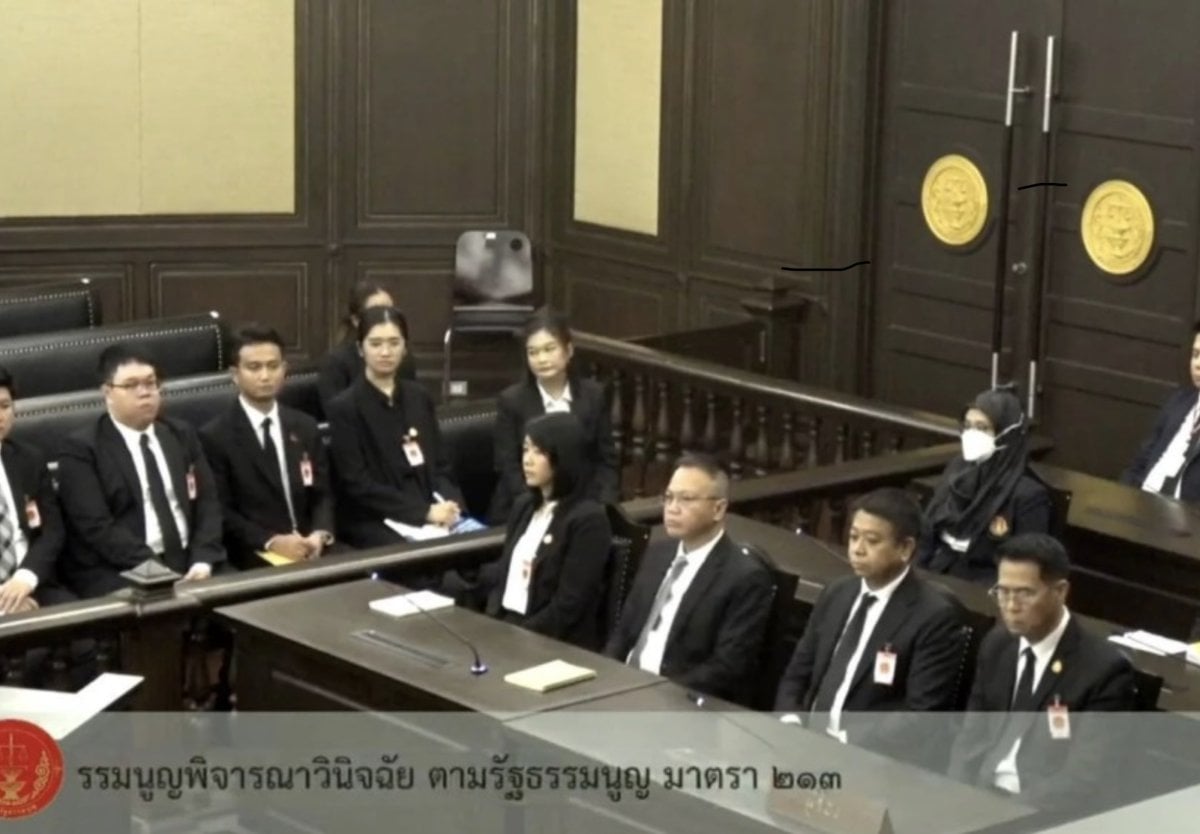
Thailand's Constitutional Court has ruled that barcode and QR codes printed on ballots in the 8 February 2026 general election did not violate the constitutional requirement for secret voting.
The decision, read on 28 September after more than five months of hearings, means the election will not be invalidated over the disputed ballot markings. The court nevertheless said election authorities should use future designs that avoid symbols capable of linking a voter's identity to their choice.
The case, T.30/2569, followed public concern when polling-station officials were seen holding up ballots during the count on the evening of 8 February. Party-list ballots carried barcodes, while constituency ballots displayed QR codes - a feature not seen in several previous elections.
Court finds tracing a voter was highly unlikely
The Ombudsman referred 22 complaints to the Constitutional Court under Section 213 of the Constitution. Complainants argued that the codes might allow ballots to be traced back to individual voters, potentially exposing both their identity and their chosen candidate or party.
They said this would breach a number of constitutional provisions, including Sections 4, 25, 32, 34, 50(7), 83, 85, 95 and 224.
The court accepted the case on 18 March by a 6-3 vote. It heard evidence from five witnesses: Nittriya Rattanathasanee, a senior election academic at the Election Commission; Worapong Anantcharoenkij, director of the EC's Election Support Bureau; Pakpoom Phu-udom of T.K.S. Technologies Plc; Kanyanat Pikultong of Chanwanich Security Printing; and EC secretary-general Sawaeng Boonmee.
EC chairman Narong Kalayanamit was allowed to observe the hearings, while deputy EC secretary-general Acting Sub-Lieutenant Pasakorn Siriphakyaporn demonstrated ballot-storage procedures.
For constituency ballots, the court said a book number on the stub could theoretically be associated with 20 eligible voters. However, it found that a QR code could arise only among 20 people receiving ballots from the same book and choosing the same candidate, making identification of a particular voter very unlikely.
Security procedures were central to ruling
For party-list ballots, the court accepted that barcodes could be scanned during the count and could, in principle, be checked against ballot stubs and voter lists. But it said identifying an individual would require access to all three documents and cooperation by polling officials or provincial EC staff, which would be unlawful.
It found the documents were stored separately under sufficient security measures, and said there was no evidence that any person or agency had linked ballot records to discover how a complainant or other voter had voted.
The court dismissed an objection by Polphakhun Setthayabodi, representing the National Thai People's Group, against judges Sarawut Songsivilai and Jakrapong Wiwatwanich taking part. It said there were no grounds for their removal.
The court also warned that the markings had affected public confidence in election management. It said the three respondents should develop ballot formats with stronger anti-fraud protections without using marks or symbols that could link voter identity with voting choices, and should apply especially strict storage safeguards to the disputed ballots.
Related story
Constitutional-court-to-rule-on-February-election
Join the discussion? 

28 September 2026
Recommended Comments
Create an account or sign in to comment