




The Iranian-backed group Hezbollah has fired rockets from Lebanon into Israel for a second consecutive day, prompting Israeli air strikes and a ground troop deployment in southern Lebanon, as the country is pulled deeper into the widening regional conflict involving the US, Israel and Iran.
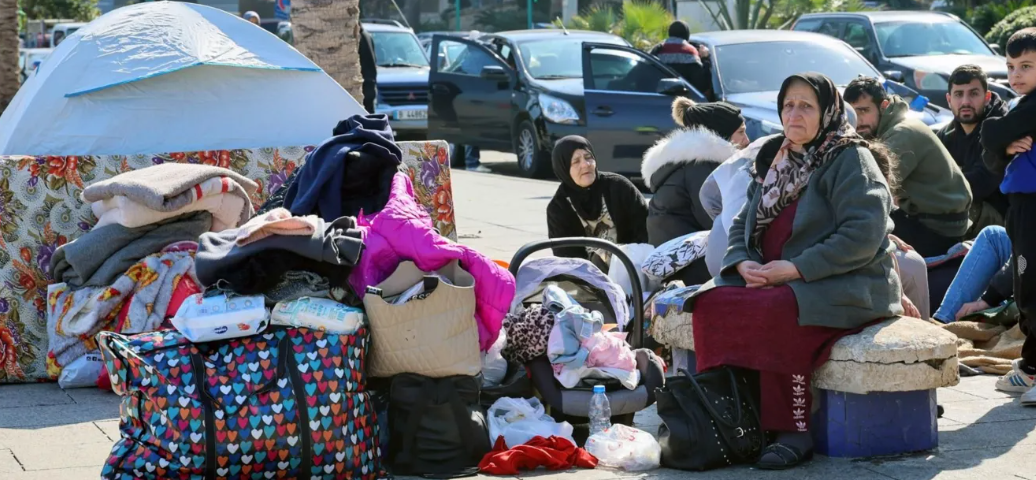
Israeli strikes have killed dozens of people, according to Lebanese health officials. In response to the escalating violence, thousands of residents fled villages in southern Lebanon. In Beirut, displaced families gathered in Martyrs’ Square and along the Mediterranean promenade seeking safety.
Get the latest headlines in your email 
Israel said its bombing campaign was retaliation for rockets and drones launched by Hezbollah, which described its actions as revenge for the killing of Iran’s Supreme Leader, Ali Khamenei, in Tehran over the weekend. While Hezbollah’s barrage was seen by many analysts as largely symbolic, Israel’s response has been forceful and expansive.
Air strikes have targeted southern Lebanon, the Bekaa Valley and Beirut’s southern suburbs, known as Dahieh — a stronghold of Hezbollah and Lebanon’s Shia community. The Israeli military says it has expanded its presence in southern Lebanon, signalling the possibility of a prolonged operation.
Domestic backlash and political strain
Hezbollah’s decision to engage has sparked backlash within Lebanon, reflecting the group’s diminished standing after years of economic crisis and conflict. The Lebanese government announced a ban on Hezbollah’s military activities and demanded it hand over its weapons to the state.
Prime Minister Nawaf Salam said the group’s actions disregarded the “will of the majority of Lebanese,” underscoring growing frustration across the political spectrum.
Formed in the 1980s during Israel’s occupation of Lebanon, Hezbollah evolved into a powerful political and military force. Its most recent war with Israel ended in a 2024 ceasefire after 13 months of devastating fighting that left much of southern Lebanon in ruins. The group’s long-time leader, Hassan Nasrallah, was among senior figures killed during that conflict, and much of its arsenal was destroyed.
Despite the truce, Israel continued near-daily strikes, saying Hezbollah was attempting to rebuild. The militia largely refrained from responding — until now.
A risky calculation
Lebanese authorities had warned Hezbollah against intervening in the growing confrontation between Washington and Tehran. President Joseph Aoun has pushed a disarmament plan, arguing that armed resistance risks reigniting sectarian tensions.
Hezbollah, however, has resisted calls to surrender its weapons, a core element of its identity. Some observers suggest internal divisions may be emerging over the group’s strategy.
Israeli Defence Minister Israel Katz has described Hezbollah’s current leader, Naim Qassem, as a “marked target for elimination,” heightening fears of further escalation.
With Israeli troops expanding operations in the south, concerns are mounting that Lebanon could face another extended conflict. Analysts warn Hezbollah may now be cornered, risking further devastation for a country already struggling to recover from past wars.
Join the discussion? 
Already a member? 
 Adapted by ASEAN Now · Source · 03.03 2026