



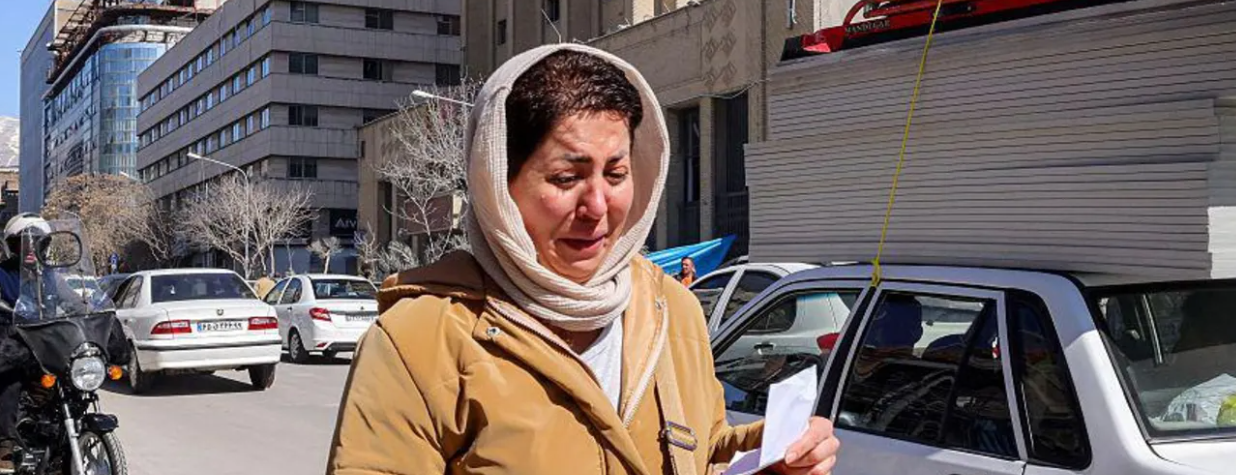

Residents of Tehran are stockpiling food and essentials as uncertainty grows over how long the escalating conflict will last in the Iranian capital.
Locals told BBC Persian they are increasingly anxious about the availability of groceries and rising prices, as explosions continue to echo across the city following days of U.S. and Israeli air strikes.
Get the latest headlines in your email 
“We need to stock up because we don’t know for how long it’s going to continue,” said Nasrin, a Tehran resident. “We’re worried that we might run out of essentials if we don’t.”
Rising prices and empty streets
Iran was already grappling with high inflation and cost-of-living pressures before the latest hostilities. International sanctions and economic hardship sparked nationwide protests in December, which were met with a harsh crackdown by the Islamic Republic authorities.
Since the latest round of strikes began, residents say prices have climbed further.
Pouya, another Tehran resident, said staple goods have become noticeably more expensive. “Rice is now at 625 tomans; it was 530 before the war,” he said, adding that potatoes appear to have been among the hardest hit items.
Iranian state media reported that, under a government decision to prioritise domestic supply, exports of food and agricultural products have been banned “until further notice.”
Internet blackouts compound anxiety
Communication has also become more difficult. Internet blackouts and restrictions have limited access to information, complicating reporting from inside the country. International news organisations are frequently denied visas to operate in Iran.
Shayan, who lives in Karaj near Tehran, said internet packages have risen sharply in price. He added that access to satellite-based services such as Starlink, operated by Elon Musk, has become “enormously” more expensive.
“It’s very difficult to get online now,” he said.
Unease over duration of conflict
Omid, a 26-year-old in Tehran, said many residents initially assumed the strikes would be brief and focused on senior figures such as Ali Khamenei, who was assassinated at the start of the campaign.
“I thought it would be over by now,” he said, but described hearing further explosions on Tuesday afternoon.
Security presence in parts of the capital has increased, residents say, even as streets grow quieter. “There is a greater security presence on the streets, but the streets themselves are empty,” Omid said. “Some shops have closed, particularly those near the affected areas.”
As the conflict continues with no clear timeline for resolution, many in Tehran say they are preparing for the possibility of prolonged disruption to daily life.
Join the discussion? 
Already a member? 
 Adapted by ASEAN Now · Source · 03.03 2026