



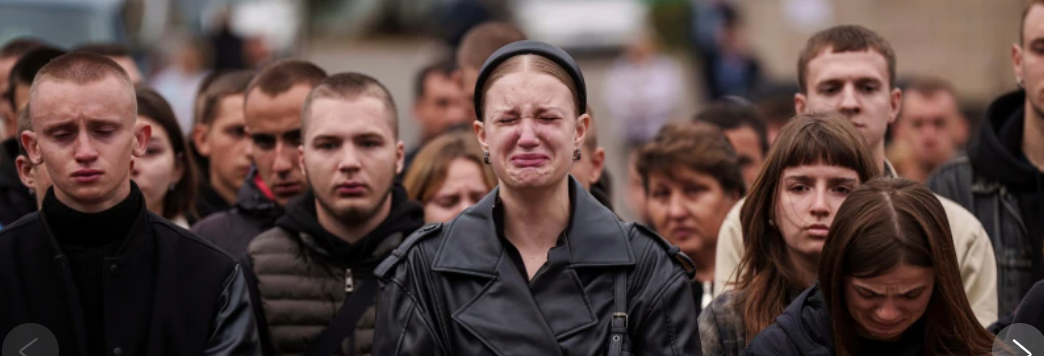

Russia's full-scale invasion of Ukraine began four years ago, marking Europe's largest conflict since World War II. The war has reshaped the security dynamics in the region and caused significant suffering among civilians and soldiers.
Casualties
A report by the Center for Strategic and International Studies estimates that up to 1.8 million soldiers have been killed, wounded, or gone missing on both sides. Russia reportedly experienced about 1.2 million casualties, including up to 325,000 deaths, which is considered the highest troop loss for any major power since World War II. For Ukraine, military casualties range from 500,000 to 600,000, including up to 140,000 deaths. Ukrainian President Volodymyr Zelenskyy recently noted that 55,000 Ukrainian troops have been killed, with many still missing. Neither Moscow nor Kyiv provides regular updates on military losses, making independent verification challenging.
Civilian Toll
According to the United Nations, there have been 14,999 civilian deaths in Ukraine since the invasion, but this number is likely underestimated. Over 40,600 civilians have been injured. The conflict has claimed the lives of at least 763 children. The year 2025 was particularly deadly, with 2,514 civilian deaths—an increase of 31% compared to 2024.
Territorial Occupation
Russia currently occupies 19.4% of Ukrainian territory, including the regions of Crimea and parts of Donetsk and Luhansk. Over the past year, Russia has gained just 0.79% more territory, indicating limited progress in a costly war of attrition. Before the full-scale invasion, Russia already controlled nearly 7% of Ukraine.
Foreign Aid
Foreign military aid to Ukraine decreased by 13% last year compared to the previous years' average from 2022 to 2024. President Donald Trump ceased sending American-supplied weapons to Ukraine after taking office. To offset this, European nations increased their military assistance by 67%. However, foreign humanitarian and financial aid saw a 5% decline last year.
Displacement and Humanitarian Crisis
Approximately 5.9 million Ukrainian civilians have left the country, with 5.3 million finding refuge in Europe, as reported by the United Nations. Additionally, around 3.7 million Ukrainians have been internally displaced. Ukraine's prewar population exceeded 40 million.
Healthcare Under Attack
Since the invasion's onset, there have been 2,881 Russian attacks affecting medical care services in Ukraine. The World Health Organization documented at least 2,347 strikes on healthcare facilities, as well as attacks that damaged medical vehicles and jeopardized the storage of medical supplies. This marks nearly a 20% increase in such attacks compared to 2024.
The conflict continues with no clear resolution in sight, as peace talks facilitated by the US face significant challenges. The main obstacles include the future of Russian-occupied territories and ensuring Ukraine's postwar security. Both Moscow and Kyiv have suffered heavy losses, and civilian hardships remain severe due to ongoing Russian aerial strikes resulting in power outages and water shortages.
Join the discussion? 
Already a member? 
 Adapted by ASEAN Now · Source · 23 Feb 2026