



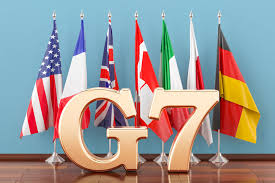

Leaders of the Group of Seven (G7) have said they are prepared to take “necessary measures” to stabilise global energy supplies after the escalating war involving United States, Israel and Iran triggered a sharp surge in oil prices.
The pledge came after an emergency virtual meeting between G7 finance ministers and the International Energy Agency (IEA). While officials discussed releasing strategic oil reserves, no final decision was taken.
Get the latest headlines in your email 
Oil prices briefly climbed close to $120 a barrel on Monday as traders feared the conflict could disrupt shipments through the critical Strait of Hormuz, a narrow passage used for roughly one-fifth of the world’s oil trade.
However, prices later dropped sharply after comments from Donald Trump suggesting the conflict might soon come to an end.
Emergency Energy Options Considered
During the meeting, IEA executive director Fatih Birol warned that global oil markets had deteriorated significantly in recent days.
He said a combination of disrupted shipping routes and curtailed production was creating growing risks for energy markets.
IEA member states collectively hold more than 1.2 billion barrels of emergency oil stocks, while a further 600 million barrels are stored by industry under government mandates.
Releasing those reserves remains an option if the situation worsens.
“We are not there yet,” said Roland Lescure, France’s finance minister, following the talks.
If countries decide to tap emergency reserves, it would mark the first coordinated release since 2022, when stockpiles were used to stabilise markets after Russia's invasion of Ukraine.
UK Calls for De-Escalation
The United Kingdom urged immediate steps to reduce tensions in the Middle East.
Chancellor Rachel Reeves said Britain had called for de-escalation and for guarantees to protect shipping routes in the region.
She also confirmed the UK was ready to support a coordinated release of oil reserves if necessary.
Major disruptions to energy supplies from the Middle East could push up fuel costs worldwide, potentially fuelling inflation and complicating plans by central banks to cut interest rates.
Markets React to Conflict
Financial markets reacted sharply to the growing uncertainty.
Benchmark Brent crude surged more than 25% during Asian trading at one point, briefly touching about $119.50 a barrel before falling back below $90 later in the day.
Gas prices also rose sharply. UK month-ahead gas contracts jumped nearly 25% to around 171p per therm before easing slightly.
Despite the increase, prices remain well below the extreme highs reached in 2022 following the outbreak of war in Ukraine.
Global stock markets also suffered losses.
Japan’s Nikkei 225 dropped more than 5%, while South Korea’s KOSPI fell about 6%.
In Europe, Germany’s DAX index and France’s CAC 40 both closed lower.
London’s FTSE 100 finished the day down only slightly after recovering from steeper earlier losses, while energy giants Shell and BP rose as investors bet they would benefit from higher oil prices.
Duration of War Key Concern
Analysts say the biggest uncertainty for markets is how long the conflict will last.
Paul Gooden, head of natural resources at Ninety One Asset Management, warned that prolonged disruption could push oil prices significantly higher.
“If the conflict drags on, the oil market will become increasingly nervous,” he said.
Prices between $120 and $150 a barrel could trigger what economists call “demand destruction”, where high costs force consumers and businesses to reduce fuel consumption.
For now, traders remain focused on developments in the Middle East, where attacks on energy infrastructure and shipping routes have already rattled global markets.
Join the discussion? 
Already a member? 
 Adapted by ASEAN Now · Source · 09.03 2026