



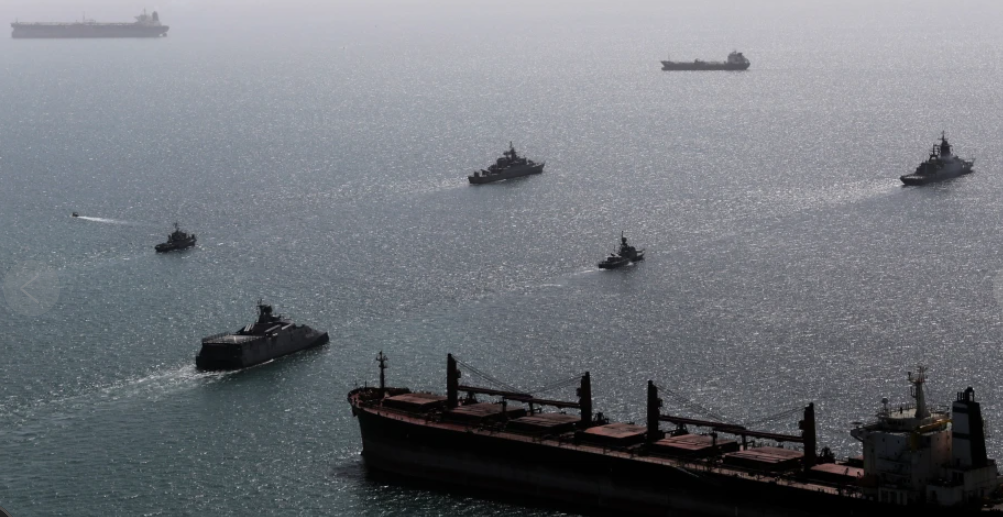

Iran has accused U.S. President Donald Trump of spreading "big lies" about its nuclear program, as both nations prepare for critical talks in Geneva. This comes amid the largest U.S. military deployment to the Middle East in decades.
Rising Tensions
Iranian officials criticized Trump's methods, alternating between dismissing his claims and expressing hope for "honorable diplomacy." The U.S. military buildup aims to pressure Iran into negotiating constraints on its nuclear activities. Trump has warned of potential attacks if talks fail, raising fears of a regional conflict as tensions between Israel and Hamas persist.
Iran views all U.S. military bases in the Middle East as possible targets, endangering American service members. Satellite imagery revealed that U.S. naval forces, typically docked in Bahrain, are now at sea for protective measures, echoing past strategies used in tense situations.
Get the latest headlines in your email 
Nuclear Program Concerns
Trump's State of the Union address highlighted concerns about Iran's missile capabilities and nuclear ambitions. The U.S. asserts Iran aims to develop missiles threatening Europe and America. Satellite images show Iran rebuilding missile production sites previously targeted by U.S. strikes. Iran maintains its nuclear intentions are peaceful, opposing U.S. narratives.
International Reactions
Iranian Foreign Ministry spokesperson Esmail Baghaei compared Trump's tactics to those of Hitler's propaganda minister, accusing him of a misinformation campaign. Disputes over protest death toll numbers further strain relations. Trump claimed 32,000 killed in recent unrest, while independent counts vary significantly.
Iran's parliament speaker, Mohammad Bagher Qalibaf, stated that diplomacy respecting Iranian dignity could lead to agreements, but warned against deceit and aggression. He emphasized Iran’s willingness to use force if necessary.
Diplomatic Efforts
The upcoming Geneva talks, mediated by Oman, mark the third round between Iran and the U.S. Iranian officials, including Foreign Minister Abbas Araghchi, are set to meet American counterparts led by special U.S. envoy Steve Witkoff. U.S. Vice President JD Vance reiterated Trump's stance against Iran obtaining nuclear weapons, suggesting the military option remains if diplomacy fails.
Potential Outcomes
The outcome of the Geneva talks remains uncertain. If negotiations falter, strategic military decisions will need to be made. An attack might aim to pressure Iran or attempt to dismantle its leadership, potentially leading to prolonged military engagement.
Iran’s nuclear program status also remains unclear, with past U.S. strikes claimed to have dismantled it. IAEA inspectors have not verified current conditions, creating further tension and speculation. Any military action risks widening the conflict, possibly involving U.S. allies in the Persian Gulf or Israel. Recent oil price hikes reflect these uncertainties.
Join the discussion? 
Already a member? 
 Adapted by ASEAN Now · Source · 25 Feb 2026