



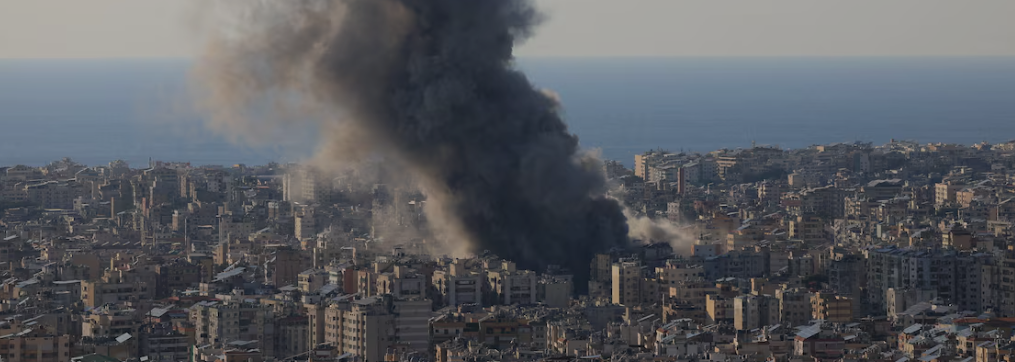

The U.S. and Israeli air war against Iran escalated sharply on Monday, expanding into Lebanon as regional tensions deepened and a Kuwaiti air defence unit mistakenly shot down three American fighter jets during an Iranian attack.
The widening campaign has left no clear end in sight, with Israeli forces striking targets in Lebanon after missile and drone launches by Hezbollah, while Tehran continued retaliatory attacks on Gulf states hosting U.S. military bases.
Get the latest headlines in your email 
Kuwait downs US jets during Iranian strike
According to U.S. Central Command, Kuwait mistakenly shot down three American F-15E fighter jets amid the chaos of an incoming Iranian assault. All six crew members ejected safely and were recovered.
The incident underscored the volatility of a conflict that has already killed dozens across Iran, Israel and Lebanon, disrupted global air travel and halted shipping through the strategic Strait of Hormuz — a chokepoint for roughly a fifth of the world’s oil trade. Oil prices surged as a result.
Trump says operation could last weeks
U.S. President Donald Trump said the joint U.S.-Israel campaign could continue for several more weeks, describing it as “ahead of schedule” but warning it could take longer than initial projections.
“Right from the beginning, we projected four to five weeks, but we have capability to go far longer than that,” Trump said at the White House.
The operation began with targeted strikes that killed Iran’s Supreme Leader, Ali Khamenei, dramatically reshaping the regional landscape. Trump said it remained unclear who was now in charge in Tehran.
The Pentagon said more U.S. forces were deploying to the region. General Dan Caine, chairman of the Joint Chiefs of Staff, warned that military objectives would require “difficult and gritty work.”
So far, six U.S. service members have been killed, all in Iranian retaliatory attacks on Kuwait.
Political and economic fallout
The campaign represents one of the most consequential foreign policy gambles of Trump’s presidency. A Reuters/Ipsos poll found only one in four Americans supports the strikes, posing potential risks for Republicans in upcoming midterm elections.
Rising oil prices have already pushed average U.S. gasoline prices above $3 per gallon, adding economic pressure at home.
Iran denies seeking nuclear weapons and has condemned the strikes as unprovoked, saying negotiations with Washington had been ongoing before the assault. Tehran has refused calls to negotiate under fire.
War spreads to Lebanon
The conflict opened a new front when Hezbollah launched missiles and drones toward Israel from Lebanon. Israel responded with sweeping airstrikes in Beirut’s southern suburbs, targeting what it described as senior militants. Lebanese officials reported dozens killed and injured.
An Iranian-designed Shahed drone, believed by Cypriot authorities to have been launched from Lebanon, struck a British air base in Cyprus. UK Prime Minister Keir Starmer said Britain would defend its personnel but would not engage in offensive operations.
Meanwhile, Gulf states including Qatar and Saudi Arabia faced renewed missile and drone attacks, forcing energy shutdowns and deepening fears of prolonged regional war.
Join the discussion? 
Already a member? 
 Adapted by ASEAN Now · Source · 02.03 2026