




Tehran retaliates against U.S. and Israeli strikes while key partners limit support to diplomacy
Iran is increasingly isolated as it confronts intense military pressure from the United States and Israel, with longtime partners Russia and China offering little beyond diplomatic criticism and calls for restraint.
The war intensified after Iranian Supreme Leader Ali Khamenei was killed in the opening strikes of the conflict. Since then, Tehran has responded by widening the scope of the confrontation, launching missiles and drones at targets across the Middle East and beyond.
However, despite years of cooperation and shared opposition to Western influence, neither Vladimir Putin nor Xi Jinping has shown any sign of providing direct military support to Iran.
Get the latest headlines in your email 
Iran expands the battlefield
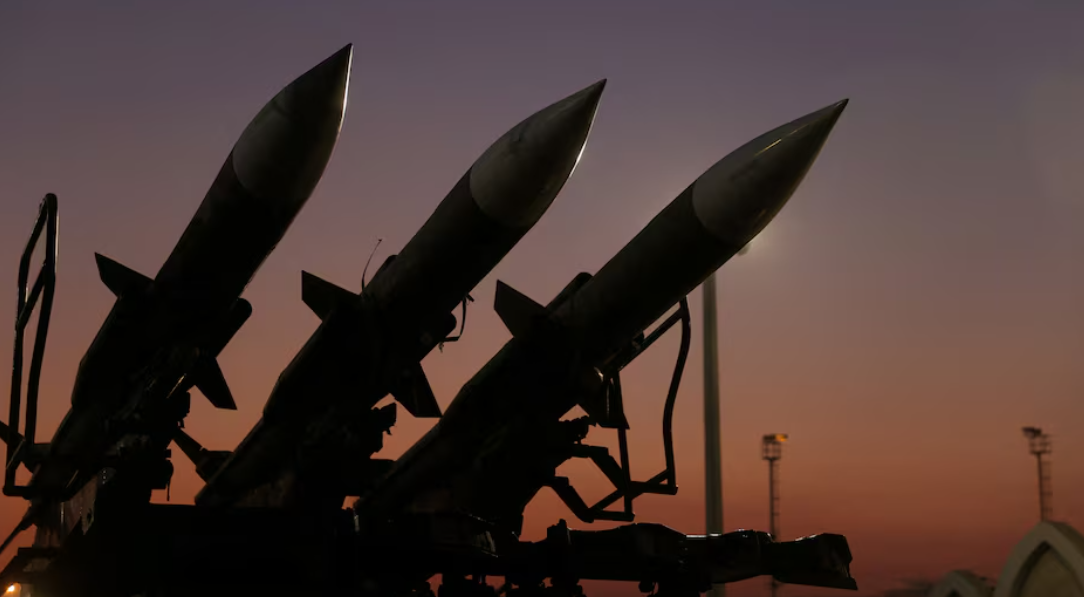
In retaliation for the U.S.-Israeli campaign, Iran has targeted military bases, energy infrastructure and strategic facilities across the region. Missile and drone strikes have reached as far as Cyprus, Azerbaijan, Turkey and several Gulf states.
The attacks have also rattled global energy markets. Shipping disruptions in the Strait of Hormuz, which carries roughly 20% of the world’s oil supply, have forced tankers to divert or halt voyages altogether.
With the route effectively shut down for large parts of commercial traffic, oil prices have surged and major economies are scrambling to secure alternative energy supplies.
The growing disruption underscores the global consequences of the war, as energy flows from the Gulf remain critical for markets in Asia, Europe and beyond.
Russia prioritises Ukraine
Analysts say Moscow’s restrained response reflects a calculated decision to avoid direct confrontation with Washington.
Russia has deepened ties with Iran over the past decade, cooperating on military technology, missile systems and regional security issues. But the Kremlin’s priorities remain focused on the ongoing war in Ukraine.
“Putin has other priorities, and chief among them is Ukraine,” said Russia analyst Anna Borshchevskaya of the Washington Institute. Direct military involvement in Iran’s war with the United States would carry enormous risks for Moscow while offering little strategic benefit.
Some Russian officials also acknowledge that the Middle East conflict is drawing international attention away from Ukraine — an outcome that may indirectly serve Moscow’s interests.
Rising oil prices are another advantage. Higher global energy prices strengthen Russia’s war-time economy and increase revenue from its own exports.
China’s cautious strategy
China’s response has also been carefully measured. Beijing has criticised the use of force and called for negotiations but has avoided taking steps that could entangle it militarily in the conflict.
China has spent years expanding its diplomatic role in the Middle East while building strong economic partnerships across the region. However, its foreign policy generally avoids security commitments far from its core interests.
Unlike the United States, whose alliances often include formal defence obligations, China prefers relationships centred on trade, investment and arms sales.
This approach allows Beijing to maintain ties with multiple rival states at once — including Iran and its Gulf Arab neighbours — without being drawn into their conflicts.
Analysts say the conflict may even offer strategic benefits for China. As U.S. forces focus resources on the Middle East, Beijing gains a clearer view of American military capabilities while avoiding direct involvement.
Such insights could prove valuable as China continues to assess potential future conflicts closer to home, particularly around Taiwan and the South China Sea.
Energy concerns remain for Beijing
China’s biggest vulnerability in the crisis is its heavy reliance on Middle Eastern energy supplies.
About 45% of China’s imported oil passes through the Strait of Hormuz, making disruptions there a major concern for Beijing. However, the country has spent years building strategic petroleum reserves and diversifying suppliers.
Experts say China also has significant volumes of Iranian oil already stored in tankers or storage facilities, giving it a short-term buffer against supply interruptions.
Diplomacy instead of intervention
With military involvement unlikely, both Moscow and Beijing appear to be positioning themselves as potential diplomatic mediators.
Chinese Foreign Minister Wang Yi has held calls with European and Middle Eastern leaders urging dialogue, while President Putin has also spoken with Gulf officials and Iranian representatives.
At the same time, Russia appears careful not to tie its long-term strategy to the survival of Iran’s current leadership.
Analysts point to Moscow’s approach in Syria as an example. Despite backing former president Bashar al‑Assad for years, Russia quickly adapted when political power shifted in the country, preserving its strategic military bases and regional influence.
The same flexible approach may shape Moscow’s thinking toward Iran.
For both Russia and China, Iran remains strategically useful as a counterweight to Western influence. But the current conflict highlights the limits of that partnership.
As the war escalates, Tehran is discovering that even its closest geopolitical partners may be unwilling to fight on its behalf.
Join the discussion? 
Already a member? 
 Adapted by ASEAN Now · Source · 05.03 2026
-
 1
1