



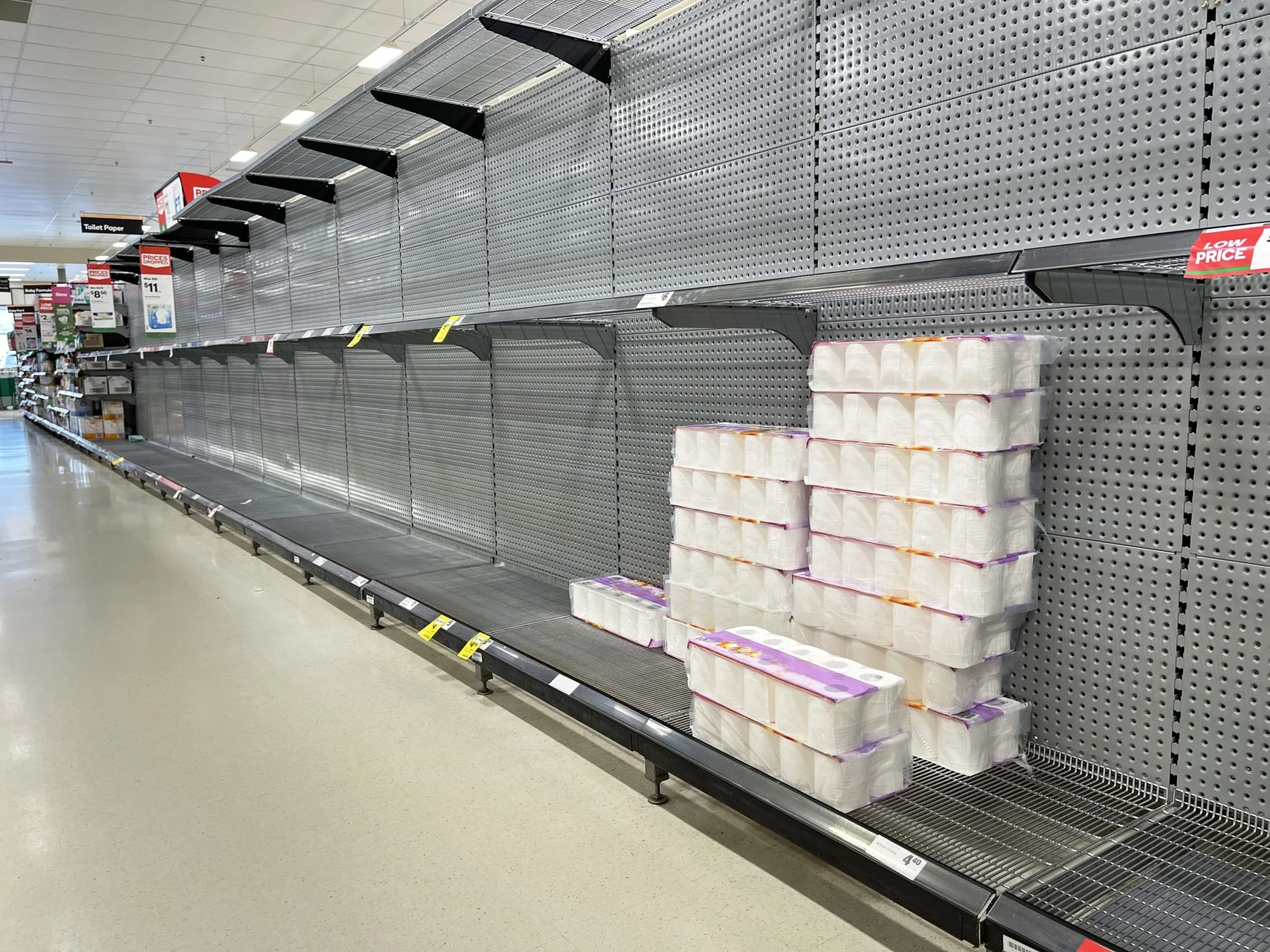

Shoppers in Japan have begun stockpiling toilet paper as global tensions linked to the conflict involving Iran unsettle markets, reviving a pattern of panic buying that authorities say is unnecessary.
Get today's headlines by email 
Images circulating on social media show empty shelves in some stores as consumers rush to buy toilet paper in large quantities. Government officials have urged residents not to hoard the product, stressing that supplies remain stable.
The surge in buying has emerged despite the fact that toilet paper production and distribution are not directly affected by disruptions tied to oil markets or geopolitical tensions.
Economists and behavioral researchers say the phenomenon reflects how rumors and uncertainty can quickly trigger consumer runs on everyday goods.
Panic buying returns
The behavior resembles a bank run, where concern about shortages spreads rapidly and prompts individuals to buy more than they need.
In earlier eras, such fears might have spread through word of mouth. Today, social media posts suggesting shortages can rapidly amplify the same reaction nationwide.
Similar dynamics were seen during the global outbreak of COVID-19 in 2020.
On March 12 of that year, toilet paper sales surged 734 percent compared with the same date in 2019, making it the top-selling grocery item worldwide that day. During the months that followed, about 70 percent of grocery stores globally experienced at least one period when shelves were empty.
Researchers later found that the shortage was largely driven by panic buying rather than actual supply disruptions. Production levels remained stable and supply chains continued to function, but surging consumer demand temporarily drained store inventories.
The pandemic also led to a spike in demand for alternatives such as bidets, as some households adjusted their bathroom habits during the shortage.
Japan’s history of hoarding
Japan has a long record of toilet paper stockpiling during periods of crisis.
The pattern dates back to 1973 during the global oil crisis, when Yasuhiro Nakasone urged the public to conserve paper products. The statement triggered rumors that supplies were running out, prompting consumers to buy large quantities of toilet paper.
Historians and sociologists later described the panic as reflecting anxiety about economic stability during a time of global uncertainty.
Similar hoarding behavior reappeared after the devastating 2011 Tōhoku earthquake and tsunami, when consumers rushed to purchase toilet paper and other household essentials.
In those cases, temporary supply disruptions in some regions contributed to the rush.
Today’s panic appears to be driven largely by perception rather than actual shortages.
Symbol of security
Experts say toilet paper often becomes a focal point during crises because of its physical and psychological characteristics.
The product is bulky and visibly finite, making empty shelves easy to notice. Unlike many foods that are consumed and replaced frequently, toilet paper is seen as a long-term household staple.
Anthropologist Grant Jun Otsuki has argued that the item carries symbolic importance in modern consumer culture. The possibility that it might disappear from store shelves can prompt people to secure supplies quickly.
So far, the latest surge in panic buying appears largely confined to Japan.
However, early signs of similar stockpiling have been reported in Perth in Australia, suggesting the pattern could spread if concerns continue to circulate.
Authorities in Japan continue to stress that there is no shortage and that consumers should avoid unnecessary purchases.
Join the discussion? 
Already a member? 
 Adapted by ASEAN Now. Source 26 March 2026