



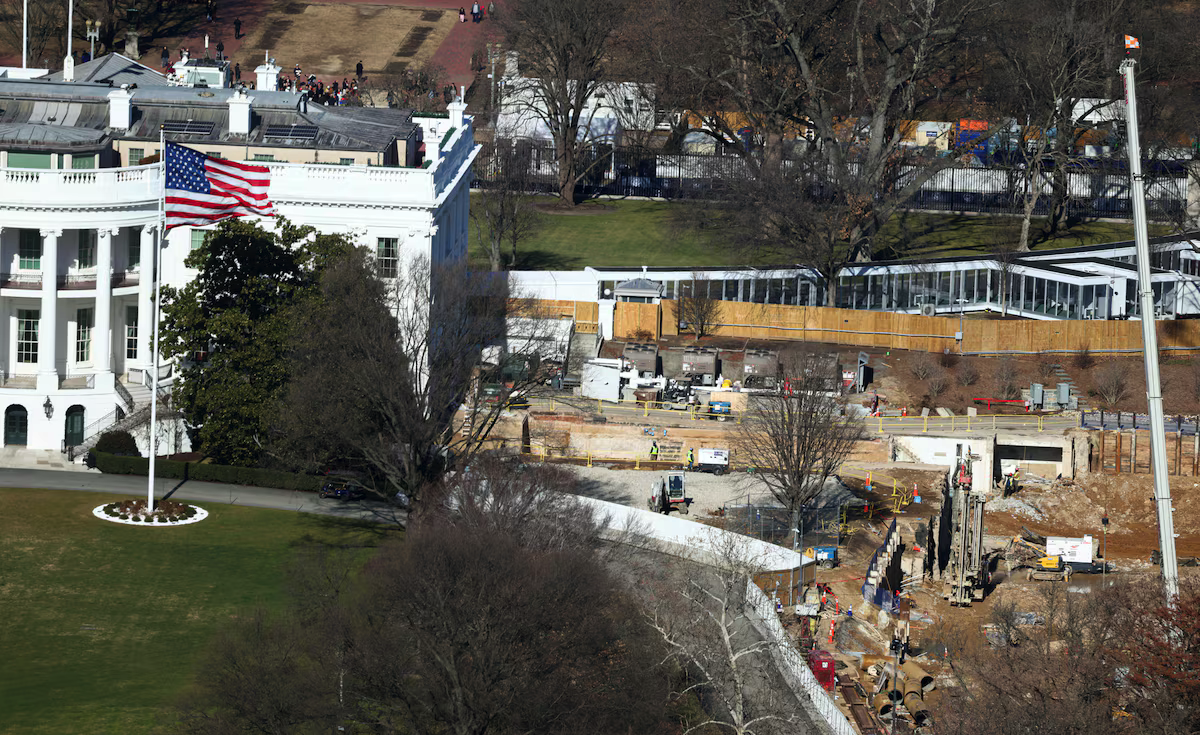

A U.S. federal judge has raised fresh concerns over the legality of President Donald Trump’s plan to construct a large ballroom at the White House, as he considers a renewed effort by preservation groups to halt the project. During a hearing on Tuesday, Richard Leon of the U.S. District Court expressed scepticism about the legal arguments presented by the Justice Department in defence of the $400 million development. He pointed to inconsistencies in the administration’s reasoning, describing the case as marked by “shifting theories” from the outset.
Get today's headlines by email 
The planned ballroom, a 90,000-square-foot venue intended for state functions and major events, is being built on the site of the demolished East Wing. Construction began in October and is expected to continue through 2028, with most funding reportedly coming from private donors.
Dispute over legal authority
However, the National Trust for Historic Preservation has challenged the project in court, arguing that it violates federal requirements. The group says the administration failed to seek congressional approval and did not carry out mandated reviews or allow for public consultation.
Lawyers representing the preservationists accused the government of providing inconsistent explanations about who holds authority over the project. Attorney Thaddeus Heuer told the court officials had created confusion over several months before now, arguing that construction has progressed too far to be stopped.
Government defends project
In response, Justice Department lawyer Yaakov Roth maintained that the project rests on both public and private authority, describing it as having a “dual source of funding and dual source of authority.”
Judge Leon appeared unconvinced, calling that interpretation a “brazen” reading of the law. He emphasised the symbolic importance of the White House, describing it as an “iconic” national landmark and noting that the president acts as a steward rather than an owner of the property.
Ongoing legal battle
The courtroom exchange follows an earlier ruling in which Leon declined to block construction, citing procedural shortcomings in the preservationists’ initial complaint. He invited the group to revise its case, leading to the current legal challenge.
In his previous opinion, Leon noted that the administration had initially suggested constitutional grounds for the project before later abandoning that argument, further complicating the legal landscape.
The preservation group has now filed an updated complaint, again seeking to stop the construction. Government lawyers have urged the court not to intervene, citing national security considerations and practical difficulties in halting work already underway.
Decision expected soon
The dispute has drawn criticism from historians, preservation advocates and some lawmakers, particularly over the demolition of the East Wing and the perceived bypassing of established procedures.
Judge Leon indicated that he aims to issue a decision by the end of the month, which could determine whether construction continues or faces further legal obstacles.
Join the discussion? 
Already a member? 
 Adapted by ASEAN Now. Source 18 March 2026