



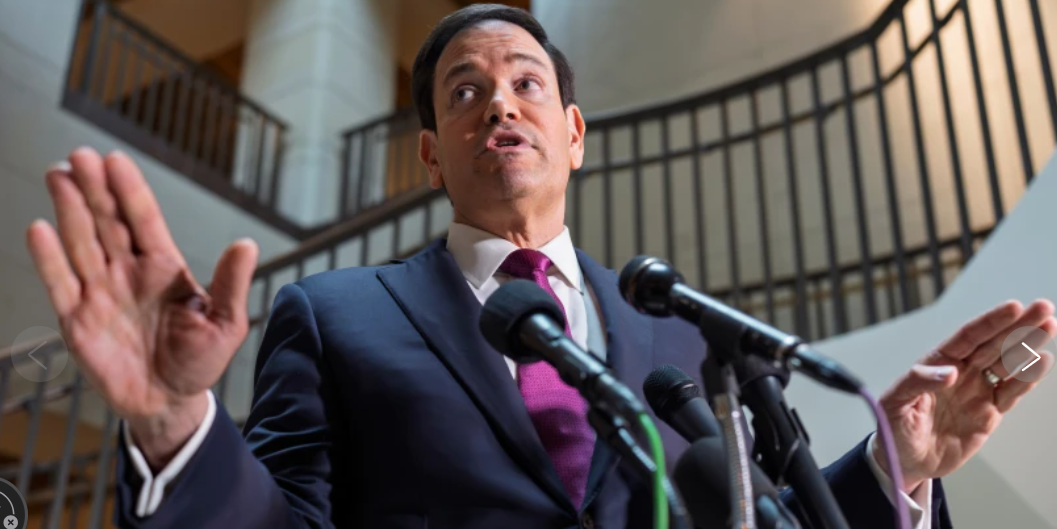

Tensions flared on Capitol Hill as lawmakers pressed the Trump administration for answers about the strategy, cost and endgame of the expanding war with Iran.
Senior officials returned to Congress on Tuesday for a second day of closed-door briefings as both chambers weigh votes on a war powers resolution that would restrict Donald Trump’s authority to continue the joint U.S.-Israel military campaign without explicit approval from lawmakers.
Get the latest headlines in your email 
“The president determined we were not going to get hit first. It’s that simple,” Secretary of State Marco Rubio said during a tense exchange with reporters.
Rubio rejected suggestions that Trump acted because Israel was poised to strike first, instead arguing the president seized a “unique opportunity” to degrade Iran’s missile and nuclear capabilities. “There is no way in the world that this terroristic regime was going to get nuclear weapons, not under Donald Trump’s watch,” he said.
Lawmakers voice concern over ‘mission creep’
The sudden shift to a wartime footing has disrupted the congressional agenda and intensified debate over potential “mission creep,” particularly following the killing of Iran’s Supreme Leader, Ali Khamenei. At least six U.S. service members have died so far in retaliatory attacks.
Senate Democratic Leader Chuck Schumer said he was concerned about the risk of a prolonged conflict. Other Democrats questioned whether the administration has clearly defined objectives or an exit strategy.
Sen. Angus King of Maine called it “very disturbing” if the United States entered war at the urging of Israeli Prime Minister Benjamin Netanyahu. Sen. Elizabeth Warren asked how the operation aligned with Trump’s “America First” pledge to avoid extended foreign entanglements.
Defense official Elbridge Colby told senators the campaign is designed to eliminate Iranian missile threats and prevent nuclear weapons development, insisting it is “not nation-building” and “not going to be endless.”
Divided reactions on Capitol Hill
Republican lawmakers largely rallied behind the president. Sen. Markwayne Mullin said Trump “did the world a favor,” while Sen. Lindsey Graham argued the focus should remain on eliminating threats, regardless of who governs Iran next.
Others urged caution. Sen. Richard Blumenthal said he feared the conflict could lead to U.S. “boots on the ground,” a scenario Trump has not explicitly ruled out.
Senate Majority Leader John Thune said the future of Iran’s leadership should be determined by its people, not Washington.
War powers vote looms
Both the House and Senate are preparing to consider war powers resolutions aimed at limiting the president’s authority to wage war without congressional approval. Under the Constitution, Congress holds the power to declare war, though presidents have frequently initiated military action without formal declarations.
House Democratic Leader Hakeem Jeffries said there would be strong support among Democrats for reasserting congressional authority. However, House Speaker Mike Johnson warned it would be “frightening” to constrain the commander-in-chief while U.S. forces are already engaged.
With midterm elections approaching and supplemental funding requests expected, lawmakers now face one of the most consequential votes of their terms — determining not only the scope of the conflict but Congress’s role in shaping it.
Join the discussion? 
Already a member? 
 Adapted by ASEAN Now · Source · 03.03 2026