



Skip to content
View in the app

A better way to browse. Learn more.

ASEAN NOW

A full-screen app on your home screen with push notifications, badges and more.

To install this app on iOS and iPadOS
  1. Tap the Share icon in Safari
  2. Scroll the menu and tap Add to Home Screen.
  3. Tap Add in the top-right corner.
To install this app on Android
  1. Tap the 3-dot menu (⋮) in the top-right corner of the browser.
  2. Tap Add to Home screen or Install app.
  3. Confirm by tapping Install.

Become a member

Become a member

Record El Niño raises risk of extreme global weather

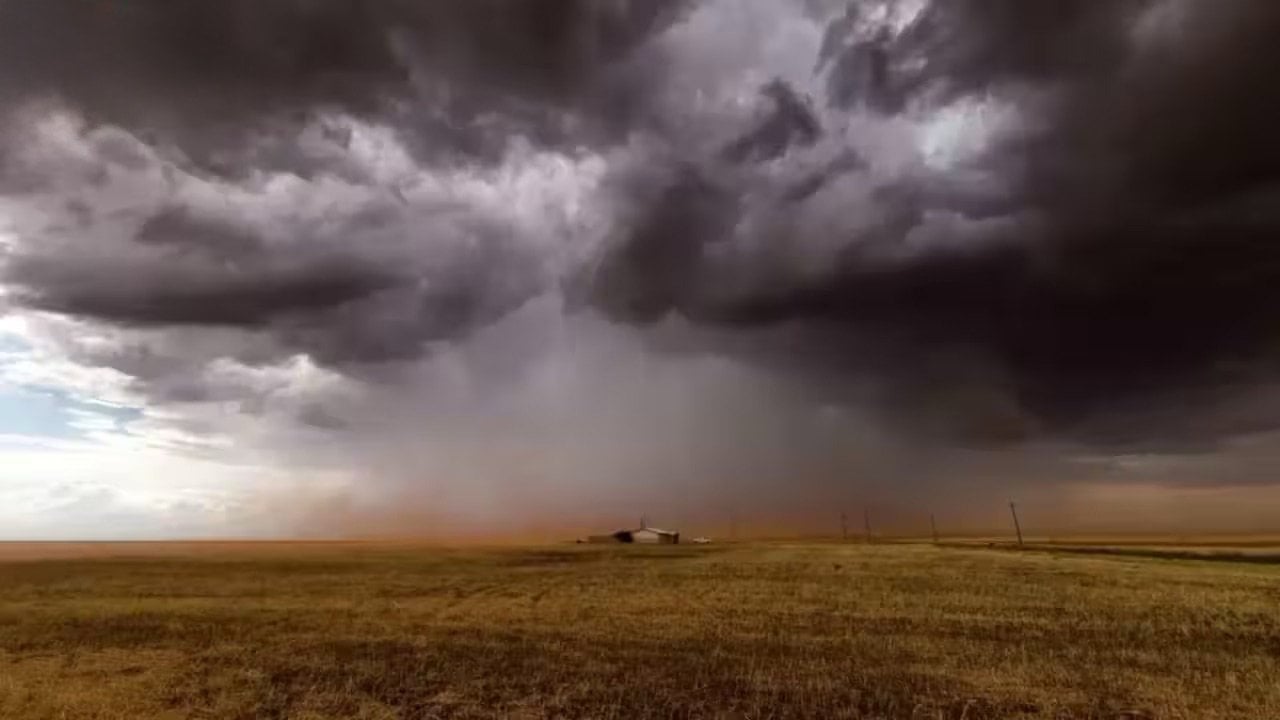
The Met Office has warned that the El Niño weather pattern developing over the Pacific Ocean is likely to be the strongest in living memory, with implications for global temperatures and the risk of extreme weather.

El Niño events can push up average temperatures worldwide and can alter rainfall and wind patterns across the globe. The Met Office said the effects of human-driven climate change, alongside El Niño, make it “very likely” that 2027 will be the warmest year on record.

There is already evidence that the changing climate patterns associated with El Niño are taking hold, including below-average monsoon rainfall in India and lower hurricane activity in the Atlantic.

The Met Office also warned that the UK could face a higher chance of a wet and stormy autumn as the event develops.

What Met Office Forecasts Suggest

The Met Office said sea-surface temperature anomalies across a key region of the Pacific are currently well above normal, with measurements showing levels more than 2C higher than average. Forecasts indicate the anomalies could rise beyond 3C later this year as El Niño approaches its peak.

The Met Office’s forecasts suggest this would be unprecedented in temperature records dating back to 1950, and could be the most intense event since the 19th century.

The warning comes as warmer conditions deeper in the ocean may add to the strength of the episode. In some places, temperatures at around 100m (330ft) in the Pacific are about 8C above average, providing additional heat that can help reinforce the event.

Prof Adam Scaife, head of long-range forecasting at the Met Office, said the signal in forecasts has been exceptionally strong, adding: “I have never seen an El Niño signal this intense in our forecasts.”

How El Niño Works

El Niño is a naturally occurring climate pattern that typically appears every two to seven years and lasts for around a year. It is linked to changes in Pacific trade winds, which usually blow from east to west.

During El Niño, these winds can weaken or reverse, allowing warm surface water to spread eastwards. As heat is released from the ocean into the atmosphere, global temperatures rise and rainfall patterns shift.

Scientists identify an El Niño when sea-surface temperatures in the central Pacific are at least 0.5C above average. Current measurements are well beyond that threshold, according to the Met Office.

In comments reported by the Met Office, Dr Zeke Hausfather, a climate scientist at Berkeley Earth, said the ongoing development over coming months has increased confidence the event could be record-setting. Other climate groups have projected an even stronger outcome, potentially reaching around 4C above average.

Hausfather said it is possible, though not certain, that the event could be among the most intense El Niños for centuries, adding that evidence for such comparisons becomes increasingly difficult further back in time.

Impacts Seen Around the World

El Niño does not affect every region in the same way, and impacts can differ from one event to the next. However, the Met Office said there are signs that influences are already being felt.

It pointed to suppressed southwest monsoon rainfall in South Asia, with 2026 running well below normal. It also said shifts in wind patterns in the Caribbean and tropical Atlantic can reduce hurricane activity, with only three named storms recorded so far this season.

In areas near the tropical Pacific, the Met Office said El Niño can contribute to drought and bushfire risk in Australia, while also increasing the threat of flooding in parts of Peru, Ecuador and the southern United States.

What It Could Mean for the UK

The Met Office said El Niño is not thought to be a major driver of the record-breaking heatwaves seen this summer. It suggested the pattern could have greater influence on weather later in the year.

It said the risk of wetter and stormier conditions could increase across north-west Europe during autumn and early winter, including the UK. It also noted that El Niño can affect the odds of cold weather later in winter, although the link is described as less clear.

2027 “Very Likely” Hottest Year

During El Niño, heat released from the ocean into the atmosphere can raise global average temperatures, particularly in the calendar year following the winter peak of the event. Dr Nick Dunstone, a climate scientist at the Met Office, said this makes 2027 “very likely” to replace 2024 as the warmest year on record.

Earlier this month, the UN Food and Agriculture Organization warned that El Niño could threaten tens of millions of people in at-risk countries with crisis-level acute food insecurity.


Join the discussion? Create account. orange.png


image.png

21 August 2026

User Feedback

Recommended Comments

GreasyFingers Platinum Member

GreasyFingers

Advanced Member

The Australian BOM are now predicting that will be the wettest El Nino on record. Tried to find the ABC link but not there now.

RPCVguy Advanced Member

RPCVguy

Advanced Member

An El Niño is a weather pattern event that is caused by the release of huge amounts of heat from a portion of the Pacific. The Jet Stream is affected in ways that are repeated event to event. That allows broad stroke projections of how temperatures and precipitation patterns will shift, hotter or cooler, wetter or drier.
The September 2026 to May 2027 global forecasts for this very strong El Niño can be accessed as updated on tropicaltidbits.com
The GIF files are updated as months get closer to happening, but these animations show what SHIFTS from historical monthly records are currently expected.

cfs-mon_01_T2ma_global_fh1-9.gif

The red color for Thailand in November and December doesn't mean it will be hot, only that it will be warmer than usual for those months. Warmer than usual though for April and May, .. that concerns me.

The precipitation shift shown here surprised m because El Niño events usually mean drier conditions for Thailand. That might be true for May 2027, but why is September looking wetter than usual?

cfs-mon_01_apcpna_month_global_fh1-9.gif

The Oracle Advanced Member

The Oracle

Member
(edited)

while more than 80% of cultivated land is outside formal irrigation areas and therefore depends heavily on rainfall. According to Krungthai COMPASS, usable water in central-region dams was already around 28% as of 6 June, below the 30% level considered critical. This matters enormously for the Central Plains, where rice production depends on reliable supplies of irrigation water.


I'm in what's know as the Upper Plains (I'm in Phetchabun, 270km by road north of Bangkok) on a multi-generational, multi-crop farm.
The lack of decent rain is worrying the family members that I know well. I think it was 2023 when they were this concerned. I recall it being over 40 ten days in a row and around 37-38 for the weeks around it. It killed off pretty much everything including many elderly. My two year-old date, fig. pomelo, durian, and mango trees just couldn't handle it. Even with night-time watering and daytime shading.
With the commercial crops, they didn't fare much better after the Wet hit, with lower yields and higher costs.

While some crops here are irrigated by a river and a canal that run through the property, a lot is reliant on rainfall as the article you quote suggests.
This year, the first seeding of about 200 rai - sewn at the "normal"time - had to be dug in and re-sewn due to lack of rainfall. The crops adjacent to the khlong are okay but are primarily corn and sugarcane on one side and about 500 rai of rice on the other. The problem there isn't water but getting it through irrigation system two or three miles away.
In the immediate area there are no bores, just dams, and the dams are low. Very low. The rice fields aren't waterlogged, and growth is slow. A neighbour's (not a family member) small holding of about five or six rai was sewn a little too early as well. It did grow some, but now is turning a slight yellow colour as there is no standing water so he may miss out on having any yield at all.

The el Niño forecast is going to be hard on smaller land holdings. While this family and contractors will make it through, such is their size, it'll be a drop in scale - especially for rice - but they'll be "okay". The corn is being picked as I type, the sugarcane height seems to be on a par with other years. I'm not across the forecasts for the tobacco and cassava as that is some cousin's crop and it's miles away.

In 2017 we had two full rice yields - an early planting just on Songkran due to early rains, a "normal one", and smaller, late harvest sometime in the very early part of 2018. From memory 2019 was horrific with low yield all around. I'm not positive, but the rice they grow for sale (Khao Pi - White Rice) takes three months while what they grow for themselves (Khao Hom Mali - Jasmine Rice) takes closer to four months. They don't grow Khao Neow (sticky rice) which takes, I think, even longer.


I'll post some photos. They aren't pretty considering the time of year. But I have seen the rice harvester guys out on the roads (on their flat-bed transports) over the last few days so some somebody, somewhere is ready to go.

I can only post photos when I "edit" this reply.

1000029405.jpg

1000029407.jpg

1000029408.jpg

Edited by The Oracle
Add photos.

kwilco Ruby Member

kwilco

Advanced Member
3 hours ago, The Oracle said:


I'm in what's know as the Upper Plains (I'm in Phetchabun, 270km by road north of Bangkok) on a multi-generational, multi-crop farm.
The lack of decent rain is worrying the family members that I know well. I think it was 2023 when they were this concerned. I recall it being over 40 ten days in a row and around 37-38 for the weeks around it. It killed off pretty much everything including many elderly. My two year-old date, fig. pomelo, durian, and mango trees just couldn't handle it. Even with night-time watering and daytime shading.
With the commercial crops, they didn't fare much better after the Wet hit, with lower yields and higher costs.

While some crops here are irrigated by a river and a canal that run through the property, a lot is reliant on rainfall as the article you quote suggests.
This year, the first seeding of about 200 rai - sewn at the "normal"time - had to be dug in and re-sewn due to lack of rainfall. The crops adjacent to the khlong are okay but are primarily corn and sugarcane on one side and about 500 rai of rice on the other. The problem there isn't water but getting it through irrigation system two or three miles away.
In the immediate area there are no bores, just dams, and the dams are low. Very low. The rice fields aren't waterlogged, and growth is slow. A neighbour's (not a family member) small holding of about five or six rai was sewn a little too early as well. It did grow some, but now is turning a slight yellow colour as there is no standing water so he may miss out on having any yield at all.

The el Niño forecast is going to be hard on smaller land holdings. While this family and contractors will make it through, such is their size, it'll be a drop in scale - especially for rice - but they'll be "okay". The corn is being picked as I type, the sugarcane height seems to be on a par with other years. I'm not across the forecasts for the tobacco and cassava as that is some cousin's crop and it's miles away.

In 2017 we had two full rice yields - an early planting just on Songkran due to early rains, a "normal one", and smaller, late harvest sometime in the very early part of 2018. From memory 2019 was horrific with low yield all around. I'm not positive, but the rice they grow for sale (Khao Pi - White Rice) takes three months while what they grow for themselves (Khao Hom Mali - Jasmine Rice) takes closer to four months. They don't grow Khao Neow (sticky rice) which takes, I think, even longer.


I'll post some photos. They aren't pretty considering the time of year. But I have seen the rice harvester guys out on the roads (on their flat-bed transports) over the last few days so some somebody, somewhere is ready to go.

I can only post photos when I "edit" this reply.

1000029405.jpg

1000029407.jpg

1000029408.jpg

The previous El Niño period occurred in 2023–2024, which was a strong event that followed a multiyear La Niña.... this is allegedly the strongest since 1877

kwilco Ruby Member

kwilco

Advanced Member
3 hours ago, FinChin67 said:

Here we go again... El Niño is a naturalrecurring Pacific cycle. We’ve had strong ones before (1982–83, 1997–98, 2015–16) and the world didn’t end.

4 hours ago, FinChin67 said:

Here we go again... El Niño is a naturalrecurring Pacific cycle. We’ve had strong ones before (1982–83, 1997–98, 2015–16) and the world didn’t end.

This one may well be strong and will temporarily push global temperatures up a bit and that’s what El Niño does. It also shifts rainfall patterns, which is why some places get drier and others wetter.

What’s new is the familiar media framing: every natural oscillation is now sold as “record,” “extreme,” and “amplified by climate change,” complete with worst-case food-security and 50 °C “feels-like” scenarios. The forecasts are probabilistic and not certain and the practical effects will vary widely by region.

Thailand may see a tougher dry season and the Atlantic may see fewer hurricanes. That’s weather and not catastrophe but hey, need to sell clicks.

Copied from elsewhere: We’ve managed previous strong El Niños without the current level of alarm. The sensible response is water management, crop planning and normal preparedness not treating a temporary ocean-atmosphere oscillation as existential drama.

This is the difficult part specially here in Thailand: water management, crop planning (not so much) and normal preparedness.

There is a fundamental flaw in your argument: “El Niño is natural” does not mean “its consequences are nothing to worry about.” - And the opening line — “Here we go again” — rather misses the point. –

Yes, El Niño is a natural recurring Pacific phenomenon. Nobody disputes that. The question is how exceptional this particular event may be and what happens when an unusually strong natural event occurs on top of a much warmer planet.

There is a reason scientists are using terms such as “super El Niño” and comparing this developing event with 1877–78.

The 1877–78 El Niño is regarded as one of the most catastrophic El Niño events in the historical record. It was associated with devastating droughts, famine and disease across parts of Asia, Africa and the Americas. In Brazil alone, the WMO records around 500,000 deaths from drought and smallpox during the 1877–78 drought.

So when meteorologists say the current event could rival the 1877–78 El Niño, they are not saying “the world is going to end.” They are identifying an exceptionally powerful historical benchmark.

This isn't simply some newspaper inventing a scary headline. The Met Office's Adam Scaife has described the developing event as potentially the biggest El Niño for more than a century, with Pacific Sea temperatures potentially exceeding 3°C above normal; something he describes as unheard of in modern climate records.

That brings us to another important point you seem to be overlooking.

Previous El Niños occurred in a cooler world. - The fact that humanity survived 1982–83, 1997–98 and 2015–16 does not demonstrate that their impacts were trivial, nor does it tell us that a similarly strong event occurring against today's warmer background will have identical consequences. Natural variability and climate change aren't competing explanations. They operate together.

El Niño temporarily redistributes heat and changes atmospheric circulation and rainfall patterns. Human-caused warming raises the baseline on which that natural variability operates. The result isn't that climate change “causes” El Niño; it is that the impacts of El Niño occur in a climate that is already substantially warmer than it was during those earlier events.

And the historical consequences were hardly trivial. - The strong 2015–16 El Niño was associated with drought, food insecurity and extreme weather across numerous regions.

The WMO has noted that severe droughts associated with that El Niño contributed to an increase in global hunger. More recently, the 2023–24 El Niño contributed to severe drought in southern Africa, where cereal yields were substantially below the five-year average.

So “the world didn't end” is a particularly weak argument.

A climate event doesn't have to end civilisation to cause enormous suffering, economic damage, food insecurity, displacement and deaths.

Then there is your claim that this is merely “weather”. - That's another misleading simplification. El Niño is a natural climate oscillation, but its consequences include changes in drought, flooding, agricultural production, water availability, wildfire risk and food security. The WMO itself describes the current developing El Niño as a factor that can increase the risk of extreme weather and stresses the importance of early preparation.

And finally, you say:

“The sensible response is water management, crop planning and normal preparedness.”

Exactly.

That isn't an argument against taking the forecast seriously. It is an argument for taking it seriously. If a potentially exceptional El Niño could produce serious drought and water stress, then governments should be planning for that possibility before reservoirs are empty and crops have failed.

This is particularly relevant to Thailand.

Saying “Thailand may have a tougher dry season” and then dismissing concern about it as clickbait is contradictory. The whole point of seasonal forecasting is to give governments, farmers, water authorities and communities advance warning so they can prepare.

You don't have to believe every worst-case forecast will happen, you simply have to understand risk. A 30% probability of a serious consequence isn't a reason to ignore it. It is a reason to prepare proportionately.

So no, nobody sensible is claiming:

“El Niño is happening, therefore catastrophe is inevitable.” - The actual argument is:

El Niño is natural. This particular El Niño may be exceptionally strong. Scientists are comparing it with one of the most extreme El Niño events in the historical record. Its impacts will vary enormously by region. Climate change has raised the background temperature. Forecasts have uncertainty. And therefore sensible governments should prepare for the risks rather than dismissing them as media hysteria.

Calling that “alarmism” isn't scepticism.

It's simply substituting cynicism for risk assessment.

The Oracle Advanced Member

The Oracle

Member
1 hour ago, kwilco said:

The previous El Niño period occurred in 2023–2024, which was a strong event that followed a multiyear La Niña.... this is allegedly the strongest since 1877

Yeah, it was a particularly nasty "Hot". Over 45 degrees a few times - that's the actual temperature not a combination of temp and RH. Fifty-plus in the sun. Thrity-three to thirty-five overnight. The poor fridge would freeze over, overcompensating for the heat of its shell.
The seven-rai banana plantation also met its maker. Even with a 120m X 20m x 5m dam, once that dropped below the shallow root level of the bananas, that was it. Just 300+ brown stalks.

FinChin67 Gold Member

FinChin67

Advanced Member
1 hour ago, kwilco said:

There is a fundamental flaw in your argument: “El Niño is natural” does not mean “its consequences are nothing to worry about.” - And the opening line — “Here we go again” — rather misses the point. –

Yes, El Niño is a natural recurring Pacific phenomenon. Nobody disputes that. The question is how exceptional this particular event may be and what happens when an unusually strong natural event occurs on top of a much warmer planet.

There is a reason scientists are using terms such as “super El Niño” and comparing this developing event with 1877–78.

The 1877–78 El Niño is regarded as one of the most catastrophic El Niño events in the historical record. It was associated with devastating droughts, famine and disease across parts of Asia, Africa and the Americas. In Brazil alone, the WMO records around 500,000 deaths from drought and smallpox during the 1877–78 drought.

So when meteorologists say the current event could rival the 1877–78 El Niño, they are not saying “the world is going to end.” They are identifying an exceptionally powerful historical benchmark.

This isn't simply some newspaper inventing a scary headline. The Met Office's Adam Scaife has described the developing event as potentially the biggest El Niño for more than a century, with Pacific Sea temperatures potentially exceeding 3°C above normal; something he describes as unheard of in modern climate records.

That brings us to another important point you seem to be overlooking.

Previous El Niños occurred in a cooler world. - The fact that humanity survived 1982–83, 1997–98 and 2015–16 does not demonstrate that their impacts were trivial, nor does it tell us that a similarly strong event occurring against today's warmer background will have identical consequences. Natural variability and climate change aren't competing explanations. They operate together.

El Niño temporarily redistributes heat and changes atmospheric circulation and rainfall patterns. Human-caused warming raises the baseline on which that natural variability operates. The result isn't that climate change “causes” El Niño; it is that the impacts of El Niño occur in a climate that is already substantially warmer than it was during those earlier events.

And the historical consequences were hardly trivial. - The strong 2015–16 El Niño was associated with drought, food insecurity and extreme weather across numerous regions.

The WMO has noted that severe droughts associated with that El Niño contributed to an increase in global hunger. More recently, the 2023–24 El Niño contributed to severe drought in southern Africa, where cereal yields were substantially below the five-year average.

So “the world didn't end” is a particularly weak argument.

A climate event doesn't have to end civilisation to cause enormous suffering, economic damage, food insecurity, displacement and deaths.

Then there is your claim that this is merely “weather”. - That's another misleading simplification. El Niño is a natural climate oscillation, but its consequences include changes in drought, flooding, agricultural production, water availability, wildfire risk and food security. The WMO itself describes the current developing El Niño as a factor that can increase the risk of extreme weather and stresses the importance of early preparation.

And finally, you say:

“The sensible response is water management, crop planning and normal preparedness.”

Exactly.

That isn't an argument against taking the forecast seriously. It is an argument for taking it seriously. If a potentially exceptional El Niño could produce serious drought and water stress, then governments should be planning for that possibility before reservoirs are empty and crops have failed.

This is particularly relevant to Thailand.

Saying “Thailand may have a tougher dry season” and then dismissing concern about it as clickbait is contradictory. The whole point of seasonal forecasting is to give governments, farmers, water authorities and communities advance warning so they can prepare.

You don't have to believe every worst-case forecast will happen, you simply have to understand risk. A 30% probability of a serious consequence isn't a reason to ignore it. It is a reason to prepare proportionately.

So no, nobody sensible is claiming:

“El Niño is happening, therefore catastrophe is inevitable.” - The actual argument is:

El Niño is natural. This particular El Niño may be exceptionally strong. Scientists are comparing it with one of the most extreme El Niño events in the historical record. Its impacts will vary enormously by region. Climate change has raised the background temperature. Forecasts have uncertainty. And therefore sensible governments should prepare for the risks rather than dismissing them as media hysteria.

Calling that “alarmism” isn't scepticism.

It's simply substituting cynicism for risk assessment.

We supposed to be under water already if we believed every doomsday scenario. What did Al Gore said ages ago? Even Greta turned to "Free Palestine" activist as climate scare did not bring money in anymore.

Climate scam is the easiest way to make money from taxpayers. Almost as good as"humanitarian aid".

We will see in 10 years again where we are. I'm not concerned. Neither is China or India.

kwilco Ruby Member

kwilco

Advanced Member
1 hour ago, FinChin67 said:

We supposed to be under water already if we believed every doomsday scenario. What did Al Gore said ages ago? Even Greta turned to "Free Palestine" activist as climate scare did not bring money in anymore.

Climate scam is the easiest way to make money from taxpayers. Almost as good as"humanitarian aid".

We will see in 10 years again where we are. I'm not concerned. Neither is China or India.

No we aren't – you are just conveniently ignoring the facts to help you be a denier. You might start by looking at sea levels and then where is getting flooded.

kwilco Ruby Member

kwilco

Advanced Member
1 hour ago, FinChin67 said:

Climate scam is the easiest way to make money from taxpayers. Almost as good as"humanitarian aid".

Unlike those poor oil companies, eh?

RPCVguy Advanced Member

RPCVguy

Advanced Member

2024 was a modest sized release of ocean heat, sitting atop a warmer world.
James Hansen posted an update on Friday starting with this image, then commenting:
"Our preferred metric, the heat anomaly in the upper 300 meters of the Equatorial Pacific Ocean (Figs. 1, 2), already exceeds the 1997-98 super El Nino. Note in Fig. 1 that the 2023-24 El Nino, which drove extreme global warming, was only a moderate El Nino."
It is a short read, but significant in its details.
https://jimehansen.substack.com/p/super-duper-el-nino-and-the-bigger

https://substackcdn.com/image/fetch/$s_!6pJG!,w_1456,c_limit,f_auto,q_auto:good,fl_progressive:steep/https%3A%2F%2Fsubstack-post-media.s3.amazonaws.com%2Fpublic%2Fimages%2F76950ad6-04e5-479e-839a-c53787a003b8_634x154.png

Heat and shifts in rainfall during past strong El Niño events caused severe drops in crop yields in multiple grain crops around the world. That event, combined with human folly, caused famines and political unrest. The 1877–1878 El Niño event led to the death of 50 million people.
https://en.wikipedia.org/wiki/1877%E2%80%931878_El_Ni%C3%B1o_event
This year's version of human folly includes wars and lower fertilizer availability due to the blockage of shipping through the straits of Hormuz. The rich will buy the food there is, the poor will suffer.

Heat in 2024 in Thailand was bad. Some places may have had hotter days or weeks in other years, but for for the year, much of Thailand averaged the hottest year on record. Considering that happened with what Hansen sees as a moderate release of heat, 2027 has the potential to harm many.
See https://berkeleyearth.org/global-temperature-report-for-2024/https://berkeley-earth-wp-offload.storage.googleapis.com/wp-content/uploads/2025/01/03231031/2024TemperatureRankMap-1024x601.png

FinChin67 Gold Member

FinChin67

Advanced Member
3 hours ago, kwilco said:

No we aren't – you are just conveniently ignoring the facts to help you be a denier. You might start by looking at sea levels and then where is getting flooded.

not interested watching paint dry

FinChin67 Gold Member

FinChin67

Advanced Member
3 hours ago, kwilco said:

Unlike those poor oil companies, eh?

Buy a Tesla and do your part.

FinChin67 Gold Member

FinChin67

Advanced Member
10 minutes ago, amexpat said:

I am so glad we have brilliant board members, most of whom are middle school graduates to refute those 'scientists' with their fancy PHD's and decades of experience in geology, physics, climate sci, etc.

Yes.

Paul Ehrlich (Stanford biologist) — Repeated 1960s–1970s predictions of massive famines and hundreds of millions starving in the 1970s–1980s due to population and environmental limits. Food production rose instead (Green Revolution).

Kenneth Watt (ecologist) — 1970 Earth Day claim that the world would be about 4°C colder by 1990 and 11°C colder by 2000 if trends continued.

Various 1970s scientists — Multiple researchers and media reports around 1970 predicted a coming ice age or significant cooling by 2000. Warming occurred.

James Hansen (NASA) — 1988 congressional testimony scenarios; the high-emission pathway overpredicted subsequent warming. Later specific comments on rapid Greenland melt and sea-level implications have not matched the timelines suggested.

Wieslaw Maslowski (U.S. Navy researcher) and related extrapolations — Early 2000s claims (widely amplified) of possible ice-free Arctic summers within a decade or by ~2013–2016. September Arctic sea ice has declined but has not disappeared.

Individual researchers / media-amplified claims — Multiple statements around 2007–2009 projecting ice-free Arctic summers by 2013–2018 (e.g., some linear extrapolations of volume loss). Still not occurred.

Mostafa Tolba (UN Environment Programme executive director, scientific background) — 1982 warning of environmental catastrophe “as complete, as irreversible as any nuclear holocaust” by 2000.

1989 UN environment official — Prediction that entire nations could be wiped off the Earth by rising seas if extreme action was not taken by 2000.

Early high-end sea-level or ice-sheet collapse statements — Some individual scientists in the 2000s suggested rapid multi-meter rises or irreversible West Antarctic collapse on short timelines that have not materialized at the rates claimed.

Extreme scenario reliance — Heavy use of RCP8.5 / SSP5-8.5 (“business as usual”) pathways in research and communication for years; these required implausibly high coal use and emissions trajectories that are now widely regarded as unrealistic.

I left celebrities and other crap ( Al Gore, Prince Charles, John Kerry, Greta Thunberg, Leonardo DiCaprio, UK Prime Minister Gordon Brown etc.) out for now...

Donate here and save earth:
https://thegretathunbergfoundation.org/

kwilco Ruby Member

kwilco

Advanced Member
(edited)
1 hour ago, FinChin67 said:

not interested watching paint dry

So how do you feel you have anything of value to say on this topic? Surely you've just excluded yourself?

Edited by kwilco

FinChin67 Gold Member

FinChin67

Advanced Member
20 minutes ago, kwilco said:

So how do you feel you have anything of value to say on this topic? Surely you've just excluded yourself?

I can admit being wrong unlike many forum climate "scientists".

I admit I gave you wrong advise buying a Tesla. Seems it's not right thing to do.

Priorexpat Silver Member

Priorexpat

Advanced Member

After the dry year in So. Cal, as well as very little snow in the Rockies last year, bring on the moisture.

kwilco Ruby Member

kwilco

Advanced Member
29 minutes ago, FinChin67 said:

I can admit being wrong unlike many forum climate "scientists".

I admit I gave you wrong advise buying a Tesla. Seems it's not right thing to do.

Yet again you prove my point—have you not got anything better to do, or does it annoy you when the grown-ups ignore you?

Roadsternut Platinum Member

Roadsternut

Advanced Member
13 hours ago, FinChin67 said:

We supposed to be under water already if we believed every doomsday scenario. What did Al Gore said ages ago? Even Greta turned to "Free Palestine" activist as climate scare did not bring money in anymore.

Climate scam is the easiest way to make money from taxpayers. Almost as good as"humanitarian aid".

We will see in 10 years again where we are. I'm not concerned. Neither is China or India.

You can dislike Al Gore, Greta Thunberg, climate activists, taxpayer-funded subsidies and international aid without any of that constituting evidence that climate change is a “scam.” A bad prediction, an exaggerated headline or an activist changing political priorities does not alter temperature records, ocean heat or rising sea levels, while China and India continuing to burn coal is hardly proof that they think climate change is imaginary as they are both simultaneously investing heavily in renewable energy because they clearly recognise the problem, even if their response is inadequate.

The real debate is not whether every politician or activist has ever been wrong, but whether the underlying science has broadly held up—and after decades of observation, dismissing it all with “we'll see in ten years” increasingly seems to be that you are ignoring the evidence already seen.

RPCVguy Advanced Member

RPCVguy

Advanced Member

The momentum of climate change is building. The more momentum, the bigger the storms, floods, droughts and heat waves. The warnings by climate scientists hope to stop the cause before the momentum builds too much. (Think of a car on a hill with brakes off - easier to stop early than after it gets going. Denying the brake is released doesn't help, acting to reset the brake or block the wheels might help.)

The Earth is warming in ways that upset timing of life in ecosystems, but still slower than humans feel - easy enough to deny. Denial became easier when adopted by a political party which became the case in the USA sometime between Nixon (NOAA & EPA) and Reagan (remove the solar panels). Science begun in the 1800s showed CO2 acts as an insulator, letting visible spectrum light in, but absorbing and hindering the infra red (heat) energy leaving. Accepting the facts and implications for USA Republicans is to face ridicule by friends.

Is the planet warming? Yes. Here are four views, same day of the year, same 1991 - 2020 baseline to compare against.
https://climatereanalyzer.org/clim/daily_maps/?dm_id=world-wt3&wm_id=sstanom&year=2026


FourElNiñoSeas.jpg

The adding of CO2 insulation continues, humans demand the energy and materials this carbon has enabled, We've not shown any meaningful shifts in our behavior.Oil consumption CO2 released 1988 Extended to 2022.jpg


Slow as it seems to humans, the rate of warming the past 100 years is 10x faster than past mass extinction events. So far under 2ºC, but 3º - 4ºC by 2100 is projected. Those attempting to warn are attempting to avoid the results that are logically ahead.

ExtinctionWarmingRates.jpg

Woke to Sounds Gold Member

Woke to Sounds

Advanced Member

It's called geo engineering, and China's been doing it for decades, along with all the usual players.

Climate change is the front, the fall guy, to curb your lifestyle and nail your feet to the floor.

The scam is on you, and you're willing to pay for it?

Come on people, don't be dumb.

💯% on the money

FinChin67 Gold Member

FinChin67

Advanced Member
52 minutes ago, RPCVguy said:

The momentum of climate change is building. The more momentum, the bigger the storms, floods, droughts and heat waves. The warnings by climate scientists hope to stop the cause before the momentum builds too much. (Think of a car on a hill with brakes off - easier to stop early than after it gets going. Denying the brake is released doesn't help, acting to reset the brake or block the wheels might help.)

The Earth is warming in ways that upset timing of life in ecosystems, but still slower than humans feel - easy enough to deny. Denial became easier when adopted by a political party which became the case in the USA sometime between Nixon (NOAA & EPA) and Reagan (remove the solar panels). Science begun in the 1800s showed CO2 acts as an insulator, letting visible spectrum light in, but absorbing and hindering the infra red (heat) energy leaving. Accepting the facts and implications for USA Republicans is to face ridicule by friends.

Is the planet warming? Yes. Here are four views, same day of the year, same 1991 - 2020 baseline to compare against.
https://climatereanalyzer.org/clim/daily_maps/?dm_id=world-wt3&wm_id=sstanom&year=2026


FourElNiñoSeas.jpg

The adding of CO2 insulation continues, humans demand the energy and materials this carbon has enabled, We've not shown any meaningful shifts in our behavior.Oil consumption CO2 released 1988 Extended to 2022.jpg


Slow as it seems to humans, the rate of warming the past 100 years is 10x faster than past mass extinction events. So far under 2ºC, but 3º - 4ºC by 2100 is projected. Those attempting to warn are attempting to avoid the results that are logically ahead.

ExtinctionWarmingRates.jpg

Pure fearmongering and activism and this gives it away:

The Earth is warming in ways that upset timing of life in ecosystems, but still slower than humans feel - easy enough to deny. Denial became easier when adopted by a political party which became the case in the USA sometime between Nixon (NOAA & EPA) and Reagan (remove the solar panels). Science begun in the 1800s showed CO2 acts as an insulator, letting visible spectrum light in, but absorbing and hindering the infra red (heat) energy leaving. Accepting the facts and implications for USA Republicans is to face ridicule by friends.

Roadsternut Platinum Member

Roadsternut

Advanced Member
8 hours ago, FinChin67 said:

We’ll both find out eventually.

I’m not the one losing sleep over it, and I’m definitely not the one running around screaming that the sky is falling.

India and China are laughing all the way to the bank while most of the West (the US being the current exception) keeps tying its own hands and gutting its industries.

Everything else you’re pushing is pure speculation - or, more accurately, the kind of theatrical fearmongering that usually ends with claims we’re about to start eating babies.

The only thing that has been 100% guaranteed so far is a steady stream of new taxes and fees justified by that same speculation. And those will keep going up.

scientists.jpg

death toll.jpg

That response is a rather transparent retreat.

When your list of supposedly devastating examples of failed climate science was challenged point by point, you abandoned the argument completely and switched to “we'll both find out eventually,” “I'm not losing sleep,” China and India, taxes, and fearmongering. In other words, you cannot defend the evidence you originally presented, so you have changed the subject.

Nobody is claiming that you should lose sleep, run around screaming, or believe that we are about to start eating babies. That is a childish caricature invented because it is easier to argue against than what was actually said. Was your compilation a valid argument against climate science? It wasn't.

You lumped together population catastrophism, isolated predictions, media headlines, political statements, conditional scenarios and actual scientific projections, then pretended that errors in any of them somehow invalidate the physical evidence for anthropogenic warming.

Your accompanying images are no better. A headline saying “1,100 eminent scientists declare there is no climate emergency” is not scientific evidence; it is an appeal to a petition, and “eminent” is apparently supposed to do the intellectual work that examining the signatories' relevant expertise, the wording of the declaration and the actual scientific literature would otherwise require.

The graph showing climate-related deaths declining from the 1920s is even more obviously irrelevant to the argument you think you are making. Of course mortality has fallen enormously over the last century: wealth, sanitation, medicine, infrastructure, forecasting, disaster preparedness and the ability to protect populations from extreme weather have all improved dramatically.

That does not demonstrate that the climate has not changed. It demonstrates that human societies have become better at preventing people from dying when exposed to environmental hazards.

By that logic, falling deaths from infectious diseases would prove that viruses do not exist. A certain loon on the forum might enjoy that in his padded cell.

And posting a video of Alex Antic criticising climate policy, amplified by an influencer account, contributes precisely nothing to the scientific question. A politician expressing an opinion is not evidence that atmospheric physics has been overturned. If you believe otherwise, presumably a politician making a speech in favour of climate action would constitute scientific proof that you are wrong. In fact, there is an additional irony here. Alex Antic was among those publicly promoting the same World Climate Declaration behind your “1,100 eminent scientists” headline. So your supposedly separate pieces of evidence are not independent confirmation arriving from different directions. You have a declaration produced by a campaigning organisation, a politician promoting that declaration, and social-media accounts redistributing the politician's message. That is an echo chamber, not corroboration.

Then there is the inevitable “China and India are laughing all the way to the bank” diversion. Fine: that is an argument about economic and industrial policy, not evidence against climate change. You are perfectly entitled to argue that Western governments are pursuing inefficient, excessively expensive or self-defeating climate policies. You can argue about carbon taxes, subsidies, energy security, deindustrialisation, nuclear power, Chinese manufacturing advantages and whether particular net-zero policies represent good value. Those are legitimate arguments. But they are completely separate from the question of whether greenhouse gases warm the planet and whether the observed warming, rising ocean heat content, rising sea levels and Arctic sea-ice decline are occurring.

In fact, your latest response neatly illustrates the problem with your original post. You started by presenting yourself as though you had assembled a serious evidential case against climate science. The moment that case was examined, you retreated into vague rhetoric: we'll see, I'm not worried, China, taxes, fearmongering. None of which answers a single substantive criticism.

Your “1,100 scientists” image is an advocacy declaration presented as though it were a scientific result. Your mortality graph confuses declining vulnerability with the absence of climatic change. Your Alex Antic video is a politician expressing a political opinion, redistributed by an influencer, and in this case linked to promotion of the very same declaration you are already presenting as independent evidence.

So, rather than three independent sources converging on the same conclusion, what you have actually posted is a campaign declaration, a context-free infographic and a politician's opinion being amplified through social media.

That is precisely the problem I accused you of in the first place: you are collecting things that look persuasive to someone who already agrees with you, rather than examining what each item actually establishes. A headline is not a scientific paper. A petition is not a meta-analysis. A declining death graph is not evidence that greenhouse gases do not warm the atmosphere. And a politician's video reposted by an influencer is not a substitute for evidence at all.

If you want to debate climate policy, then let's debate climate policy. Nuclear versus renewables. Carbon pricing. Deindustrialisation. Energy security. The distribution of costs between developed and developing countries. Whether particular net-zero targets are realistic or economically sensible. Those are serious arguments.

But if you want to claim that climate science itself has been debunked, you will need something substantially better than “1,100 eminent scientists,” a graph with no proper context, and Alex Antic on a social-media video.

FinChin67 Gold Member

FinChin67

Advanced Member
1 minute ago, Roadsternut said:

That response is a rather transparent retreat.

When your list of supposedly devastating examples of failed climate science was challenged point by point, you abandoned the argument completely and switched to “we'll both find out eventually,” “I'm not losing sleep,” China and India, taxes, and fearmongering. In other words, you cannot defend the evidence you originally presented, so you have changed the subject.

Nobody is claiming that you should lose sleep, run around screaming, or believe that we are about to start eating babies. That is a childish caricature invented because it is easier to argue against than what was actually said. Was your compilation a valid argument against climate science? It wasn't.

You lumped together population catastrophism, isolated predictions, media headlines, political statements, conditional scenarios and actual scientific projections, then pretended that errors in any of them somehow invalidate the physical evidence for anthropogenic warming.

Your accompanying images are no better. A headline saying “1,100 eminent scientists declare there is no climate emergency” is not scientific evidence; it is an appeal to a petition, and “eminent” is apparently supposed to do the intellectual work that examining the signatories' relevant expertise, the wording of the declaration and the actual scientific literature would otherwise require.

The graph showing climate-related deaths declining from the 1920s is even more obviously irrelevant to the argument you think you are making. Of course mortality has fallen enormously over the last century: wealth, sanitation, medicine, infrastructure, forecasting, disaster preparedness and the ability to protect populations from extreme weather have all improved dramatically.

That does not demonstrate that the climate has not changed. It demonstrates that human societies have become better at preventing people from dying when exposed to environmental hazards.

By that logic, falling deaths from infectious diseases would prove that viruses do not exist. A certain loon on the forum might enjoy that in his padded cell.

And posting a video of Alex Antic criticising climate policy, amplified by an influencer account, contributes precisely nothing to the scientific question. A politician expressing an opinion is not evidence that atmospheric physics has been overturned. If you believe otherwise, presumably a politician making a speech in favour of climate action would constitute scientific proof that you are wrong. In fact, there is an additional irony here. Alex Antic was among those publicly promoting the same World Climate Declaration behind your “1,100 eminent scientists” headline. So your supposedly separate pieces of evidence are not independent confirmation arriving from different directions. You have a declaration produced by a campaigning organisation, a politician promoting that declaration, and social-media accounts redistributing the politician's message. That is an echo chamber, not corroboration.

Then there is the inevitable “China and India are laughing all the way to the bank” diversion. Fine: that is an argument about economic and industrial policy, not evidence against climate change. You are perfectly entitled to argue that Western governments are pursuing inefficient, excessively expensive or self-defeating climate policies. You can argue about carbon taxes, subsidies, energy security, deindustrialisation, nuclear power, Chinese manufacturing advantages and whether particular net-zero policies represent good value. Those are legitimate arguments. But they are completely separate from the question of whether greenhouse gases warm the planet and whether the observed warming, rising ocean heat content, rising sea levels and Arctic sea-ice decline are occurring.

In fact, your latest response neatly illustrates the problem with your original post. You started by presenting yourself as though you had assembled a serious evidential case against climate science. The moment that case was examined, you retreated into vague rhetoric: we'll see, I'm not worried, China, taxes, fearmongering. None of which answers a single substantive criticism.

Your “1,100 scientists” image is an advocacy declaration presented as though it were a scientific result. Your mortality graph confuses declining vulnerability with the absence of climatic change. Your Alex Antic video is a politician expressing a political opinion, redistributed by an influencer, and in this case linked to promotion of the very same declaration you are already presenting as independent evidence.

So, rather than three independent sources converging on the same conclusion, what you have actually posted is a campaign declaration, a context-free infographic and a politician's opinion being amplified through social media.

That is precisely the problem I accused you of in the first place: you are collecting things that look persuasive to someone who already agrees with you, rather than examining what each item actually establishes. A headline is not a scientific paper. A petition is not a meta-analysis. A declining death graph is not evidence that greenhouse gases do not warm the atmosphere. And a politician's video reposted by an influencer is not a substitute for evidence at all.

If you want to debate climate policy, then let's debate climate policy. Nuclear versus renewables. Carbon pricing. Deindustrialisation. Energy security. The distribution of costs between developed and developing countries. Whether particular net-zero targets are realistic or economically sensible. Those are serious arguments.

But if you want to claim that climate science itself has been debunked, you will need something substantially better than “1,100 eminent scientists,” a graph with no proper context, and Alex Antic on a social-media video.

Maybe you should consider what your side suggested, eating babies. Thats how serious (lunatic) your side is. Luckily I can live a life with no worry about climate scares and fearmongering.

You can keep on writing about the green scam and keep your ”win” if that makes your little ego feel good 👍🏻

Create an account or sign in to comment

Account

Navigation

Search

Search

Configure browser push notifications

Chrome (Android)
  1. Tap the lock icon next to the address bar.
  2. Tap Permissions → Notifications.
  3. Adjust your preference.
Chrome (Desktop)
  1. Click the padlock icon in the address bar.
  2. Select Site settings.
  3. Find Notifications and adjust your preference.
