



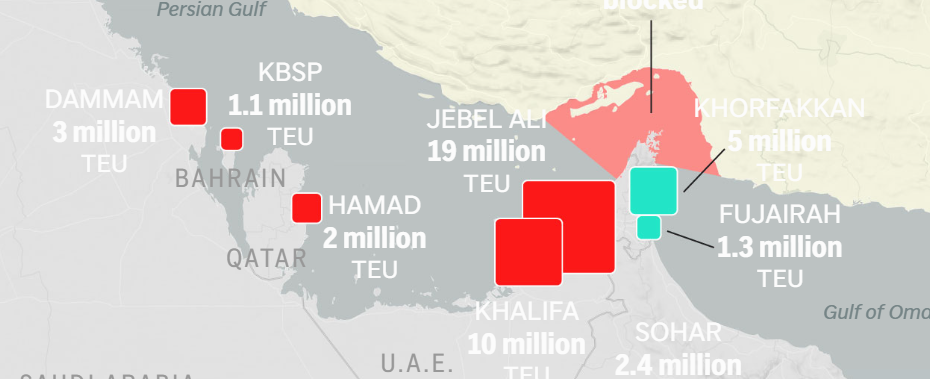

Vital Oil Route Effectively Closed
The war involving Iran, Israel and the United States has effectively shut down shipping through the Strait of Hormuz, one of the world’s most important energy corridors.
Get the latest headlines in your email 
The narrow waterway off Iran’s coast connects the Persian Gulf to global markets and carries a significant share of the world’s oil and liquefied natural gas.
With traffic through the passage now severely disrupted, gasoline prices have begun rising worldwide as energy supplies tighten.
Governments are already discussing plans to reopen the strait once the fighting subsides.
International Plans to Restore Shipping
In Europe, Emmanuel Macron is leading an international effort to prepare for the reopening of the shipping route.
The France president has proposed deploying naval forces to escort oil tankers and cargo vessels through the strait once conditions allow.
The idea is to ensure that energy shipments and global trade can resume safely after hostilities ease.
However, military analysts warn that attempting such an operation while fighting continues would be extremely dangerous.
Retired French naval officer Pascal Ausseur said sending ships through the strait during active conflict would leave them highly exposed.
“In today’s context, sending warships or civilian vessels into the Strait of Hormuz would be suicidal,” he said.
Even if a ceasefire were agreed, he added, the situation would remain risky.
Lessons From Red Sea Operations
Naval forces from several countries already have experience protecting commercial shipping in hostile waters.
Warships from France, United States and United Kingdom have previously escorted merchant vessels through attacks in the Red Sea carried out by Iran-backed Houthi militants from Yemen.
During those operations, warships used a combination of machine guns, naval cannons and advanced air-defence systems to intercept incoming missiles and drones.
For example, the French frigate French frigate Alsace shot down three ballistic missiles while escorting a container ship in 2024.
Its commander at the time, Jérôme Henry, said repeated attacks placed intense pressure on crews and left sailors with little rest.
Iran Presents Greater Threat
Experts warn that reopening the Strait of Hormuz could prove far more difficult than protecting shipping in the Red Sea.
Iran possesses a significantly more advanced military than the Houthi forces that targeted vessels in recent years.
According to assessments by the U.S. Defense Intelligence Agency, Iran has anti-ship cruise missiles capable of reaching vessels throughout the strait and nearby waters.
The country also has access to drones, naval mines, long-range missiles and fast attack craft that could be used to target shipping.
Retired French vice admiral Michel Olhagaray said the level of threat would require a much larger and more sophisticated military presence to counter.
Before commercial vessels could safely return, he said, many of Iran’s offensive systems along the coastline would likely need to be neutralised.
No Quick Solution
Even with military escorts and surveillance, analysts say reopening the strait safely would require extensive monitoring and intelligence gathering.
Navies would need to maintain constant patrols and carefully track potential threats before allowing tankers to resume transit.
Until hostilities decline significantly, Olhagaray warned, shipping through the Strait of Hormuz will remain extremely hazardouss
“That will not happen at all — not at all — in the near future,” he said.
Join the discussion? 
Already a member? 
 Adapted by ASEAN Now · Source · 11.03 2026