



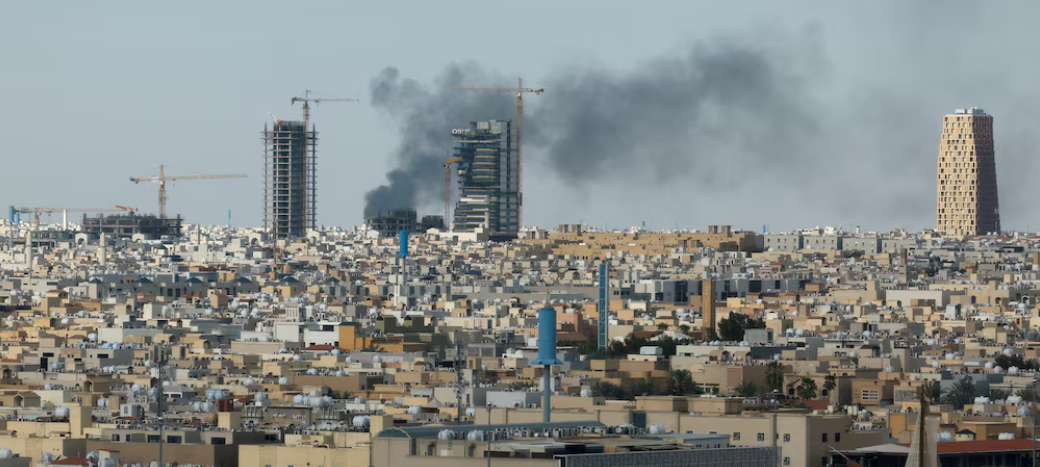

Saudi Arabia Issues Warning to Iran
Saudi Arabia has warned Iran that continued attacks on the kingdom or its energy infrastructure could force Riyadh to respond militarily, according to several sources familiar with the discussions.
Saudi officials have said they prefer a diplomatic solution to the escalating conflict between Iran and the United States, but warned that repeated strikes could change the kingdom’s position.
Get the latest headlines in your email 
The message was reportedly delivered during a call between Saudi Foreign Minister Prince Faisal bin Farhan and his Iranian counterpart Abbas Araqchi earlier this week.
Sources said Riyadh made clear that if attacks on Saudi territory or energy facilities continue, the kingdom could permit US forces to use bases in Saudi Arabia for military operations against Iran.
Iran Signals Possible De-Escalation
The warning came shortly before Iranian President Masoud Pezeshkian delivered a speech apologising to Gulf neighbours affected by Iranian strikes.
Pezeshkian said Iran’s temporary leadership council had approved suspending attacks on nearby countries unless those nations launched attacks against Iran first.
“I personally apologise to neighbouring countries that were affected by Iran’s actions,” he said, suggesting Tehran was attempting to calm tensions across the region.
Iranian officials have also emphasised that their military strikes were aimed primarily at US and allied military assets rather than Gulf states themselves.
Gulf States Under Fire
Over the past week, several Gulf nations have reported being targeted by drones and missiles launched by Iran.
Countries including the United Arab Emirates, Kuwait, Qatar, Bahrain and Saudi Arabia have all faced incoming attacks during the escalation.
The regional crisis intensified after the death of Iran’s Supreme Leader Ali Khamenei on the first day of the war. Iran responded with missile strikes targeting Israel and Gulf states that host US military bases.
Meanwhile, Israel has carried out strikes against the Iran-backed militant group Hezbollah in Lebanon.
The widening conflict has raised fears that the fighting could spread across the Middle East if diplomatic efforts fail.
Mixed Signals From Iran’s Leadership
Despite Pezeshkian’s apology, messages from Iran’s military leadership have been less conciliatory.
The armed forces command known as Khatam al‑Anbiya Central Headquarters said US and Israeli bases across the region would remain legitimate targets.
In a statement, the command said Iran respected the sovereignty of neighbouring states but warned that American and Israeli military installations on land, sea and air would face “powerful and heavy” strikes.
The statement highlighted possible divisions within Iran’s leadership about whether to escalate or limit the conflict.
Diplomatic Contacts Continue
Saudi Arabia and Iran have maintained diplomatic communication throughout the crisis, including through Iran’s ambassador in Riyadh.
The two countries had spent recent years repairing relations after decades of regional rivalry. However, the latest wave of drone and missile attacks has strained that fragile rapprochement.
Iranian sources said Tehran told Saudi officials that its strikes were aimed at US interests rather than Gulf countries themselves.
One Iranian official also reportedly urged Gulf states to close American military bases and stop sharing intelligence with Washington, claiming such cooperation was helping the US carry out attacks on Iran.
Risk of Wider Regional War
The escalating exchanges highlight the delicate balance Gulf states are trying to maintain as the conflict intensifies.
Saudi Arabia has so far avoided allowing its territory, airspace or waters to be used for direct attacks on Iran. But officials have warned that stance could change if Iranian strikes continue.
For now, Riyadh appears to be pushing for de-escalation while keeping the option of retaliation firmly on the table.
Join the discussion? 
Already a member? 
 Adapted by ASEAN Now · Source · 07.03 2026