



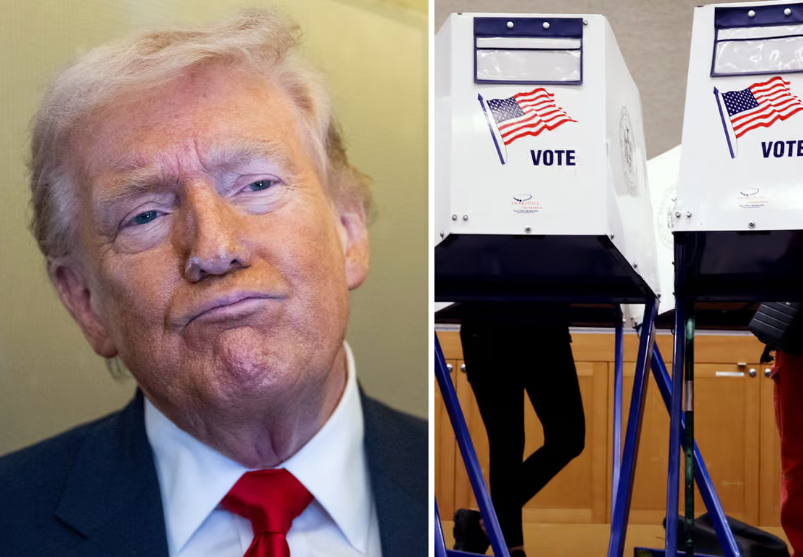

Trump Pushes Congress on Voting Bill
Donald Trump has threatened to refuse signing new legislation unless Congress approves a strict voting reform bill requiring proof of citizenship to vote.
Speaking at a Republican event in Miami, the US president renewed his push for the Safeguard American Voter Eligibility Act, often called the SAVE Act or “Save America Act”.
“All voters must show proof of citizenship in order to vote,” Trump said. “No mail-in ballots, except for illness, disability, military or travel.”
Get the latest headlines in your email 
The president said the bill should take priority over other legislative business, repeating a warning he posted on the social media platform Truth Social.
“MUST GO TO THE FRONT OF THE LINE,” he wrote, adding that he would not sign other bills until the measure is passed in its strongest form.
Trump also claimed that stricter voting rules could dramatically shift the political landscape.
“If this passes, Democrats probably won’t win an election for 50 years,” he said.
What the Proposed Law Would Do
The legislation has circulated in Congress for more than two years and aims to tighten requirements for voter registration and ballot casting in federal elections.
Among its main provisions are mandatory documentary proof of US citizenship — such as a passport or birth certificate — in order to register to vote, as well as photo identification requirements when casting ballots.
The bill would also require states to ensure only US citizens are on voter rolls and allow private individuals to sue election officials if someone is registered without proper documentation.
Another provision directs states to share voter registration lists with the Department of Homeland Security so citizenship can be verified.
Supporters say the measures are necessary to prevent voter fraud and ensure confidence in elections.
However, critics argue that the requirements would make registration far more complicated and risk excluding legitimate voters.
Bill Faces Difficult Path in Senate
The legislation has already passed the United States House of Representatives earlier this year, but its prospects in the United States Senate remain uncertain.
Because of the chamber’s filibuster rules, the measure would likely require 60 votes to move forward, meaning significant bipartisan support would be needed.
Some Republicans have called for the filibuster to be lifted in order to pass the bill.
Ken Paxton, a Republican candidate in a heated Senate race in Texas, said he would consider dropping out of the contest if Senate leaders agreed to remove the procedural barrier to passing the legislation.
Critics Warn of Voting Barriers
Voting rights groups argue the proposed law could disenfranchise millions of Americans.
Many citizens do not have readily available proof of citizenship. Only about half of Americans hold a valid passport, while other documents — such as birth certificates — may not match current legal names.
Advocates say this could particularly affect married women who changed their surnames and voters whose documentation has not been updated.
The Brennan Center for Justice said the measure could disproportionately impact younger voters and minority communities.
Research also suggests voting by non-citizens is extremely rare. The Bipartisan Policy Center has said there is no evidence that such cases occur frequently enough to affect election outcomes.
Still, Trump has repeatedly raised concerns about non-citizens participating in US elections and has suggested the federal government should take greater control over how elections are run — a responsibility traditionally handled by states and local authorities.
Join the discussion? 
Already a member? 
 Adapted by ASEAN Now · Source · 09.03 2026