



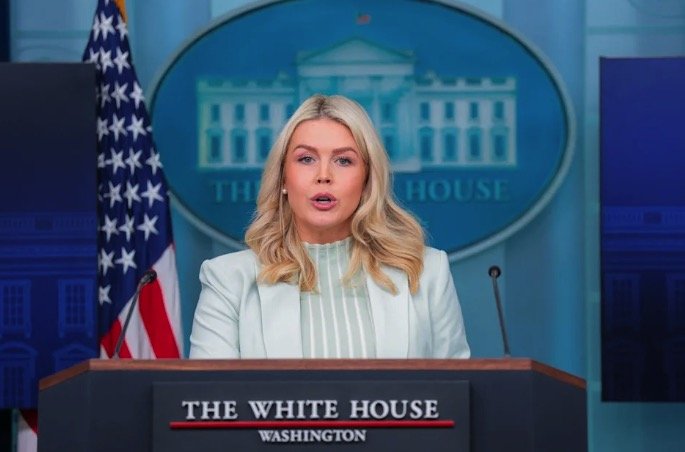

The administration of Donald Trump warned that the United States could intensify military action against Iran if negotiations aimed at ending the conflict fail.
Get today's headlines by email 
At a briefing on Wednesday, White House press secretary Karoline Leavitt said the president prefers a diplomatic outcome but is prepared to escalate if Tehran refuses to reach an agreement.
“The president’s preference is always peace,” Leavitt said. “But if Iran fails to accept the reality of the current moment … President Trump will ensure they are hit harder than they have ever been hit before.”
She added that Trump is ready to “unleash hell” if Iran misjudges the situation or refuses to cooperate in negotiations.
Talks and disputed proposal
According to sources cited by US media, Washington has sent a 15-point peace proposal to Iran through officials in Pakistan.
Iranian state media reported that Tehran rejected the proposal, and Iranian officials have publicly denied that direct negotiations are taking place.
Leavitt maintained that talks are continuing and described them as productive, but declined to provide details about the content of the discussions, the Iranian negotiators involved or whether in-person meetings are imminent.
Earlier this week, Trump said he had delayed major attacks on Iranian energy infrastructure for five days following what he described as constructive contacts with Tehran.
The administration says the pause offers Iran an opportunity to abandon its nuclear ambitions and stop threatening the United States and its allies.
Officials in both Pakistan and Egypt have indicated they could host talks aimed at ending the conflict. A meeting in Islamabad has been discussed but has not been confirmed by Washington.
Trump said negotiations involve several senior figures, including Vice President JD Vance and Secretary of State Marco Rubio. Other participants include White House envoy Steve Witkoff and Trump adviser Jared Kushner.
Leavitt described Vance as a central member of the administration’s national security team who has closely supported the president during the negotiations.
Oil gesture and military pressure
Trump also claimed Iran recently offered the United States a “very big present” linked to oil shipments moving through the Strait of Hormuz.
The president did not specify what he meant by the remark. Reports suggested it might involve an oil tanker carrying about two million barrels that successfully transited the strait, though the White House declined to confirm the details.
Leavitt said the president would address the issue at an appropriate time.
Trump indicated the gesture signaled to him that negotiations were progressing and that Iran was dealing in good faith. He also said many senior Iranian leaders had been killed in US and Israeli strikes, claiming the country’s leadership structure had already changed.
Asked whether Washington is satisfied with Iran’s current leadership, Leavitt said it was too early to make that assessment.
Military operations continue
Despite the diplomatic contacts, the United States continues to reinforce its military presence in the region.
Thousands of additional Marines are being deployed to the Middle East, while the Pentagon has requested roughly $200 billion in supplemental funding related to the operation.
Leavitt declined to comment on potential deployment of units from the 82nd Airborne Division, referring questions to the Defense Department.
She said the administration aims to keep military options available while negotiations continue.
According to the White House, the campaign — known as Operation Epic Fury — remains active and is progressing faster than initially planned.
Officials said the mission was expected to last four to six weeks and that US forces are approaching their core objectives.
Join the discussion? 
Already a member? 
 Adapted by ASEAN Now. Source 26 March 2026