




Washington Weighs High-Risk Operation
The administration of Donald Trump is reportedly considering deploying special forces into Iran to secure the country’s stockpile of highly enriched uranium (HEU), according to reports from US and Israeli officials.
Experts say Iran currently possesses about 440 kilograms of highly enriched uranium — enough material to produce at least 10 nuclear warheads if further refined to weapons-grade levels.
Get the latest headlines in your email 
Preventing Tehran from developing a nuclear weapon has been one of the central objectives cited by the US president in the ongoing war.
US secretary of state Marco Rubio told Congress that the material would need to be physically removed to eliminate the threat.
“People are going to have to go and get it,” Rubio said, suggesting that some form of direct intervention may ultimately be required.
However, he did not provide details on how such an operation might be conducted.
Special Forces Operation Under Discussion
Reports indicate that officials in Washington and Israel have discussed the possibility of deploying special forces to seize or secure Iran’s uranium reserves.
The mission could potentially involve troops from either or both countries, though no final decision has been announced.
Military and nuclear experts say the operation would be extremely complex and dangerous.
Retrieving nuclear material inside a hostile country during an active conflict would pose major logistical and security challenges.
Facilities containing the uranium are heavily protected and, in some cases, built deep underground to withstand attacks.
Uranium Stored in Underground Facilities
According to Rafael Grossi, director general of the International Atomic Energy Agency (IAEA), a significant portion of Iran’s stockpile is stored in underground tunnels.
Grossi said inspectors believe around 200 kilograms of highly enriched uranium are located at a nuclear complex near the city of Isfahan.
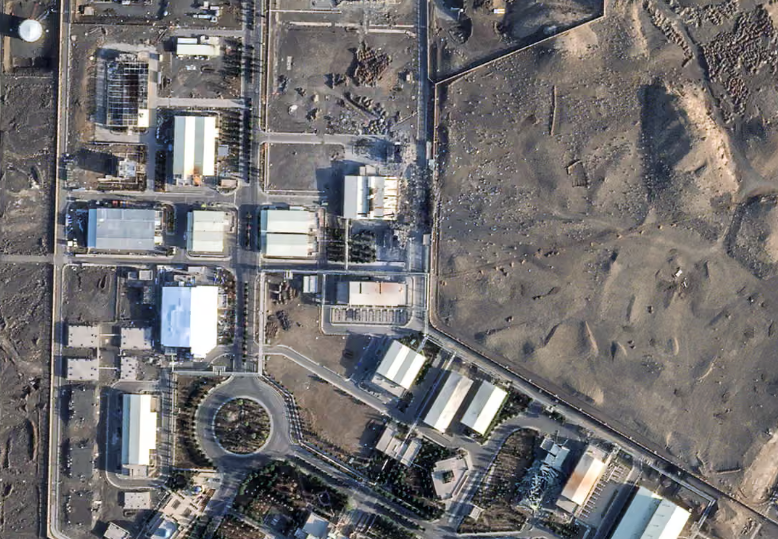
Additional material is believed to be held at another facility in Natanz, one of Iran’s most important nuclear sites.
Iran has recently constructed a new deeply fortified complex at Natanz known as Kuh-e Kolang Gaz La, which Western analysts often refer to as “Pickaxe Mountain”.
The site is built deep inside a mountain, making it far more difficult to reach through airstrikes or conventional military attacks.
High Risks and Strategic Challenges
Experts warn that any attempt to seize the uranium could carry significant risks.
Such an operation would likely require troops to enter heavily defended facilities while managing radioactive materials safely.
There is also the risk that Iran could attempt to move or hide the uranium if it believes foreign forces are preparing to capture it.
In addition, securing and transporting the material out of Iran would require careful handling to avoid environmental or nuclear safety hazards.
Analysts say the potential mission highlights how difficult it may be to fully eliminate Iran’s nuclear capabilities through military action alone.
Key Objective of the War
The fate of Iran’s enriched uranium has become one of the most critical strategic questions in the conflict.
US officials argue that leaving the material inside Iran could allow the country to rebuild its nuclear programme even if many of its facilities are destroyed.
For that reason, removing the stockpile entirely is being discussed as a possible final step to ensure Tehran cannot produce a nuclear weapon.
Whether such a high-risk operation will actually take place remains unclear.
But the discussions underline the growing urgency surrounding Iran’s nuclear programme as the war continues.
Join the discussion? 
Already a member? 
 Adapted by ASEAN Now · Source · 10.03 2026
-
 1
1