



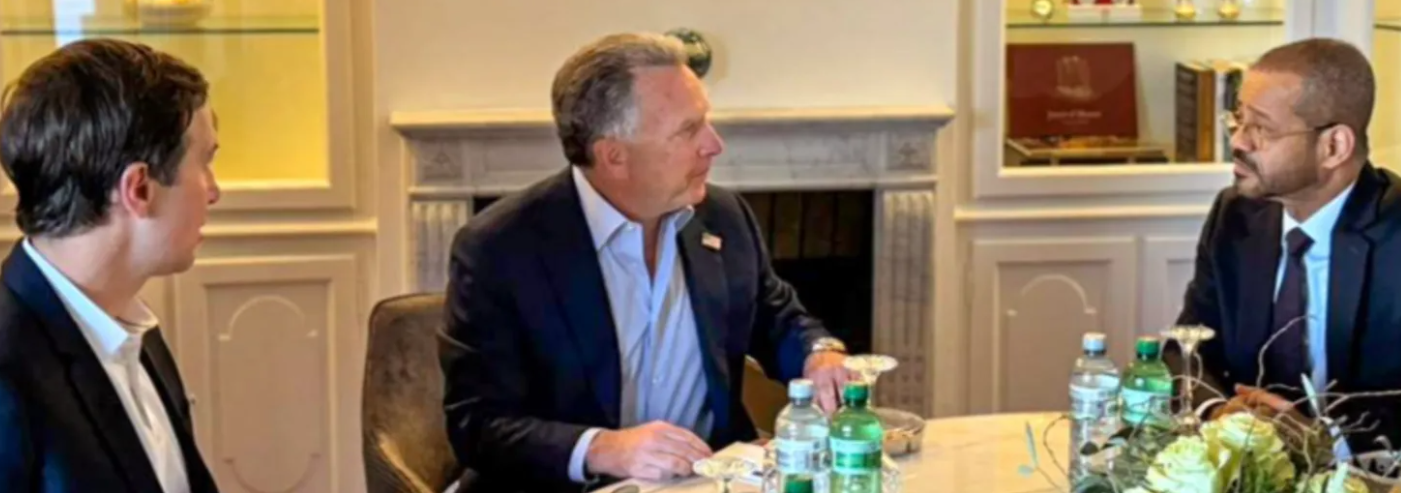

High-stakes talks between the United States and Iran over Tehran’s nuclear programme ended on Thursday without a deal. The White House is weighing possible military action, which would mark its largest intervention in the Middle East in decades.
Get the latest headlines in your email 
Iranian Foreign Minister Abbas Araghchi said “good progress” was made during the negotiations. Omani mediators said technical-level talks would resume next week in Vienna.
There was no clear evidence that the two sides moved closer on key issues. The main disputes remain Iran’s right to enrich uranium and the future of its highly enriched uranium stockpile.
The indirect talks were held in Geneva in two sessions. The US delegation was led by President Donald Trump’s special envoy to the Middle East, Steve Witkoff.
Reports said the US team was disappointed with Iran’s proposals. The second session was brief, which observers viewed as a negative sign.
Araghchi described the meeting as one of the most intense and longest rounds of negotiations. He confirmed that further contacts would take place within a week.
The United States is seeking permanent guarantees on uranium enrichment and strict inspection measures. Washington wants assurances that Iran will never develop a nuclear weapon. Tehran denies seeking such weapons.
US Secretary of State Marco Rubio said Iran’s refusal to discuss its ballistic missile programme is a concern. Iran’s foreign ministry spokesperson, Esmaeil Baghaei, accused the US of inconsistency in its demands.
The talks are taking place as the US increases its military presence in the region. The buildup includes two aircraft carrier strike groups, attack aircraft, refuelling planes and submarines armed with Tomahawk missiles.
A central issue is whether Iran will be allowed to continue domestic uranium enrichment. The US accepted limited enrichment in the 2015 nuclear deal, but current discussions focus on tighter restrictions.
Trump said last June that Iran’s main nuclear facilities at Fordow, Natanz and Isfahan were destroyed by US airstrikes. Tehran has refused to allow the International Atomic Energy Agency to inspect the sites to assess the damage.
Another major dispute concerns Iran’s uranium stockpile. The IAEA says Iran has not disclosed the location of 400kg of uranium enriched to 60% purity, which is close to weapons grade. The agency also estimated in May last year that Iran possessed about 8,000kg enriched to 20% or below.
Iran has proposed down-blending the highly enriched uranium under UN supervision. Other options include exporting it to Russia or the US. Sending the entire 8,000kg stockpile abroad would be a major concession for Tehran, even if it led to sanctions relief.
An Iranian official in Geneva rejected what he described as demands for permanent zero enrichment, dismantling facilities and transferring uranium stocks to the US.
Trump faces domestic pressure over the negotiations. Democrats have called for a congressional vote before any military action. An Associated Press poll found that 56% of Americans do not trust Trump to make the right decision on using military force abroad.
IAEA Director General Rafael Grossi is expected to play a key role in verifying any future agreement. Iran has also stated it will not negotiate on non-nuclear issues, including its ballistic missile programme and support for regional groups.
Rubio said Iran’s missile range could eventually threaten US territory. He added that Iran’s shorter-range missiles could target US bases in the region.
Join the discussion? 
Already a member? 
 Adapted by ASEAN Now · Source · 26 Feb 2026