



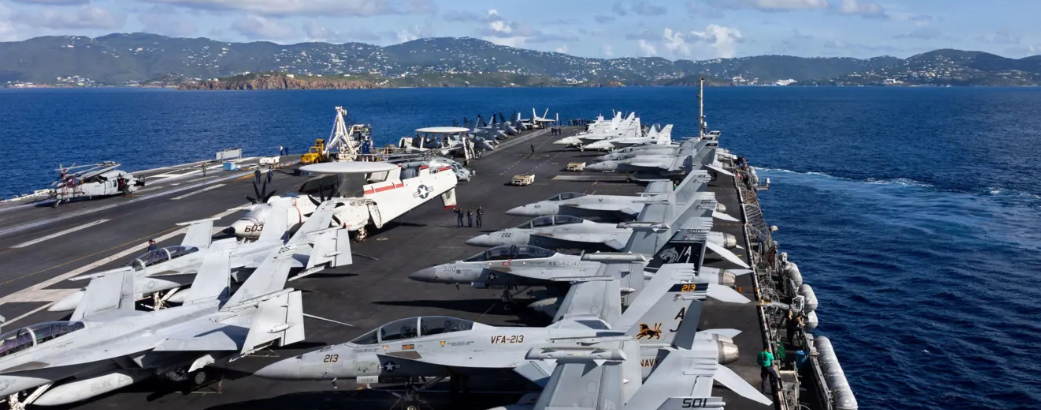

As tensions between the US and Iran escalate, the deployment of significant US military assets, including the USS Abraham Lincoln carrier strike group, signals more than diplomatic maneuvering. The movement of another carrier, the USS Gerald R Ford, towards the Middle East, along with other military reinforcements, suggests that Washington is preparing a range of military options.
Get the latest headlines in your email 
These deployments could serve as diplomatic leverage but also indicate that indirect negotiations between Tehran and Washington might be at an impasse, potentially leading to military action if neither side shifts its stance.
The critical question arises: why does Iran, facing the world’s most powerful military and its strongest regional ally, remain defiant? The answer lies in the US's stringent conditions for negotiations, which Tehran views as tantamount to surrender.
From Tehran's perspective, the US demands—including ceasing uranium enrichment, limiting missile range, and halting support for regional groups—are not just negotiation points but core components of Iran’s security framework. These elements are fundamental to what Iran terms its "Axis of Resistance," a network aimed at deterring threats and exerting regional influence.
Iran’s ballistic missile program compensates for its outdated air force and limited access to advanced military technology. The nuclear program, although officially peaceful, is considered crucial for its deterrent value. Mastery of uranium enrichment grants Iran a "threshold capability" that offers strategic leverage, as it signifies potential capacity for weaponization pending a political decision.
Iran’s leadership, notably Supreme Leader Ali Khamenei, views accepting US conditions as potentially more dangerous than enduring a limited conflict. While a military confrontation, however damaging, may be survivable, yielding its strategic deterrence would fundamentally weaken Iran's defense posture and regional stature.
Yet, the risks of military engagement are multifaceted. A US campaign would likely target Iran's leadership and security apparatus, impacting the Islamic Revolutionary Guard Corps and potentially destabilizing domestic control. The resulting power vacuum from key leadership losses could destabilize the country further, especially amid lingering public discontent following violent crackdowns on protests.
For Washington, while the military might exists to meet objectives, war is inherently unpredictable. Miscalculations could escalate conflict beyond initial plans, destabilizing the region and creating unforeseen challenges. Previous conflicts have demonstrated how quickly wars can spiral, complicating goals and management.
Internally, Iran faces significant economic pressures from ongoing sanctions, inflation, and economic stagnation. Escalating tensions further strain the economy, risking public backlash if livelihoods are threatened. Tehran’s defiance serves to project strength locally while signaling resilience to international pressures, although this stance potentially limits diplomatic flexibility.
Ayatollah Khamenei confronts stark choices between the "worst" option, strategic surrender, and what may appear as the "best of the worst," engaging in limited military confrontation. Publicly, Iran seems to lean towards the latter, despite the profound dangers involved.
Both nations face substantial uncertainties with risks of miscalculation. A conflict could redefine regional stability and power dynamics, affecting global interests. As the situation develops, the stakes remain high for Tehran and Washington, encapsulating a complex interplay of geopolitical aspirations and the harsh realities of potential warfare.
Key Takeaways
Rising US-Iran tensions with military assets deployed in the Gulf.
Iran resists US demands, seeing them as threats to its core security.
The potential for conflict introduces significant regional and global risks.
Join the discussion? 
Already a member? 
 Adapted by ASEAN Now · Source · 19 Feb 2026