



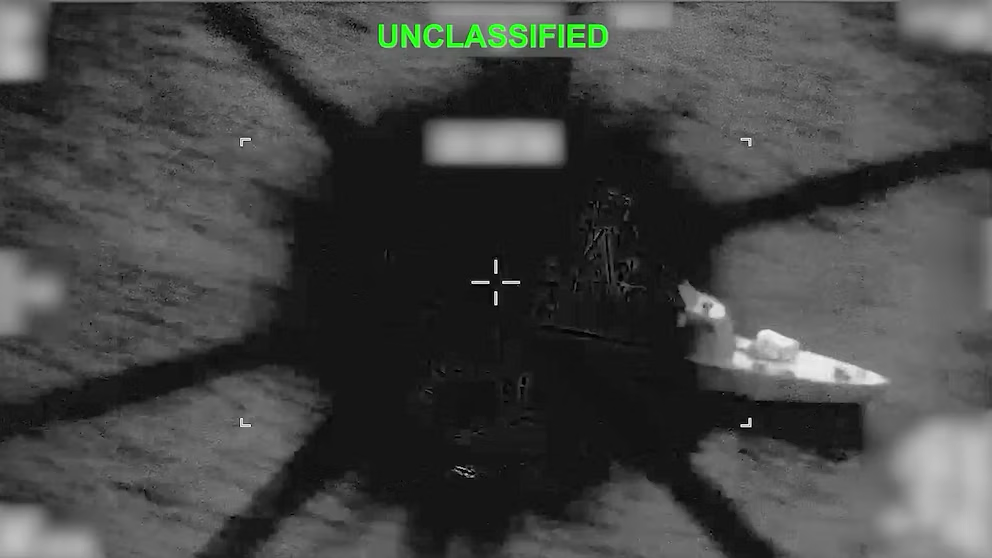

The United States has intensified military operations targeting Iranian vessels suspected of laying naval mines in the Strait of Hormuz, as efforts continue to counter a blockade that has disrupted global energy supplies. Speaking at the Pentagon, General Dan Caine said US forces had destroyed 44 Iranian boats believed to be involved in deploying mines. The vessels are seen as a key part of Tehran’s strategy to restrict movement through the narrow waterway, a vital route for around a fifth of the world’s oil shipments.
Get today's headlines by email 
US military officials say the use of sea mines has become a central concern, preventing commercial ships from safely navigating the strait.
Air Force A-10 aircraft, commonly known as Warthogs, have been deployed to target fast-moving boats that could be used to lay mines. These aircraft are designed for close-range support and are capable of attacking small maritime targets.
Focus on mine threats
President Donald Trump has indicated that US naval forces could escort commercial vessels through the strait if required. However, military experts caution that such convoy operations cannot begin until the mine threat is significantly reduced.
Limited naval resources
The US Navy’s capacity to conduct mine-clearing operations has been constrained. Two vessels equipped with counter-mine systems, the USS Tulsa and the USS Santa Barbara, are currently in Singapore for maintenance, while the location of a third ship has not been disclosed.
The US no longer operates dedicated mine-sweeping ships, after its last specialised vessels were decommissioned in 2025. This has increased reliance on multi-role ships and allied support for any large-scale demining effort.
Military analysts describe naval mines as a relatively cheap but highly effective “asymmetric” weapon, capable of being deployed from small or disguised vessels. Retired Admiral James Foggo said even boats resembling fishing vessels could be used to lay mines undetected.
Broader military response
In addition to targeting vessels, US forces have carried out strikes along Iran’s coastline, aimed at neutralising missile and drone systems that could threaten shipping in the region.
Officials have also suggested that US Marines being deployed to the Middle East could take part in limited ground operations to target coastal infrastructure linked to these threats.
General Caine said military planners are considering a range of options to secure the strait, with final decisions resting with the president.
Allies cautious on involvement
While Washington has called on allies to assist in safeguarding the waterway, there has been reluctance among European countries to become directly involved, citing the ongoing conflict between the US, Iran and Israel.
During a meeting with Japanese Prime Minister Sanae Takaichi, Trump said the US could manage the situation independently but added that it would be appropriate for partners to contribute.
Takaichi later emphasised the importance of keeping the strait open, while noting that Japan’s actions would be limited by its legal framework.
The continued disruption to shipping has contributed to rising global energy prices, with markets reacting sharply to uncertainty over supplies moving through the strategically critical passage.
Join the discussion? 
Already a member? 
 Adapted by ASEAN Now. Source 20 March 2026