
oldcpu
Advanced Member
-
Joined
-
Last visited
Everything posted by oldcpu
-
For the OP, I agree with DrJack54 here. Your 20k THB/month (even with your girlfriends 35k THB/month) is not a lot of money. Your standard of living for the two of you on that amount, will not be great. Times will be a bit rough - i hope you are prepared for that and I hope your relationship with your girlfriend is real .. real solid and can withstand the hard times. Because if she leaves you and goes with another man, you will be up the creek without a paddle. What was noted re: medical expenses, is very true. Note a short 3 week or so travel insurance will not cover one 365 days per year. Insurance company's representatives are not stupid and they will not provide compensation for one who lives 365 days in Thailand, but only purchased tourist coverage for a few weeks. Do not fool yourself here. I have a friend (who passed away) who in essence adopted the approach you did. When he passed away he left behind a ~$15,000 US$ equivalent bill in a Thai hospital. Fortunately, for his girlfriend who was hit with the medical bill (and fortunately for the Thai hospital) his family who lived overseas in North America, paid his bill after his death (including any funeral costs). He had very little money. Take a hard look perhaps at your current lifestyle not living in Thailand (and if you have friends/relatives who can help you if you are not living in Thailand) , and compare that to what it will be like living the life of many of the Thai locals who are not blessed with a higher income. I do recommend you give this a hard think.
-
This is not 100% accurate ... I believe the TRD officer you quote was talking generalities. MANY state pensions, from people who are not receiving government civil servant pensions nor receiving military pensions, but who have a state pension from their non-Thai country government, ARE taxable in Thailand, dependent on the DTA. For example, German state pensions from the German government (ie pension for those who were not civil servants/ex-military) are TAXABLE in Thailand. I will let the Australians who actually dug thru their Thai-Australia DTA comment, but I believe the same could be true for Australia, where state pensions (ie pension for those who were not civil servants/ex-military) are TAXABLE in Thailand. All pensions provided by Governments are not excluded Thai taxation. OK? All are not. it is more nuanced than that. Yes, pensions of Civil Servant/Military from countries with DTAs with Thailand are all, to the best of my knowledge, exempt Thal taxation. But state pensions, from governments of some countries (where these are not civil servant/military) are taxable in a number of cases by Thailand. Not all. But some. Also - another point noting that TRD official was likely talking in generalities, but not about all circumstances. Thai citizens, who (say via having dual citizenship) are in MANY cases, are taxed by Thailand on their foreign government civil servant pensions. That is agreed / signed upon and easily available to confirm just by examining a number of country DTAs with Thailand. And another point re "all governments" ... Further, for example pensions of EU government civil servants (not EU country governments, but EU government - there is a difference !! ) are taxable by Thailand. Nominally they have no DTA to protect them from Thai taxation on their pension.
-
I have dual citizenship ... Canadian and that of a European country. i worked for many years as a 'civil servant' (in essence) for a European government organisation (not for an EU country government, rather i worked for a government organisation in Europe run by European counties). While i worked there one of the perks was I received was/is Global Health insurance. I paid 50% (out of my salary) and the government organisation paid 50%. When I retired , with a pension from that organization, another perk was i could maintain my global health insurance (no matter where in the world i lived - albeit USA/Canada coverage was limited) and further, the government organisation would pay 50% or more of my Health insurance costs, where regardless of my age, the amount i paid was capped at a certain amount (currently ~200 euros/month that I pay). Even better (for me) the European organisation share is that they pay more than ~200 euros/month ... and as i grow older they will continue to have to pay more, but myself not so much more - my amount is already capped ). The Health insurance covers both me and my younger Thai wife. When I pass away, she gets my European organisation pension, and IMHO if she is smart, she will keep that subsidized health insurance (she is allowed to). Its a bargain. However as noted in other posts, when I applied for the LTR visa, I did not know how to get the letter to prove the Health Insurance to BoI, so I health insured. Self insuring with cash in an interest bearing bank account was not a big issue to me. Not in the slightest. i type that noting the VAST amount of my finances are in equities outside of Thailand . Saying what i posted before, but in different terms, BoI have their own definition of 'wealthy' and while some might meet most of BoI's requirements, the financial (?) pain they have to meet all of BoI's requirements, might end up being that such individuals are not sufficiently wealthy by BoIs definition. Yes. Its unfortunate. As the saying goes, this is Thailand. For those not getting the LTR, fortunately that is not an issue, as the Type-O is a great visa (as long as the type-O visa remains with no health insurance requirement and as long as it remains with no big annual cost increases, over the next decade (where I say the next decade as I am thinking in terms of an equivalent to duration to the 10-year LTR visa)).
-
The future when it comes to Thailand and government plans are hard to predict. I think all expats, who have lived in Thailand for many years, will know of many plans the Thai government officials talked about, where there was talk something was going to happen, ... government officials said so,... and ? and ? and nothing transpired. There is a saying in Canada, when it comes to ice-hockey games, in predicting who is going to win the ice-hockey game. The saying is "Its not over until the fat lady sings". Sort of a funny saying, with a history dating to a fabulous singer, who would often sing at the end of an ice hockey game in a certain city. But i diverge. In my case i am not making predictions whether global taxation will or will not, other than state its not a sure thing either way. I will predict thou, it will NOT happen overnight. That means there is a window NOW for any on the LTR, who have money outside of Thailand , money that will other wise be taxed if remitted if not on an LTR, if the money was brought into Thailand now (on an LTR-WP/WGC) it won't be taxed. There is a pretty much assured window for the next 2 to 3 years and maybe more, to remit money to Thailand and not have it taxed if on those LTR visas. Further, IF any global taxation system is implemented, and assuming it affects all expats alike, regardless of the Visa, the LTR is still a great visa. Superior, for those of us with the money, to get the visa instead of staying with the Type-O/OA route. who wants to do 90-day reports all the time (per type-O/OA visa)? Not me. who wants to have to sweat through immigration for 1 day per year to do an annual re-proving of one's finances per type-O/OA visa? Not me. who (if under age 70 with no Thai spouse) wants to stand in line for 45 to 60 minutes at the entrance/departure immigration of one is entering or leaving Thailand (as IS the case in Phuket). further if on a Type-OA visa, one can NOT self insure. One can self insure with LTR with money in a high interest yielding bank account OUTSIDE of Thailand. One can not do that with a Type-OA visa. ... There is a risk Type-O could also end up having to go for health insurance sometime in the next decade. further if on a Type-OA visa one can NOT use a foreign branch of a Health Insurance company. It MUST be health insurance from the Thai branch of a health insurance company. With an LTR visa one can use a foreign branch of a health insurance company. And, again, there is the ever present risk a Type-O could also end up having to go for health insurance at some time in next decade ... . the 50,000 THB fee for 10 years for the LTR visa (which includes multiple re-entry) is no more expensive than the 57,000 THB (total over 10 years) for a Type-O/OA if one assumes a multiple re-entry permit was desired to be purchased with the Type-O/OA. One can even speculate the type-O/OA fee, or the cost of multiple re-entry stamp, could increase in the next 10 years (although I personally hope that does not happen). What are the odds of no price increase in Type-O/OA visa for 10 years. i would not want to bet on no change. 10 years is a long time. If there are any on an LTR-WP visa, who share your view that global taxation is around the corner, they have a good window now for those on LTR-WP/WGC to bring money into Thailand to provide living expenses for a number of future years. Of course, your elephant in the room - we get here into a debate on what is considered wealthy where for some, the $100k US equivalent in a high interest yielding foreign bank account, for self health insurance is not a big issue for some who are wealthy, but it is an issue for others who consider themselves wealthy (but are not in BoI's assessment).. This really depends on one's financial circumstances, ... I still maintain, it is better to go for the LTR now, if one wishes to live in Thailand > 6 months/per calendar year, especially if planning to bring a lot of money into Thailand (such as purchasing a condo while one plans to reside in Thailand long enough to be a tax resident). Waiting gives no advantage IF one plans anyway to live in Thailand for more than 1/2 of a calendar year ... where clearly I type that from the view that if one is sufficiently wealthy to qualify for the wealthy pensioner LTR, one should either buy health insurance (that meets BoI requirements) or put the money in a high interest yielding bank account outside of Thailand to self insure. If that is an issue, then is one wealthy? Perhaps BoI does not consider one is wealthy if that is an issue. Of course clearly, it boils down to what we both agree on (I believe) - that it really depends on each person's own financial situation.
-
I agree - with that quote. Thailand has a number of good visas. The Type-O IMHO is a very good one at present for those who do not like the LTR visa requirements. There was a time, when (like others) I deliberately left Thailand without a re-entry permit to invalidate (the Type-OA) visa i was on, for the sole purpose (of having no re-entry permit) so that i could re-enter Thailand and then apply for the Type-O visa. i dare say most of the retired expats I know are on the Type-O visa, ... and for good solid reasons IMHO. The Type-O is a good visa. The LTR's financial requirements does not match the financial situation for everyone. For those of us (like myself) where it does match our finances ... well in my case, i feel very fortunate.
-
i have global health insurance from Europe from Cigna. It covers myself and my Thai wife anywhere in the world except it does not cover us as residents if we reside in Canada nor if we reside in the USA. However it does give us a few weeks travel insurance coverage in the USA and a few weeks travel insurance in Canada. However there is a specific method one has to adopt to get the foreign health insurance accepted by BoI which I did not know in 2023 when I obtained my LTR-WP, so i went with self-health insurance route (which was not an issue for me - while i concede this is a very very big issue for some others). To get foreign health insurance accepted by BoI, one needs an official letter from the foreign Health Insurance company saying some specific details about the coverage in the letter. Something like "The xxx insurance plan covers the entire course of stay in Thailand with hospitalization treatment of no less than 50,000 US$ and the remaining period of no less than xxx months). ... I don't know the exact number of months to put there. Others who have succeeded with this letter perhaps can provide more details. In 2028, when i go to reprove my finances for my LTR-WP, i plan to see if they will accept me switching from self health insurance, to using my European Health insurance via such a letter .
-
Currently, there is no "when". Just to be clear, in case others reading this thread are confused. At most, there is an "if". And I note again, many of the Thai politicians are wealthy. They have money outside of Thailand invested, and they make money off of that. They are not keen to see such taxed globally. So they will not support a global taxation as it is against their financial interests. And they do have influence. There is no sure 'thing' about global taxation. Once there is a drafted bill presented to the Thai government, to change Thai tax law, (or an equivalent Royal Decree) then there may be a 'when'. Currently thou, the taxation system is a remitted system. .
-
i guess it boils down to what is 'wealthy' for some is not 'wealthy' for others. USD $100K may not be so big for some, and given the money can be in a bank account abroad earning 3.5% to ~4.5% that means while not matching good stock market earnings, it is not essentially nothing and it is still earning. Also, it is often a good policy to keep some money in cash (albeit I agree, keep the majority in investments). One can use a foreign savings account (where one can not trade in equities) for self health insurance for BoI for the LTR. The issue BoI have with allowing cash in a brokerage account, is one can lose all their money in a brokerage a lot easier than they can in a bank (assuming a solid well established bank). And if one loses their brokerage money, they no longer meet the BoI self health insurance requirements. Hence BoI decided to not allow that possibility.
-
A supporting statement to that - for a while foreigners who went to Phuket immigration for a one year extension on their type-OA visa, if they obtained their type-OA before a certain date , were 'grandfathered' and did not have to meet the then recently introduced health insurance requirements, while those with a newer type-OA visa did have to meet such Heath Insurance requirements. However i think most immigration offices did not follow Phuket's immigration policy - and its possible Phuket itself now no longer follows their original "grandfathering" and require all type-OA visa holders to get Health Insurance .... for that - I do not know the current status. I note the Phuket Immigration volunteer web page no longer defines the Type-OA grandfathering dates, while i believe at one time they did. Still, I agree, grandfathering is possible re any taxation changes for LTR visa holders.
-
i assumed you looked at the details of the Australian-Thai DTA. I do not know all the details, but I believe i saw mention that pensions of former Australian government employees (civil/military) is not taxable by Thailand for Australian expats who live in Thailand and who are assessed as Thai tax residents. However I read other Australian pensions (ie not ex-military and not a former civil servant) are taxable by Thailand when remitted (if not from savings from before 1-Jan-2024) if the Australian is a Thai tax resident - so I assume you considered that.
-
I would be most interested to see the text of that email, as it is contrary to what BoI told me, and contrary to what BoI were saying when I obtained my LTR-WP. What BOI will not accept is any savings in an account that can trade equities. But if the money is in a true bank account, where equities can not be traded, then when I applied for my LTR visa, that type of foreign account was acceptable.. So I am curious to see if BoI's policy has changed here. A lot can happen 2 to 3 years. Any global taxation system, if implemented will affect all Expat visa holders. As I noted elsewhere, the tax exemption of the LTR-WP visa for me, was just the icing on the cake. It was not my main reason for applying ... even without the tax break I would have applied regardless. I repeat, any global taxation system, if implemented will affect all Expat visa holders. i think we agree there. So as I noted elsewhere, the tax exemption provided to the LTR-WP visa for me, was just the icing on the cake. It was not my main reason for applying ... for even without the tax break I would have applied regardless. As for waiting ?? , my view is if you plan to retire in Thailand now, waiting is the worst strategy to adopt. Get the LTR-WP now, bring your money in while there is no global taxation. Waiting, just increases the odds of any global taxation causing you issues no matter what Thai visa you have (unless of course, the wording of the specific DTA between Thailand and the source country of your income exempts you from Thai tax on your global income). You have a window NOW with LTR to bring money into Thailand and per Thai Royal decree it is not taxable by Thailand. Don't forget, a lot of the Thai politicians are very wealthy and they likely have many investments outside of Thailand making money. They may not want that taxed. Well its up to you. The current LTR-WP remitted exempt income situation is known. Remitted income not taxable for LTR-WP visa holders. Worst case that might change in 2 to 3 years, but my guess is it won't change. And who knows, maybe if it does change there will be a 'grandfather' clause indicating those already with the Visa are exempt (but new applications are not). Obviously - speculation. Regardless, waiting 2 to 3 years (to decide on a LTR-WP) only loses a clear and obvious 2 to 3 year window to bring money into Thailand and not have it taxable by Thailand. In my case, taxation was not a consideration for the LTR-WP (rather it was the 'icing on the cake') ... The German-Thai and Canada-Thai DTAs work in my favour independent of the LTR-WP benefits. So rather than taxation considerations, it was the other LTR visa benefits that i liked (no 90-day reports when on LTR, and when on LTR not having to suffer through the annual visa extensions which at times took up almost an entire very uncomfortable day every year, in a hot, not air-conditioned waiting area). But we do agree - each person needs to make their own decisions.
-
I was at my Bangkok bank over a month ago (so to transfer 50K-euros out of that Bangkok bank FC account to another Thai bank foreign currency account). I noticed a small withdrawal out of my Thai baht account that I did not recognize. I had my Thai wife with me, and so she asked the bank rep for me (in Thai) what was that Thai baht withdrawal for? The bank representative noted it was for an annual Bangkok Bank credit card payment (where I rarely use that card any more as I have one's from other Thai banks that i prefer). My wife didn't miss a beat - she noted to the bank representative my 50k euro transfer could have been bigger, and noted given the amount left in Bangkok Bank was still substantial, she did not like my being required to pay an annual credit card fee (I think my wife said it more politely than that). The Bangkok Bank rep took note, made a phone call, and said she had my annual fee cancelled. But the Bank rep advised I had to use the credit card more than just sitting mostly dormant. My wife asked how much must I spend? The rep suggested maybe use it for 5,000 Thai baht in the next month. We agreed. Within the day I had used the card for much more than 5,000 THB in purchases. Reading this thread and others, I can not help but think that the Bangkok Bank experiences are very different, and they depend a LOT on the individual's bank branch and also on one's finances/experiences, and also on one's familiarity with the staff at the respective Bangkok Bank branch.
-
That is true for some European countries also - and not just Thailand. I have money outside of Thailand in multiple currencies. I think all banks in the world put a limit on how much they guarantee ... and after that, frankly, it makes no difference what currency one's money might be in. The guaranteed amount has been exceeded and all money after that at risk. Regardless of the currency, it will not be guaranteed once one exceeds a certain amount. (and I also have larger equity trading accounts that exceed any amount in the banks). I have said this before - and I will again - it really depends on one's individual financial situation.
-
IMHO the changing taxation situation, at the very worst, will play no favourites. Currently there is NO global taxation on any visa, despite any wanna be plans by people in the Thai finance department. Further under LTR-WP visa, money earned after 31-Dec-2023 can be remitted to Thailand now, with no Thai taxation (only the tax of one's income source country need to be considered). The same can NOT be said for Type-O nor Type-OA. Instead for type-O/OA one has to hope DTAs of income source country protects one, and in many cases the DTAs do not protect as much as one might like. Further, having typed that ... I went for the LTR visa independent of any taxation benefits. The taxation benefits were 'the icing on the cake'. Again - no 90 day reports required for LTR (only one report per year) - odds are many of us who travel out of Thailand a couple of times per year never have to do another annual report. - no annual reproving of finances (which dependent on the immigration office, reproving finances annually can be a real PIA). - no having to worry on LTR about changing policy of immigration circumstances forcing type-O annual extensions to buy health insurance from Thailand (yes - that has not happened yet ... but it is just a big a risk, just as anything else that forum members speculate about). - compared to type-OA (where type-OA only accepts health insurance from Thai companies) one can self insure or use foreign health insurance with LTR. Again, the Type-O could be at risk in the future and suffer with same limitations as type-OA. - LTR being able to use the fast track lane at Thailand international airports (where I note Phuket airports line-ups at times can be 45-minutes to an hour long) - LTR visa's 50,000 THB fee is no more expensive than Type-O/OA plus multiple re-entry costs for Type-O/OA (after 10 years) And the bottom line, which I am pretty sure annoys many, but .. .well ... in the case of the LTR-WP, this is called a Wealthy Pensioner visa, with emphasis on the 'Wealthy", for a reason. So if the proof of finances, money to buy health insurance, money to keep in the bank to self insure, or money to invest in Thailand is a relatively big expense for one, or if one does not have more than adequate income to not worry about relatively small financial differences (such as interest), or larger one's such as health insurance, .. if such aspects of the LTR are understandably distasteful .. well ... well ... well in that case ... ... fortunately Thailand has many great visas. In particular the Type-O is a great visa. The Type-O has worked for years, and lets hope it says that way with no one throwing in a health insurance requirement in the future (like they did to the Type-OA).
-
That is the first I heard that a foreign bank account (not an equity account, a bank account), with all the money in the account cash, and again I emphasize, the account having no capability to purchase equities, was not accepted. It makes me wonder if this is a new policy, or if this was specific to you. When I applied for my LTR-WP, BoI noted to me when I querried, they had no issue with my money being in a foreign account. Their issue was that even thou the adequate amount of money was in cash, because it was possible to trade equities with that account, it was disallowed. Did your account have the capability to allow trading of equities? .
-
I found this interesting (my not being a USA citizen), I was unfamiliar with the term "Consolidated Omnibus Budget Reconciliation Act" (COBRA) which I guess is supported by a USA federal law. Still, I believe the concept applies to everyone who is leaving a company, where the company provided (or subsidized) the health insurance. I was employed at a European organisation for almost 2 decades, where they provided global health insurance for the entire time I was employed with them. Upon my retiring, I was given the option to continue using that global Health Insurance. So I guess one could say that European organisation has sort of a 'CORBRA' equivalent. I believe typically (most of the time) one can get lower rates if one can stick with the same old health insurance company after departing from a company that previously bought the Health Insurance for one. However, perhaps "global" is important here in regards to such. Not all Health Insurance plans are global, so it is good to check into that. Also for the OP, what was noted by Rob Browder about getting a policy that limits USA and also Canada coverage, can reduce the rates. In the case of my current Health Insurance (European with Cigna), it only gives me limited travel insurance coverage in Canada and the USA for short periods (but gives me full coverage 365-days/year) in pretty much the rest of the world.
-
Re: having to go to Bangkok ( given its a bit far from Phuket) while I see it as a bit of PIA if having to go there, my Thai wife loves it. Her view? A great place for more shopping. Lol. Reminds me of the saying: Every cloud has its silver lining.
-
You also posted this in another thread on this forum. I replied to that here:
-
I note your view. Let me provide some 'counterpoints'. Re: health insurance, you note you 'self insure'. You can do that self health insurance with an LTR visa, with money still in Australia. Possibly a Health Insurance 'issue' here for you, is that you believe you either need less money than what BoI insist is adequate for self-health insurance, or you believe you need less liquidity in your self-health insurance funds, than what BoI insist is necessary for liquidity. In comparison to Type-OA visa, I also want to point out, the Type-OA visa does not accept health insurance from branches of insurance companies from outside of Thailand, nor does the Type-OA visa accept self health insurance. So for many expats that means the Type-O visa is THE visa of choice for long term stay in Thailand, if not working/receiving income in Thailand. However I would also speculate there is just a big chance of Health Insurance becoming a type-O visa requirement (which would be a disaster for many) as there is of the LTR visa being cancelled. ... I suspect we will disagree on that view of mine. I do note that this is Thailand and predicting the future is nebulous at best. Next point. Reference Tax laws, there is no incoming Thailand global taxation system. None. Not at present. There is no Royal Decree establishing such a global taxation. So that is only speculation at present. Further, any such global taxation law, if ever implemented, will impact ALL Thai tax residents, and not only hypothetically the LTR visa holders. Now I think it is very very clear, that at present, LTR visa holders (per Royal Decree) are tax exempt remitted income to Thailand. That Thailand tax exemption, for some, provides an excellent opportunity NOW, for those on the LTR visa (whose DTA of their source income does not protect them) to bring money in NOW, so to last them some years, in case tax laws change. So from that view point, it makes sense to get an LTR now !! Don't wait ... take advantage of it now, before any laws hypothetically change. Reference the new PM or Thai politics. Trying to predict what will happen there is highly speculative. Again, if there is something good in place now for Visa, it makes sense to use it while it is good. Reference 'risking money' on LTR, I would argue the opposite. If you are a Thai tax resident, and if have foreign income that a DTA (on a Type-O) does not make tax exempt in Thailand, you risk much more. Clearly thou - at least clear to me - every foreign expat needs to consider their financial situation, consider their source income amount and consider any associated DTA with the source country of that income, and come to their own assessment. But if one is worried the LTR may in the future close to new applicants, the logic i see is its best to get the LTR now, before the door closes - contrary to your assessment. Regardless, the very best wishes to you and the approach you adopt.
-
I am on an LTR via now (and only have every year annual reports) , but i still wake up some mornings, asking myself, did i forget to do my 90 day report ?? ... I panic for a second or two, i remember i am on an LTR visa, and then i roll over and fall back to sleep. There was ONE occasion, some years back, when on either a type-O or OA non-immigrant visa, that I forgot about my 90-day report - almost. I was at a dinner on Sunday and it suddenly dawned on me my 90-day report might be due. I got back to my condo, and sure enough, 90-day report was due on either the previous Monday or Tuesday .. about 6 days earlier. So on the very next day, a Monday (7th day after 90-day report due) i went to Phuket immigration. At that time the rules said one could do their 90-day report up to 7-days late without a fine. So it appeared I might be ok and no fine. The volunteers at immigration who checked my paperwork before i could see an IO advised me the immigration computer system was down, and suggested that I come back the next day. I noted if i did that I might be 8-days late for doing the 90-day report and subject to a fine ! .. So they gave me a queue # to wait to see an IO. When my turn came, I went to the IO's desk, the IO noted i just 'barely' made the 7-day grace period, and since their computer was down, the IO filled in a bunch of paperwork to equate doing the 90-day in the computer. ... And I managed to get away with no fine. But as noted, since then, every now and then I wake up in the morning and wonder - did i do my 90 day report?? 😂
-
As soon was we get back to our Phuket home, after any travel (both inside and outside of Thailand) my wife fills in an online TM30 for me. Is it required? ... I think every Thai immigration make up their own legal interpretation here ... sadly. So while I believe it is only likely needed of one leaves Thailand and returns to Thailand, I believe some rouge (?) immigration offices may also require it if one leaves their Thailand home and stays elsewhere in Thailand overnight and then returns. Nominally for internal travel in Thailand, a TM30 should not IMHO be required, but This Is Thailand and sometimes policy in place-A is different than place-B.
-
My understanding is the 90-day Type-O Visa issued abroad will have a validity period (that may also be 90-days). You must enter Thailand before that validity period expires else the visa will be invalid. Once you enter, anytime during that 90-day validity period, you will get in your passport a 90-day permission to stay in Thailand stamp. Do not confuse the 'permission to stay' 90-day, with the visa validity (or expiry) date. With that 90-day permission to stay stamp, you can ignore the visa expiry date (edit - unless you want to exit and re-enter ... and then that gets complex and I won't cover that here).. it is the permission to stay date that counts. Others on this forum know far more than myself on this aspect - so if i am wrong i hope they will correct me. As soon as you can upon arrival, go to your local immigration and get a one page letter (with a picture of you on it) which is a COR (certificate of residence). Simply tell the immigration office you need it to open a Thai bank account. Immediately open a Thai bank account Then go to a local bank with your passport, and that COR ... and apply to open a bank account. As soon as you get that bank account transfer as a minimum the 800k Thai baht equivalent to the Thai bank account (if you wish to use 'retirement' as a reason for extensions to your permissions to stay in Thailand) or transfer 400k Thai baht equivalent to the Thai bank account (if you wish to use 'marriage' as a reason for your extensions permission to stay in Thailand). Transferring the entire 800k at once should not be an issue. Note thou what I think about taxation ... Marriage vs Retirement for the visa application & the permission to stay in Thailand. Note using 'marriage' to a Thai as a reason has vastly more paperwork required than 'retirement' and further dependent on the Thailand province, it can take a lot longer to get approval, which is why many of us, who are married to a Thai person, still go for the 'retirement' reason for staying in Thailand. We would rather tie up an extra 400k Thai baht in the bank, than suffer through the extra work associated with an extension of our permission to stay in Thailand for reason of marriage. ... of course, not everyone shares that view. Taxation Another thought, dependent entirely on your tax situation, if you enter Thailand in the second half of the calendar year, you will not be a Thai tax resident for the calendar year in which you enter Thailand. So that means you can transfer a LOT of money to Thailand in that first year, and it is not subject to Thai taxation considerations. However, if you enter Thailand in the 1st half of a calendar year, and stay in Thailand all year, Thai taxation is something you need to consider for that first year in Thailand. That does NOT mean you will be taxed nor does it mean for certain you will have to file a Thai tax return, as other aspects come into play, such as was the money you bring into Thailand savings from before 1-jan-2024, and what are the details of the Double Tax Agreement (DTA) between Thailand and the source country of your income. .... so from my view, entering Thailand in the 2nd half of the year, has certain advantages to reduce having to think too much about any taxation aspects. ...Frankly, i think most expats don't think too much about taxation aspects, but this is Thailand, and one never knows what the future has in store. In my case, I managed to open a bank account in 2016 in Thailand, even thou i spent less than 6 months per calendar year in Thailand from 2016 to 2019 inclusive. So I bought a LOT of money into Thailand then as a non-tax resident to Thailand. Being an non-tax resident to Thailand, that money is not taxable by Thailand as Thailand uses a remitted taxation system. Extensions of Permission to stay application timing Dependent on your province in Thailand, you can apply either 30-days before your permission to stay in Thailand expires, or 45 days before. My recommendation is to show up at the provincial immigration as soon as you are either 30 or 45 days before the permission to stay expires, to apply for your 1st one year extension of your permission to stay in Thailand.
-
Yes, the 1 year LTR 'annual reporting' resets when you leave and re-enter. Like the Non-O, on the LTR when you re-enter you see an immigration officer at the Thailand 'border' (or airport) immigration entry point. They see that you have an LTR visa, they check to see when your LTR was issued and they add 5 years to that, and on your entry stamp (in your passport) they stamp your re-entry back into Thailand. And of course they have any previous re-entry stamps in your passport as guidance. A few times I have had the IO call over another IO to get instruction as to how to handle the LTR aspect in the passport. When the airport/border IO gives me my passport back, I always take extra time to, very carefully check what they scribble in ( @ the stamp location) for the permission to stay, to ensure they get it right. Once I confirm they put in the correct permission to stay date, I give a polite wai to the immigration officer and enter Thailand. That usually gets a smile or a nod in return , but they have never complained about me taking an extra 20-seconds to 30 seconds to scrutinize what they put in my passport upon re-entry. I obtained my LTR visa in June-2023. I have been out/in of Thailand about 1/2 dozen times since, and I have never gone to immigration to do a 1-year report. The exit/entry counts as the 1-year report. My permission to stay in Thailand expires in June-2028, which is my 5-year point, and maybe 1/2 year before then I will start the process to re-prove my finances. My passport also expires around that time, so I am also into passport renewal territory, and that should make the renewal process a bit more complex in terms of how i go about it.
-
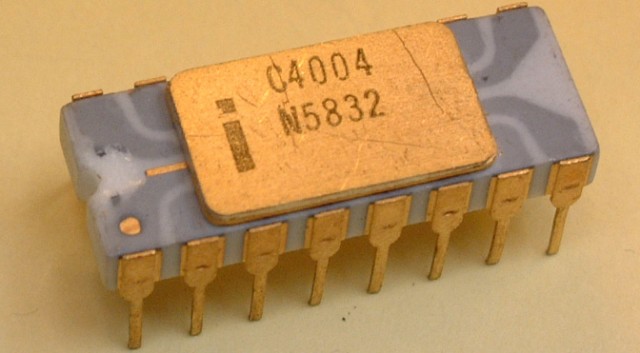
I started using computers in 1972 (fortran), but my first computer of my own was not until very early in 1981, and I bought a used !!! Apple-II+ with a 6502 processor. It had 48kB of RAM, two floppy drives with 128kb each (no monitor - I had to buy a TV to use as a monitor) , and that Apple-II+, for me, at that time, it felt like a powerhouse. Buying that used Apple-II+ computer was one of the smartest things i have done in my life, as using it refreshed my computer knowledge and that refreshed knowledge helped me time and time again in my working career.
-
You are correct. if you do not want to purchase health insurance that meets their criteria, and if you do not want to position the equivalent of $100k US in cash in a bank account (anywhere in the world) seasoned for 2 years, then you are out of luck in regards to the LTR visa (from a Health Insurance perspective). In that case, IMHO you should consider instead a Type-O non-immigrant visa, and after obtaining that, you will be in the situation every year of having to renew your permission to stay on the Type-O visa. I found that constant one-year permission to stay on a Type-O/OA visa renewal fatiguing. Others claim they renew with no issue. And some like me find the Type-O/OA visa permission to stay 1 year renewal tiresome, and some even they pay an agent to do all the Type-O/OA visa permission to stay paper work with immigration for them (in essence they provide the agent a limited power of attorney to do the visa permission to stay renewal on their behalf). Note the type-OA visa, if one is going for a 1 year permission to stay renewal in Thailand, the Type-OA has a health insurance requirement, where the health insurance pretty much must come from the Thailand branch of a health insurance company. Self insurance is NOT allowed on the type-OA. And to the best of my knowledge, superior health from a foreign branch of a health insurance company is not acceptable for the type-OA visa. .... So from that perspective, an LTR health insurance requirement is far superior where on an LTR visa: (a) one can use foreign health insurance IF one gets a letter from the foreign health insurance company with the appropriate/exact words needed to be accepted by BoI, or (b) one simply proves $100k US equivalent (in any currency) in pretty much any Bank in the world as long as the money has been seasoned in cash long enough. That is why MANY on this forum, go for a Type-O visa (with subsequent annual extensions) where the Type-O (unlike the Type-OA) has no health insurance requirements. In my case, for the LTR-WP visa, I did not know of a way to use a 'custom letter' from my European health insurance, so i went the self health insurance route. For my self health insurance, i did not want to use the money i had in Thailand (in a foreign currency account) as i had plans to spend that money elsewhere (which as it turned out was a mistake) - and given I was (inappropriately) not confident of the taxation aspects of bringing money into Thailand, the money I already had in Thailand was also money i brought into Thailand as a non-resident many years prior (hence it was not taxable by Thailand), and I did not want to use that money for self health insurance. But things did not work out as I planned. I first tried an equity account in Canada, that had the pre-requisite amount in cash. Because it was an equity account BoI refused to accept that account as self health insurance. I then tried a Canadian Registered Retirement Savings Account (emphasis on 'saving' so i thought it would be accepted). This is an official Canadian government approved/legislated savings plan. it had the pre-requisite seasoned amount. BUT one can trade equities with that 'saving's plan' and BoI would not accept that. I then thought to try money in an account in Europe, but the paper work for that account was in German language -which meant i likely would have to pay to have the paperwork officially translated to English language. ... So in the end, I stopped my stubbornness, and used the money I had in Thailand for self health insurance (which was accepted by BoI) ... and I restructured my finances elsewhere to achieve that which I had planned for my Thai account now being 'tied up' for use as self health insurance. As noted, my approach was not the best for Self Health insurance. i do have excellent global health insurance from Cigna which is heavily subsidized by my former employer as part of a European pension (and it provides health insurance for myself and my wife). The amount I pay is 'capped' at about 200-euros/month , no matter how old i get. My former employer (and pension provider) pays for the rest ( ie my former employer in fact pays even more than 200 euros per month ) - so as noted, in 2028 I intend to try to obtain a custom letter from Cigna so I no longer have to tie up money in a Thai bank account for self health insurance. I think i am in a fortunate financial situation that these amounts, which cause some to step back and say too much ... too much ... too much ... are relatively not that large compared to my equity accounts, where I do well with equity investments. And from my view, the amounts in cash, are a financial reserve, if things in my equities go south, I can change my living strategy and use those cash funds to attempt to recover. NOTE, if you have the pre-requisite money in Australia, in cash in an Australian bank account (even in Australian $ ), you can use it as your self health insurance. OK? Unlike money in the Bank for a Type-O/OA visa (if going the 400k THB or 800k THB Type-O/OA route) money which has to be in Thailand. For the LTR visa the money nominally need not be in Thailand for things such as Self health insurance (of course a clear exception is that for some LTR visa variants one must invest money in Thailand). And further, for Australia and self-health insurance, given English is the spoken language in Australia, you do not have to pay someone to translate the document from a European language (such as German) to English. Re; health insurance ... Every one is different, but I highly recommend having health insurance when in Thailand. All it takes is one accident, and suddenly one can have major medical expenses .... But each to their own. Policy is policy. I've lived in a few countries in my life time, and experience is as an average Joe, i have never been able to change the policy of 'city hall' (so to speak). i am not up on the detail here. i have read of some approaches, but perhaps others can chime in before I start pontificating. Annual extension? Perhaps this is your wording. There is no annual extension for the LTR visa. Typically, when referring to the word extension (in the context of a Type-O or Type-OA visa) , for the annual extension one must reprove one's finances. In the case of the LTR visa, one must reprove one's finances only at the 5-year mid point. Now there is an annual report. Note in the case of the type-O and type-OA visas, one has to report every 90 days !! In the case of the LTR visa, this annual report is only once every year. There are LTR visa HATERS who claim every year an LTR visa holder must reprove their finances. That is 100% BS designed to hit at people like you. I obtained my Visa in June-2023. This is September 2025. I have NOT had to re-prove my annual finances. But in terms of reporting to immigration (90-days for Type-O/OA visas and every year for LTR visa) each time you leave Thailand and re-enter, you pass through immigration on your way into Thailand, and that is considered to satisfy a report to immigration, and the counter restarts (ie starts counting the 90-days for type-O/OA, or starts counting the 1-year for LTR). Now if you never leave Thailand, i think most people with an LTR visa, go to Bangkok once per year for their annual report. My having typed that, I know a few people on an LTR visa have reported they could simply go to their provincial immigration office and do their LTR visa one year report there. But I do not believe all local (provincial) immigration offices support that yet for the LTR visa, so depending on your Thailand province, you may have to go to Bangkok to do an annual report. Again .... in an annual report, there is no re-proof of Finances needed. Do not let the envious naysayers convince you otherwise. They are full of hateful BS.