Skip to content
View in the app

A better way to browse. Learn more.

ASEAN NOW

A full-screen app on your home screen with push notifications, badges and more.

To install this app on iOS and iPadOS
  1. Tap the Share icon in Safari
  2. Scroll the menu and tap Add to Home Screen.
  3. Tap Add in the top-right corner.
To install this app on Android
  1. Tap the 3-dot menu (⋮) in the top-right corner of the browser.
  2. Tap Add to Home screen or Install app.
  3. Confirm by tapping Install.

Thailand News

All the latest news stories from Thailand are written in English. Fresh news and stories from around the kingdom brought to you daily.
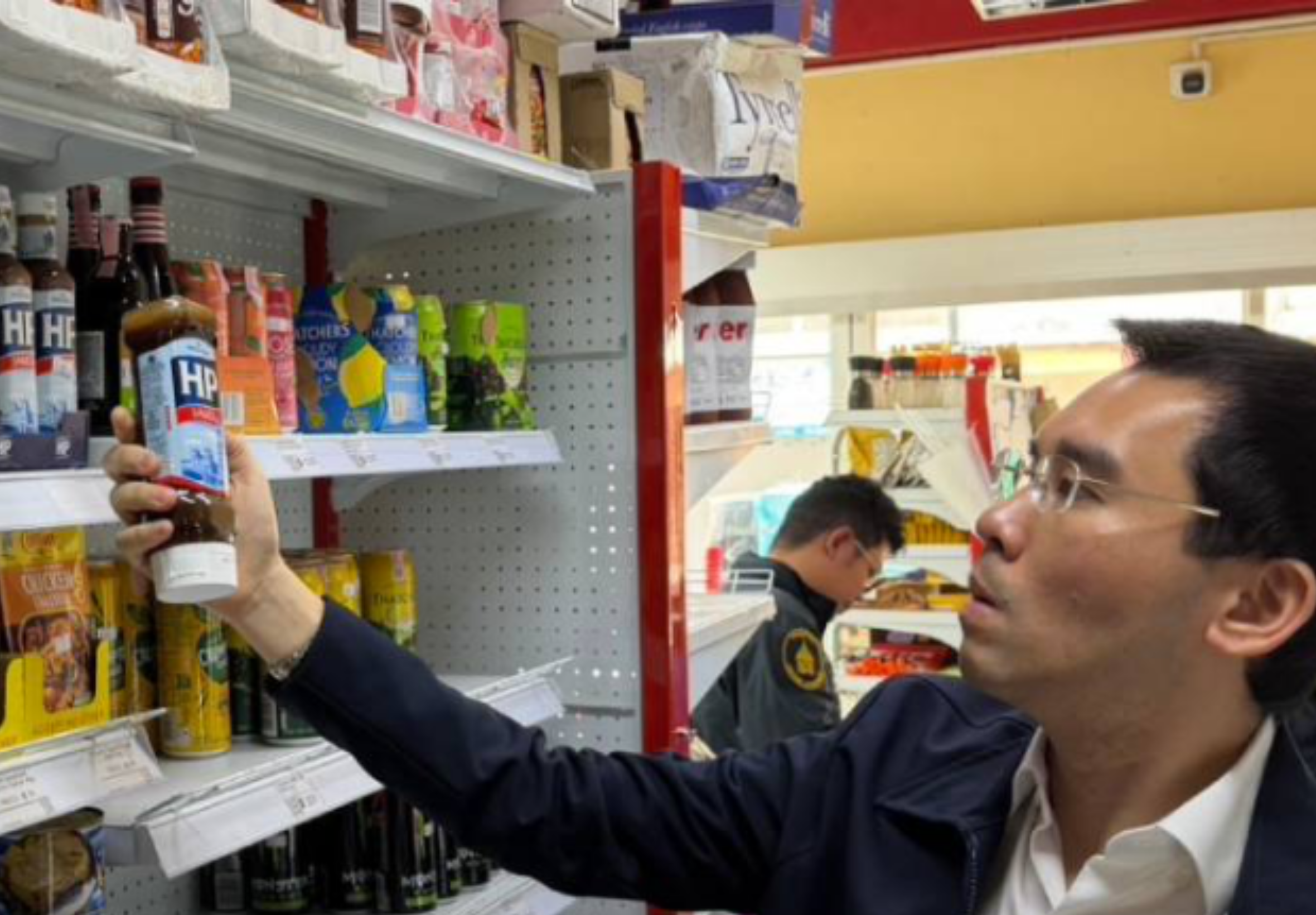
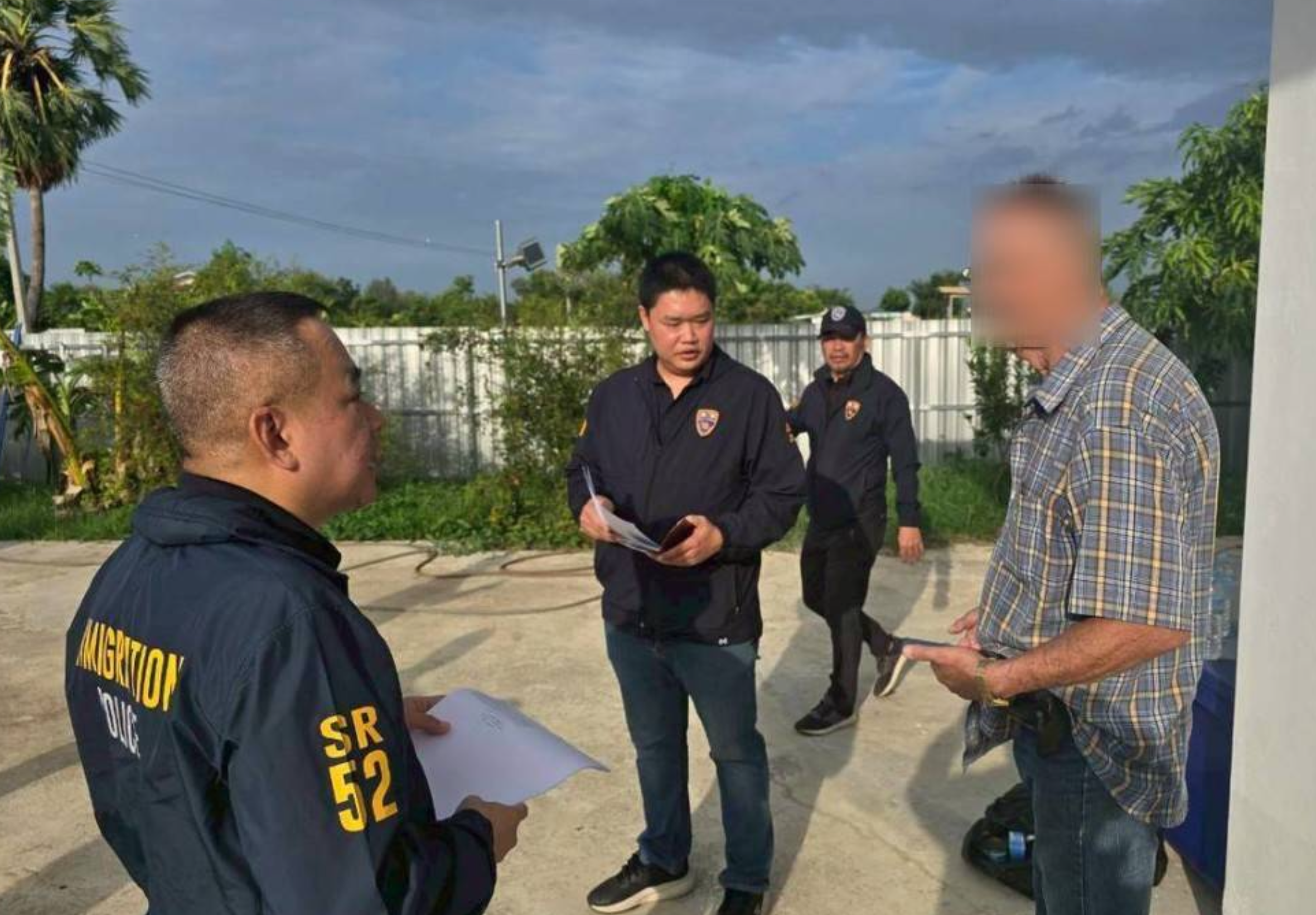
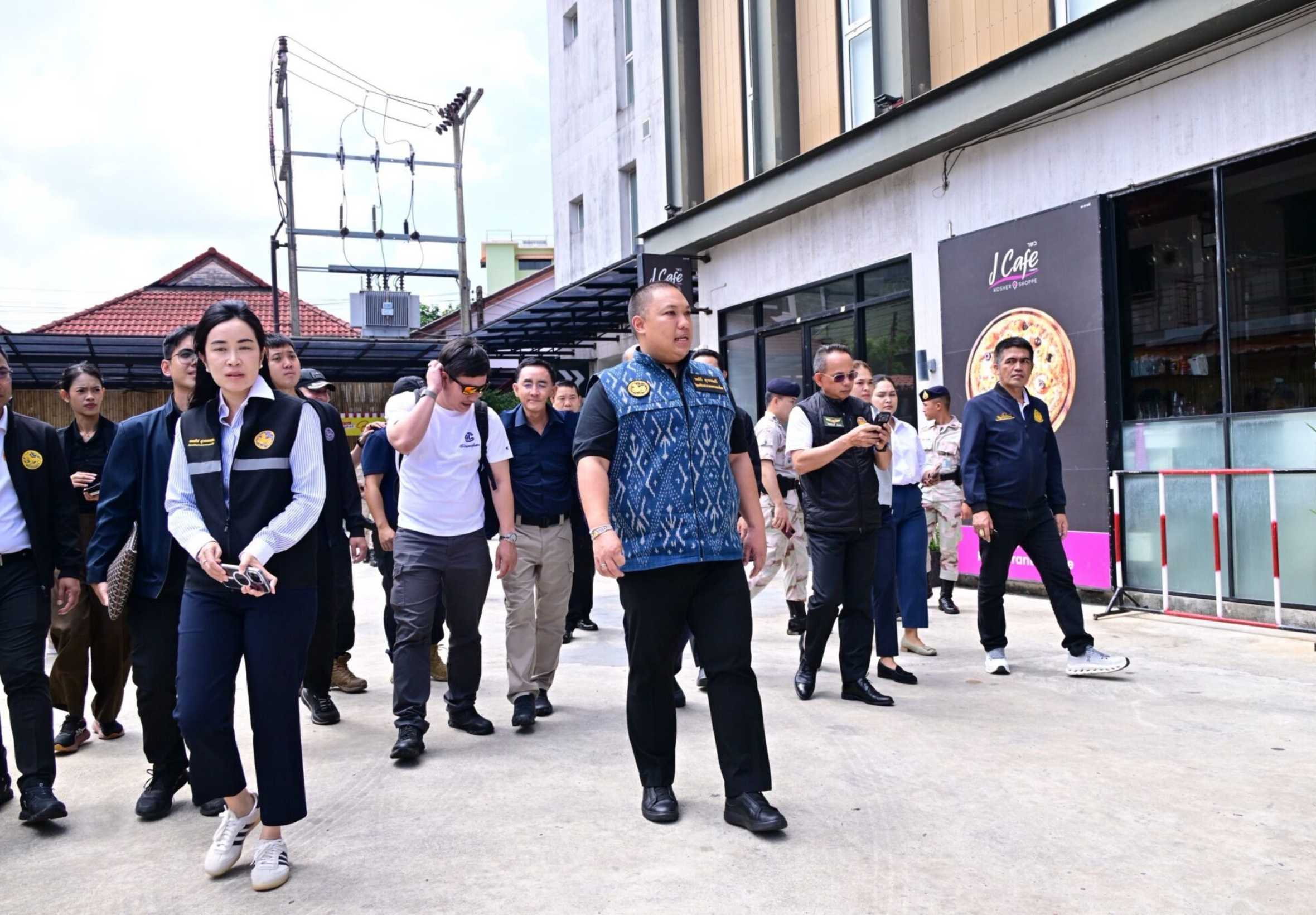
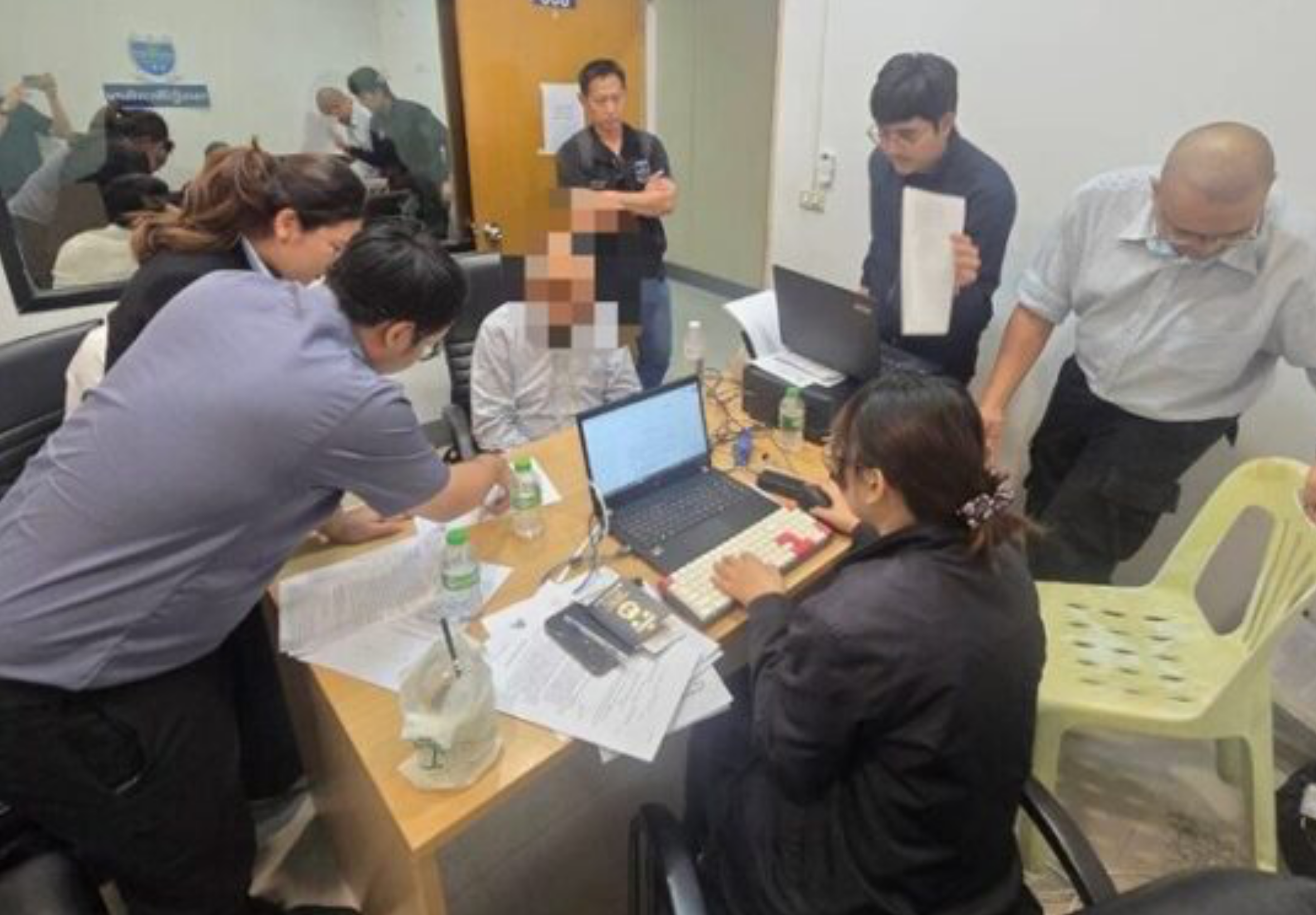
Thai police have seized 49 rai of land worth more than THB 1.05 billion in Phuket, Krabi and Phang Nga as part of the latest operation targeting alleged foreign nominee business networks. The coordinated raids on 20 June 2026 involved more than 500 officers and resulted from 59 arrest warrants, 60 search warrants and investigations into 89 land plots linked to suspected illegal ownership structures.

Get today's headlines by email

The operation, named “Foreign Nominee Network Crackdown Phase 3”, was ordered by Pol Gen Samran Nuanma, Deputy National Police Chief and Director of the Centre for Suppression of Transnational Crime and Illegal Immigration. Pol Lt Gen Noppasin Poolsawat led the operation alongside senior officers from Provincial Police Region 8 and other specialist units.

Authorities said the investigation focused on companies suspected of using Thai nationals as nominees to hold shares on behalf of foreign investors, allowing them to control land and businesses in violation of Thai law. Across Phuket, Phang Nga and Krabi, investigators identified 29 companies allegedly operating as nominees and 48 companies holding land while having foreign shareholders in the majority.

In Phuket, police examined 56 land plots with a combined value of about THB 231 million. Investigators identified 10 nominee companies controlling four land plots worth approximately THB 116 million, leading to 13 arrest warrants for 12 foreign nationals. Another 39 companies were found holding land while foreigners allegedly controlled more than half of the shares.


Among the key targets was the G-Mat group of companies, which operates hotels, resorts, vehicle rental services, restaurants, cannabis businesses and fitness facilities.

In Phang Nga, officers investigated companies linked to eight land plots. Authorities alleged that nine nominee companies controlled land worth about THB 269 million. One British national, identified only as Andrew, was arrested after investigators found that Sava Beach Villas was operating seven villas as a hotel business without the required licence.

Investigators also found evidence suggesting some Thai shareholders listed on company registrations were employees or relatives of company directors who lacked the financial means to make genuine investments, indicating possible nominee arrangements.


Pictures courtesy of Komchadluek

In Krabi, police targeted property development and entertainment businesses. Authorities arrested 26 Thai nationals and 12 foreign nationals linked to alleged nominee structures. One major case involved Tropical House, a property development company reportedly controlled by Polish investors through Thai nominees despite being registered as a Thai-owned company.

Another investigation focused on Kanj Entertainment Partnership, allegedly owned by a South African national who used Thai nominees. Police also accused a lawyer and an accountant of helping create false registration documents, including the use of signatures belonging to deceased individuals.

Komchadluek reported that police seized company registration records, accounting documents, computers, mobile phones and other electronic evidence. The material is being examined as investigators expand enquiries into related networks across the country.


Join the discussion?

Already a member?

Adapted by ASEAN Now Komchadluek 21 June 2026
Georgealbert
Georgealbert
Thailand’s House Public Health Committee is reviewing the country’s cannabis policy amid growing concerns over widespread sales, legal loopholes and public health risks. The committee is considering whether cannabis should be returned to the narcotics list, a move that could have significant implications for farmers, businesses and consumers.

Get today's headlines by email

The review follows concerns that uncontrolled sales and unregistered cultivation have expanded since cannabis was liberalised in June 2022. A meeting chaired by Sakoltee Phattiyakul on 18 June brought together representatives from the Department of Thai Traditional and Alternative Medicine, the Food and Drug Administration (FDA), medical networks, academics and civic groups campaigning against drug-related harms.

The debate highlighted sharp divisions over cannabis regulation. Medical and anti-drug groups support temporarily returning cannabis to narcotics control while a dedicated cannabis law is developed. Cannabis operators and civic networks oppose the proposal, arguing it could harm farmers and businesses attempting to operate legally.

Dr Tewan Thaneerat, deputy director-general of the Department of Thai Traditional and Alternative Medicine, said concerns had continued since legalisation. He noted that the Public Health Ministry introduced three regulations in June 2025 covering research, sales, processing and exports in line with international standards.

Officials are now working on a new cannabis and hemp bill alongside the FDA, the Department of Health Service Support and the Office of the Permanent Secretary for Public Health. The draft was previously submitted to the Cabinet but was not considered before Parliament was dissolved. Public hearings are expected to conclude by late July before the bill is resubmitted.

Ekkapop Sittiwantana, deputy chairman of the committee from the People’s Party, said cannabis should be returned to the narcotics list until the new law is enacted. He warned that widespread unregistered cultivation and informal sales had created loopholes that could be exploited by grey businesses and called for proper registration of cannabis plants.

Assoc Prof Dr Smith Srisont, representing doctors, academics and civic groups opposed to drug-related harms, also supported tighter controls. He argued that despite extracts containing more than 0.2% THC remaining classified as narcotics, cannabis availability had already created practical concerns and that narcotics control should be restored before a separate regulatory law is introduced.

The FDA told the committee that most inspected cannabis products met labelling and testing standards. However, it said many sales channels remain outside the legal system, creating enforcement challenges.

Cannabis operators and the Thai Cannabis Future Network argued that legal businesses face unfair competition from the black market, illegal imports and ongoing legal uncertainty. The network also raised concerns about alleged pressure linked to cannabis licensing and the cost of obtaining medical prescriptions.

The Nation reported that Sakoltee concluded the meeting by directing officials to compile a list of all licensed cannabis shops in Bangkok and FDA-certified cannabis products for review. The committee will also examine cannabis-related harm and consider both public-sector proposals and the Public Health Ministry’s draft bill as lawmakers seek a balanced regulatory framework.


Picture courtesy of The Nation

Join the discussion?

Already a member?

Adapted by ASEAN Now Nation 21 June 2026
Georgealbert
Georgealbert
An American man was arrested in Chiang Mai after police alleged he was working as a DJ without a valid work permit, highlighting ongoing enforcement of Thailand’s labour laws affecting foreign nationals.

Get today's headlines by email

The suspect, identified as Eick Alberto, 30, was detained by tourist police during an inspection of an entertainment venue on Charoen Rat Road in Muang district. The arrest took place at approximately 00:20 on Saturday, 20 June 2026.

According to police, Alberto was found performing as a DJ at the venue despite not holding the work permit required under Thai law. Authorities said foreign nationals must have appropriate authorisation before undertaking employment in the country.

Police charged Alberto with working as a foreigner without a permit or working beyond the scope of authorised employment. Following his arrest, he was handed over to investigators for further legal proceedings.

The operation formed part of ongoing inspections by tourist police targeting illegal employment by foreign nationals. Authorities said the checks are intended to ensure compliance with Thailand’s labour regulations and employment requirements.

The arrest comes amid continued enforcement efforts across the country, with officials monitoring workplaces and entertainment venues for potential violations involving foreign workers. Tourist police have stated that such inspections are conducted to identify individuals who may be working without the necessary legal documentation.

Khaosod reported that the case will now proceed through the investigative process. Authorities have not announced any further charges, and the outcome will depend on the findings of investigators and subsequent legal proceedings.


Picture courtesy of Khaosod

Join the discussion?

Already a member?

Adapted by ASEAN Now Khaosod 21 June 2026
Georgealbert
Georgealbert
Two workers were killed and two others injured after a section of wall collapsed inside the Doi Luang railway tunnel on the Den Chai-Chiang Rai-Chiang Khong railway project in Doi Luang district, Chiang Rai, on 20 June 2026. The collapse occurred in an area of the tunnel that had not yet been lined with concrete, with debris falling onto workers inside the construction site.

Get today's headlines by email

According to project engineer Pattapong Boonkaew, the Doi Luang tunnel is 3.4 kilometres long and was successfully bored through last year. Construction is currently focused on installing a permanent concrete lining to protect the tunnel walls, with more than three-quarters of the work already completed. The collapse occurred in an exposed section that was awaiting protective treatment as part of the normal construction process.

Pattapong said preliminary findings suggest the collapse was caused by an “unforeseeable geological event”. He explained that Chiang Rai has experienced unusually heavy and prolonged rainfall over the past two to three years, resulting in excessive water accumulation within rock layers beneath Doi Luang mountain. This is believed to have affected temporary support structures in the exposed section, causing a localised failure and collapse.

The engineer stressed that the tunnel’s main structure, including sections already lined with permanent concrete, remains stable and safe. He said the incident would not affect the overall construction schedule or the future safety of railway operations. Geological specialists will now conduct a detailed assessment of rock conditions, while additional safety measures and reinforced temporary supports will be introduced to prevent similar incidents.


Authorities confirmed that two workers died at the scene and two others were injured. All casualties were transferred to Chiangrai Prachanukroh Hospital.

Chiang Rai Governor Chucheep Pongchai visited the site shortly after receiving reports of the incident. He said he had been attending official duties in Wiang Kaen district when informed by the Doi Luang district chief. The matter was immediately reported to the Director-General of the Department of Disaster Prevention and Mitigation and the Permanent Secretary of the Ministry of Interior, who were attending duties with the Prime Minister.

The governor said the Prime Minister had expressed concern and ordered an immediate on-site assessment. He described the collapse as an engineering accident influenced by natural factors, including persistent rainfall. He added that accumulated rainfall data would be incorporated into future construction planning during the wet season.

Authorities have coordinated with Chiangrai Prachanukroh Hospital to ensure support and compensation for the injured workers and the families of those who died. Chucheep emphasised that the collapse was confined to a specific construction area within the tunnel and did not involve a major structural failure of the project.

Matichon reported that the Den Chai-Chiang Rai railway project was approved by the Cabinet on 31 July 2018 with a budget of 85.345 billion baht and a construction period of seven years. The line is expected to open in January 2028 and includes four railway tunnels.


Pictures courtesy of Matichon

Join the discussion?

Already a member?

Adapted by ASEAN Now Matichon 21 June 2026
Georgealbert
Georgealbert
Thailand is facing renewed calls to tighten regulations governing foreign condominium ownership as the government considers raising the foreign ownership quota in condominium projects to attract overseas investment and support a property market still struggling with a slowdown.

Get today's headlines by email

The proposal is viewed as a way to improve liquidity in the real estate sector and help developers clear unsold inventory. However, concerns have emerged over housing affordability for Thai citizens, property speculation and the long-term impact of increased foreign ownership.

Dr Sopon Pornchokchai, president of the Agency for Real Estate Affairs (AREA), said the debate should move beyond claims that Thailand is “selling the nation”. He noted that only a limited number of condominium projects have reached the current 49% foreign ownership quota and that foreign buyers accounted for less than 20% of total condominium purchases last year.

Sopon argued that Thailand’s rules are considerably more lenient than those in China. Foreign buyers in Thailand face no residency requirement before purchasing a condominium, whereas China generally requires foreigners to have lived in the country for around one to two years before becoming eligible to buy property.

He also highlighted the absence of a minimum purchase price in Thailand. AREA’s survey of foreign condominium purchases in Bangkok and surrounding provinces in 2025 found that around two-thirds of units purchased by foreigners were priced at 5 million baht or less. By comparison, foreigners purchasing condominiums in major Chinese cities typically face costs of around 10-20 million baht or more due to higher property values and larger unit sizes.

The number of units foreigners can purchase has also come under scrutiny. Thailand allows foreign buyers to acquire multiple units provided the building remains within the legal foreign ownership quota, while China generally limits foreign buyers to a single unit. Sopon also raised concerns about nominee ownership structures and claimed that foreign owners already play a significant role in the management of some condominium projects in Bangkok, Pattaya and Hua Hin.

Additional concerns relate to property speculation and short-term rentals. Sopon said Thailand permits foreign buyers to purchase condominiums for investment and resale, while enforcement against illegal daily rentals remains weak. He warned that some buildings could become dominated by owners from a single nationality, potentially creating foreign enclaves and affecting the hotel sector if units are used as unlicensed accommodation.

Sopon also criticised Thailand’s low property tax burden on foreign owners. He said annual property taxes, rental income taxes and capital gains taxes are significantly lower than those imposed in China, making Thailand particularly attractive for investment-focused buyers seeking returns rather than permanent residence.

The Nation reported that the government has yet to decide whether to increase the foreign ownership quota. Sopon said any expansion should be accompanied by stricter, more transparent regulations to balance foreign investment with the long-term interests of Thailand and its citizens.


Picture courtesy of The Nation

Join the discussion?

Already a member?

Adapted by ASEAN Now Nation 21 June 2026
Georgealbert
Georgealbert
Parts of a two-storey building front collapsed at Mor Mee Junction in Bangkok at approximately 4:50pm, on 20 June 2026, leaving people trapped beneath the rubble and causing damage to vehicles on a nearby road. Emergency responders were deployed to the scene and began rescue operations as concerns grew that there could be fatalities and injuries.

Get today's headlines by email

The collapse occurred near Mor Mee Junction, close to a Starbucks branch at Hua Lamphong on Rama IV Road. Debris from the structure fell onto the pavement and roadway, striking vehicles and creating a hazardous situation in the area.


Initial reports indicated that at least one person was visible trapped, believed dead, beneath the collapsed building. Authorities at the scene are working urgently to assess the extent of the damage and search for anyone caught under the rubble.

Emergency services and relevant authorities remain at the site to carry out rescue and recovery efforts. Khaosod reported that investigators are expected to examine the cause of the structural failure once rescue work has been completed. Further updates are likely as authorities determine the number of people affected and assess the condition of the damaged building.


Picture courtesy of Khaosod

Join the discussion?

Already a member?

Adapted by ASEAN Now Khaosod 20 June 2026
Georgealbert
Georgealbert
A foreign man was arrested in the early hours of 20 June 2026 after allegedly assaulting an Indian tourist, damaging a songthaew taxi and causing disorder in Pattaya, prompting police to deploy more than 10 officers to bring the situation under control.

Get today's headlines by email

Police from Pattaya City Police Station were called to the junction near the Marine Hotel on Pattaya Second Road Soi 16 in Nong Prue, Bang Lamung district, Chon Buri, at 3.00am. Officers found a large foreign man causing a disturbance while motorcycle taxi riders, Bolt riders, songthaew drivers and tourists surrounded him to prevent him from leaving. Due to his apparent state of intoxication and refusal to cooperate, officers required more than 10 minutes and reinforcements of over 10 police officers to take him into custody.


CCTV footage reportedly showed the man arguing with several groups before chasing an Indian tourist and becoming involved in a confrontation near a songthaew parking area. During the disturbance, property was damaged, including a broken wing mirror on a songthaew. The confrontation later spread to involve an Indian man and a Thai Bolt motorcycle rider, leading to wider unrest.

According to the suspect’s daughter, the family had been celebrating her birthday at a bar in South Pattaya. She said an argument broke out with a ladyboy inside the venue and claimed her mother had her hair pulled. The daughter said she intervened and was allegedly struck on the head with a bottle, suffering injuries to her leg and head. She stated that the ladyboy left the scene before the family departed the bar.


She said that while walking away from the bar, Indian national Mr Karan Kumar, aged about 35, allegedly touched her on the hip. She claimed her father, the suspect, confronted him, leading to a fight in which Mr Kumar fell and suffered a head injury. She further alleged that her father then assaulted a Thai man who attempted to intervene.

However, Ms Thikhamphon Kaewin, 20, a friend of the injured Indian tourist, disputed that account. She said the group had been walking home when the foreign man accused them of staring at his family before punching Mr Kumar in the face. She denied that Mr Kumar had touched Ms Summer and said motorcycle taxi riders and Bolt riders pursued the suspect until police arrived at a Myanmar-owned food shop where he had taken refuge.


Pictures courtesy of แจ็ค โพธิ์แดง

Songthaew driver Sompong, 52, said his vehicle was damaged during the confrontation. He reported that a side panel and the right wing mirror were broken and filed a police report seeking compensation.

Police have initially charged the man with being drunk and causing a public disturbance. Investigators said all parties involved had been drinking and that further interviews and evidence reviews would be conducted before any additional legal action is considered.

AQMHHWRA5d3-z-b1OC0-gDd6ST7lT3k4fEeLBEsoJvOTbkdvsKCcTzrA-hxaivCZeWjMacuh4TPj0iGp2vU5jMpzDzZMZ0UfO1up4gVJgA.mp4

AQPa4zN8gGKMyyJPYpZT50prT6_d2Ee1qk7kosh5dDRASY-zZ45igyuuymdGVNj_AR1zIPjho33A4Y6Ir8UqclSm9buSV-VhulwdkrO8vg.mp4

Join the discussion?

Already a member?

Adapted by ASEAN Now แจ็ค โพธิ์แดง 20 June 2026
Georgealbert
Georgealbert
The Central Investigation Bureau (CIB) has launched “CIBbot”, an artificial intelligence chatbot designed to help the public access legal advice, assess criminal incidents and receive guidance on reporting crimes. The system was officially unveiled on 19 June 2026 and is available 24 hours a day, aiming to improve public access to the justice process through digital technology.

Get today's headlines by email

The project was developed through a partnership between the CIB and the National Research Council of Thailand (NRCT). The initiative, titled Development of an AI Chatbot System for Criminal Complaints and Legal Consultation, seeks to reduce barriers between the public and law enforcement by providing rapid and accurate information to victims of crime.

CIBbot has been designed as a virtual adviser that incorporates knowledge from specialists and legal resources within the Central Investigation Bureau. The chatbot covers a wide range of criminal matters, including general offences and more complex specialist cases such as cybercrime, human trafficking and economic crime.

The system helps users determine which authority or agency should receive their complaint and provides guidance on preparing for the reporting process. This includes advice on necessary documentation and initial statements, with the aim of making criminal complaints and legal proceedings more efficient and accessible for the public.


According to the CIB, the chatbot is powered by advanced artificial intelligence technology and enhanced through Retrieval-Augmented Generation (RAG). This allows the system to retrieve information from legal databases and operational guidelines to provide accurate responses and answer detailed legal questions.

The launch reflects the CIB’s broader effort to modernise public services and expand the use of digital tools in law enforcement. By providing round-the-clock assistance, the bureau hopes to help people respond more effectively when faced with criminal activity and obtain reliable legal information without delay.

Thaitabloid reported that the CIBbot is now integrated into the CIB’s One Stop Service platform. Members of the public can access the system immediately through the CIB website at cib.go.th/CIBbot.


Pictures courtesy of Thaitabloid

Join the discussion?

Already a member?

Adapted by ASEAN Now Thaitabloid 20 June 2026
Georgealbert
Georgealbert
Thai immigration investigators and Samut Prakan immigration officers have arrested two Chinese nationals wanted by Chinese authorities on money laundering charges linked to an alleged corruption case involving a former mayor in Shanxi Province.

Get today's headlines by email

The arrests form part of the Immigration Bureau’s ongoing “Three No’s” policy, aimed at preventing foreign criminals from entering, remaining in, or evading justice in Thailand. Authorities said the operation targeted foreign nationals suspected of criminal activity and those subject to international arrest warrants.

According to Lt Gen Phanumas Boonyalak, Commissioner of the Immigration Bureau, and senior officers overseeing the operation, investigators from Division 1 of the Immigration Bureau’s Investigation Division tracked down Mr Jiang, 59, and Mrs Ren, 60, both Chinese nationals. The operation was reported on 19 June 2026.

Mr Jiang’s visa had already been revoked by immigration authorities. Chinese officials had requested Thailand’s cooperation in returning both suspects under warrants issued by the Taiyuan City Court in Shanxi Province on 2 August 2024.

Chinese authorities allege that the pair assisted Mr Wang, a former mayor of Xiaoyi City, Shanxi Province, who is accused of accepting bribes, embezzling public funds and abusing his authority. Mr Wang, identified as a relative of both suspects, is also the subject of legal proceedings in China.

Investigators said Mr Jiang allegedly used his personal bank account to receive bribe payments before transferring funds into stock and financial investment accounts under his name. Authorities claim he unlawfully obtained 1 million yuan while facilitating money laundering activities.

Mrs Ren is accused of using her bank account to receive proceeds from bribes connected to Mr Wang and helping channel funds into securities and other business investments as part of the alleged money laundering operation.

Immigration investigators determined that both suspects were residing in accommodation in the Bang Na area of Bangkok. Officers conducted an operation at the property and arrested the pair. Thai authorities said both individuals were taken into custody and will face further legal procedures in accordance with the law and relevant international cooperation arrangements.

Thaitabloid reported that officials encouraged members of the public to report suspected immigration offences through the Immigration Bureau website, provincial immigration offices nationwide, or the Immigration Bureau hotline 1178.

Join the discussion?

Already a member?

Adapted by ASEAN Now Thaitabloid 20 June 2026
Georgealbert
Georgealbert
A former deputy leader of the Palang Pracharath Party has criticised the transfer of Phuket’s governor and deputy governors, arguing that the move does not address the root causes of problems in the province and serves only to ease public pressure.

Get today's headlines by email

On 19 June 2026, Suradej Yasawat said the reassignment of Phuket’s governor and two deputy governors was a response to symptoms rather than causes. He noted that the two deputy governors, who had reportedly been linked to conflicts and other issues in Phuket, were transferred to Nakhon Si Thammarat and Songkhla, provinces he described as equally important and lucrative as Phuket.

He argued that the transfers should not be viewed as punishment and suggested the government’s intention was merely to reduce public criticism. He also questioned why the former governor, whom he described as having performed well and allegedly faced opposition from deputy governors after blocking certain actions, was not allowed to continue in the role.

Suradej said the government must tackle the issue systematically and create stronger checks and balances within provincial administration. He called for central police units to investigate local influence networks, protection rackets and links to foreign nominee businesses, claiming authorities already know who is involved and which foreign groups are connected.

He proposed using Phuket as a model for dealing with influential figures and suggested agencies such as the Crime Suppression Division and the Department of Special Investigation should be deployed. According to Suradej, the presence of central investigators would make local police and officials more cautious and less willing to accept bribes.

Addressing concerns over foreign nominee shareholding and grey capital, he said the Foreign Business Act B.E. 2542 already carries severe penalties, including imprisonment of up to three years, fines ranging from 100,000 to 1,000,000 baht, and additional daily fines of 10,000 to 50,000 baht. He argued that stricter enforcement would significantly reduce nominee business activity.

Suradej also linked the issue to ongoing conflicts in the Middle East and the Russia-Ukraine war, saying people from affected countries are seeking new places to live and do business. He argued that Thailand’s visa-free entry scheme is no longer necessary and creates security risks by allowing large numbers of visitors to enter without prior screening.

He said reducing visa-free stays from 60 days to 30, 15 or even 10 days would not solve the problem and instead called for the complete cancellation of visa-free entry. He argued that all visitors should go through embassy screening to identify criminal backgrounds before arrival.

Suradej claimed that foreign grey capital groups, including some from China, were establishing themselves in Thailand and expanding their networks. He also referred to concerns about groups of Israelis in Koh Phangan and Pai, saying authorities should prevent foreigners from taking jobs from Thai citizens or creating local problems.

He rejected suggestions that ending visa-free entry would damage tourism, arguing that Thailand should focus on attracting quality tourists who visit and return home rather than individuals seeking opportunities for illegal business activities.

ThaiRath reported that Suradej urged the prime minister and government to take more decisive action, saying the response should go beyond site visits, ministerial assignments and administrative transfers, and instead deliver visible and measurable improvements for local residents.

Related stories

Phuket-land-nominee-crackdown-ordered

Anutin-defends-Phuket-governor-transfer

Join the discussion?

Already a member?

Adapted by ASEAN Now ThaiRath 20 June 2026


Georgealbert
Georgealbert
Police have arrested the alleged Thai ringleader of a major transnational money-laundering network linked to call centre scam gangs during Operation “Dragon Stable”. The suspect, Kritpat “Frame”, 30, was detained at a luxury in Bangkok’s Lang Suan area, while investigators seized company seals and registration documents linked to more than 20 firms allegedly used to launder illicit funds.

Get today's headlines by email

The operation was announced on 19 June by the Anti-Online Scam Centre (ACSC) and the Highway Police Division at the Crime Suppression Division headquarters in Bangkok. Authorities said the network processed more than 100 million baht per month through a complex system involving nominee companies, investment platforms, gold purchases and mule accounts.

The investigation stemmed from a raid on a “mule account party” at a pool villa in January 2026, when nine suspects were arrested for collecting cash from scam victims in a scheme that caused losses exceeding 30 million baht. Police later expanded the probe in March 2026, raiding a luxury condominium safe house in Huai Khwang and arresting eight more suspects. Investigators found evidence of money laundering through stock-trading platforms, gold transactions and a language school allegedly used as a front to facilitate the movement of foreign nationals.


Police obtained arrest warrants for 10 suspects of Thai, Chinese and Cambodian nationality. Four have now been arrested. They include Kritpat, described as the head of the Thai operation; Sitthi, 45, a senior nominee who allegedly allowed his name, documents and bank accounts to be used; Plathawat “Arsen”, 33, an interpreter accused of relaying instructions from Chinese organisers; and Natthaporn, 24, Kritpat’s girlfriend, who allegedly helped recruit mule accounts and support the operation.

Authorities are still searching for six fugitives, including Chinese nationals Ah Tao, described as the financial boss behind companies used to launder money for scam groups, and Lao Chong, 35, who allegedly supervised cash-withdrawal teams and gold purchases in Thailand. Cambodian national Priao, identified by police as a Cambodian police officer, is also wanted for allegedly assisting network members based in Cambodia.


Pictures courtesy of Daily News

Investigators said Kritpat took extensive measures to avoid detection, frequently changing hotels, remaining inside his room, using more than 10 mobile phone numbers registered to other people and directing food deliveries to alternative locations. During his arrest, police found more than 70 methamphetamine tablets in his possession. Officers said he suffered a severe shock when confronted and collapsed unconscious, requiring treatment in hospital, before being discharged into police custody.

Daily News reported that police also identified 28 additional mule-account holders allegedly involved in laundering money through investment platforms. The investigation remains ongoing as authorities continue efforts to arrest the remaining suspects and trace further financial links.


Join the discussion?

Already a member?

Adapted by ASEAN Now Dailynews 20 June 2026
Georgealbert
Georgealbert
A 32-year-old woman was left with facial injuries after allegedly being assaulted by a male neighbour at an apartment building in Pattaya during the early hours of 19 June 2026. The incident occurred at approximately 5.35am at an apartment in Soi Thepprasit 7, prompting an emergency response from rescue workers and police.

Get today's headlines by email

Rescue personnel from the Sawang Boriboon Thammasathan Pattaya Rescue Centre arrived at the scene alongside officers from Pattaya City Police Station. They found Ms Daraporn, 32, suffering from bruises to her body and lacerations to her lip and right eyebrow, with blood covering her face. She received first aid at the scene before being taken to hospital for treatment.

The alleged attacker had fled before officers arrived. According to the victim, the suspect is a Thai man known as “Mr Keng”, who lives in the room next to hers.

Ms Daraporn told police that she had been living at the apartment for around five to six months and claimed that Mr Keng had repeatedly attempted to court her during that time. She said she had never encouraged his advances and had tried to avoid him.

The victim stated that after returning home from work, she encountered the suspect outside his room. An argument followed, which escalated into a physical confrontation during which she was allegedly slapped and punched. She said members of the public intervened and initially stopped the attack.

Witness Mr Weerawat, 36, said he came out to investigate after hearing a disturbance. He reported hearing the suspect complain that the woman was speaking too loudly on the telephone before the pair became involved in a heated argument.

According to the witness, even after bystanders separated the two, the suspect followed the woman and assaulted her again. Emergency services were then contacted to intervene.

Daily News reported that police are gathering evidence and interviewing those involved as part of their investigation. Officers are also working to locate and arrest the suspect so that legal proceedings can be pursued.


Picture courtesy of Daily News

Join the discussion?

Already a member?

Adapted by ASEAN Now Dailynews 20 June 2026
Georgealbert
Georgealbert
Thailand’s Department of Special Investigation (DSI) has unveiled on 19 June 2026, the results of a major nationwide operation targeting an illegal Forex investment and pyramid-style fraud network, following coordinated raids at 24 locations across Bangkok, Pathum Thani, Samut Prakan and Samut Sakhon. The operation led to the seizure of substantial assets, the freezing of dozens of bank accounts and the discovery of financial links that investigators say may extend to prominent public figures. More than 500 victims have already filed complaints directly with the DSI, while over 60 additional cases have been reported through the Cyber Crime Investigation Bureau’s online system.

Get today's headlines by email

The crackdown was the result of a six-month investigation conducted jointly by the DSI, the Cyber Crime Investigation Bureau (CCIB), the Central Institute of Forensic Science and the Bank of Thailand. Investigators initially traced financial movements connected to scam syndicates and online gambling operations before uncovering unusually large volumes of money flowing through suspected illegal Forex investment schemes. The Bank of Thailand reiterated during the operation that no individual or company has ever been granted a licence to operate a Forex trading business in Thailand.

According to investigators, the network was structured into three key groups. The first consisted of unlicensed Forex brokers operating investment platforms including QRS Global, HFM, GOFX and Eterwealth, many of which claimed registration in offshore jurisdictions to avoid Thai regulatory oversight. The second group comprised introducing brokers, or IBs, who promoted investment opportunities through social media, training courses and displays of wealth designed to attract new investors.


The third group involved payment gateway companies that allegedly acted as financial intermediaries, receiving funds from investors before transferring or converting them into cryptocurrency. Companies identified by investigators included Rainny Corporation Co., Ltd. and Pay Solution Co., Ltd. Authorities said investors were initially able to withdraw profits successfully, creating confidence in the schemes. However, withdrawals later became delayed, restricted or blocked entirely, leaving many investors unable to recover their funds.

Following court approval, investigators searched 15 companies and nine private residences linked to the network. Authorities froze 77 bank accounts, including 20 corporate and 57 personal accounts, and moved to restrict access to associated cryptocurrency wallets. Seized assets included 65.27 million baht in cash, foreign currency valued at 600,000 baht, five luxury cars, 15 additional vehicles, four motorcycles, gold weighing 50 baht, 12 kilograms of silver bars, 113 luxury watches, more than 40 designer handbags, 55 computers, 30 mobile phones, four cryptocurrency hardware wallets and three firearms with ammunition.

One of the most significant developments from the investigation was the discovery of financial transfers linked to the payment gateway network. DSI stated that funds moved from ALPFX through Spark Digital before being transferred into the personal account of Pavut Pongvitayapanu, a People’s Party list MP. Investigators identified 14 transactions of approximately 2 million baht each, totalling around 28 million baht, all conducted within a single day in July 2024. Officials noted that the rapid succession of large transfers differed from normal salary or dividend payments and warranted further examination.


Pictures courtesy of The Standard

Investigators also cited evidence linking actor Ratthaphum Tokongsub, known as Film, to Eterwealth in a role involving business promotion and consultancy. However, DSI stressed that neither Pavut nor Ratthaphum has been named as a suspect. Officials emphasised that the discovery of financial links does not automatically indicate criminal wrongdoing and that both individuals will be given the opportunity to explain the transactions and their involvement.

DSI further stated that the investigations involving Pavut and Ratthaphum concern separate branches of the wider network and that no direct connection between the two has been established. Officials also rejected suggestions of political interference, insisting that the investigation is based solely on evidence gathered during the six-month inquiry.

The Standard reported that the investigation is continuing as authorities work to trace additional assets, identify further victims and examine the full extent of the network’s financial operations. DSI estimates total losses may ultimately reach several billion baht and has urged anyone affected to submit evidence to assist with asset recovery and compensation efforts.


Related story

DSI-raids-forex-network-across-Bangkok-region

Join the discussion?

Already a member?

Adapted by ASEAN Now TheStandard 20 June 2026
Georgealbert
Georgealbert
Hotels and airlines in Thailand remain cautious about the prospect of a tourism rebound, despite expectations that the ceasefire MOU, between the United States and Iran could ease pressure on travel costs. Industry operators warn that weak consumer spending and the ongoing low season are likely to delay any meaningful recovery.

Get today's headlines by email

According to Nuntaporn Komonsittivate, head of commercial at Thai Lion Air, average load factors for June and July have declined compared with the same period last year. Travellers have become more cautious with their spending after holiday trips during April and early May, reducing demand during the current off-peak season.

Although crude oil prices have fallen close to pre-conflict levels, Mrs Nuntaporn said fuel prices for airlines are unlikely to return immediately to where they stood before the Gulf conflict. Airlines are expected to wait until transport routes are fully restored before making operational changes such as increasing flight capacity or reinstating suspended services.

Thai Lion Air has reduced seat capacity by 15% since the conflict began. The airline is now assessing how lower fuel costs could affect ticket prices from next month.

The tourism slowdown is also affecting the hotel sector. La-iad Bungsrithong, a board adviser to the Thai Hotels Association, said the 2026 low season has been the weakest in years. Average hotel occupancy in Chiang Mai stands at only 40-45%, while some areas are recording rates as low as 35%.

She noted that the downturn is affecting all market segments, including five-star hotels, which have traditionally performed well during low-season periods. Mid-range three- and four-star hotels are facing weaker domestic demand as households and businesses prioritise spending on essential expenses rather than leisure travel or meetings.

Luxury hotels are also experiencing lower bookings due to a decline in international visitors, particularly from Europe and the United States. High jet fuel costs have discouraged travel from those long-haul markets.

Industry representatives expect travellers to adopt a wait-and-see approach even if the peace agreement works. Operators are closely monitoring booking trends for July and August, when school holidays, long-stay visitors, pensioners and digital nomads typically help support demand.

Mrs La-iad also said government cost-of-living relief measures, including co-payment schemes, have not provided a significant boost to domestic tourism spending. Instead, households are using the assistance to cover essential daily expenses.

Bangkokpost reported that as of 31 May, domestic trips in Thailand increased by 1.77% year-on-year to 86.7 million. Bangkok, Chon Buri and Kanchanaburi recorded the highest number of visits.

Join the discussion?

Already a member?

Adapted by ASEAN Now Bangkokpost 20 June 2026
Georgealbert
Georgealbert
A 33-year-old Thai woman has been arrested in Japan’s Mie Prefecture on suspicion of violating entertainment business regulations by providing sexual services in a prohibited location. The case emerged after police investigating an attempted robbery at the premises uncovered alleged illegal activities.

Get today's headlines by email

According to reports, Mie Prefectural Police arrested Nipaporn Moonsangha, a Thai national aged 33, on Tuesday, 16 June. Authorities said she was employed at a business in the prefecture and was suspected of breaching laws governing entertainment-related businesses by offering sexual services from a beauty salon.

Police allege that on 12 June, at the Bijin-gyo beauty salon in the Higashikata area of Kuwana City, Nipaporn provided sexual services to male customers. Under Japanese regulations, beauty salons are considered prohibited locations for sex businesses. She has reportedly admitted to the allegations during questioning.

The investigation was triggered by an unrelated criminal case. On 12 June, a 36-year-old man allegedly attempted to rob the beauty salon. Police said the suspect threatened employees with a knife and was later arrested on suspicion of robbery.

Following enquiries into that incident, investigators uncovered evidence of suspected illegal sexual services being provided at the premises. Information from public safety authorities indicated that the alleged prostitution operation came to light accidentally as a result of the robbery investigation.

Police believe the business may have been operated by individuals working behind the scenes and are continuing to investigate who was responsible for managing the establishment. Authorities have not released further details regarding potential additional suspects or any wider criminal network.

The case has drawn attention to the use of legitimate-looking businesses as fronts for activities that may breach Japanese entertainment and prostitution-related regulations. Investigators are now examining the operation’s structure and determining whether others were involved.

Manager Online reported that further enquiries by Mie Prefectural Police are ongoing, with authorities expected to focus on identifying those responsible for running the business and establishing the full circumstances surrounding the alleged offences.

Join the discussion?

Already a member?

Adapted by ASEAN Now MGRonline 20 June 2026
Georgealbert
Georgealbert
Rescue workers and local authorities in Bang Lamung, Chon Buri, are racing to save more than 20 dogs trapped inside a deep water storage pit after they became unable to climb out. Several of the animals were reported to be exhausted after being stranded for days, while soma others had already died inside the pit.

Get today's headlines by email

The situation came to public attention after a Facebook user named “Nueng Lamnarai Lopburi” posted an appeal for help on social media. The user reported that more than 20 dogs had jumped into a water retention pit in the Khao Mai Kaew area near an elephant camp in Chon Buri province. The dogs were unable to escape because the pit was lined with slippery PE sheeting.

According to the post, many of the dogs repeatedly tried to climb out but failed. Some had become weak after spending several days trapped inside the pit, while the bodies of other dogs had begun to produce a strong odour in the surrounding area. The poster suggested that a long rope arranged like a rope ladder could help the animals climb to safety.

Following the social media appeal, numerous users shared the information and called for rescue organisations and relevant authorities to intervene. The case quickly attracted wider attention online, prompting an official response.


Reporters later visited the site in Khao Mai Kaew subdistrict, Bang Lamung district, Chon Buri. Officials from Bang Lamung district, Khao Mai Kaew Municipality, community leaders, local council members and rescue personnel from the Sawang Boriboon Thammasathan Pattaya Rescue Foundation joined efforts to assess the situation and plan the rescue operation.

Investigators found that the pit covered approximately 20 rai and had been excavated for water storage purposes. The entire interior surface was lined with black sheeting, making it impossible for the trapped dogs to gain traction and climb out. Dozens of dogs were observed scattered across different areas of the pit.


Rescue teams developed a plan to herd the dogs into a confined area before administering sedatives, using tranquilliser darts, to allow them to be safely captured and removed. During the first phase of the operation, five dogs were successfully rescued from the pit.

SiàmRath reported that officials said more than 10 dogs remained inside and rescue efforts would continue. Authorities and rescue workers are expected to remain at the site until all surviving dogs have been brought to safety.


Pictures courtesy of SiamRath

Join the discussion?

Already a member?

Adapted by ASEAN Now SiamRath 20 June 2026
Georgealbert
Georgealbert
Cambodia has reaffirmed its commitment to defending its internationally recognised border with Thailand, citing agreements inherited from the colonial era and rejecting any attempt to alter the boundary through the use of force.

Get today's headlines by email

Government spokesperson Pen Bona made the remarks on Thursday 18 June 2026, stating that Cambodia maintains a firm position on protecting the Cambodia-Thailand international border as established by the Siam-French Boundary Commission. He said the border arrangements are consistent with principles of international law.

Pen Bona referred to the principle of uti possidetis juris, under which newly independent states inherit pre-existing legal borders. He argued that inherited boundaries must not be violated and stressed that Cambodia respects conventions, treaties, maps and border demarcation records agreed between France and Siam, as well as subsequent agreements and documents jointly recognised by both countries.

The comments come amid continuing discussions over border issues between the neighbouring nations. Cambodia has repeatedly maintained that existing border arrangements are supported by historical legal instruments and international law.

On maritime matters, Pen Bona said Cambodia has exercised its right to compulsory conciliation under the United Nations Convention on the Law of the Sea to address overlapping maritime claims with Thailand.

He expressed confidence that the process would demonstrate the value of international law and peaceful dispute resolution. He also reiterated Cambodia’s complete rejection of any border changes resulting from the use of force.

Cambodia’s Ministry of National Defence echoed the government’s position, stating that border issues must be resolved through formal mechanisms rather than unilateral actions. The ministry also called for the Joint Boundary Commission to resume work immediately to facilitate the safe return of displaced civilians.

The Cambodian authorities further expressed support for ASEAN observers and called for stronger powers to ensure full compliance with any ceasefire agreements.

The statements underline Cambodia’s continued reliance on international legal frameworks and bilateral mechanisms in addressing both land and maritime disputes with Thailand. The emphasis on the Joint Boundary Commission and international processes suggests that diplomatic and legal channels will remain central to future discussions.

The Manager Online reported that how Thailand and Cambodia proceed through existing border mechanisms, including the Joint Boundary Commission and maritime conciliation procedures, is likely to shape the next stage of negotiations between the two countries.

Join the discussion?

Already a member?

Adapted by ASEAN Now MGRonline 20 June 2026
Georgealbert
Georgealbert
Two Thai bar owners in Udon Thani have been arrested on charges linked to the trafficking and sexual exploitation of underage girls, following an investigation by Thailand’s Anti-Trafficking in Persons Division (ATPD).

Get today's headlines by email

Police announced on 19 June that Ms Suchanan, known as “Jae Pla”, aged 58, and Mr Saroch, aged 60, were arrested at a bar in Mak Khaeng subdistrict, Mueang district, Udon Thani. They face charges of jointly engaging in human trafficking by exploiting prostitution involving individuals aged over 15 but under 18, and jointly receiving benefits from the prostitution of others.

The arrests were ordered by Major General Wittaya Sriprasertphap, commander of the ATPD. Officers from Division 3 of the ATPD worked alongside Mueang Udon Thani police during the operation.

The case stems from an earlier raid carried out on 4 March at a foreign-oriented bar in the same area. During that operation, officers arrested a bar owner and rescued six girls under the age of 18 who were identified as trafficking victims. Investigators found the girls worked at the venue and regularly provided sexual services to customers, most of whom were foreign nationals.


The establishment operated as a nightlife venue serving alcoholic drinks, where female staff socialised, entertained and drank with customers. Investigators later found that girls who left the venue with customers charged 2,000 baht for sexual services and were required to pay a 500-baht bar fine, described by the owner as a “lady special” fee, to the venue before leaving.

Police said the bar fine represented an improper financial benefit derived from the prostitution of girls under the age of 18. Evidence gathered during the investigation led to further arrests.

Subsequent enquiries revealed that the bar operated by the two suspects was linked to the same network as the previously raided venue. Officers had earlier rescued two additional victims, identified under pseudonyms as Ms One, aged 15, and Ms Two, aged 16, from a hotel located about 50 metres from the bar.

When officers inspected the premises, they identified Ms Suchanan as the owner and Mr Saroch, also known as “Kai”, as the manager. Both were taken into custody.

The suspects have denied the allegations during questioning. They were handed over to investigators from Division 3 of the ATPD for further legal proceedings.

Matichon reported that provincial officials from the Ministry of Social Development and Human Security in Udon Thani have been tasked with screening and assisting trafficking victims, protecting their rights and supporting their recovery. The two rescued girls have been placed under the protection of the Udon Thani Children’s and Family Home.


Pictures courtesy of Matichon

Join the discussion?

Already a member?

Adapted by ASEAN Now Matichon 20 June 2026
Georgealbert
Georgealbert
Thai Prime Minister Anutin Charnvirakul and Russian President Vladimir Putin agreed to strengthen cooperation across a range of sectors during bilateral talks in Kazan, Russia, on June 18. The discussions covered security, energy, the digital economy, artificial intelligence, public health, education and tourism, while both sides also committed to expanding trade and investment links.

Get today's headlines by email

The meeting took place at the Kazan International Congress Centre on the sidelines of the ASEAN-Russia Commemorative Summit. Government spokesperson Rachada Dhanadirek said the talks were held in a friendly atmosphere, with Anutin describing Russia as a long-standing and important partner of Thailand.


Putin welcomed the close relationship between the two countries and noted that Thailand and Russia are preparing to celebrate the 130th anniversary of diplomatic relations in 2027. Both leaders also agreed that Russia will host the 9th meeting of the Thai-Russian Joint Commission on Bilateral Cooperation in Moscow in August 2026 to help advance practical cooperation.

The leaders discussed political and security issues, including the impact of geopolitical tensions in the Middle East on energy security and global supply chains. Thailand expressed appreciation for Russian support in areas such as clean energy, liquefied natural gas (LNG), petrochemical products and fertilisers.

Both countries agreed to expand cooperation in defence, information security, public health, science, technology and education. Thailand also reiterated the importance it places on relations with Russia as a major global power and signalled its readiness to strengthen cooperation through bilateral, regional and multilateral frameworks.

Economic cooperation featured prominently in the talks. Both sides acknowledged that bilateral trade, currently valued at around US$1.5 billion, remains below its potential. The Thai-Russian business council has expressed interest in increasing trade in consumer goods and identifying new commercial opportunities.


Pictures courtesy of The Nation

Thailand confirmed it will continue negotiations on a free trade agreement between Thailand and the Eurasian Economic Union (EAEU) to improve trade, investment and market access. Anutin also highlighted the success of last year’s Russian-Thai Investment Forum, which is scheduled to return to Bangkok in October 2026 to support business networking and economic cooperation.

The discussions also covered multilateral engagement. Thailand thanked Russia for supporting ASEAN and recognised its role in APEC, particularly in promoting innovation, the digital economy, food and energy security, and sustainable development. Thailand additionally expressed its willingness to cooperate with Russia on cybersecurity, anti-scam measures and broader Asia-Pacific economic initiatives.

Tourism and cultural exchanges were also identified as priorities. Anutin welcomed the nearly two million Russian tourists who visited Thailand in 2025, making Russia one of Thailand’s largest European tourism markets. Thailand also plans to promote Russian music, film and performing arts through future cultural exchange programmes.

The Nation reported that as cooperation expands ahead of the 2027 diplomatic milestone, both governments are expected to use upcoming meetings and forums to translate their commitments into practical projects. Anutin also expressed hope of meeting Putin again at the 33rd APEC Economic Leaders’ Meeting later this year.

AQPcTB6OsTgqpUrpRty0a8SJAOMRAgQsXyCabMGicyE0xGt163MWykpP7fH15MNYkZqRn0uMw8dvXEMcNJACeK9CEQE9hkgtKIeKdkh6Ug.mp4

Join the discussion?

Already a member?

Adapted by ASEAN Now Nation 20 June 2026
Georgealbert
Georgealbert
A Chinese national wanted in connection with an alleged multi-billion-baht pyramid scheme has been arrested at a home in Bang Phli, Samut Prakan, as Thai authorities intensify investigations into foreign-operated business networks and suspected nominee arrangements.

Get today's headlines by email

Police identified the suspect only as Ju, 39, who was taken into custody on 19 June 2026 for remaining in Thailand after his permission to stay had expired. The arrest was carried out by officers from the Crime Suppression Division, Immigration Police and international police coordination units following a court-approved search operation.

The case stems from an investigation into companies suspected of using Thai nominees to enable foreign nationals to conduct business and hold assets in Thailand in violation of local laws. Investigators focused on high-value residential properties and real estate linked to foreign ownership structures.

Acting on Search Warrant No. 338/2569, issued by the Samut Prakan Provincial Court on 16 June 2026, officers searched a property in Moo 6, Bang Kaeo subdistrict, Bang Phli district. During the operation, they located JU, who was residing at the property and serving as a director of a Thai company.


Authorities determined that Ju’s permission to remain in Thailand had previously been revoked. Prior to the arrest, the Embassy of the People’s Republic of China in Thailand informed the Royal Thai Police Foreign Affairs Division that Ju was the subject of an arrest warrant issued by Chinese authorities and requested assistance in locating and returning him to China.

According to Chinese investigators, Ju and two associates were involved in promoting and recruiting investors for an online financial platform known as ACE through online campaigns and in-person seminars. Authorities allege that Ju developed and managed the platform’s operational systems.

The ACE platform reportedly began operating on 28 September 2018 using a multi-level marketing structure that authorities describe as a pyramid scheme. Chinese authorities stated that, as of 10 March 2026, the platform had 469,767 active members and had received more than 3.71 billion USDT in investments, equivalent to approximately 11-12 billion baht.

Ju is wanted in China on allegations of establishing and leading a pyramid scheme organisation to unlawfully obtain financial benefits. Following his arrest, he was charged with remaining in Thailand after permission to stay had expired and reportedly admitted the offence before being transferred to Bang Kaeo Police Station for further legal proceedings.

During the search, officers seized passports and identification documents linked to Vanuatu, Paraguay, Myanmar, Grenada and China. Other items seized included gold bars weighing a combined 20 baht weight, two mobile phones, a laptop computer, a Thailand Elite card, bank cards, vehicle documents, foreign currency and multiple identification cards.

Khaosod reported that authorities are continuing to examine the seized assets, trace financial transactions and identify additional members of the network. They are also coordinating with relevant agencies regarding Ju’s return to China to face the outstanding warrant.


Pictures courtesy of Khaosod

Join the discussion?

Already a member?

Adapted by ASEAN Now Khaosod 20 June 2026
Georgealbert
Georgealbert
Vietnam’s tourism sector is expanding rapidly, with the country welcoming more than 21 million foreign visitors in 2025, around 20% higher than the previous year. The growth has strengthened Vietnam’s position as a major tourism destination in Southeast Asia and increased competition with Thailand, particularly in the important Chinese visitor market.

Get today's headlines by email

According to a report cited by Fortune, Vietnam attracted 5.3 million Chinese tourists in 2025, surpassing Thailand’s approximately 4.5 million arrivals from China. The figures highlight Vietnam’s emergence as a significant regional rival as international tourism continues to recover following the COVID-19 pandemic.

A key factor behind Vietnam’s success is the diversity of its tourism offerings. Destinations include major cities such as Hanoi and Ho Chi Minh City, coastal resorts including Da Nang and Phu Quoc, and mountain areas such as Sa Pa. These locations appeal to a broad range of travellers interested in nature, culture, history, food and luxury experiences.

Tourism growth is also spreading beyond the country’s largest cities. Visitor numbers increased sharply in secondary destinations such as Phu Quoc and Sa Pa during 2025, reflecting changing travel preferences as tourists increasingly seek unique experiences and closer connections with nature.

Vietnam has supported this growth through more accessible visa policies, allowing visitors from several countries to enter without visas or remain for longer periods. The country has also invested heavily in infrastructure, including airports, hotels and international flight connections.

Vietnamese airlines have expanded services from China, Japan and Singapore, with potential future growth into European markets. These developments are designed to support long-term tourism growth rather than relying solely on natural demand.

Alongside increasing visitor numbers, Vietnam is seeking to attract higher-spending travellers who stay longer and return more frequently. Target markets include business travellers, conference and seminar groups, luxury tourists and medical tourists.

The strategy reflects lessons learned from established tourism destinations such as Thailand and Bali. Vietnam aims to avoid some of the challenges associated with mass tourism, including overcrowding, environmental pressure, rising living costs and uneven service standards.

Thailand’s experience remains particularly relevant. While Thailand has long been a leading tourism destination, the sector has faced challenges since the pandemic, including a slower recovery in Chinese arrivals, safety concerns, crime-related perceptions and ongoing debate about prioritising quality over quantity in tourism.

However, analysts note that Vietnam’s rapid expansion also carries risks. Significant investment in hotels, airports and tourism developments could create excess capacity if future visitor demand declines.

The Nation reported that the country’s long-term challenge will be balancing growth with sustainability while maintaining service quality, controlling overdevelopment and encouraging repeat visits. Success in these areas could help Vietnam establish itself as one of Asia’s leading tourism hubs while increasing competitive pressure across the ASEAN tourism market.


Picture courtesy of The Nation

Join the discussion?

Already a member?

Adapted by ASEAN Now Nation 20 June 2026
Georgealbert
Georgealbert
Japan’s National Police Agency (NPA) has deployed a police officer to Bangkok on a permanent basis as part of efforts to combat a sharp rise in international call scams targeting victims in Japan. The move is intended to strengthen operational cooperation with law enforcement agencies across Southeast Asia and disrupt “tokuryu” criminal syndicates believed to be behind many of the fraud operations.

Get today's headlines by email

The officer, a male investigator in his 30s from the NPA’s Second Organised Crime Division, will be based in the Thai capital. His duties include analysing evolving crime trends, gathering intelligence and supporting early interventions aimed at dismantling scam operations before they become fully established.

The deployment follows a dramatic increase in fraud-related losses in Japan. According to NPA data, losses from call scams and other offences classified as special fraud rose by around 70 per cent year-on-year, reaching a record 126 billion yen between January and April 2026. Overseas calls accounted for three-quarters of all special fraud cases reported in Japan last year.

Authorities believe that most of the scam operations targeting Japanese victims are based in Southeast Asia. Thailand has become a key regional hub for international law enforcement cooperation, with personnel from the United States and several European countries already stationed there to combat transnational crime networks.

The Japanese liaison officer will work closely with Thai authorities and international counterparts to develop intelligence-sharing networks and coordinate investigations. If an active fraud centre is identified in a neighbouring country, the officer will help organise joint investigations and gather information on any Japanese nationals linked to the operation.

Regional enforcement efforts have already produced results. Last year, authorities arrested 54 individuals across four countries, including suspects later repatriated to Japan. By the end of May this year, a further 35 individuals had been detained in Cambodia, Indonesia and other countries as part of ongoing crackdowns.

The NPA has previously hosted international summits and increased cooperation between senior police officials to address the growing threat. However, the agency is now placing greater emphasis on field-level collaboration to identify and apprehend those directing the criminal networks.

The Nation reported that officials say the Bangkok deployment reflects a strategic shift towards closer regional coordination and direct operational engagement. An NPA official said: “We want to establish a system in which offenders will definitely be caught even if they escape or stay abroad.” The official added, “The liaison is at the forefront of the efforts.”

Join the discussion?

Already a member?

Adapted by ASEAN Now Nation 19 June 2026
Georgealbert
Georgealbert
Thai immigration police in Chonburi have arrested six Pakistani nationals accused of targeting tourists in Pattaya with misleading herbal remedy sales pitches, allegedly claiming the products could regrow hair, reduce belly fat and deliver visible results within weeks. Authorities said the operation had caused significant damage to Pattaya’s tourism image, with victims reportedly losing amounts ranging from hundreds to tens of thousands of baht.

Get today's headlines by email

The arrests were carried out at 00.10am on 19 June 2026 following orders from Pol Col Napatsapong Khositsuriyamanee, Superintendent of Chonburi Immigration. The operation was led by Pol Lt Col Kavinwat Arayasuriwong, Deputy Superintendent, and Pol Lt Col Kittipat Hongchuwech, Inspector, together with an immigration investigation team. All six suspects were charged with working in Thailand without permission.

Investigators said the group operated herbal shops in Pattaya and targeted foreign tourists, particularly Indian visitors who were overweight or experiencing hair loss. The suspects allegedly promoted products using exaggerated health claims before selling them for prices ranging from hundreds to tens of thousands of baht, despite the products being widely available on the open market.

Authorities said some tourists were pressured or intimidated into making purchases. Investigators also cited previous incidents in which members of the group allegedly behaved aggressively, including an altercation with the president of the Pattaya Indian Association while he was recording a warning video for Indian tourists. The suspects were also accused of fighting with customers who refused to buy products.


Picture courtesy of แจ็ค โพธิ์แดง 

The investigation followed numerous complaints and an extended evidence-gathering operation by Chonburi Immigration Police. Officers worked with an Indian informant who posed as a tourist in areas along Pattaya Beach Road and Second Road, locations where the suspects allegedly approached potential customers and directed them to shops selling the products at heavily inflated prices.

Police said some victims had spent tens of thousands of baht on the products. During searches of the shops, officers reportedly found multiple cash receipts worth more than 300,000 baht in total, while some individual victims were believed to have lost more than 60,000 baht.

Officials noted that similar crackdowns had been conducted in the past, but new groups often returned and adapted their methods by employing Thai nationals to work in shops and handle sales in an effort to avoid prosecution for illegal employment.

The suspects told investigators they had entered Thailand on tourist visas and received commissions from sales after directing tourists into the shops. They were transferred to investigators at Pattaya City Police Station for legal proceedings, while authorities continue efforts to identify and prosecute those believed to be behind the wider network.

AQOUJU_efyrY5p2hNeyYV38122zkc3Ng8c8iLQLcyKDXCUJmdPEKFu3wQTLZC5L5Wc_8LniDx1r1paAb0RK7daMfGIeswar2uNg6u0VMvg.mp4

Related article

Indian-community-leader-raises-Pattaya-scam-alert

Pattaya-tourists-report-herbal-scam-by-foreign-sellers

Join the discussion?

Already a member?

Adapted by ASEAN Now แจ็ค โพธิ์แดง 19 June 2026
Georgealbert
Georgealbert
Police, local administration officials, the Department of Special Investigation (DSI) and the Public Sector Anti-Corruption Commission launched a major operation on 18 June 2026 targeting an alleged fraud network accused of helping foreign nationals obtain Thai identification documents illegally in Chiang Rai province. Authorities arrested 22 suspects, including a former deputy district chief of Wiang Kaen, two members of the Volunteer Defence Corps and 19 individuals accused of assuming false identities.

Get today's headlines by email

The operation, named “Grey Registry Crackdown”, followed an investigation into the alleged misuse of student registration records. Investigators believe more than 200 suspicious cases were created between 2024 and 2025 in Wiang Kaen district, with foreign nationals allegedly posing as children listed in official records in order to obtain identity cards for people without civil registration status.

The investigation began after police operating a security checkpoint in November 2025 stopped a foreign national who had entered Thailand through a natural border crossing. Officers found 140,000 baht in cash, which the individual claimed was intended for obtaining an identity card for a person without registration status. Further inquiries uncovered four cases in Wiang Kaen where foreign nationals had allegedly assumed the identities of legitimate record holders.

According to Deputy National Police Chief Pol Gen Samran Nuanma, those involved came from several nationalities, including Chinese, Myanmar, Lao and Vietnamese nationals. Investigators believe some may have links to scam operations or drug trafficking networks. Authorities said possession of such documents could facilitate travel, banking, financial transactions and potentially lead to the improper acquisition of Thai citizenship in the future.


Police said some card holders admitted learning about the scheme through private groups used by foreign workers in Thailand. One witness reportedly told investigators that a Myanmar national living in Tachileik, identified as Tun Lin, aged about 50, offered to arrange the documents for 100,000 baht, claiming that after holding the card for four or five years it could eventually be converted into a Thai national identity card.

Searches were conducted at six locations, including the former district official’s residence in Wiang Chiang Rung district, his wife’s home in Mueang Chiang Rai district, two residences linked to Volunteer Defence Corps members, a suspect’s home in Doi Luang district and the Wiang Kaen District Learning Promotion Centre.

Khaosod reported that authorities said the investigation will continue as police, the Department of Provincial Administration and partner agencies expand inquiries and pursue further prosecutions against anyone connected to the network.


Pictures courtesy of Khaosod

Join the discussion?

Already a member?

Adapted by ASEAN Now Khaosod 19 June 2026
Georgealbert
Georgealbert
Deputy Interior Ministers Phonphir Suwannachee and Worasit Liangprasit have ordered a broad crackdown on illegal foreign land ownership and nominee arrangements in Phuket, with a focus on returning land to Thai ownership and bringing unregistered businesses into the legal system.

Get today's headlines by email

The policy direction was announced during a meeting with Interior Ministry agencies and related government departments at Phuket Provincial Hall on 18 June 2026. Senior officials, including the Phuket Governor, attended the session alongside district chiefs and government representatives.

Phonphir said the immediate priority was “returning Thai land to Thai people” following widespread reports of foreign nationals illegally occupying and controlling land through nominee structures. He instructed Phuket authorities to coordinate with all relevant agencies to investigate cases thoroughly and take firm action where laws have been broken.

He stressed that those found guilty must be held accountable, while individuals who have acted legally should be given the opportunity to explain their position. Referring to guidance from Prime Minister and Interior Minister Anutin Charnvirakul, Phonphir said authorities would focus on behaviour rather than identities when enforcing the law.

The deputy minister added that Phuket could not be closed off from international visitors and investors, but illegal practices must be addressed. He said the government does not want foreign nationals or their nominees gaining unfair advantages at the expense of Thai citizens or interfering with the work of public officials.

Phonphir also highlighted concerns over entertainment venues operating outside legal regulations. He said authorities should work towards bringing such businesses into the formal system so that they can be properly regulated while preserving employment opportunities. He added that the Interior Ministry’s role includes modernising laws and encouraging operators who remain outside the legal framework to register with the government as quickly as possible.

He described the next phase of work as a “reset” rather than a reopening of old disputes, with the aim of ensuring that all outstanding problems are addressed without omission. He said the objective was to improve Phuket’s image as a safe, attractive destination for residents and visitors.

Worasit said the government was focused on determining what Phuket should look like in the future and implementing the prime minister’s policies more clearly, particularly regarding hotels and land ownership. He said authorities were working to reduce illegal land encroachment and regulatory violations because Phuket residents and the national economy were directly affected.

Thaitabloid reported that he added that unnecessary obstacles to legal business operations should be removed while encouraging operators outside the system to become compliant. Worasit said both the public and private sectors were ready to support the reforms and that authorities would take action against anyone obstructing lawful processes. He also pledged protection for government officials acting in the national interest.


Picture courtesy of Thaitabloid

Join the discussion?

Already a member?

Adapted by ASEAN Now Thaitabloid 19 June 2026
Georgealbert
Georgealbert

Account

Navigation

Search

Search

Configure browser push notifications

Chrome (Android)
  1. Tap the lock icon next to the address bar.
  2. Tap Permissions → Notifications.
  3. Adjust your preference.
Chrome (Desktop)
  1. Click the padlock icon in the address bar.
  2. Select Site settings.
  3. Find Notifications and adjust your preference.