



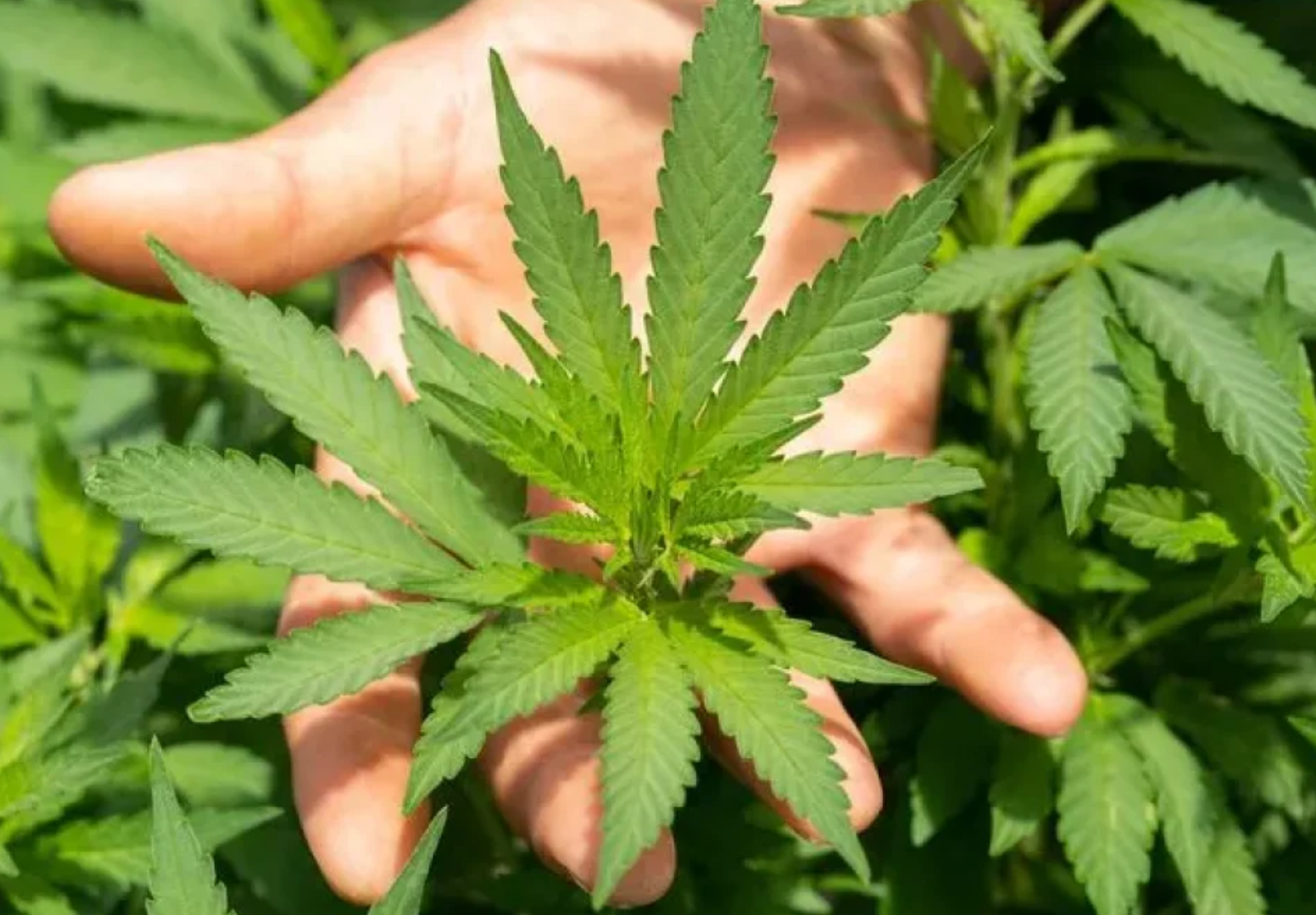

Thailand's once open cannabis market has been replaced by a prescription-only medical system, with Bangkok dispensaries now required to operate much more like clinics than retail shops.
For foreigners living in or visiting Thailand, the practical message is clear: cannabis can still be obtained legally, but only after a consultation with a licensed practitioner and the issue of a Thai prescription. Foreign prescriptions are not recognised.
From decriminalisation to medical-only access
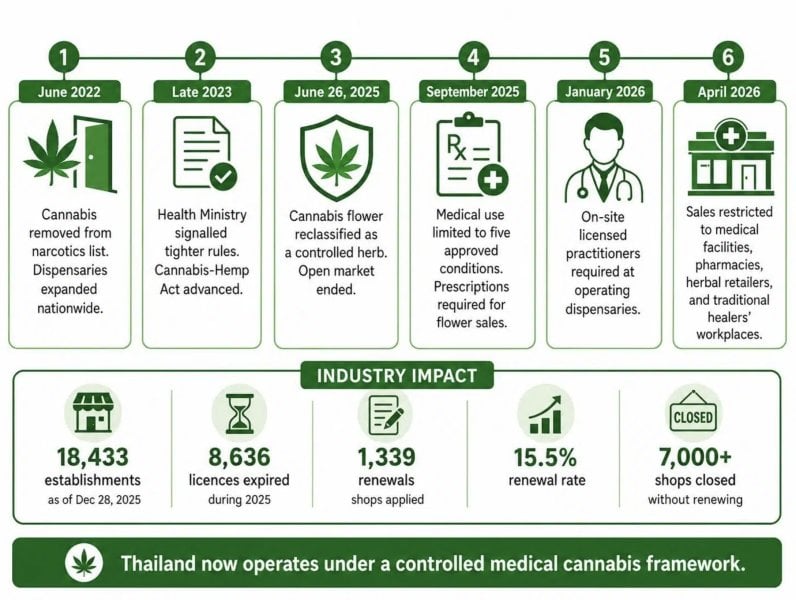
Thailand became the first country in Asia to decriminalise cannabis in June 2022, after removing it from the narcotics code. Dispensaries then expanded rapidly, particularly in Bangkok's Sukhumvit and Silom areas, and cannabis became part of the tourist experience for some visitors.
The policy began shifting by late 2023, when the Ministry of Public Health signalled tighter controls and a Cannabis-Hemp Act entered the legislative process.
On June 26, 2025, cannabis flower was reclassified as a "controlled herb", ending the largely open retail market. In September 2025, the department confirmed that flower could be prescribed only for five approved medical conditions.
Further rules took effect in January 2026, requiring dispensaries to have a licensed practitioner on site throughout their opening hours. By April, permitted premises had been limited to medical facilities, pharmacies, herbal product retailers and traditional healers' workplaces.
The effect on the trade has been substantial. Thailand had 18,433 cannabis-related establishments as of December 28, 2025, but licences for 8,636 shops expired during that year. Only 1,339 sought renewal, about 15.5%, meaning more than 7,000 closed without renewing.
What visitors and residents must do
A valid Phor Thor 33, or PT33, prescription is now required to buy cannabis flower. It is issued by a licensed medical practitioner for a qualifying condition, a specified quantity and a set period, generally about 30 days.
At a compliant dispensary, customers should expect a consultation about symptoms or health concerns before any product is supplied. A passport or other valid ID will normally be needed. The same PT33 process applies to Thai nationals, expatriates and tourists; long-stay visa holders do not have a separate route.
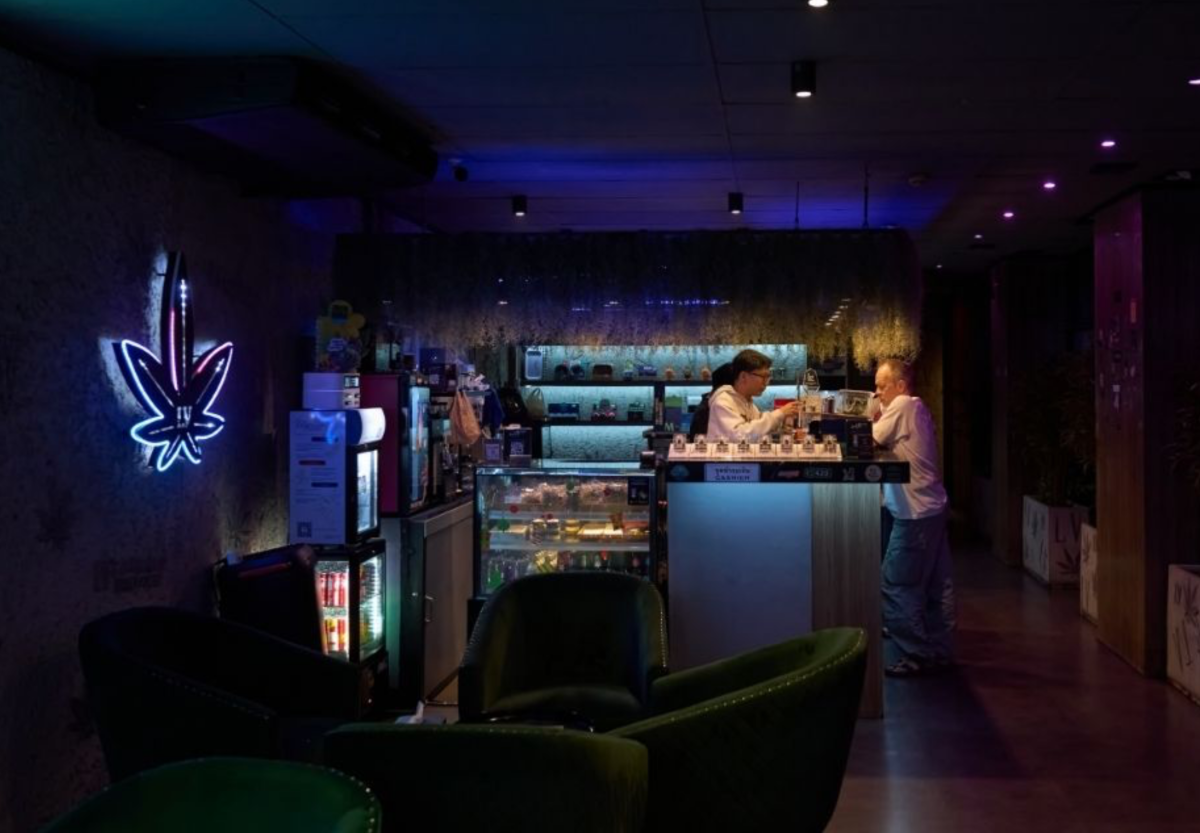
Recreational sales, public consumption, online sales, vending-machine sales and sales without a licensed practitioner are no longer permitted. Public consumption can bring fines of up to 25,000 baht.
Travellers should not bring cannabis into Thailand, including legally prescribed products from their home country. Thai law treats importing cannabis as drug trafficking and can result in immediate arrest.
Checks are stricter on tourist islands
Compliant dispensaries must keep a licensed doctor or nurse physically present, maintain records of prescriptions and dispensing, and source commercial flower from GACP-certified farms. Supply-chain documents can be inspected.
Bangkok has the greatest concentration of compliant shops and licensed practitioners, making access through the legal system generally easier than elsewhere. Phuket authorities have been particularly visible in checking shops in Patong, Bangla Road and beach resort areas, following the island's push for stricter rules.
Koh Samui, Koh Phangan and Phuket operate under the same national PT33 rules as Bangkok. The difference is enforcement intensity, not the legal process.
Thailand's online cannabis shop tracker, launched in April 2026, allows customers to check whether a dispensary is licensed before visiting. The wider Cannabis Act remains in the legislative process, although the current medical-only direction has cross-party support following the 2026 elections.
Pictures courtesy of The Thaiger
Join the discussion? 

16 August 2026
-
 1
1
Recommended Comments
Create an account or sign in to comment