





Thailand’s schools are grappling with the lasting effects of children’s increased reliance on smartphones and tablets, as educators warn that habits formed during the Covid-19 pandemic are proving difficult to reverse.
The debate comes amid growing concern over the impact of excessive screen time on children’s mental health, learning and behaviour. Unicef says nearly half of young people under 25 have participated in online gambling, while 33% are addicted to cyber gaming. Meanwhile, the Thai Health Promotion Foundation estimates that 98.2% of Thai children are now screen addicts.
Schools seek balance rather than bans
Wilaiwan Anmak, director of Lat Pla Khao Phitthayakhom School in Bangkok, said only around 10% of families at her school had reported problems linked to excessive gaming or mobile phone use. In those cases, teachers work closely with parents to address the issue.
She said students are generally allowed to bring their own devices to school, but mobile phones are prohibited during lessons unless teachers specifically require them for research or classroom activities.
Wilaiwan explained that the pandemic fundamentally changed students’ relationship with technology.
“During the pandemic, students needed smartphones or tablets for online learning. Once schools returned to normal, it became much harder to reverse that dependence because digital devices had already become part of education,” she said.
She added that, as a public school with limited resources, requiring students to surrender their phones would create practical problems if devices were lost or damaged.
The school also monitors social media disputes between students, using student volunteers to alert teachers before disagreements escalate. According to Wilaiwan, prompt intervention through discussion and mediation has prevented serious violence linked to online conflicts.
Rather than rejecting technology altogether, she said the school is embracing artificial intelligence, with both students and teachers encouraged to use AI to improve learning and classroom efficiency.
Early years focus on development
Janana Srivardhana, director and licensee of Jananan Kindergarten, said her school has long limited children’s exposure to screens because research links excessive screen time to emotional regulation problems, aggression, impatience and increasingly self-centred behaviour.
Parents are asked to disclose their children’s screen habits during admissions, although Janana said children’s behaviour often reveals whether those answers are entirely accurate.
She said the school’s long-standing no-screen philosophy was disrupted during Covid, when digital learning became unavoidable. After the pandemic, Jananan Kindergarten returned to banning mobile phones while introducing interactive boards only for its oldest pupils preparing to move into primary education.
Teachers use the technology to encourage participation and confidence rather than passive viewing of videos or online content.
Janana stressed that consistency between home and school is essential, urging parents to limit children’s screen time outside the classroom so children receive the same guidance in both environments.
She and Wilaiwan both said parents ultimately play a crucial role because they are the ones providing children with digital devices. Wilaiwan also urged adults to help young people distinguish reliable information from misinformation and to develop safe digital habits before considering broader restrictions on social media.
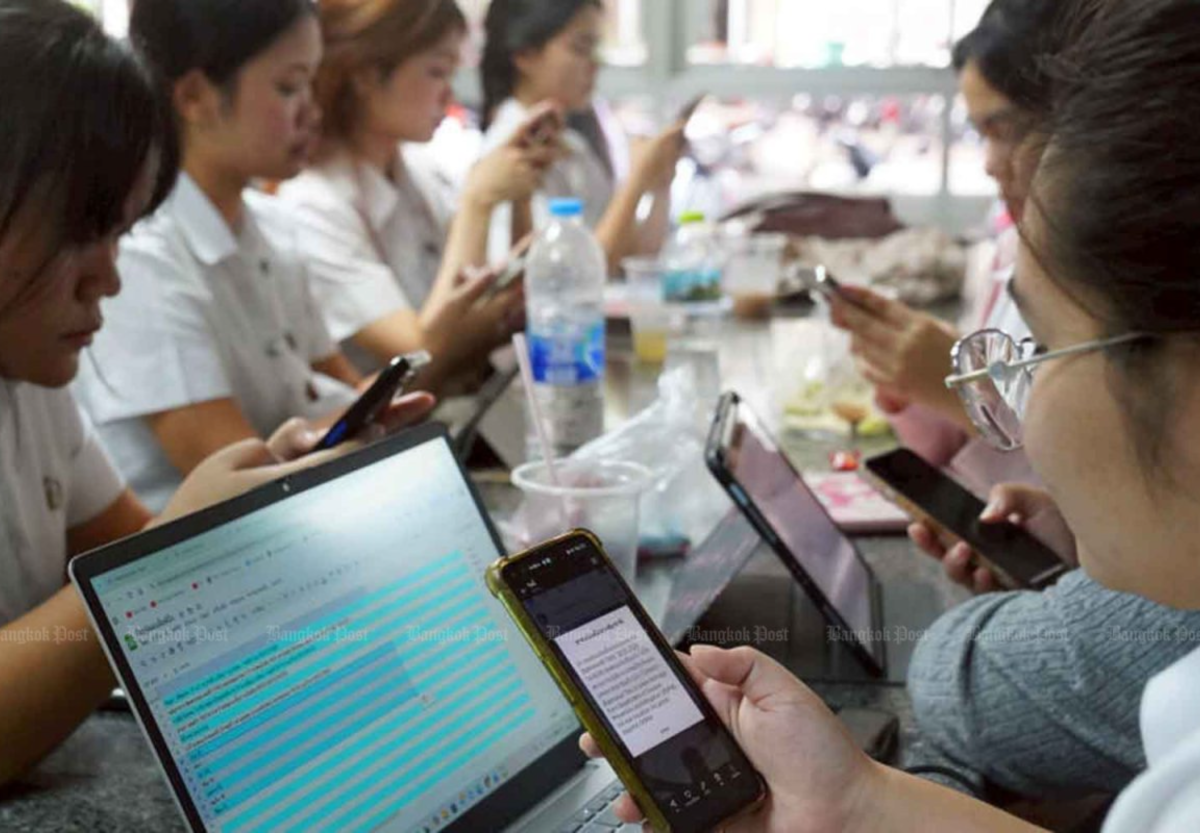
Picture courtesy of Bangkokpost
Join the discussion? 

28 July 2026
Recommended Comments
Create an account or sign in to comment