



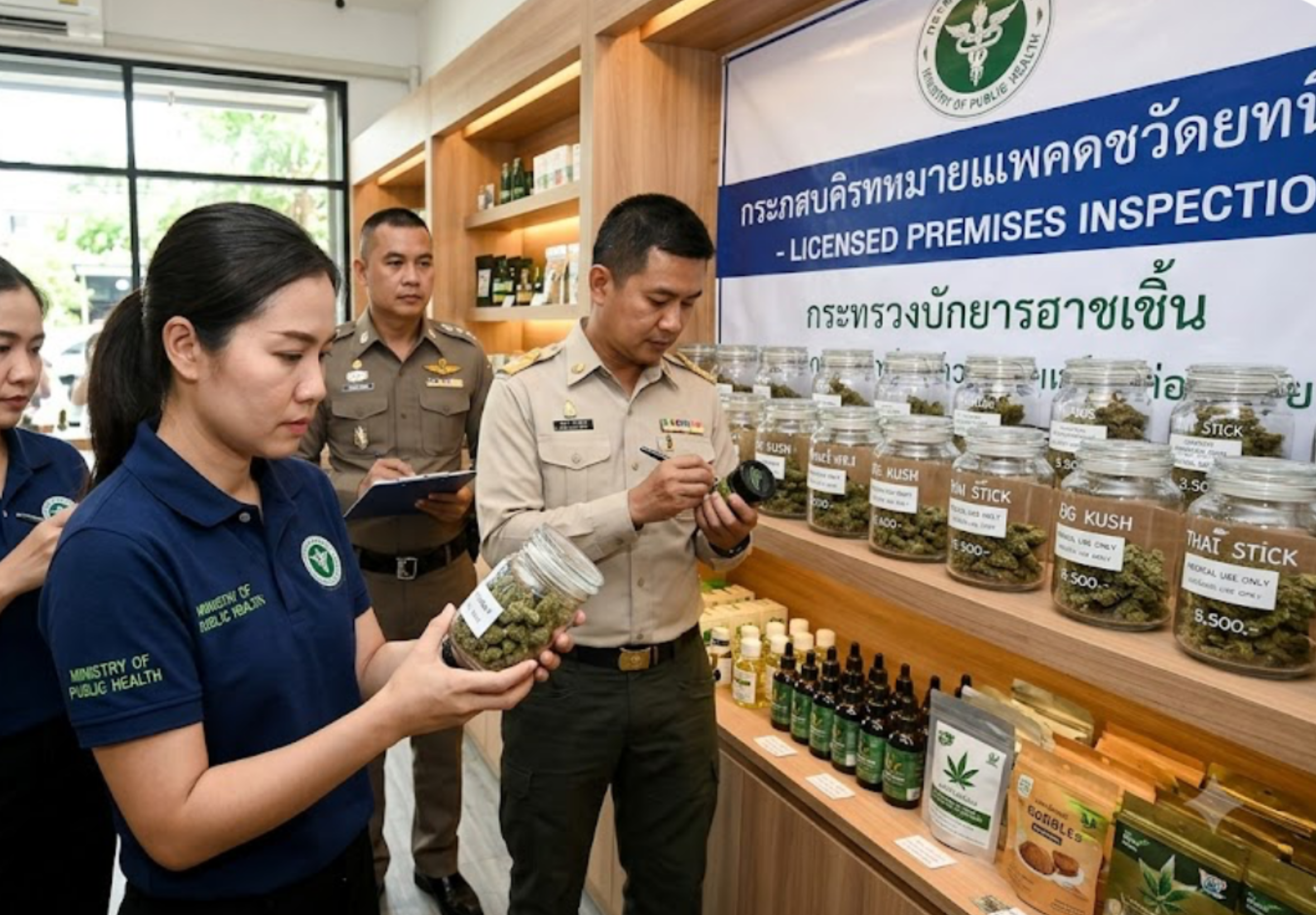

Thailand's Ministry of Public Health has intensified enforcement against cannabis businesses, inspecting 1,326 shops since October 2025 and seizing products worth more than 109 million baht.
Public Health Minister Pattana Promphat outlined the results at a meeting on 3 August 2026, on enforcement guidelines under the Protection and Promotion of Thai Traditional Medical Knowledge Act.
Authorities have carried out 83 seizures and started legal action against 40 people or businesses since the campaign began last October. They have suspended 84 operating licences, revoked four licences and considered 39 appeals against suspensions or revocations.
Nationwide inspections to follow
The meeting brought together officials from the Health Ministry, Royal Thai Police and local administrative bodies for training on procedures covering cannabis cultivation, sales, medical use and inspections of licensed premises.
Officials are now set to inspect businesses across the country. Depending on the seriousness of any breach, operators may be ordered to correct it, have their licence suspended, be closed down or face prosecution.
For foreign residents and visitors, the stepped-up checks are a reminder that the presence of a cannabis shop does not mean recreational consumption is officially permitted. Mr Pattana restated the ministry's position that cannabis is for medical use only.
New cannabis law remains in progress
Mr Pattana said the ministry was continuing work on the draft Cannabis and Hemp Act, which is intended to restrict cannabis to medical purposes, prevent recreational use and reduce risks to children and young people.
He acknowledged that political turmoil had delayed cannabis legislation in recent years, but said the government remained committed to speeding up the bill. He dismissed concerns about continuing uncertainty over whether it will be passed.
Under existing law, extracts containing more than 0.2% tetrahydrocannabinol, or THC, remain classified as narcotics, Mr Pattana said. Any wider decision to reclassify cannabis would be for the relevant authorities.
If the proposed act comes into force, cannabis cultivators will need permits under its framework. Retailers already holding licences would be able to continue operating until their current three-year licences expire, after which they would have to meet the new requirements.
The rules matter particularly to expatriates who use cannabis for medical reasons, as well as tourists expecting Thailand's retail market to operate like a fully legal recreational system. The ministry's latest stance indicates that shops, products and claimed medical uses will face closer scrutiny while the new law remains unfinished.
Join the discussion? 

5 August 2026
-
 1
1
Recommended Comments
Create an account or sign in to comment