



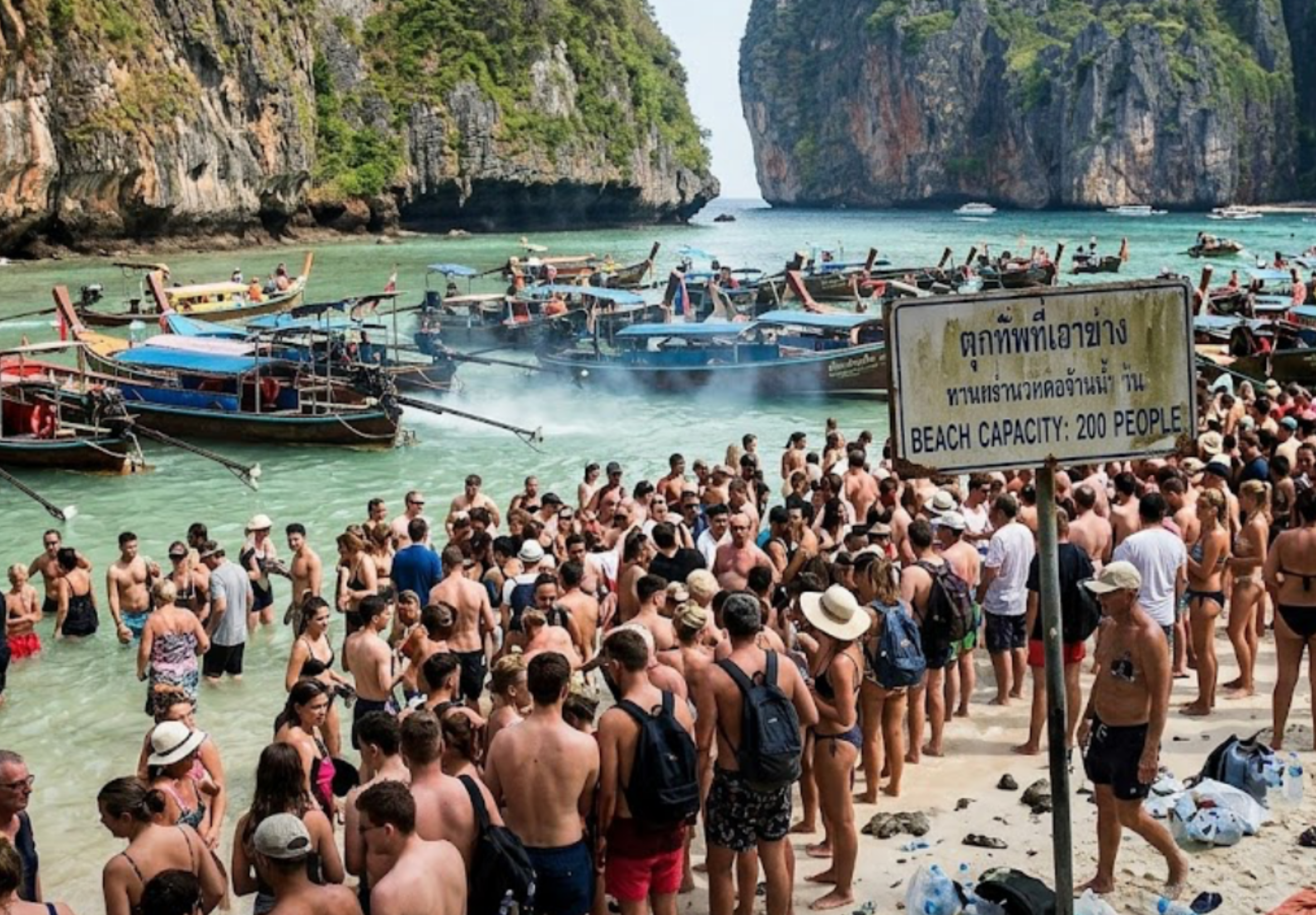

Thailand must stop measuring tourism success simply by visitor numbers and build a system that protects destinations, local communities and infrastructure, according to two researchers at the Thailand Development Research Institute (TDRI).
Nopparuj Chindasombatcharoen and Wirin Khowrat said tourism remains one of Thailand's largest income sources, but rising arrivals can also place severe pressure on natural resources, public services and the industry's future competitiveness.
Their warning comes as the government plans to reduce the visa-free stay from 60 days to 30 days, a proposal they say reflects the difficult balance between attracting visitors and managing the effects of overtourism.
For foreigners living in Thailand, as well as tourists, the issue is practical. Overcrowding, inadequate waste and wastewater systems, strained transport and public infrastructure, and safety concerns can directly affect daily life and the visitor experience in major destinations.
Sustainability schemes lack a common direction
Thailand has introduced several measures intended to support lower-carbon and more sustainable tourism. These include the Green Hotel Plus programme, Green Destination Standards for attractions, communities and small businesses, and carbon-accounting tools for hotels and low-carbon tourism routes.
However, the researchers said the schemes remain fragmented and largely voluntary. Green Hotel Plus, Green Destinations Standard, Green Health Hotel, Green Leaf Certification and carbon-measurement systems operate without a shared roadmap for the sector's transition.
They said there is also no clear common pathway setting baseline standards for tourism operators, financial incentives or government support. That leaves businesses to work out the requirements themselves rather than moving together.
Large operators generally have the money, specialist staff and management systems to meet sustainability standards, while smaller firms may lack funding, technical knowledge and operational capacity. Without changes, the researchers warned, sustainability policies could widen the gap between major companies and smaller tourism businesses.
Phuket illustrates the pressure
The authors said existing policies have not sufficiently targeted the biggest sources of tourism emissions: transport and energy use across the tourism supply chain. Many current measures instead focus on hotel standards, certification, carbon offsets and pilot projects.
They also stressed that sustainability involves more than emissions. Tourism income remains concentrated in a limited number of provinces, while many other areas have not turned visitor spending into meaningful local development.
Phuket demonstrates the risks, they said. As visitor numbers and tourism businesses have expanded, waste disposal, wastewater treatment and public infrastructure have come under growing strain, with local systems in some places struggling to cope.
Accidents and other incidents involving foreign visitors also continue to receive international attention, affecting confidence in Thailand as a destination.
Climate risks need local responses
Drought, flooding, extreme heat, coastal erosion and deteriorating marine ecosystems, including coral reefs and beaches, threaten the natural assets that draw travellers to Thailand, the researchers said.
They argued that destinations need locally tailored responses, rather than a single nationwide solution. Government should provide dependable information, improve infrastructure, coordinate agencies and help communities and tourism businesses prepare for climate impacts.
Thailand can continue growing tourist numbers, they concluded, but each additional visitor will add strain unless standards, incentives, safety, infrastructure, income distribution and climate adaptation are brought into one framework.
Join the discussion? 

31 July 2026
-
 2
2
-
 2
2
Recommended Comments
Create an account or sign in to comment