




Proposal to feature British animals on new currency sparks political criticism and public debate
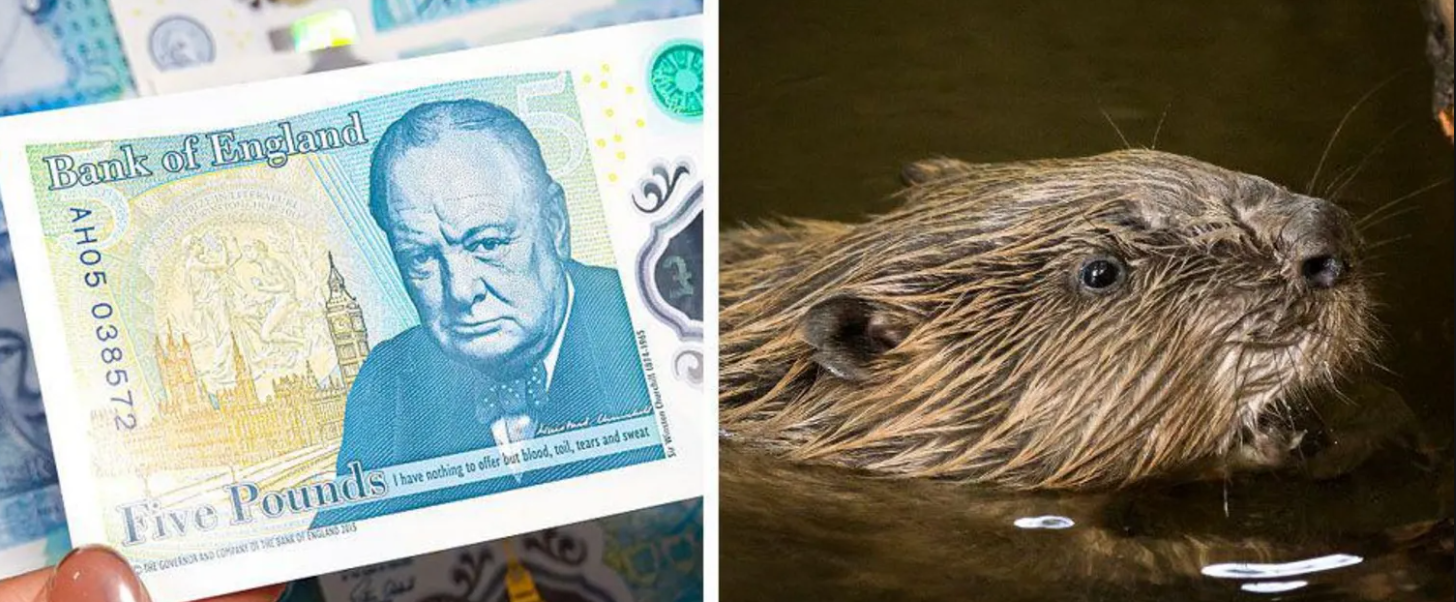
The Bank of England plans to feature British wildlife on its next generation of banknotes, replacing historical figures such as Winston Churchill and Jane Austen — a move that has already sparked a political backlash.
Don’t miss the latest headlines from Thailand and around the world. Get the Asean Now Briefing newsletter, delivered daily. Sign up here.
The central bank says the redesign follows public consultation and is partly driven by the need to introduce more sophisticated anti-counterfeiting technology.
However, some political leaders argue that removing well-known figures from the currency risks downplaying Britain’s history.
Political leaders voice criticism
Several prominent politicians have criticised the proposal since it was announced.
Kemi Badenoch, leader of the Conservative Party, dismissed the idea as unnecessary, arguing that replacing historical figures with wildlife would be a mistake.
Meanwhile Nigel Farage of Reform UK described the proposal as “absolutely crackers”, suggesting that revered national figures could end up being replaced by animals such as beavers.
Ed Davey, leader of the Liberal Democrats, also questioned the timing of the change, saying it seemed odd to debate banknote designs while conflict continues in Europe.
Public consultation favoured nature
Despite the criticism, the Bank of England says the wildlife theme was the most popular choice during a consultation process involving tens of thousands of responses.
About 60 percent of participants selected nature or wildlife as one of their preferred themes for future banknotes.
Other options included architecture and landmarks, historical figures, arts and culture, innovation and major national milestones.
The new designs would appear on the reverse side of £5, £10, £20 and £50 notes, replacing portraits that have appeared on Bank of England banknotes for more than five decades.
Portraits of notable individuals were first introduced in 1970, beginning with William Shakespeare.
The current series features Churchill on the £5 note, Austen on the £10, artist J. M. W. Turner on the £20, and mathematician and wartime codebreaker Alan Turing on the £50.
Animal charities join the discussion
The debate has attracted attention beyond politics, with the RSPCA suggesting that lesser-known animals could also be considered.
The charity highlighted species such as pigeons, rats and gulls, arguing they have played significant roles alongside humans.
RSPCA wildlife expert Geoff Edmond pointed out that pigeons famously carried military messages during both world wars, while rats have been trained to detect landmines and identify diseases.
He said animals that are often overlooked — including foxes and gulls — might also deserve recognition on the country’s currency.
Family reaction to Churchill removal
Emma Soames, a granddaughter of Winston Churchill, said she was not surprised that the wartime leader might eventually disappear from the £5 note.
She told the BBC she never expected the portrait to remain on the currency indefinitely.
Asked about the possibility of Churchill being replaced by an animal such as a badger, she joked that either the badger or her grandfather would be fortunate.
Security features driving redesign
Officials say the wildlife theme offers new possibilities for modern security features designed to prevent counterfeiting.
Designs could include moving elements built into the notes, such as birds appearing to flap their wings or animals depicted in motion.
Victoria Cleland, the Bank of England’s chief cashier — whose signature appears on British banknotes — acknowledged that currency designs often provoke strong opinions.
She said consulting the public was an important part of the process.
Wildlife imagery already appears on some British banknotes issued by other institutions. For example, notes produced by the Royal Bank of Scotland feature animals such as otters, red squirrels and mackerel.
Online reaction adds humour
The debate has also produced a wave of jokes on social media.
Supermarket chain Aldi UK even suggested that its well-known “Cuthbert the Caterpillar” cake could appear on a future banknote design, sharing a playful mock application for the role.
The Bank of England has not yet decided which species will appear on the new notes.
Experts will now compile a shortlist of wildlife candidates that will be presented to the public later this year.
A final decision will ultimately be made by the bank’s governor, although it may take several years before the redesigned notes enter circulation.
Join the discussion? 
Already a member? 
 Adapted by ASEAN Now · Source · 14.March 2026