



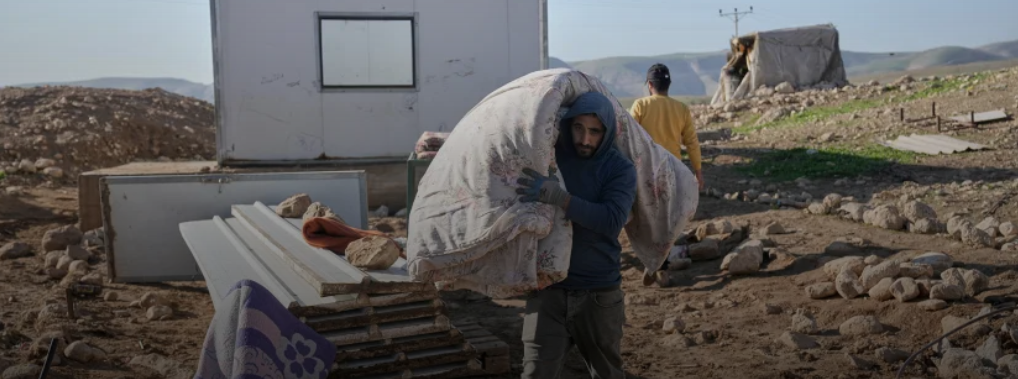

Chaos has engulfed Ras Ein al-Auja—a West Bank village facing its own disaster. For over a decade, relentless harassment by Israeli settlers has pushed this once-thriving Palestinian community to the brink. Families are fleeing, citing fear for their safety amid an intensified wave of violence.
Suleiman Ghawanmeh knows this despair all too well. After years of cries for help fell on deaf ears, he's left with nothing but anger. "Nobody listens to us," he laments, feeling the world’s abandonment. Residents have been terrorized by armed settlers, mostly teenagers, who have descended on the community daily, according to local accounts and activists. With over 800 people displaced by January’s end, Ras Ein al-Auja stands empty.
This village represents the 46th settlement where Palestinians have faced expulsion since October 7, 2023. Israeli human rights group B'Tselem calls it "ethnic cleansing." The response from the Israeli military condemns the violence, but residents paint a different picture; the military's role seems less about protection and more about passive observation.
In a troubling twist, the situation worsened post-Hamas attacks, exacerbating tensions. Settlers have aggressively expanded, establishing four illegal outposts since April 2024. They've raided water tanks, cut electricity, and vandalized homes, all allegedly under military inaction, as CNN’s footage suggests.
Furthermore, confronting settlers yielded little. When approached, hostility and refusal to engage were the only responses, along with a police call to CNN reporters. Such responses underscore the ongoing tensions and reluctance to address deep-seated issues.
Ghawanmeh believes his community’s plight is tolerated by global indifference. The sight of families dismantling their homes, packing belongings into trucks, epitomizes their uncertainty. As men spray “the last displacement 2026” on metal sheds, they reference the Nakba of 1948—a painful reminder of past exiles.
Haitham Zayed, a resident all his life, calls this a systematic displacement policy. His determination to stay waned as settler intimidation grew too hazardous. Two days after declaring he'd remain, he, too, admitted defeat, saying, "We are reliving the Nakba."
In June 2024, Israel declared 3,000 acres of the Jordan Valley, including Ras Ein al-Auja, as state land. This move, the largest seizure since the Oslo Accords, blocks Palestinians from accessing their own land, argues watchdog group Peace Now.
As families seek refuge just two miles away, uncertainty remains the only certainty. They question where safety lies, when nowhere feels immune from danger—a dilemma echoing across the West Bank.
Key Takeaways:
Ras Ein al-Auja villagers forced out by intensified settler violence.
Israeli military condemned violence but faced criticism for inaction.
Land seizure by Israel blocks Palestinian access to the West Bank lands.


Adapted by ASEAN Now from Source 2026-01-28


-
 7
7
-
 1
1