



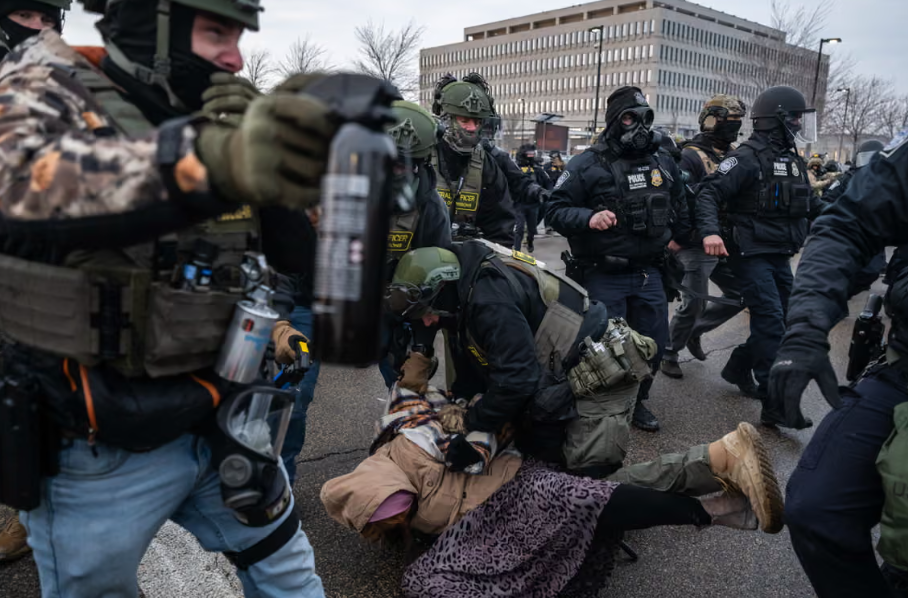

An appeals court has temporarily lifted an injunction against ICE, allowing agents to use pepper spray and make arrests during peaceful protests in Minnesota. This decision marks a notable victory for the Trump administration, undoing a ruling by Judge Katherine Menendez aimed at protecting First Amendment rights.
Judge Menendez had restricted ICE from retaliating against protesters, using non-lethal force, and stopping drivers without cause, citing a "chilling effect" on free speech. In contrast, the Department of Homeland Security defended ICE’s measures as "appropriate and constitutional" to uphold law and order.
This court decision coincides with Vice President JD Vance’s upcoming visit to Minneapolis, where he plans to meet local leaders and focus on restoring stability. The visit follows public outcry over the recent death of Renee Good, a mother killed by a federal agent, which has amplified protests across the state.
Minnesota Governor Tim Walz and other state officials have condemned the federal deployment as an unconstitutional "federal invasion," claiming it spreads fear and violates civil liberties. In response, the Justice Department has subpoenaed figures such as Governor Walz and Minneapolis Mayor Jacob Frey, accusing them of obstructing ICE operations.
The presence of federal agents in Minnesota remains a contentious issue, with state leaders arguing it undermines civil rights. As legal challenges unfold, the debate highlights broader concerns over immigration enforcement and protest rights in the United States.
Key Takeaways
Appeals court lifts restrictions; ICE can use force during Minnesota protests.
Vice President JD Vance to address law and order during Minneapolis visit.
Tensions escalate as state officials decry federal actions, facing subpoenas.


Adapted by ASEAN Now from The Guardian 026-01-21


-
 1
1